Battery Solution Design for Off-Grid Telecom Towers
As a senior lithium battery engineer at Horizon Power, I have deployed battery solution systems to some of the most inaccessible places on the map—ridge-top telecom towers hours from the nearest road, island sites reachable only by boat, desert nodes where the grid will never arrive. For a mobile network operator, a tower with no power is simply a dead tower, and diesel generators are expensive, polluting, and unreliable to fuel. The modern answer is a properly engineered off-grid power system where the battery is the heart of the site. In this article I walk through how we design a custom battery solution that keeps a telecom tower alive through storms, monsoons, and weeks without sun.
Why Telecom Towers Go Off-Grid
Extending the grid to a remote tower can cost more than the entire radio equipment it powers, and in many regions the grid is itself unreliable—frequent outages that defeat the purpose of a backup feed. Operators have learned that a self-contained renewable-plus-storage site is both cheaper over its lifetime and far more available. A well-designed battery solution turns a tower into an island of reliability: it rides through grid outages, eliminates diesel runs, and slashes operating cost. The battery is no longer a backup; it is the primary power source, with solar or a genset as the intermittent top-up. Getting this right is an engineering discipline, not a product you buy off a shelf.
Sizing the Battery Solution for Uptime
Sizing starts with the load: the radio, the rectifier losses, the shelter cooling, and any future capacity headroom. From there we define autonomy—how many sunless days the site must survive. For a critical tower I typically design for two to three days of autonomy at full load, because a single cloudy week is a real event, not a theoretical one. We then size the battery to deliver that energy without dropping below its safe depth-of-discharge, and size the solar array to fully recharge the battery inside a normal sunny day. A custom battery solution lives or dies on this arithmetic; under-size the autonomy and the site goes dark, over-size it and you waste capital the operator will not recover. I model worst-case seasonal solar, not annual averages.
Depth of Discharge and Real Capacity
Operators sometimes quote nameplate capacity and ignore usable window. A lithium iron phosphate pack should not be routinely discharged below 80%% depth of discharge if you want a long life, so the usable energy is roughly 80%% of rated. I always specify usable capacity, never nameplate, when promising uptime. This honesty prevents the classic failure where a site “has a big battery” but still browns out because the usable window was misunderstood.
Chemistry Choice: LFP Dominates Remote Sites
For off-grid telecom, lithium iron phosphate (LFP) is my default and usually my final answer. Its long cycle life—thousands of cycles—directly attacks the operator’s biggest cost, which is truck rolls for battery replacement. Its excellent thermal stability reduces fire risk at sites nobody visits for weeks. And its tolerance of partial state-of-charge cycling suits a solar-charged system perfectly. A battery solution built on LFP at a remote tower can run five to ten years with minimal intervention, which is exactly what an operator with hundreds of sites needs. Lead-acid, by contrast, demands disciplined watering and fails early under the partial-state abuse of solar cycling.
Solar Plus Battery: The Hybrid Backbone
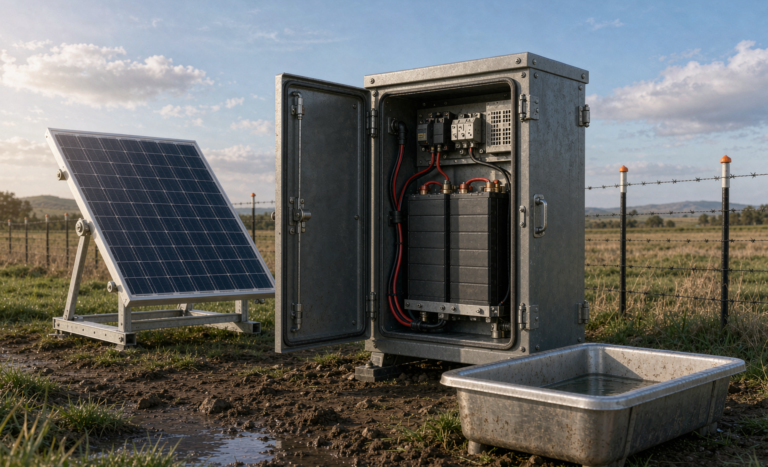
The battery does not work alone. A solar array sized with a little headroom charges the pack through the day, a charge controller manages the chemistry-specific profile, and the battery absorbs the mismatch between generation and load. For very remote or high-reliability sites we add a small generator or, increasingly, a wind input as a second renewable. The controller logic—when to pull from battery, when to accept solar, when to start the genset—is part of the custom battery solution we deliver, not an afterthought. I have seen sites cut diesel consumption by over 90%% simply by getting this orchestration right.
Thermal and Enclosure Design
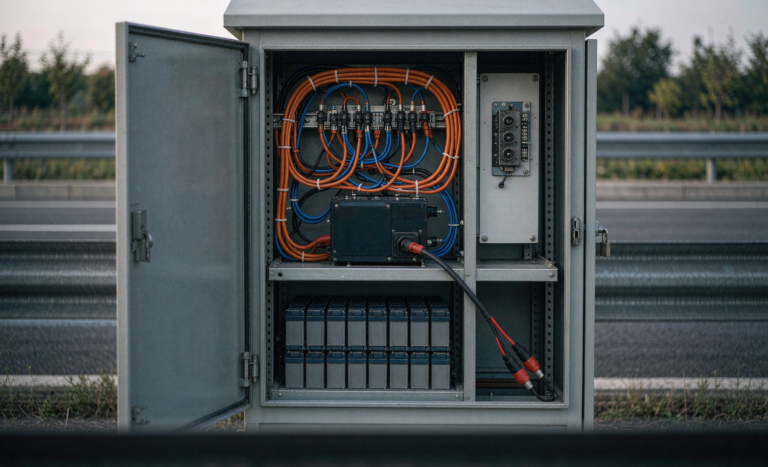
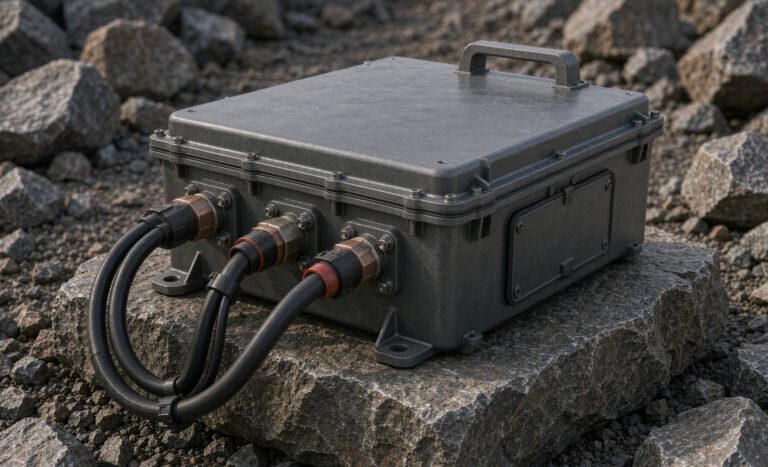
A telecom battery lives outdoors in conditions from −30°C to +50°C, and temperature is the enemy of both life and safety. I specify insulated, ventilated enclosures with passive or active thermal control sized to the local climate, and I keep the battery within its operating band year-round. In hot regions, shading and airflow beat air conditioning for reliability. In cold regions, the pack may need a low-wattage heater triggered only at extreme temperatures. The enclosure also provides physical security against theft and wildlife—a real concern at unstaffed sites. A battery solution that ignores its housing fails regardless of cell quality.
Remote Monitoring and Maintenance
Because nobody is on site, the system must report its own health. I integrate the BMS with a telemetry link—often the tower’s own backhaul—that streams state-of-charge, cell balance, temperature, and fault flags to a central dashboard. This lets a network operations centre spot a degrading pack weeks before it causes an outage and dispatch a truck with the right part. Predictive maintenance, enabled by good data, is what turns a battery solution from a mystery box into a managed asset. I tell operators: if you cannot see the battery, you cannot trust it.
A Real Deployment Blueprint
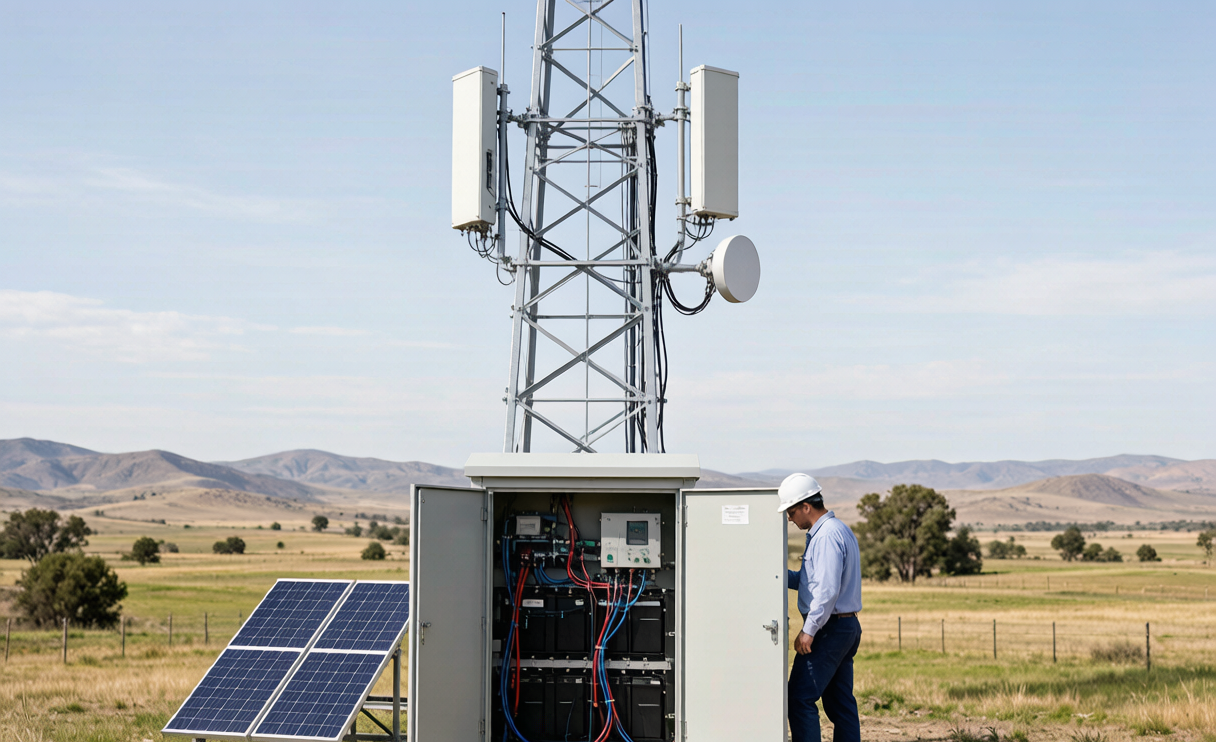
For a typical rural tower drawing 1.5 kW average with three-day autonomy, the blueprint looks like this: an LFP battery of roughly 10–12 kWh usable, a solar array of 4–6 kWp oriented for morning recovery, a hybrid charge controller with generator start contact, an insulated enclosure rated for the site climate, and a BMS with cellular telemetry. We commission it with a full capacity test, set the autonomy alert thresholds, and hand the operator a dashboard login. That single custom battery solution typically removes diesel from the site entirely and pays back within two to three years versus generator fuel and maintenance. It is one of the clearest return-on-investment cases I handle.
Cell Balancing and Battery Management at the Site
At a remote tower, the BMS is doing double duty: it protects the cells and it talks to the network. I specify active or high-quality passive balancing so that after months of partial cycling the series cells stay aligned, because an unbalanced pack wastes usable capacity and ages unevenly. The BMS also enforces the depth-of-discharge limit that preserves life, and it logs every event for later analysis. A battery solution without a competent BMS is just expensive cells waiting to fail; at an unstaffed site, the management system is the crew that is always present.
Scaling From One Tower to a Network
One tower is a project; a hundred towers is a platform. As operators scale, the custom battery solution must standardise so that any technician can service any site, spare parts are interchangeable, and the dashboard compares sites at a glance. I design a family of modular enclosures—say 5, 10, and 20 kWh blocks—that share the same BMS, controller, and telemetry, so a network grows by adding identical, well-understood building blocks. This standardization is what lets a lean operations team manage a vast geographic footprint without a proportional increase in headcount or error rate.
Regulatory and Safety Compliance for Site Batteries
A tower battery is a permanent fixed installation, so it must satisfy local electrical codes, fire ordinances, and transport rules for the cells delivered to site. I ensure every pack is qualified to UN38.3 for transit and built to IEC 62133 cell safety, then installed inside an enclosure that meets the site’s fire-separation requirements. Many regions now mandate specific spacing and venting for lithium storage, and designing to those rules from day one avoids costly retrofits. A compliant battery solution is also an insurable one—something operators discover quickly when underwriters ask for documentation. I treat the paperwork as part of the deliverable, not a burden to dodge.
Frequently Asked Questions
How many days of autonomy should an off-grid tower have?
For a critical site I design two to three days at full load, based on local worst-case weather rather than annual averages. The cost of one extended outage—lost service, a costly emergency truck roll—far exceeds the marginal battery cost of an extra day of autonomy in a well-engineered battery solution.
Why not just use a diesel generator?
Diesel is reliable only if fuel keeps arriving, and at remote sites fuel logistics are the weak link and the dominant lifetime cost. A solar-plus-storage battery solution eliminates most fuel runs, cuts emissions, and improves availability, because the sun does not need a supply chain. Generators remain useful as a rare top-up, not the primary source.
Can lead-acid work for off-grid telecom?
It can, but it is a poor fit for solar cycling. Lead-acid suffers rapid failure under the partial-state-of-charge abuse that solar charging imposes, and it demands watering and equalisation that remote sites cannot reliably provide. Lithium iron phosphate in a custom battery solution lasts far longer with less maintenance, lowering total cost despite higher upfront price.
How do you monitor a battery nobody visits?
We connect the BMS to the site’s existing communication link and stream state-of-charge, temperatures, and fault data to a central dashboard. This lets operators see degradation early and dispatch targeted maintenance. Visibility is what makes an unstaffed battery solution trustworthy over a multi-year life.