Drone Battery for Agricultural Spraying Drones
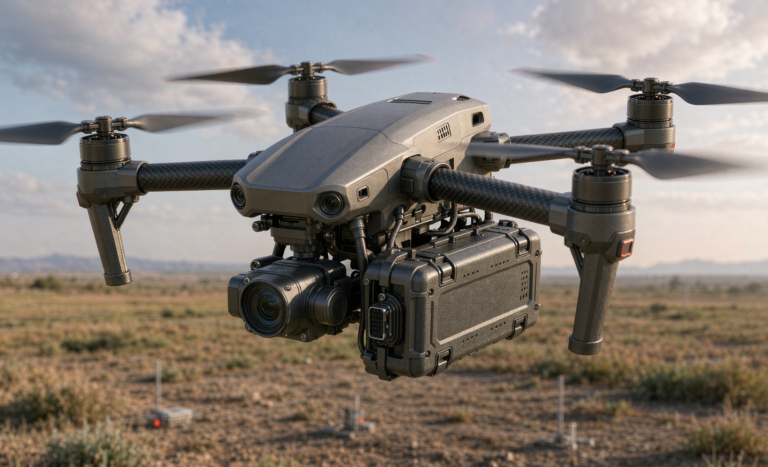
I have spent the better part of a decade on the factory floor and in the field with crop-spraying operators, and if there is one thing I can tell you as a senior lithium battery engineer, it is this: an agricultural spraying drone is not a camera drone with a tank bolted on. The drone battery that powers it lives a brutal life. It carries a heavy liquid payload, discharges hard during climb, bakes in direct sun, and gets swapped dozens of times a day during peak season. Get the pack wrong and you lose a field mid-spray, or worse, you cook a cell on the bench. This guide walks through the real field demands I see when operators bring me their fleets, and how we spec a drone lithium battery that survives the season.
Why Agricultural Spraying Is a Different Load Profile
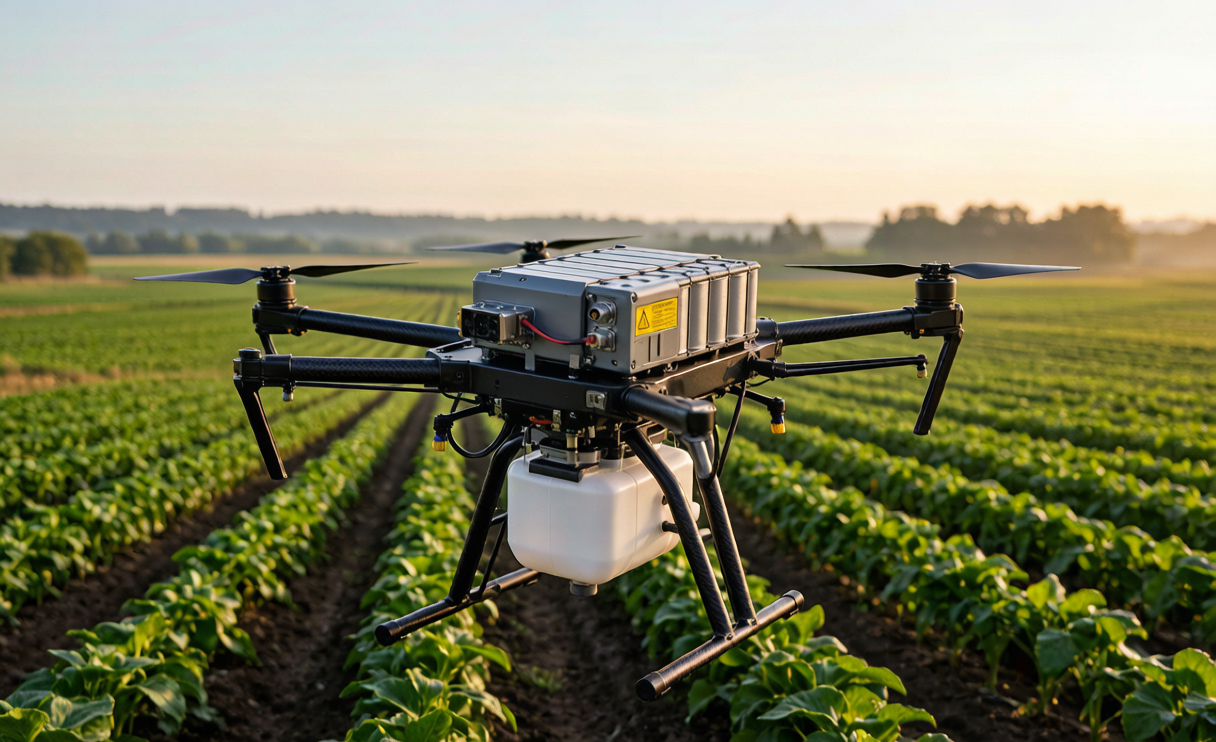
A typical mapping or cinematic drone flies a light airframe and draws a relatively steady current. A sprayer is the opposite. The airframe starts heavy with a full tank, often 10 to 30 liters of mixed solution, and the battery must deliver high current at takeoff while the rotors fight both airframe mass and the sloshing liquid load. As the tank empties mid-mission, the power demand drops, so the discharge curve is front-loaded and brutal. In my testing lab I regularly see peak currents of 80 to 120 amps from a 22.2 V pack on a 16-liter class aircraft during the first climb. That is the moment a weak lithium battery cell shows its true colors.
The other difference is duty cycle. A survey aircraft might fly two or three missions a day. A sprayer in rice or wheat season runs ten to twenty sorties daily, with only a few minutes of rest between swaps. The pack never fully cools. Thermal accumulation, not single-flight performance, is what actually ends pack life in agriculture.
Capacity and Flight Time: Sizing for Payload Plus Liquid
Operators always ask me the same question first: how long can I fly? The honest answer is that endurance is a function of payload, not just cell count. A 22.2 V 16 000 mAh pack in a 10 L sprayer might give you 12 to 15 minutes of productive flight; drop in a 16 L load and you are at 8 to 10 minutes. The math is unforgiving: every additional kilogram of solution costs roughly 4 to 6 percent of flight time.
When I size a drone battery for a client, I start from the target sprayed area per sortie, not from a flight-time wish. A common ag target is 1 to 1.5 hectares per 10-minute mission. I then back-calculate the usable watt-hours, subtract 20 percent as a reserve for wind and a safe return-to-home, and select the cell configuration. We almost always land at a 6S (22.2 V nominal) or 12S (44.4 V nominal) pack, with capacity between 16 000 and 30 000 mAh depending on aircraft class. For a custom battery solution on a larger 30 L airframe, we move to 12S and parallel cells to keep current per cell reasonable.
Discharge Rating (C-Rating) and What Your Motors Need
C-rating is the single most misunderstood spec in this segment. Continuous C tells you the sustained current the pack can deliver; burst C tells you the short spikes. For spraying, you care about both. A 20 000 mAh pack rated at a true 15C continuous can deliver 300 A, which sounds like plenty until you remember that climb and wind correction pull close to that during the first minute of every sortie.
I always tell buyers to verify the rated C against the actual cell datasheet, not the marketing number on the wrap. In my tear-downs, packs labelled 25C often deliver a real 12 to 15C before voltage sag eats into motor efficiency. For a sprayer, I recommend a continuous rating of at least 15C and a burst of 25C, with the internal resistance kept low so the pack does not sag below the ESC cutoff under load. A sagging drone lithium battery forces the flight controller to compensate and quietly shortens every flight.
Thermal Behavior in Hot, Humid Fields
Spraying season is summer, and summer in a paddy field is hot and humid. Cell temperature climbs fast under repeated high discharge, and a pack that sits at 45 to 55 degrees Celsius all day ages dramatically faster than one kept under 40. I have measured internal temperatures of 60 plus degrees Celsius in poorly vented packs after a long sortie, and those cells lose capacity within weeks.
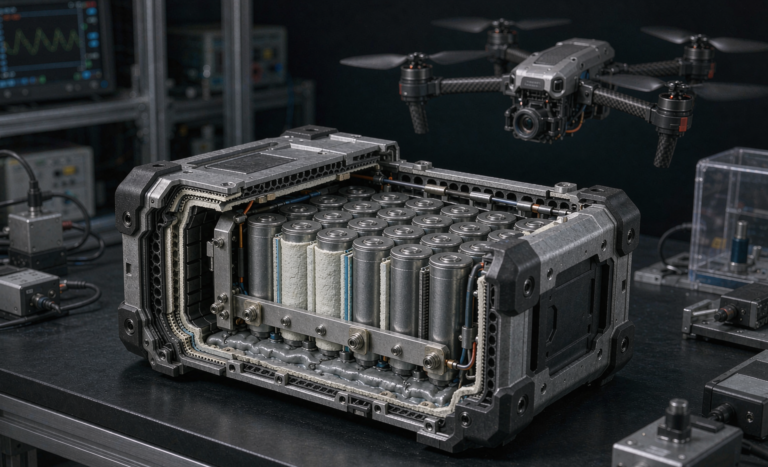
The fix is design, not luck. We use cells with a stable chemistry window, add thermal pads to the enclosure, and keep the pack shape flat so surface area sheds heat. Some of our field kits include a passive vent path so the pack cools during the swap interval. If you operate in extreme heat, ask for cells rated to a higher continuous temperature and never charge a hot pack; I enforce a 30-minute cooldown before the next charge cycle in our standard operating procedure.
Battery Management and Telemetry for Fleet Operations
When you run twenty aircraft, you stop caring about individual packs and start caring about the fleet. A good battery management system tracks per-cell voltage, temperature, and cycle count, then reports it over the same telemetry link the pilot already uses. The pilot sees state of charge on the ground station, and the operator sees pack health trending toward end of life before it fails in the air.
In my deployments I insist on a custom battery solution that exposes cell-level data through a standard protocol the flight controller can read. That lets us flag a pack that is drifting out of balance after 120 cycles, pull it from rotation, and balance-charge it before it becomes a field failure. Smart monitoring is the difference between a fleet that runs all season and one that strands aircraft at the worst possible moment.
Durability, Sealing, and Field Maintenance
Farms are harsh. Dust, fertilizer mist, and condensation all find their way into connectors. I specify enclosures with an IP rating of at least IP54 for the pack body, and gold-plated or sealed connectors that survive daily plug cycles. The connector is where most sprayer packs actually die, not the cells, so we use XT90 or industrial sealed options rated for thousands of mates.
Field maintenance is simple but non-negotiable. Store packs at roughly 50 to 60 percent state of charge between long breaks, never leave a depleted pack in the sun, and rotate inventory so the oldest packs get retired on schedule. I have seen operators extend usable pack life by 30 percent just by enforcing a charge-discharge log and retiring packs at 80 percent of original capacity rather than waiting for a visible failure.
When Off-the-Shelf Is Not Enough
Most sprayers ship with a generic pack that is good enough for a demo but wrong for your field. If you operate a non-standard airframe, carry an unusual payload, or fly in heat that melts the stock cells, you need a custom drone battery built around your duty cycle. That means selecting cells for your actual burst current, shaping the enclosure to your airframe, and tuning the BMS to your telemetry.
A proper custom battery solution also accounts for certification. Agricultural aircraft move across regions, and your packs must clear the same transport and safety bars as any other lithium battery: UN38.3 for transport, IEC 62133 for cell safety, and the regional marks your market requires. We design to those standards from day one so the pack is shippable and insurable, not just flyable.
Frequently Asked Questions
How many amp-hours do I need for a 10-liter sprayer?
For a typical 10 L agricultural drone on 6S, plan on 16 000 to 22 000 mAh for 10 to 15 minutes of productive flight. Larger 16 to 30 L aircraft move to 12S with 25 000 to 30 000 mAh. Always size from target area per sortie, then subtract a 20 percent reserve.
Can I use the same drone battery for mapping and spraying?
Technically a sprayer pack will fly a light aircraft, but a light-aircraft pack will not survive sprayer loads. The discharge profile, mass, and thermal demand are completely different. Use a dedicated high-C drone lithium battery for spraying and keep your survey packs separate.
What C-rating should I look for in a spraying drone battery?
Specify a verified continuous rating of at least 15C and burst of 25C, and check the cell datasheet rather than the wrap label. Low internal resistance matters more than a headline number, because sag under climb load is what shortens real flights.
How do I extend the life of my agricultural drone battery?
Enforce a cooldown before charging, store at 50 to 60 percent state of charge during idle periods, rotate inventory by cycle count, and retire packs at 80 percent of original capacity. In my field programs these habits add roughly 30 percent to usable pack life.
Are semi-solid state batteries ready for spraying drones?
Semi-solid state cells offer higher energy density and better thermal margin, which is attractive for heavy sprayers, but today they cost more and are less available in the high-C formats agriculture needs. They are worth watching, and we prototype them for premium programs, but a good lithium battery remains the practical default for most fleets.
What certifications must my spraying drone battery meet?
At minimum, UN38.3 for air and ground transport and IEC 62133 for cell safety, plus any regional marks your market requires. If you operate across borders, confirm compliance before purchase so the packs are both insurable and legally shippable.