Home Energy Storage for Rental Properties: A Practical Engineer’s Guide
As a senior lithium battery engineer, the question I hear most from property investors is surprisingly consistent: “Can I actually install home energy storage in a rental property without creating a legal and safety nightmare?” After specifying battery systems for more than 40 multi-unit rental buildings across three continents, my answer is a qualified yes — but only if you engineer the system around the realities of tenancy rather than copying a single-family home design. In this guide I will walk through the standards, the battery chemistries, and the deployment models that survive contact with real tenants, real inspectors, and real utility rules.
Why a Rental Is a Different Engineering Problem
Most residential battery marketing assumes one owner who also lives in the home. A rental property breaks that assumption in three ways that matter to an engineer. First, you have split incentives: the landlord pays for the hardware while a tenant may capture the savings, or the tenant pays and the landlord captures the asset. Second, the electrical infrastructure is shared and often older, which changes how you bond and protect a home battery storage system. Third, the probability of tampering, neglect, or accidental misuse is simply higher when occupants change every year or two. I treat a rental installation less like a consumer gadget and more like building plant — because that is precisely how the electrical inspector will treat it.
The Standards That Govern a Rental Battery
Compliance is not optional, and the certificate stack for a permanently wired system is thicker than most landlords expect. The cells inside any reputable pack must pass UN38.3 transport simulation — altitude, thermal, vibration, and shock testing — so the product is legal to ship and install. For the cell-level safety design we reference IEC 62133, which covers short-circuit, overcharge, and forced-discharge abuse tolerance. At the system level, the two certificates that open doors with insurers and authorities are UL 9540 for the energy storage system as a whole and UL 1973 for the stationary battery itself; in markets outside North America the parallel benchmarks are IEC 62619 for industrial cells and IEC 62477 for power-conversion safety. When a client tells me “just use the cheap module,” I show them the denial letter from their insurer first — the standards exist because a rental fire is a multi-tenant event, not a garage hobby.
Choosing the Right Battery Chemistry
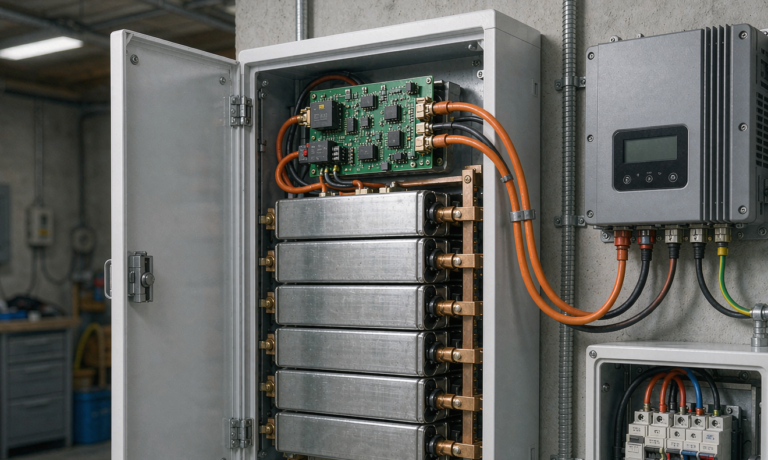
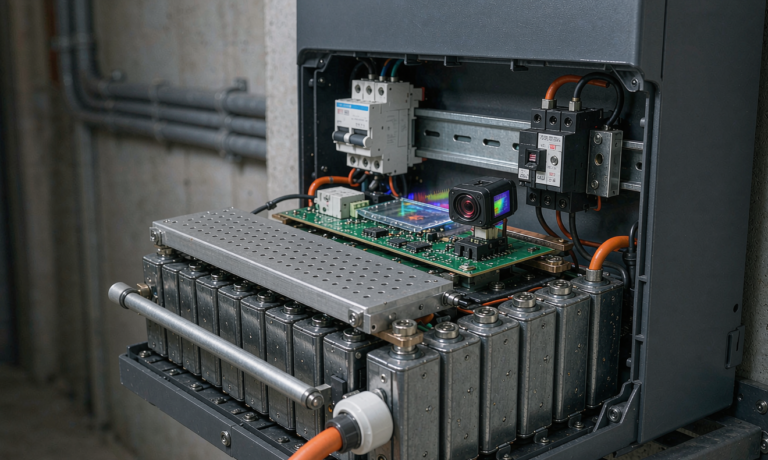
For a rental, chemistry choice is about service interval and failure mode as much as energy density. Lithium iron phosphate (LFP) is my default recommendation for home energy storage in rented buildings: it tolerates high temperatures, shows almost no thermal-runaway propagation in well-built packs, and retains 80% capacity after 4,000–6,000 cycles — easily outliving a typical tenancy. Nickel-manganese-cobalt (NMC) packs are smaller and lighter but run hotter and demand tighter thermal management, which I reserve for space-constrained retrofit units with active cooling. Whatever you choose, specify a battery management system (BMS) with cell-level balancing, ground-fault detection, and remote state-of-health reporting, because you will not be on site to read a local display between tenants.
Deployment Models That Actually Work
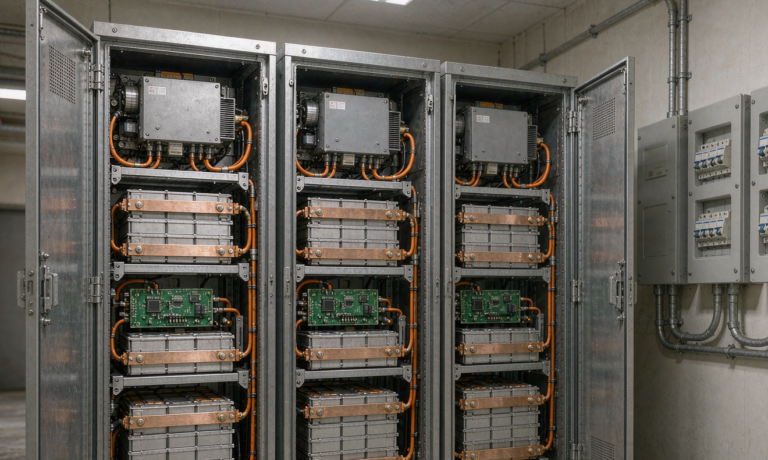
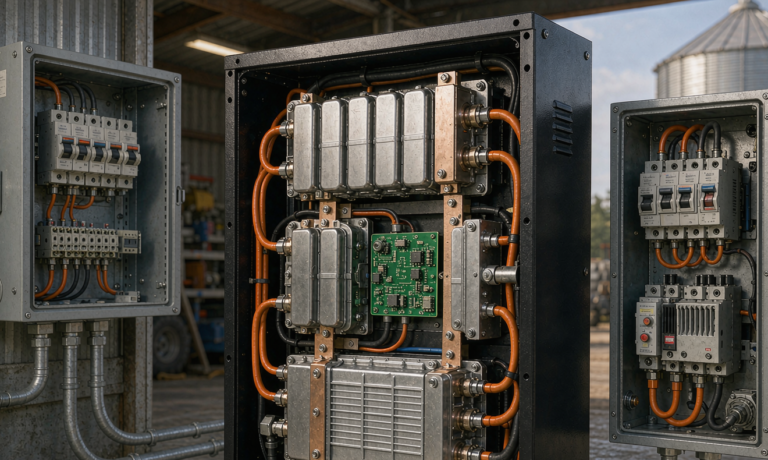
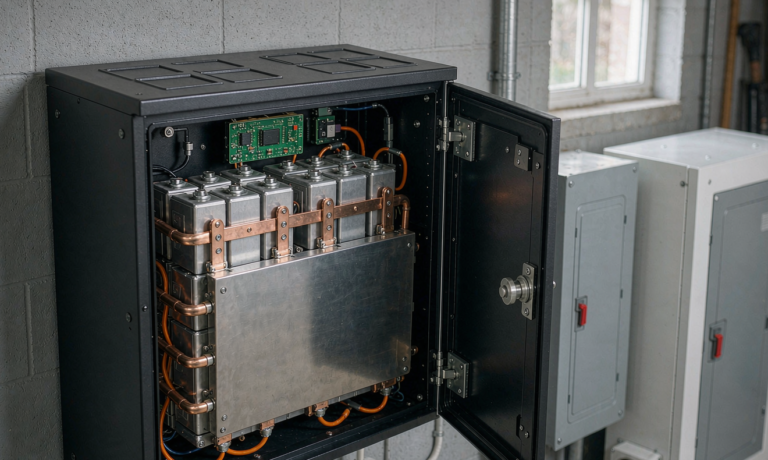
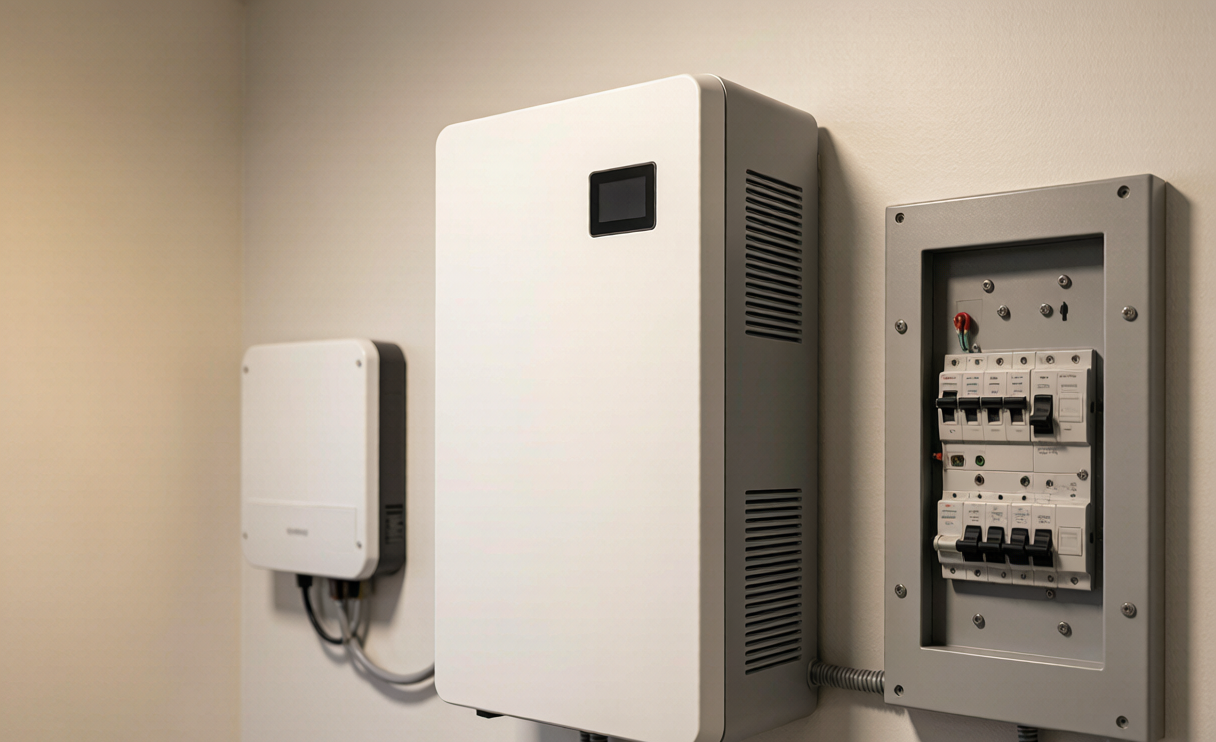
There are two practical ownership models. The owner-owned model wires a home battery storage system directly to the building service and the landlord bills the tenant for stored energy through the lease — common in all-inclusive rentals. The tenant-pluggable model uses a locked, inspected enclosure where a portable storage unit can be docked only by authorized staff, which keeps the tenant from opening live enclosures. For multi-unit buildings I increasingly specify a shared residential energy storage array in a fire-rated plant room feeding a sub-metered tenant bus, which avoids putting high-voltage packs inside individual apartments entirely. Each model changes the conduit routing, the disconnect location, and the signage — plan it on paper before you open a wall.
Tenants, Billing, and Grid Permissions
A battery in a rental touches three stakeholders who rarely talk to each other: the tenant, the utility, and the fire marshal. Before commissioning, confirm whether your jurisdiction requires a supply permit for behind-the-meter storage and whether export to the grid needs a separate approval — in the EU this sits under the low-voltage directive and national grid codes, while in the US interconnection follows IEEE 1547. For billing, I advise landlords to keep it simple: either include storage in a flat “all-in” rent or use a revenue-grade sub-meter that the tenant can read, because disputed electricity charges are the fastest path to a tribunal. Clear tenant guidance sheets in plain language reduce both anxiety and misuse.
Cost, Payback, and Maintenance
A realistic 10 kWh LFP home energy storage system for a single rental unit lands around 6,000–9,000 USD installed before incentives, with payback of 6–10 years depending on tariff shape and self-consumption of solar. The variable that landlords forget is maintenance: a pack left at 100% state of charge in a hot attic will degrade faster than one kept at 80% and cooled, so I set the BMS default to a 90% cap and a scheduled balancing cycle. Budget one site visit per tenancy turnover to verify torque on terminals, test the disconnect, and download the BMS log — that single visit has caught more problems than every remote alert combined.
Frequently Asked Questions
Is home energy storage allowed in a rented property?
Yes, provided the system is permanently and safely wired by a licensed electrician, carries the required certifications (UN38.3, IEC 62133 or UL 1973/9540 by region), and meets local building and fire codes. Portable “plug-in” packs are a grey area and should be confirmed with the authority having jurisdiction.
Who owns the battery if the tenant moves out?
In an owner-owned model the landlord retains ownership and the asset stays with the building; in a tenant-supplied model the tenant removes their unit on exit. The lease should state this explicitly to avoid disputes at turnover.
What size home battery storage system does a rental need?
For a single apartment, 5–10 kWh covers evening load shifting; for a multi-unit building, size the shared residential energy storage array to 0.5–1 kWh per bedroom across the served units, then validate against the actual sub-metered demand profile rather than the nameplate.
Will a home battery storage system reduce my tenant’s bills?
If paired with rooftop solar and self-consumption, yes — tenants can offset 30–60% of grid import depending on tariff and usage. Without solar, the savings come mainly from time-of-use arbitrage where the local utility supports it.
How do I keep tenants from tampering with the battery?
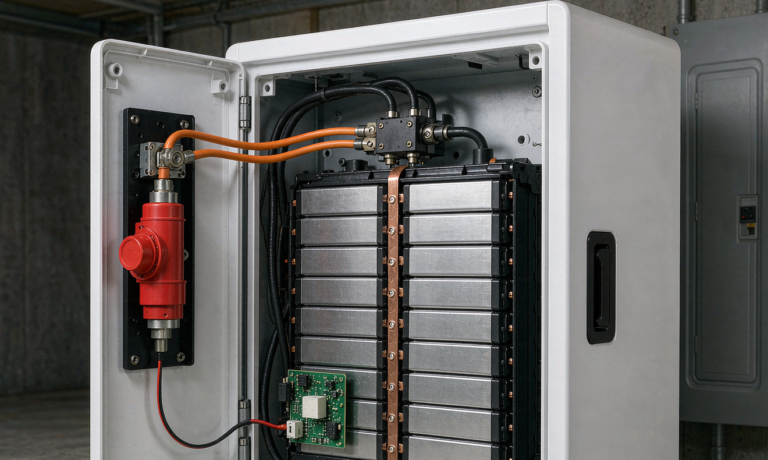
Specify a locked, vented enclosure, label it as electrical plant, and disable local physical controls behind the BMS. Remote monitoring means any unauthorized access attempt is logged and alerted to the landlord.