Sodium-Ion Battery for Grid-Scale Storage
As a senior lithium battery engineer at Horizon Power, I have spent a decade specifying lithium packs for everything from drones to homes, and I will be the first to say lithium earned its dominance. But the grid is not a drone. A grid installation does not care about 200 grams of saved mass, and it does not demand the absolute highest energy density. It cares about cost per stored kilowatt-hour, safety at scale, and resilience across decades of daily cycling. That is precisely the arena where the sodium-ion battery has moved from lab curiosity to a serious contender. In this article I lay out, from real engineering tradeoffs, where a sodium ion battery already competes for grid-scale storage—and where it still should not.
Why Grid Storage Is a Different Game
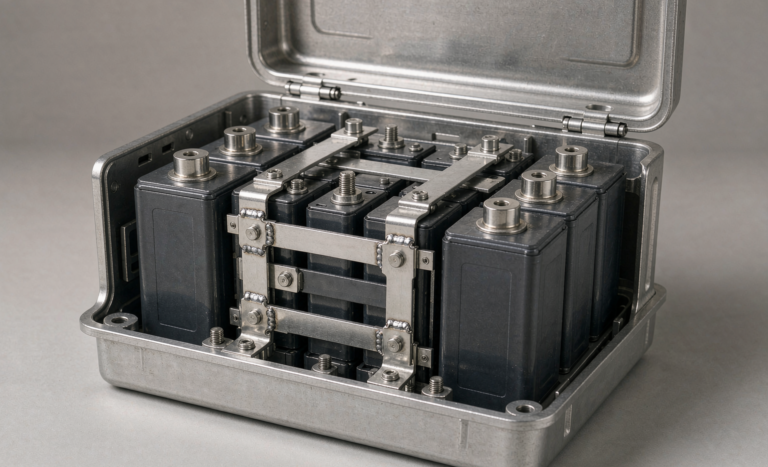
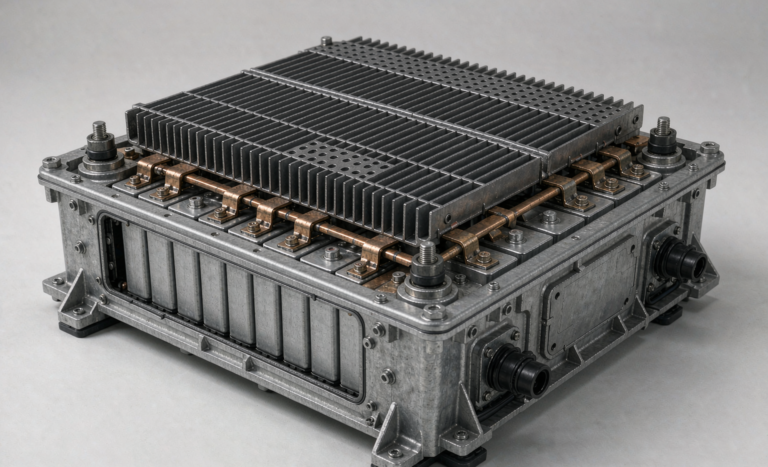
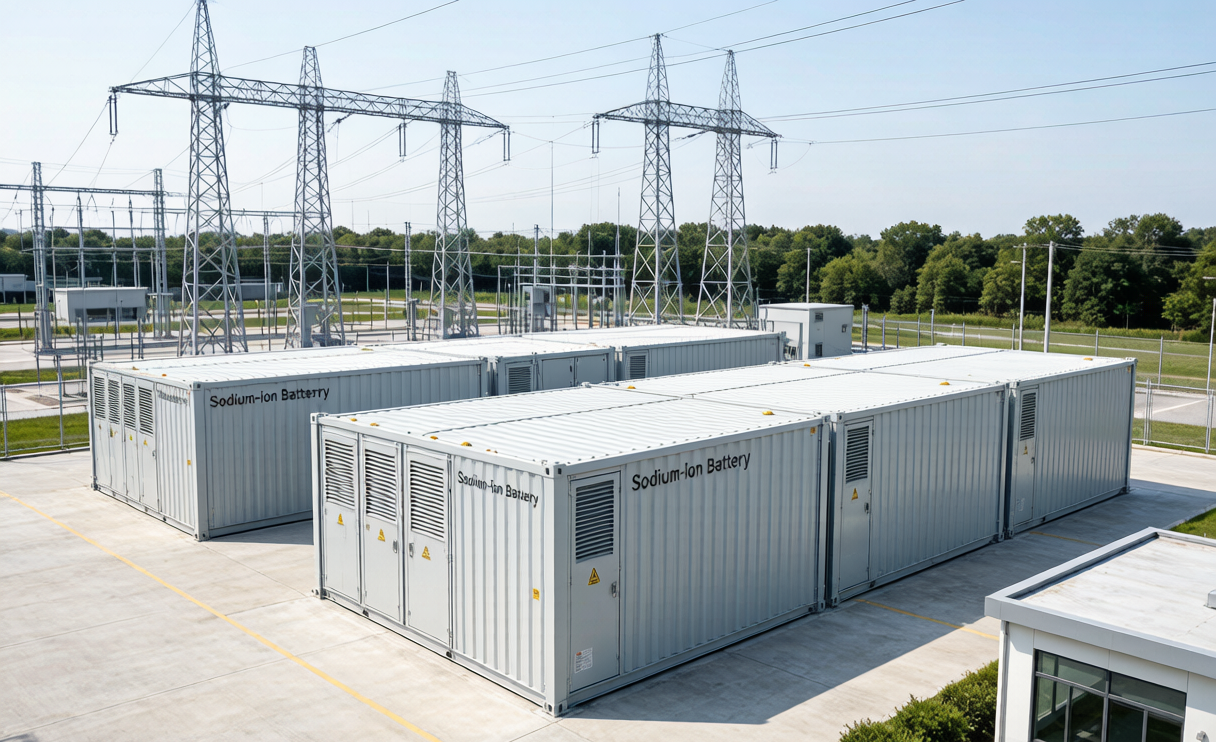
When you design a battery solution for a multirotor, energy density is everything; every gram is paid for in flight time. A grid storage project could not be more different. The batteries sit in grounded enclosures on cheap land, so volume and weight are nearly free. What the operator actually pays for is levelized cost of storage—capital cost amortised over lifetime throughput—plus the operational risk of a fire in a densely packed array. Suddenly, the properties that make lithium premium (high density, high cost) matter far less, while traits like material abundance, thermal stability, and cycle-life economics rise to the top. This shift in what counts is exactly why sodium-ion deserves a serious look for stationary applications.
Sodium-Ion’s Cost and Material Advantage
The headline argument for the sodium-ion battery is resource geography. Sodium is everywhere—it is literally in seawater and salt flats—whereas lithium, nickel, and cobalt are concentrated in a handful of regions and subject to price swings that have tripled cell costs within living memory. Sodium cells also avoid cobalt and copper foil in many designs, simplifying supply and easing ethical sourcing concerns. For a utility procuring hundreds of megawatt-hours, that material independence is not a footnote; it is a hedge against a volatile commodity market. I have watched procurement teams choose sodium specifically to de-risk a multi-year buildout against lithium price shocks.
Where Sodium-Ion Wins Today
The clearest wins are applications with relaxed density needs and high cycle counts. Renewable firming—storing midday solar for evening use—is a natural fit, because the system is ground-mounted and cycles daily for a decade or more, rewarding low cost-per-cycle over compact size. Behind-the-meter industrial peak-shaving, where a site discharges a few hours each weekday to avoid demand charges, also favours sodium’s economics. And in regions with abundant, cheap land, the lower energy density of a sodium ion battery simply does not matter. These are not tomorrow’s use cases; they are being deployed and commissioned today across several continents.
Four-Hour and Longer Duration
As storage durations stretch to four, six, or eight hours, the share of cost that is “container and balance-of-system” shrinks relative to the cells, and the value of cheap sodium chemistry grows. Longer-duration grid storage is where I expect the sodium-ion battery to take the largest market share over the next five years, precisely because density is irrelevant at that scale.
The Cold-Climate Edge
One property keeps surprising people: sodium-ion retains capacity far better than lithium in the cold. Where a lithium iron phosphate pack can lose 20–30%% of its usable capacity near freezing, many sodium chemistries hold most of theirs down to −20°C. For grid storage in northern climates—or for any outdoor stationary installation without expensive thermal conditioning—that means fewer heaters, lower overhead, and more honest delivered energy in winter. I have recommended sodium specifically for northern microgrids where heating a lithium bank would erase its economic case. Cold is sodium’s home turf.
Where Lithium Still Leads
Honesty matters here. For applications where mass and volume are constrained—vehicles, aircraft, portable gear—lithium’s higher energy density remains decisive, and sodium is unlikely to close that gap fully. Lithium also currently offers a more mature supply chain and a deeper track record at very high cycle life in some premium formats. And for residential battery solution designs where wall space is limited, a smaller lithium pack may still win. The engineer’s job is to match chemistry to constraint, not to declare a universal winner. Sodium is not here to replace lithium everywhere; it is here to win where density does not matter.
Safety and Siting Benefits
Grid arrays are judged heavily on fire risk, and this is where the sodium-ion battery scores quietly but importantly. Sodium chemistries are inherently harder to ignite than nickel-rich lithium, and they do not contain the same high-energy transition metals. That can translate into simpler siting—less fireproofing, smaller buffer zones, lower insurance premiums—which over a project’s life is real money. I have seen sodium proposals win approvals faster precisely because the fire marshal’s concerns were easier to answer. Safety is not just about preventing catastrophe; it is about the cost of compliance, and sodium often lowers both.
A Practical Selection Framework
When a client asks me whether to specify sodium for their grid project, I run a simple test. First, is the pack stationary and space-unconstrained? If yes, sodium is eligible. Second, is the dominant cost driver lifetime cost-per-cycle rather than footprint? If yes, sodium is favoured. Third, is the site cold or thermally exposed? That strengthens the case. Fourth, can the supplier show a credible cycle-life warranty backed by test data? Only then do I commit. This framework has steered several sodium ion battery deployments and stopped a couple of premature ones. Match the chemistry to the constraint, and the choice usually makes itself.
Round-Trip Efficiency in Practice
No storage technology is free to operate; every charge and discharge loses energy as heat. Lithium iron phosphate typically posts round-trip efficiencies around 90–95%%, while current sodium-ion battery systems land a little lower, often in the mid-to-high 80s. For a daily-cycling grid project that gap is real but rarely decisive—the saved capital from cheaper cells usually outweighs a few points of efficiency over the project’s life, especially when paired with cheap solar input. I model the full 20-year energy balance rather than judging by the headline efficiency number alone. Where the array charges from otherwise-curtailed solar, even an 85%% round-trip efficiency looks excellent, because the input energy was free to begin with.
Integration With Renewables and the Grid
A sodium ion battery does not live in isolation; it sits behind an inverter, a controller, and a grid interconnection agreement. The good news is that sodium’s stationary nature means it plugs into the same power-conversion equipment as lithium, so integration cost is comparable. I pay special attention to the battery management and energy management software, which must understand sodium’s slightly different voltage window and temperature behaviour to extract full value. Done well, a sodium array supports the same services—peak shaving, frequency response, renewable firming—as its lithium cousin. The chemistry changes; the system architecture barely does, which is a big reason adoption is accelerating.
Manufacturer Maturity and What to Verify
The sodium-ion battery field includes both established cell giants and ambitious startups, and the gap in track record matters for a 20-year asset. Before I specify sodium for a client, I verify three things: independent test data on cycle life, a warranty that puts the supplier’s money behind the claim, and evidence of existing deployed megawatt-hours rather than pilot lines. I also confirm the cells meet the same transport and safety baselines—UN38.3 and IEC 62133—as any lithium pack. A younger chemistry demands more proof, not less. The projects that succeed are the ones where the buyer did this homework instead of chasing the lowest quoted price per kilowatt-hour.
Frequently Asked Questions
Is sodium-ion ready to replace lithium in grid storage now?
In the right applications, yes—today. For ground-mounted, cycle-heavy, density-insensitive grid storage, a sodium-ion battery is already a sound commercial choice where the supplier can warranty cycle life. It is not a mature universal replacement, but it is far past the prototype stage for stationary use.
Does sodium-ion last as long as lithium?
Competitive sodium chemistries now demonstrate cycle lives in the thousands, approaching many lithium iron phosphate offerings, though premium lithium still leads at the very top end. For typical daily grid cycling the gap is narrow enough that cost-per-cycle, not raw cycle count, usually decides the better buy.
Why is sodium better in the cold?
Sodium-ion intercalation kinetics remain effective at low temperatures where lithium plating and increased internal resistance degrade lithium packs. The practical result is that a sodium ion battery delivers more of its rated capacity near freezing without aggressive heating, which saves energy and cost in cold climates.
Should I worry about sodium-ion energy density for my project?
Only if your storage is space- or weight-constrained—which grid and most stationary installs are not. If the batteries sit in enclosures on land you already own, the lower density of sodium is irrelevant to the project’s economics, and its lower cost and safety profile matter far more.