Sodium Ion Battery Buyer Guide
As a Senior lithium battery Engineer at Horizon Power, I have spent the last decade qualifying cells for drones, home energy storage, and industrial packs. In 2026, one chemistry keeps landing on my bench for cost-sensitive, safety-critical programs: the sodium ion battery. This sodium ion battery buyer guide distills what my team and I have learned qualifying Na-ion modules against real customer specs, so you can decide whether it belongs in your 2026 bill of materials.
I want to be clear about perspective. I am not a sodium evangelist; I still specify lithium and semi-solid state where energy density is king. But I have watched Na-ion move from lab curiosity to shippable, certified product, and the procurement questions I now get are practical, not speculative. Buyers want to know cycle life, cold behavior, certification burden, and landed cost. That is exactly what this guide covers, drawn from cells we have actually cycled rather than vendor brochures.
What a Sodium Ion Battery Actually Is
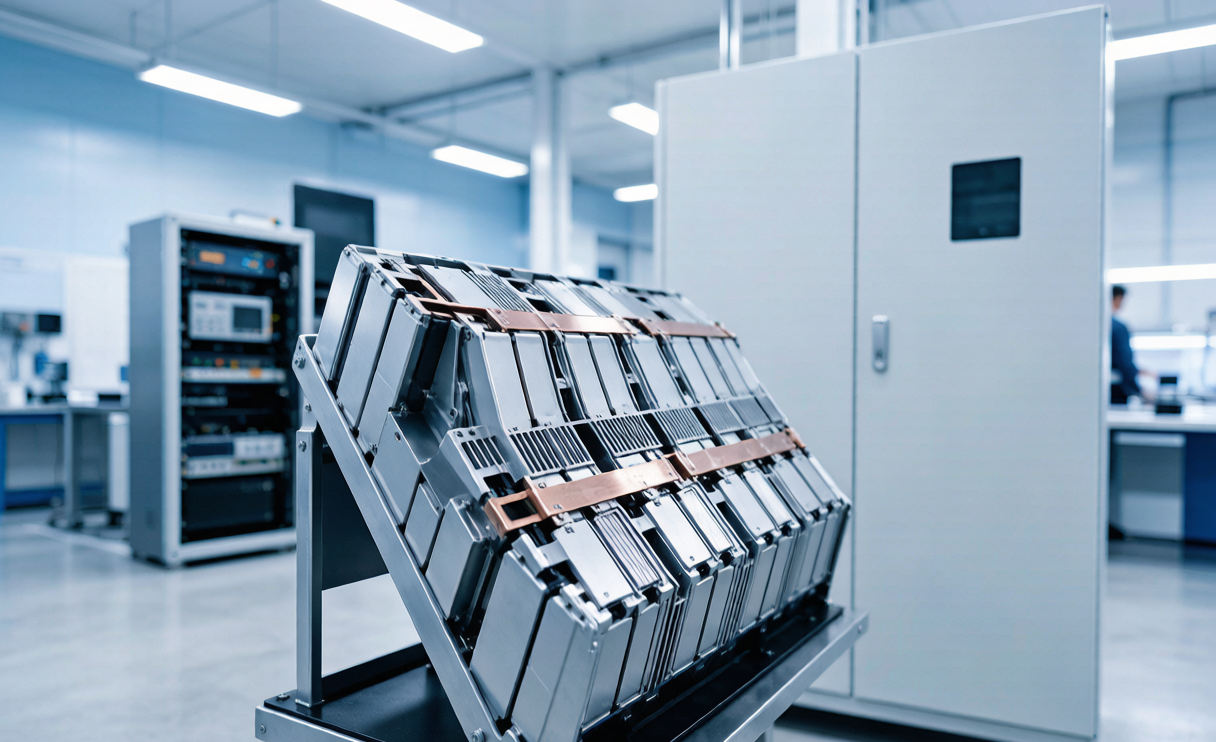
A sodium ion battery works on the same rocking-chair principle as lithium-ion: sodium ions shuttle between a cathode and an anode during charge and discharge. The difference is the carrier. Instead of lithium, we use sodium, the sixth most abundant element on Earth and effectively unlimited in supply. In a Na-ion cell, the anode is typically hard carbon, while the cathode is usually a layered oxide (O3 or P2 structure), a polyanion compound such as Na3V2(PO4)3, or a Prussian-blue analog.
From an engineering standpoint, the most important takeaway is that Na-ion does not require nickel, cobalt, or lithium carbonate. That single fact reshapes your supply-chain risk profile, which is why so many procurement teams now ask for a sodium ion battery buyer guide before they commit to a chemistry for a new product line.
Cathode Chemistries Compared
Not all sodium ion cells are equal, and the cathode choice drives nearly every performance trade-off. The three families I see in production are layered oxides, polyanions, and Prussian-blue analogs.
- Layered oxides (O3/P2): highest energy density, typically 120-160 Wh/kg at cell level, but more sensitive to moisture and air during manufacturing. Best when volume matters.
- Polyanions (e.g., Na3V2(PO4)3): lower energy density around 90-110 Wh/kg, but excellent thermal stability and long cycle life. Ideal for stationary storage where safety and longevity beat compactness.
- Prussian-blue analogs: open framework structures with fast ion transport and low cost, though they can carry higher residual water and lower first-cycle efficiency that must be engineered out.
When a customer asks me which to pick, I map the application first. A home energy storage bank that sits in a garage for ten years wants polyanion durability. A weight-limited mobility pack wants layered oxide density. Specifying the wrong cathode is the most common mistake I correct in a sodium ion battery buyer guide review.
Key Specifications Buyers Should Verify
When a vendor sends me a Na-ion datasheet, I check five numbers before anything else:
- Cell energy density: 100-160 Wh/kg for current production cells. Pack-level figures land around 70-130 Wh/kg, lower than LFP but sufficient for stationary and low-weight-mobility use.
- Nominal voltage: roughly 2.5-3.6 V per cell, averaging about 3.1 V. Your BMS and pack topology must be designed around this, not borrowed from an LFP layout.
- Cycle life: 2,000-4,000 cycles to 80% state of health under moderate conditions, which is competitive for storage applications.
- Operating temperature: this is where Na-ion shines, as I explain below.
- Self-discharge: typically below 5% per month at room temperature, acceptable for seasonal standby.
I always ask for third-party test reports, not just factory claims. A credible Na-ion supplier should provide UN38.3 and IEC 62133 documentation as a baseline, plus IEC 62619 for industrial and stationary deployments.
Low Temperature Performance: The Real Differentiator
In our cold-chamber tests, a well-built sodium ion battery retains roughly 80-90% of its room-temperature capacity at -20°C, and still delivers usable power near -40°C. By contrast, conventional lithium-ion packs often collapse to 50-60% capacity in the same conditions and may refuse to charge at all below 0°C without external heating.
This low temperature advantage comes from sodium’s weaker solvation energy, which lets ions move more freely in the electrolyte when it thickens with cold. For telecom backup in northern regions, forklifts in refrigerated warehouses, or drones operating in alpine survey work, that behavior removes an entire heating subsystem from the design. In my experience, eliminating the heater alone can recover 8-12% of system efficiency over a winter.
Safety and Certifications You Cannot Skip
Sodium does not form dendrites the way lithium does, and the chemistry is intrinsically more thermally stable. In abuse testing, Na-ion cells typically enter thermal runaway at higher temperatures than comparable lithium cells. That said, “safer” is not “unregulated.” Every pack I release must clear:
- UN38.3 for air and sea transport, including altitude simulation, thermal, vibration, shock, external short-circuit, impact, and overcharge tests.
- IEC 62133 for portable cell and pack safety, covering short circuit, overcharge, and forced discharge.
- IEC 62619 for industrial stationary cells, where we evaluate thermal runaway propagation between cells.
- Regional marks such as CE, FCC, and UL where the end market demands them.
My advice in any sodium ion battery buyer guide is simple: if a supplier cannot produce current UN38.3 and IEC 62133 reports, stop the conversation. The chemistry cannot compensate for a weak quality system.
Cost Reality in 2026
Buyers hear “sodium is cheap” and assume the pack will undercut lithium by half. The honest numbers are narrower. Raw cathode material cost is roughly 30-40% lower than LFP because there is no lithium carbonate or phosphate pressure, but cells, housing, BMS, and assembly dominate the bill. In 2026, a Na-ion pack typically lands 10-25% below an equivalent LFP pack at the system level, and the gap widens as volume scales.
Where Na-ion wins decisively is total cost of ownership in cold climates and long-dwell applications, because you avoid heaters, lose less capacity seasonally, and ride out supply shocks in lithium pricing. I have modeled programs where the sodium ion battery buyer guide logic flipped a project from marginal to clearly profitable purely on reduced thermal-management hardware.
Another cost angle buyers miss is the recycling stream. Sodium chemistries use abundant, non-critical materials, so end-of-life handling avoids the stringent cobalt and lithium recovery mandates that are tightening in the EU and North America. For a fleet operator planning thousands of packs, that regulatory relief is a real line item, not a footnote.
Where Na-ion Fits and Where It Does Not
After qualifying dozens of designs, here is the pattern I trust:
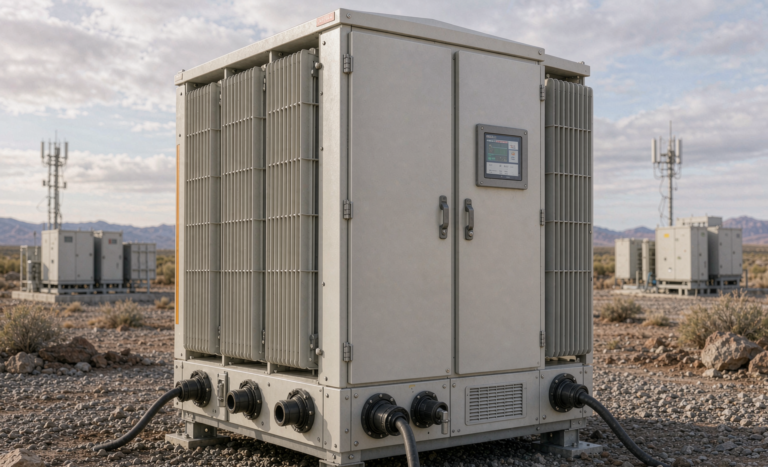
- Strong fit: home energy storage, telecom and grid backup, low-speed e-mobility, forklifts, and cold-region stationary storage where weight is not the constraint.
- Weak fit: long-endurance drones and aviation where every gram matters, and ultra-compact consumer electronics needing maximum energy density.
The Na-ion story is not “better than lithium everywhere.” It is “the right tool for weight-tolerant, safety-first, cost-sensitive, cold-capable systems.” A good sodium ion battery buyer guide sets that boundary clearly so you do not spec it into the wrong chassis.
One more nuance from the field: Na-ion self-discharge and calendar fade are gentle, which makes it attractive for infrequent-duty backup. A telecom site that draws the battery only during outages benefits more from Na-ion’s idle stability than from lithium’s higher peak energy. Match the duty cycle to the chemistry, and the business case clarifies quickly.
How to Qualify a Supplier
Before I sign off on a Na-ion vendor, my team runs a four-week qualification: sample teardown, full-cell cycling at 0°C and 25°C, thermal abuse screening, and a documentation audit for UN38.3 and IEC 62133. We also confirm the cathode chemistry (layered oxide versus polyanion) because it dictates cycle life and power. A supplier who understands their own Na-ion chemistry deeply is worth more than one offering the lowest quote.
Frequently Asked Questions
Is a sodium ion battery safe to ship internationally?
Yes, provided it passes UN38.3. Na-ion cells are classified under similar dangerous-goods rules as lithium batteries for transport. Your supplier must supply valid UN38.3 test summaries; without them, carriers will reject the shipment regardless of chemistry.
How does Na-ion compare to LFP on cycle life?
Current production Na-ion delivers 2,000-4,000 cycles to 80% SOH, which overlaps LFP’s 3,000-6,000 range. For most stationary storage warranties of 10 years, both chemistries are adequate, and Na-ion’s lower cost often tips the decision.
Can a sodium ion battery charge in freezing weather?
Generally yes, without the external heating that lithium requires. In our tests, Na-ion accepted charge near -20°C with only modest rate derating. This low temperature tolerance is one of its headline advantages and a recurring theme in any honest sodium ion battery buyer guide.
Will sodium replace lithium in drones soon?
Not for weight-critical long-endurance flight, where lithium and semi-solid state still win on energy density. But for ground support, short-hop inspection drones, and cold-weather rotorcraft, Na-ion is already a credible choice in 2026.
What certifications prove a Na-ion pack is legit?
At minimum, UN38.3 for transport and IEC 62133 for portable safety, with IEC 62619 for stationary industrial use. Reputable manufacturers also provide CE, FCC, or UL depending on the destination market. Always request the original test reports, not summaries.