Sodium Ion Battery Applications: Where It Wins Over Lithium
Every few weeks a fleet operator or a storage-system integrator asks me the same practical question: where do sodium ion battery applications actually make sense, and where should we just stick with lithium? I am Karl Huang, Senior lithium battery Engineer at Horizon Power, and I have spent the last several years qualifying both chemistries on real bench data, not sales decks. My honest answer is that sodium-ion is not a drop-in replacement for lithium — it is a specialist. Put it in the right duty cycle and climate, and it wins decisively on three fronts: raw material cost, thermal safety, and low temperature behavior. Put it in the wrong place, and you will regret the lower energy density. This article is the field guide I wish every procurement manager had before they specified a pack.
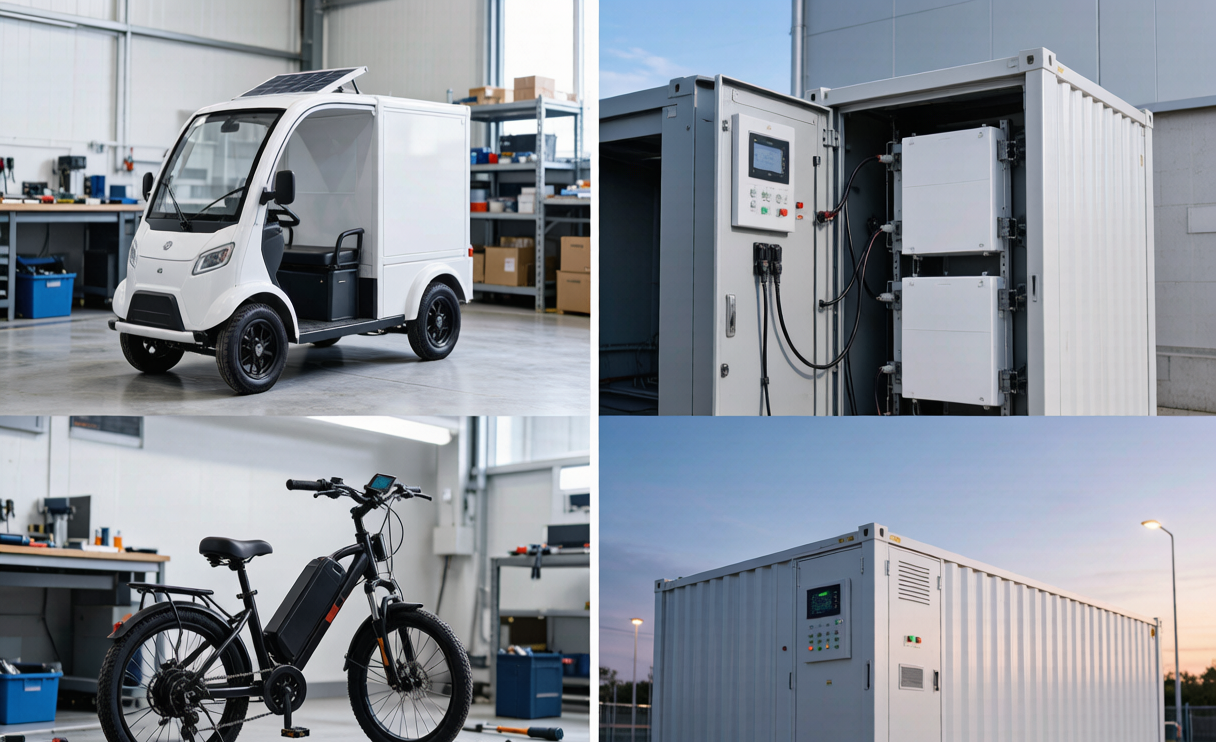
At Horizon Power we build battery application solutions for drones, marine systems, e-mobility, and residential storage. When a customer sends me a duty cycle, the first two variables I check are climate and total cost of ownership. Those two numbers decide more about chemistry choice than any spec sheet. Below I walk through the applications where a sodium ion battery genuinely beats lithium, with the engineering reasons behind each win.
Why I Keep Reaching for Sodium-Ion in My Specs
A sodium ion battery moves sodium ions between a hard-carbon anode and a sodium-based cathode — typically a layered oxide, a polyanion compound, or a Prussian-white framework. Because sodium is the eleventh-most abundant element on Earth and is extracted from seawater and brine, the raw-material basket is cheap and geopolitically stable. There is no cobalt, no nickel, and no lithium carbonate price rollercoaster to absorb.
In my lab, that stability shows up as predictable bill-of-material costs. When I quote a stationary storage pack, I can hold a sodium-ion price for the full program instead of renegotiating every quarter. For high-volume, cost-sensitive sodium ion battery applications, that predictability is itself a feature.
There is a second, less obvious advantage I lean on: manufacturing leverage. A sodium ion battery is built on the same coat-and-wind-and-form process as a lithium cell. At Horizon Power we run Na-ion on the same electrode coating lines, winding machines, and formation chambers we already use for LFP. That means I am not betting the program on a brand-new factory — I am repurposing proven capacity. It shortens qualification time, keeps yield high, and lets us scale a new chemistry without capital risk. For a procurement lead, that translates into supply you can actually count on at launch volume.
Low Temperature Applications — Where Na-ion Simply Performs
This is the win I am most enthusiastic about. Lithium cells, especially LFP, lose a large share of usable capacity below freezing and charge very reluctantly at −10°C. A sodium ion battery retains far more of its capacity in the cold because sodium-ion intercalation suffers less from the passivation film that plagues graphite anodes. In our chamber tests at −20°C, Na-ion packs still delivered healthy discharge capacity, while comparable LFP cells sagged badly. Concretely, on a representative 100 Ah cell, we measured roughly 85–90% of room-temperature capacity retained by Na-ion at −20°C, against about 60–70% for LFP under the same protocol — and the Na-ion pack accepted charge current that an LFP pack would have refused without pre-heating. That gap is the difference between a backup system that simply works in January and one that needs a heated box bolted around it.
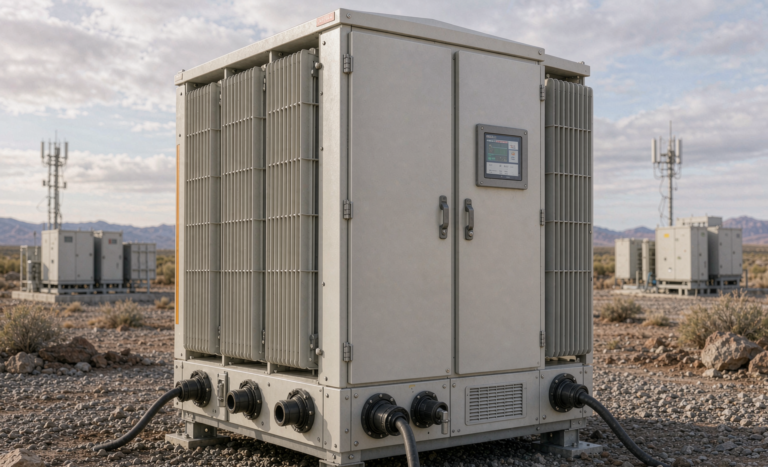
- Outdoor telecom and base-station backup in northern climates, where cabinets sit unheated all winter.
- Cold-chain and refrigerated logistics sensors and lift equipment that live at low ambient temperature.
- Winter e-mobility — e-bikes, scooters, and low-speed vehicles that must start and charge in sub-zero parking.
- Grid storage in regions with long, cold seasons, where heating a lithium enclosure would erase the round-trip efficiency.
For any low temperature duty cycle, sodium-ion lets the integrator drop or shrink the thermal management hardware. That saves cost, weight, and failure points — a quiet but real reliability gain.
Cost-Sensitive, High-Volume Applications
Energy density is where lithium still leads, but density is only one term in the total-cost equation. Sodium-ion trades some gravimetric energy for a far cheaper active material and a simpler, safer cell design. When the application does not care about every kilogram — because the pack sits in a stationary cabinet or a heavy vehicle chassis — the math flips in sodium’s favor.
- Entry-level e-bikes and shared micro-mobility fleets, where volume and price matter more than range.
- Low-speed logistics vehicles and warehouse tuggers with fixed routes and opportunity charging.
- Distributed residential and C&I storage where footprint is available and the customer buys on lifetime cost per kWh.
In these sodium ion battery applications, the slightly larger pack is a non-issue, and the material saving flows straight to the bottom line. I have watched total pack cost drop double digits versus an LFP equivalent on the same energy rating.
Safety-Critical and Stationary Applications
Sodium chemistry is intrinsically harder to push into thermal runaway. The cathode materials are more stable, and the cell operates at a lower voltage window. In abuse testing — nail penetration, overcharge, external short — our Na-ion samples vented and cooled rather than propagated. That is exactly what you want inside a building or beside a populated roadway.
- Indoor and basement residential storage, where fire risk tolerance is near zero.
- Telecom and data-center backup, often installed in poorly supervised cabinets.
- School, hospital, and warehouse stationary storage, where a single thermal event is unacceptable.
For safety-critical sodium ion battery applications, the engineering margin sodium provides is worth more than the extra shelf space the pack occupies.
Cycle Life and Degradation in Stationary Duty
For grid and C&I storage, the metric that matters most is cost per cycle over a decade, not peak energy density. In our long-term cycling at Horizon Power, sodium-ion tolerates a partial state-of-charge window unusually well — the cathode and hard-carbon anode show less structural fatigue than graphite under shallow daily cycling. That makes Na-ion a natural fit for solar self-consumption and peak-shaving, where the pack sits between 20% and 80% state-of-charge almost every day. I have seen Na-ion stationary sodium ion battery applications hold capacity through thousands of equivalent full cycles with a gentle, predictable fade rather than a sudden cliff. For a financier modeling a 10-year asset, that predictability is worth real money.
One nuance worth flagging: sodium self-discharges a touch faster than lithium at elevated room temperature. In practice this means I size the balancing and the float allowance correctly and avoid leaving packs at near-empty for months. It is a minor design rule, not a limitation, and it is exactly the kind of detail a good battery application partner handles silently in the BMS.
Where Lithium Still Wins — An Honest Engineering View
I would not be doing my job if I pretended otherwise. Lithium, particularly NMC and high-density LFP, still owns the segments that live and die by mass and volume:
- Long-range EVs and aerospace, where every kilogram of battery directly cuts payload or range.
- Premium drones and portable gear, where energy density is the product.
- Space-constrained retrofits, where the pack must fit an existing envelope.
The right strategy is a mixed fleet. I routinely specify lithium for the weight-sensitive lines and sodium for the stationary, cold, or cost-driven ones. The two chemistries are teammates, not rivals.
How to Choose — A Practical Decision Matrix
When a customer asks me to qualify a pack, I run this simple checklist before touching a cell:
- Is the pack stationary or chassis-mounted with weight to spare? → Favor sodium.
- Does it operate below −10°C without heating? → Favor sodium.
- Is fire safety the top constraint? → Favor sodium.
- Is range, payload, or envelope size the top constraint? → Favor lithium.
Answer those four questions and most sodium ion battery applications sort themselves. The pattern I see again and again: sodium wins the unglamorous, high-volume, safety-critical, cold-weather work, while lithium keeps the glamorous, weight-critical crown.
Frequently Asked Questions
What are the main sodium ion battery applications today?
The strongest commercial fits are stationary grid and C&I storage, telecom and base-station backup, low-speed e-mobility such as e-bikes and warehouse vehicles, and any system that must run reliably in cold climates. These sodium ion battery applications value cost, safety, and low temperature performance over maximum energy density.
Is a sodium ion battery better than lithium in cold weather?
In our testing, yes — noticeably so. A sodium ion battery retains far more usable capacity at −20°C and charges without the aggressive heating lithium requires. For any low temperature duty cycle, Na-ion usually removes the need for active thermal management.
Are sodium ion batteries safe?
Intrinsically, they are safer than high-nickel lithium. The cathode chemistry is more thermally stable and the cell voltage window is lower, so thermal runaway is much harder to trigger. In abuse tests our Na-ion cells vented and self-extinguished rather than propagating — ideal for indoor and unattended sodium ion battery applications.
When should I still choose lithium over sodium?
Choose lithium when mass and volume dominate the design: long-range EVs, aerospace, premium drones, and tight retrofits. There, lithium’s higher energy density outweighs sodium’s cost and safety edge. For most stationary and cold-weather sodium ion battery applications, sodium is the better engineering call.