Drone Battery Parallel vs Series Configurations Explained
Every week at Horizon Power I review at least a handful of drone pack drawings from customers, and the same misunderstanding shows up again and again: people treat “how many cells” as a single number, when in reality the drone battery parallel series configuration is the single most important design decision you make before a pack is ever built. Get it wrong and you either starve your motors of voltage or cook your cells with current they were never rated for. Get it right and the same cells quietly deliver 30–40% more usable flight time. In this field guide I’ll walk through series, parallel, and the combined layouts the way my team actually specifies them on the bench — with the math, the failure modes, and the certification constraints that shape real drone lithium battery programs.
Why Cell Arrangement Is the First Decision You Make
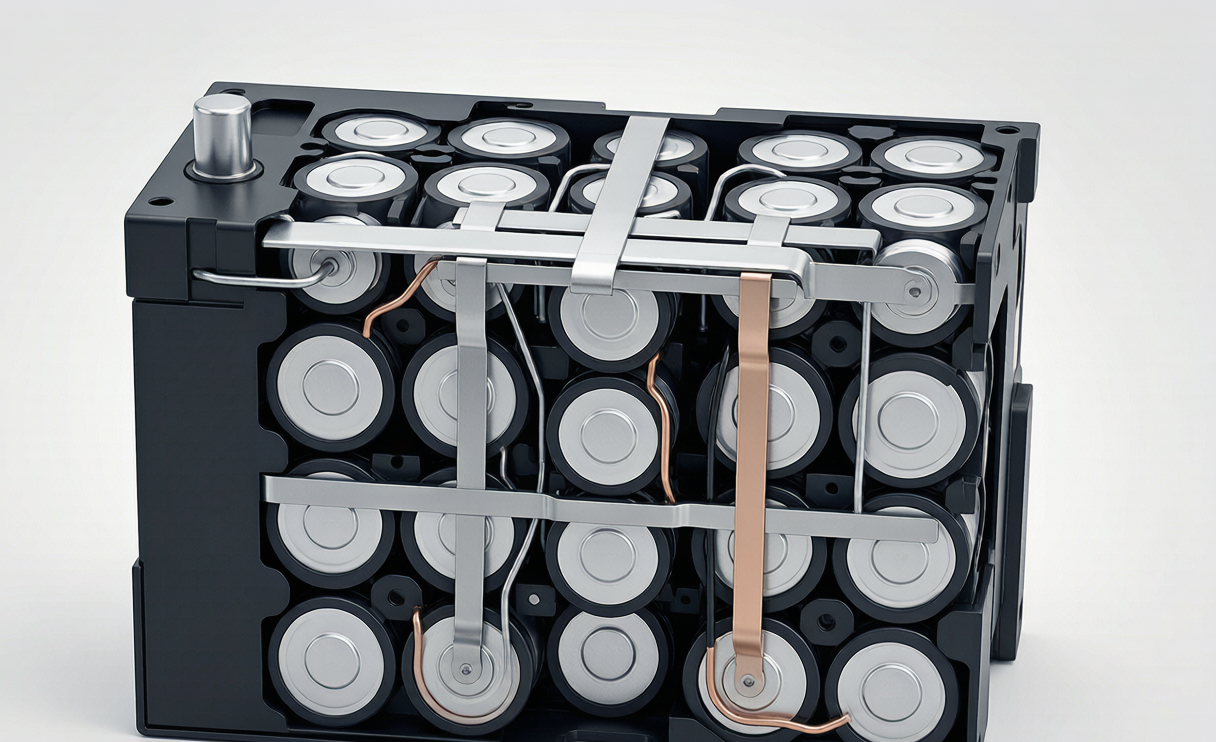
Before we talk chemistry, capacity, or BMS firmware, we talk topology. A lithium battery pack is never one big cell — it is many small cells wired into a network. The two fundamental ways to wire them are:
- Series (S): cells connected end-to-end so their voltages add. Capacity stays equal to a single cell.
- Parallel (P): cells connected positive-to-positive and negative-to-negative so their capacities add. Voltage stays equal to a single cell.
Every commercial drone pack is described with an “S×P” label. A 4S1P is four cells in series. A 6S2P is six series groups, each made of two cells in parallel — twelve cells total. When an engineer says “we need to re-architect the drone battery parallel series configuration,” they mean changing how those cells are grouped, not swapping the chemistry. That distinction matters because it changes voltage, current, weight, and certification class all at once.
Series Configuration — Voltage Stacking and What It Does to Your Motors
In a series string, the pack voltage is simply the number of cells in series multiplied by the cell’s nominal voltage. A standard Li-ion 18650 runs at 3.6 V nominal (4.2 V fully charged). So:
- 4S = 14.8 V nominal (16.8 V full)
- 6S = 21.6 V nominal (25.2 V full)
- 12S = 43.2 V nominal (50.4 V full)
Why does this matter to the airframe? Brushless motors are governed by KV (rpm per volt). For a fixed power demand, raising pack voltage lets you draw less current. Power P = V × I, so at constant power, current is inversely proportional to voltage. I see this on the bench constantly: a 1000 W load on a 6S pack pulls roughly 46 A, while the same 1000 W on a 4S pack pulls about 68 A. That 22 A difference is not trivial — it shows up as thicker wiring, hotter connectors, and noticeably more I²R loss in the harness.
From an engineering standpoint, series wiring is mechanically simple: every cell in the string carries the full pack current, and you only need one robust path. The catch is balancing. Because series cells cannot equalize on their own, each series junction needs a balance tap and the pack must pass tight voltage-matching before assembly. We qualify every cell to IEC 62133 and every finished pack to UN38.3 for transport — series strings with one weak cell will drag the whole pack’s usable capacity down to the worst cell’s level.
Parallel Configuration — Capacity, Current Sharing and Redundancy
Parallel groups behave almost opposite to series. Voltages stay equal; capacities add. Two 3000 mAh cells in parallel behave like a single 6000 mAh cell at the same voltage. The real gift of parallel is current sharing: a 2P group splits the discharge current across both cells, so each runs at half the C-rate.
Lower C-rate means lower internal heating, and lower heating means measurably longer cycle life. On a recent heavy-lift program we moved a 6S1P design to 6S2P; per-cell discharge dropped from 15C to about 7.5C, pack surface temperature fell 9 °C in a hover test, and our accelerated cycle test improved from ~320 cycles to ~480 before hitting 80% capacity. That is the kind of win that pays for the extra cells.
Parallel also adds a degree of redundancy. If one cell in a parallel group is slightly weaker, the stronger cell carries more — the pack keeps flying instead of dropping a whole series step. But parallel is not free of risk. If you join cells with mismatched voltage or internal resistance, you get circulating current as the stronger cell tries to charge the weaker one. My rule on the line: match cells to within 10 mV open-circuit and within 3 mΩ AC internal resistance before they are ever welded into a parallel group. A good custom battery solution provider will do this matching for you as part of incoming inspection.
Reading a “6S2P” Label Like an Engineer
Once you understand S and P separately, the combined notation is just multiplication. Take a 3.6 V, 3000 mAh 18650 cell in a 6S2P layout:
- Voltage: 6 × 3.6 V = 21.6 V nominal
- Capacity: 2 × 3000 mAh = 6000 mAh (6.0 Ah)
- Energy: 21.6 V × 6.0 Ah = 129.6 Wh
That 129.6 Wh number is the one your logistics team cares about most. Under IATA and FAA/EASA rules, loose or installed drone lithium battery units between 100 Wh and 160 Wh require operator approval and are capped at two spares per passenger; anything above 160 Wh is generally not allowed in cabin baggage at all. We frequently design modular packs as separate ≤100 Wh bricks precisely so they ship as “non-restricted” cargo under UN38.3 Section 38.3. That packaging decision is driven entirely by the parallel/series split, not by chemistry.
For mission sizing, work backwards from energy. If a mapping drone needs 90 Wh per flight and you want 20% margin, target 108 Wh. Pick your cell and then solve for S and P. A 6S2P of 3000 mAh cells gives 129.6 Wh — comfortable. A 4S2P gives only 86.4 Wh — short. The drone battery parallel series configuration is how you hit the target without oversizing weight.
How Configuration Changes Your BMS and Wiring
The BMS sees the world through balance taps, and topology decides how many it needs. A pure series stack of N cells needs N−1 sense taps along the string; every series junction must be monitored so the protector can bleed the highest cell during charge. Parallel groups, by contrast, self-balance — cells in the same P-group sit at the same potential, so you need only one tap per group. A 6S2P needs 5 sense lines; a 12S1P needs 11.
Current paths also differ. The series stack carries the full pack current through every weld, so busbars and nickel strips must be rated for peak amps with margin. Parallel busbars split current, so each strap sees less — but the strap connecting the two parallel cells must handle the worst-case imbalance inrush. We size these with a 2× safety factor over the measured peak and verify with a thermal cam during the first hover test. Connector choice follows the same logic: an XT60 is fine to ~60 A continuous, an EC5 or AS150 steps up from there, and the rating you need is set by pack current, which is set by your series count at a given power.
Choosing the Right Layout for Your Mission
There is no universal “best” drone battery parallel series configuration — only the best one for the flight profile. A few patterns I recommend:
- Long-endurance mapping or surveying: bias toward parallel (more P). You trade a little weight for lower C-rate, cooler cells, and the cycle-life gain above.
- High-thrust cinematic or heavy-lift: bias toward series (more S). Voltage headroom keeps current manageable through aggressive throttle and protects your connectors.
- Acrobatic / racing: high S with moderate P, because you need voltage for KV headroom and burst current more than raw mAh.
- Cold-weather operations: slightly more P helps, because lithium cells lose capacity at low temperature and the parallel buffer keeps per-cell load gentle.
When two requirements fight each other — say, both long endurance and high thrust — that is the moment to stop guessing and bring in engineering support. A competent custom battery solution partner will model the discharge curve against your actual motor/prop combo, run the thermal case, and hand you a validated S×P that hits the weight budget. We do exactly this during EVT, and it is cheaper to fix on paper than after the first pack swells.
Field Lessons From a Bench That Has Seen It All
Two mistakes dominate the support tickets I answer. First, builders add parallel cells expecting “free capacity” but forget to re-match them, and a 20 mV mismatch quietly drains one cell into another on every charge. Second, they raise series count for more power but keep the same 60 A connector, and the XT60 melts mid-season. Both are topology errors, not chemistry errors. The fix in both cases is disciplined incoming inspection and a BMS sized to the real peak, not the brochure peak.
My standing advice to any team specifying a new airframe: lock the S×P before you lock anything else. Voltage drives your ESC and motor selection; parallel count drives your weight and endurance; together they define the certification class and the shipping path. Nail the drone battery parallel series configuration early and everything downstream — BMS, enclosure, thermal, logistics — becomes a solved problem instead of a fire drill.
What does 6S2P mean on a drone lithium battery?
It means six cells wired in series (to set voltage) with each series position made of two cells in parallel (to add capacity). Six series steps give roughly 21.6 V nominal from Li-ion cells; the 2P doubles capacity and splits current. Twelve cells total. The label tells you voltage, capacity, and current-sharing behavior at a glance.
Is series or parallel better for flight time?
Neither is “better” by itself — they solve different problems. Series sets voltage and keeps current low for a given power; parallel adds capacity and lowers per-cell stress. Flight time comes from total pack energy (V × Ah) and how gently you discharge. A well-balanced parallel layout usually wins on endurance because lower C-rate preserves usable capacity and cycle life.
Can I mix different capacity cells in parallel?
Not safely. Mixing capacities or internal resistances in a parallel group causes circulating current as the stronger cell props up the weaker one, generating heat and accelerating wear. Always match cells by capacity, IR, and voltage (within ~10 mV) before welding them into a parallel group.
How many cells can I safely put in series?
Electrically, quite a lot — 12S (about 50 V) is common on larger industrial drones. The real limit is your BMS balance range, your insulation strategy, and certification. Higher series counts need more sense taps, better isolation, and careful handling because string voltage climbs into hazardous ranges.
Does a parallel configuration need cell balancing?
Within a parallel group, cells self-balance because they share terminals at the same potential, so you need only one tap per group. But separate parallel groups in a series stack still need balancing across the series steps, exactly like any series pack. Parallel reduces tap count; it does not eliminate balancing.
How do I keep a drone battery within airline and shipping rules?
Design packs at or below 100 Wh wherever possible so they ship as standard UN38.3 cargo without operator approval. Between 100–160 Wh you need approval and a two-spare cap; above 160 Wh is generally barred from cabin baggage. Splitting a large requirement into multiple ≤100 Wh modules is the cleanest way to stay compliant.