Lightweight Drone Battery Design
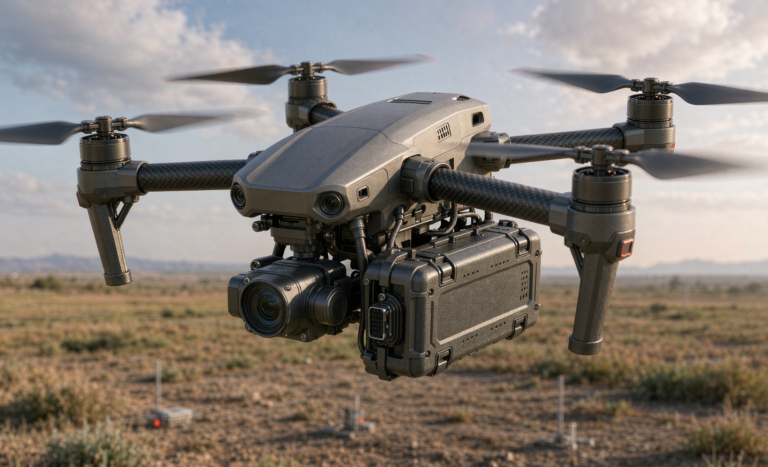
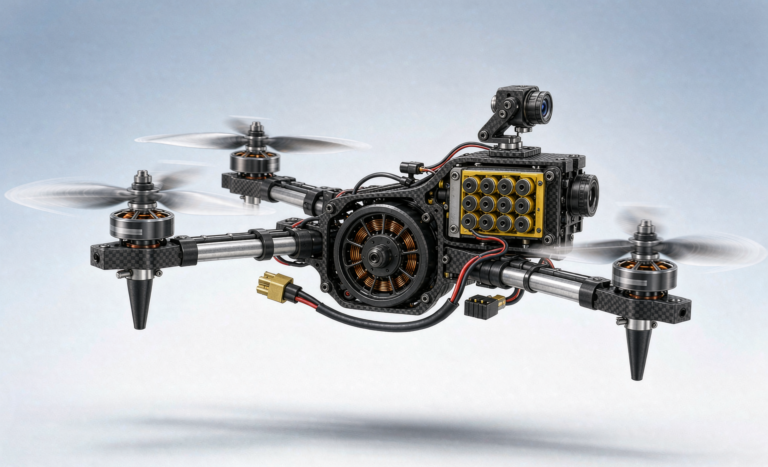
When a customer sends me a new airframe and asks, “How do we make it fly longer?” the honest answer is almost never “add more battery.” It is “remove mass everywhere else, then design the drone battery so it carries its own weight as structure.” I am Karl Huang, a senior lithium battery engineer, and over the past decade I have watched lightweight design move from a nice-to-have spec to the single biggest lever in commercial UAV performance. This article walks through how we actually cut grams from a drone lithium battery without quietly sacrificing the power, safety, or cycle life that the mission depends on.
Why Mass Is the First Constraint, Not Range
In fixed-payload missions the battery is typically 30 to 45 percent of maximum take-off weight (MTOW). Every gram removed from the pack directly raises usable payload or, at equal payload, extends endurance. I explain to clients that a 10 percent lighter lithium battery pack at the same specific energy is worth more than a 10 percent chemistry gain, because it also reduces the lift the rotors must produce and therefore the energy they consume. Mass compounds: lighter pack, lower induced drag, smaller motors, even lighter airframe.
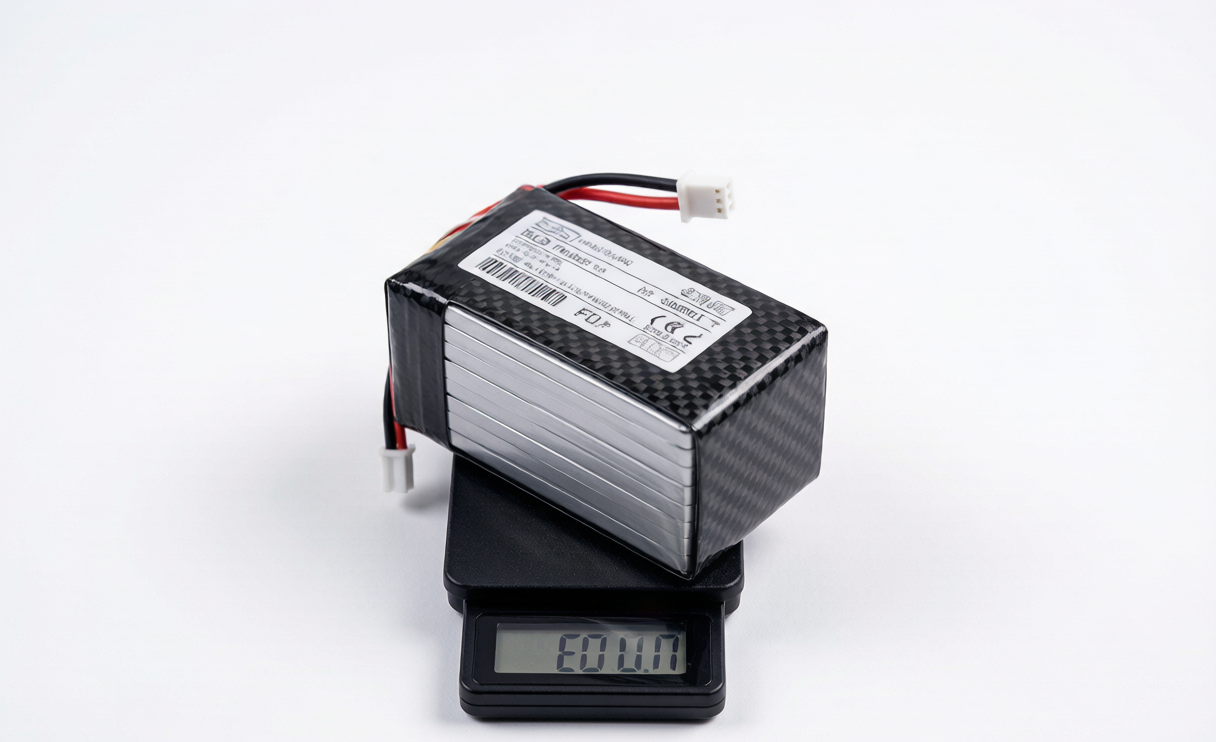
The trap is that “lightweight” is often sold as a single number, grams per cell, while the real system weight includes casing, balance wiring, connectors, and the BMS. A custom battery solution that trims the cell but ignores the envelope usually fails to deliver the promised flight benefit. To make this concrete: on a 6 kg mapping quadcopter we recently reduced the pack from 1.9 kg to 1.6 kg by switching to a structural carbon shell and NMC 811 cells. The saved 300 g let the customer add a heavier survey payload and still gain four minutes of endurance. The pack held 158 Wh, identical energy, 16 percent less mass.
Cell Chemistry: Where the Grams Are Actually Won
Specific energy is the starting point. In our drone programs we most often choose high-nickel NMC (NMC 811) pouch cells rated around 250 to 280 Wh/kg, against roughly 160 to 180 Wh/kg for LFP and about 200 Wh/kg for LCO. That 80 Wh/kg gap is the difference between a 22-minute and a 30-minute mission on the same airframe.
But chemistry choice is never free. Higher nickel content means tighter thermal windows and a higher self-heat rate under burst discharge. For a drone lithium battery in a tropical survey campaign, I will sometimes accept 20 Wh/kg less to gain the thermal headroom LFP provides, because a pack that derates at 35 C is lighter only on the spec sheet. We validate every chemistry against the actual mission thermal profile, not a laboratory 25 C number. We also watch volumetric density, not just gravimetric. A cell with 270 Wh/kg but poor Wh/L can force a fatter pack that hurts aerodynamics more than the gram saving helps. For slim airframes we sometimes pick a slightly lower Wh/kg cell that fits a thinner profile, because drag, not mass, is the binding constraint there.
Structural Integration: Making the Pack Carry Load
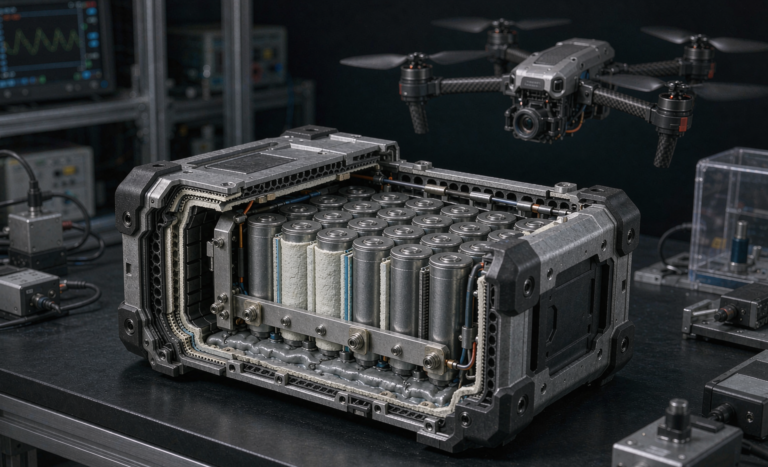
The biggest mass savings I have shipped came not from the cell but from the enclosure. Traditional packs sit inside a separate battery bay; the bay, the pack walls, and the mounting hardware are all dead weight. Structural battery design, bonding cells directly into a carbon-fiber monocoque, using cell-to-pack (CTP) layout, and letting the pack become a load path of the airframe, can remove 8 to 15 percent of pack mass.
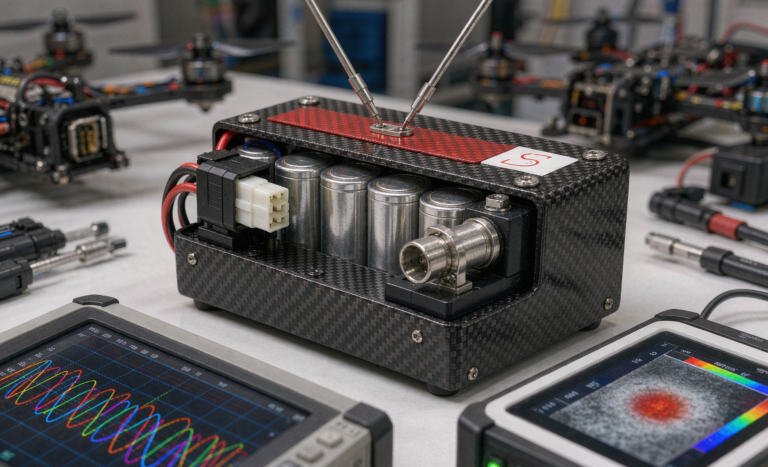
We use thin carbon-fiber-reinforced shells (0.6 to 0.8 mm) with localized Nomex or aramid reinforcement at screw points. Potting is minimal and only where it earns its grams by replacing metal brackets. The result is a drone battery that is part of the aircraft rather than cargo inside it. The trade-off is repairability: a structural pack is harder to field-swap, so we reserve this approach for fleet operators with managed maintenance, not hobbyist users. One subtlety operators miss: a structural pack changes the aircraft’s center of gravity. Because the battery now sits flush in the frame, we re-run the CG envelope with the airframe team before sign-off. The mass win is real, but only if the airframe still flies within its certified envelope.
Thermal and Safety Margins Under Weight Cuts
Cutting mass almost always reduces thermal mass, and less thermal mass means faster temperature rise during a hard climb or a crash. This is where lightweight design meets certification. Every pack we release passes UN 38.3 (the UN Manual of Tests and Criteria, T.1 to T.8: altitude, thermal, vibration, shock, external short circuit, impact, overcharge, and forced discharge) and meets IEC 62133 for portable sealed secondary cells and batteries. For commercial flight we prepare documentation against FAA Part 107 operations in the U.S. and EASA U-space rules in Europe, and we ship under IATA Dangerous Goods provisions for lithium batteries.
In practice this means the lightweight pack still carries crush-resistant end caps, a vent path, and a BMS that opens the contactor on over-temperature, features that add a few grams but keep the pack legal and insurable. I tell clients: the certification grams are non-negotiable; the vanity grams are what we attack. I also budget a thermal margin of at least 15 C below the cell’s rated limit at end of life, because internal resistance rises as the pack ages and a three-year-old pack runs hotter than a fresh one. Lightweight packs have less thermal inertia, so this aging margin matters more, not less.
Sizing the Pack to the Real Mission, Not the Brochure
A common error is sizing the lithium battery to peak current rather than to the weighted mission profile. In my experience 70 percent of “underperformance” complaints trace back to a pack specified for max thrust but flown at 35 to 45 percent throttle, where cell internal resistance and balance losses dominate. We build the duty cycle from telemetry, then size for the 5th to 10th percentile worst case, not the average.
For a mapping drone, for example, the pack may sit at 0.5C cruise and spike to 8C only during a wind gust or a VTOL transition. A custom battery solution lets us place high-rate cells only where the burst lives and use higher-energy cells elsewhere, a hybrid layout that beats a single chemistry on both mass and cost. This is design work a catalog pack cannot do. We present clients a simple mass-versus-endurance curve: at constant energy, every 100 g removed buys roughly 1 to 2 percent endurance on a mid-size quadcopter, but the curve flattens as you approach the airframe’s lift ceiling. Knowing where the curve flattens tells us when further weight cutting is no longer worth the safety trade.
How We Validate Before a Lightweight Pack Flies
Before any lightweight drone lithium battery goes into a customer fleet, it runs our internal qualification: 200-cycle capacity retention at the mission C-rate, drop testing from 1.5 m onto concrete with the casing intact, and a thermal-runaway propagation test between adjacent cells. We also confirm the pack survives the vibration spectrum of the target airframe, because a shell that saves 20 g but cracks at 30 Hz is a net loss.
Only after the envelope is proven do we lock the bill of materials. The lightest pack is the one whose every gram is justified by data, not by a marketing target. Finally, we document the mass breakdown, cell, structure, BMS, connectors, so the client can see exactly where every gram went. Transparency here builds the trust that lets a fleet manager accept a pack that looks thinner than the one it replaces.
Frequently Asked Questions
How much weight can realistically be cut from a typical drone battery?
In a conventional pack we typically remove 10 to 20 percent of system mass versus an off-shelf equivalent through enclosure redesign and CTP layout, and a further 5 to 10 percent through chemistry selection. Beyond that you start trading safety margin or cycle life, which I do not recommend for commercial operations.
Does a lighter drone battery reduce flight time?
It can increase endurance at equal energy because the aircraft lifts less, but only if the energy (Wh) stays the same. A lighter pack with less capacity will fly shorter. The goal of lightweight design is to keep watt-hours constant while dropping grams, then reinvest the saved mass into payload or margin.
Which certification does a drone lithium battery need for commercial flight?
At minimum UN 38.3 for transport and IEC 62133 for cell safety. For the aircraft itself, operators comply with FAA Part 107 (U.S.) or EASA U-space (EU), and batteries are shipped under IATA Dangerous Goods rules. We supply the test summaries and documentation needed to clear these.
Can the same lightweight pack fit different drone models?
Sometimes, if the voltage, discharge, and mounting envelope match. But structural packs are airframe-specific by design. Where flexibility matters, a custom battery solution with a standardized cell module and model-specific casing is the better route.
How do you keep a lightweight pack safe in a crash?
We keep crush-resistant end caps, a defined vent path, and a BMS that disconnects on over-temperature or over-voltage even in a lightweight shell. Certification testing under UN 38.3 and IEC 62133 is what proves these protections hold, so we never strip them to save grams.
When should I ask for a custom battery solution instead of an off-shelf pack?
When your airframe is mass-constrained, your duty cycle is unusual (long cruise, rare burst), or you need certification support. A custom battery solution pays for itself when grams translate directly into flight time, payload, or a regulatory approval you cannot get off the shelf.