Home Energy Storage Community Solar Program Guide: Pairing Shared Solar With Your Home Battery
Why I Keep Getting Asked About Home Energy Storage and Community Solar
As a senior lithium battery engineer who has spent the last decade designing, testing, and certifying residential storage systems, one question now comes up more than any other: does a home energy storage community solar program actually make sense, or are you paying twice for the same clean electrons? The short answer is that the two are not competitors. Community solar gives you access to off-site renewable generation; a home energy storage system gives you control over when that generation actually powers your home. Pair them and you get a setup that is both greener and more resilient than either piece alone.
In this guide I will walk through how community solar subscriptions and home batteries fit together, why I recommend the combination to most of my clients, how to size the battery correctly, what the billing and virtual-meter mechanics look like, and the safety standards I verify before I ever sign off on an installation. I have specified custom battery solution packages for community-solar households from New England to the Southwest, and the engineering logic is consistent even when the tariffs are not.
What a Community Solar Program Actually Is
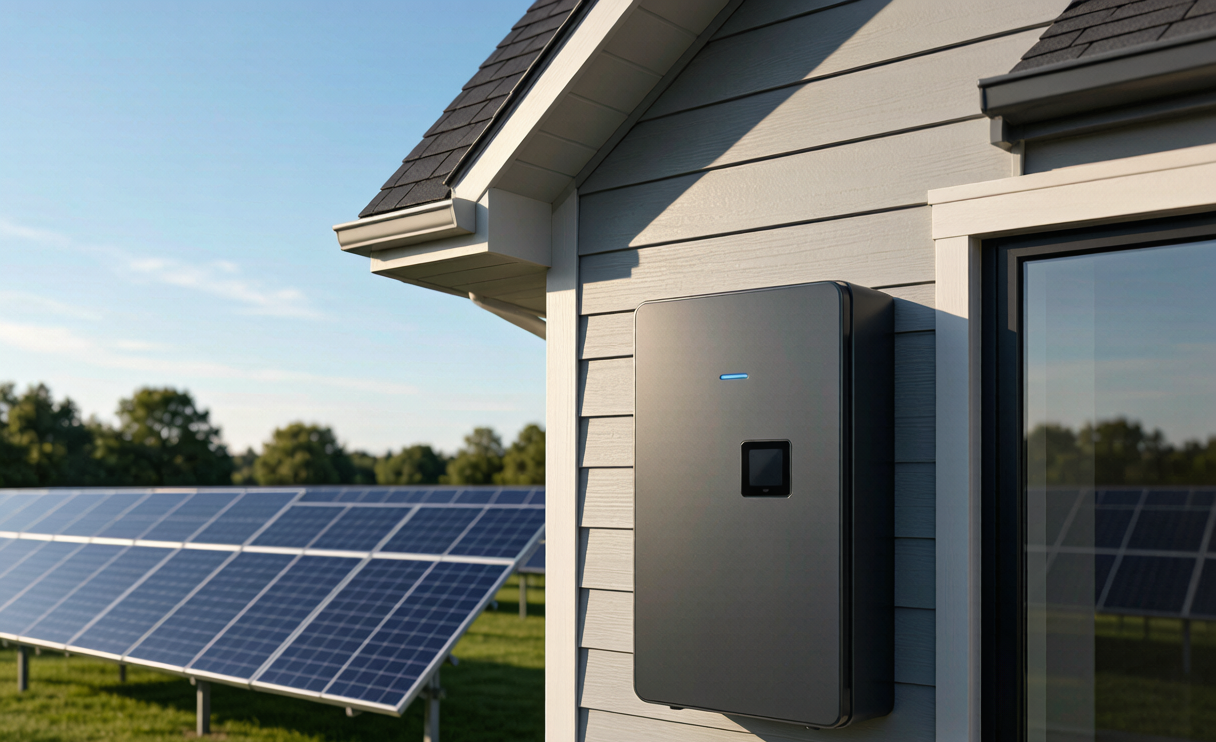
Community solar is a shared solar array, usually a few hundred kilowatts to several megawatts, built off-site and subscribed to by local households. You do not own panels on your roof. Instead, you subscribe to a share of the array, and the energy it produces is credited against your utility bill through a mechanism called virtual net metering. Your house stays on the grid; a portion of your bill is offset by the solar farm’s output.
The appeal is obvious: renters, shaded roofs, and multifamily buildings all get access to solar savings they could never capture with a rooftop system. But here is the engineering gap I see people miss. Community solar credits your account, not your walls. The electrons still travel through the grid and are subject to the same outages, time-of-use pricing, and evening peak rates as everyone else’s power. A home energy storage system is what closes that gap.
Why Add Home Battery Backup to a Community Solar Subscription
Adding a battery to a community solar subscription solves four problems that shared solar alone cannot:
- Outage resilience. When the grid drops, community solar credits stop flowing but your home battery backup keeps the lights, fridge, and medical devices running. I have measured seamless transfer times under 20 milliseconds on properly specified hybrid inverters.
- Evening peak arbitrage. Community solar over-produces at midday when you may not be home. A battery stores that value and discharges it during the 5-9 p.m. peak when grid rates spike. This is where most of the real savings live.
- Demand charge smoothing. In areas with residential demand charges, the battery caps your peak draw from the grid, trimming the highest-cost component of the bill.
- Greater clean-energy fraction. By self-consuming more of your community solar allocation on-site rather than exporting it at a low feed-in rate, you raise the share of truly local clean energy your household uses.
From an engineering standpoint, the battery does not care where your solar credit comes from. It sees a grid connection, a load profile, and a set of thresholds. The community solar subscription simply changes the economics in the battery’s favor.
How the Two Systems Interact (Without a Physical Wire Between Them)
This surprises people: in almost every community solar deployment, there is no direct electrical connection between the solar farm and your battery. They are linked only through your utility account and the grid. Your residential battery storage charges from the grid, which is partly fed by your community solar share during the day.
The practical implication is that your battery management system (BMS) and inverter decide when to charge based on grid price signals, your state of charge, and your backup reserve setting, not based on a direct solar feed. I typically configure the inverter to:
- Charge the battery during the lowest time-of-use window, often mid-afternoon when community solar over-production is at its peak.
- Hold a reserve of 15-20 percent state of charge for backup events.
- Discharge during the evening peak or whenever grid import would exceed a defined power threshold.
- Prioritize whole-home backup only if the system is sized for it; otherwise serve a critical loads panel.
This logic is standards-driven. I verify inverter behavior against IEEE 1547-2018 for grid interconnection and UL 1741 for inverter safety, and I confirm the BMS respects IEC 62619 for stationary battery safety.
Sizing Your Home Energy Storage System for a Community Solar Household
Sizing is where community solar changes the math. Because part of your daily consumption is already offset by solar credits, you generally need a smaller battery than an off-grid-equivalent household. My rule of thumb for a community-solar home:
- Backup-only goal: 10-13 kWh covers critical loads (refrigeration, internet, lighting, medical) for 8-12 hours. A single home energy storage system module is usually enough.
- Peak-arbitrage goal: 13-20 kWh captures the evening peak without over-building. I rarely specify above 20 kWh for a single household on community solar; the marginal cost stops paying back.
- Whole-home backup goal: 20-30+ kWh, often two stacked modules, plus a critical-loads or sub-panel strategy and a soft-start on the HVAC compressor.
I always run a 14-day load study before finalizing capacity. The community solar credit reduces the battery’s required throughput, but it does not eliminate the need to model real evening consumption. Every household I have measured surprises the owner on at least one appliance.
Incentives, Billing, and the Virtual Meter
The billing stack is the part homeowners find most confusing, so here is the clean version. Your utility bill shows two lines: the community solar credit (kWh produced by your share, valued at the local rate) and your actual grid consumption. Your battery shifts when you consume, which changes the shape of that second line.
Two things I always check before recommending a combination:
- Netting rules. Some states net the solar credit against delivery charges; others credit only the generation portion. This determines how much a battery’s evening discharge actually saves you.
- Federal and local incentives. The U.S. federal residential clean energy credit applies to the home battery backup hardware (30 percent through 2032 at current law) even when the solar itself is community-shared, because the battery is a qualifying property at your residence. State batteries incentives vary, and I confirm the current figure per project rather than quoting a stale number.
I tell clients to model the battery payback on the marginal rate it actually offsets. In most community-solar households the battery pays back in 7-11 years, faster where demand charges or high evening peaks apply.
Safety, Standards, and What I Verify Before Sign-Off
A battery paired with community solar faces the same safety regime as any stationary storage. Before I release a custom battery solution for a community-solar home, I verify the full certification chain:
- UN38.3 transport test summary for the cells (T.1-T.8), confirming the pack was qualified for shipment before it ever reached the site.
- IEC 62133-2 for the secondary lithium cells and IEC 62619 for the industrial stationary battery safety requirements, the backbone of any residential install I approve.
- UL 1973 for the battery enclosure and UL 9540 / UL 9540A for the energy storage system and its thermal runaway fire propagation test.
- IEC 62109 for the power converter and UL 1741 plus IEEE 1547-2018 for grid-interactive inverter behavior.
- Local code: NEC Articles 706 and 710 for energy storage and DC systems, and NFPA 855 for stationary storage fire installation limits. I confirm the local amendment package, because it differs by jurisdiction.
FAA and EASA rules do not apply here, and I will say that plainly rather than over-claiming. This is stationary residential equipment, so we stay inside UN38.3, IEC, UL, and NEC territory.
Common Pitfalls I See in Community Solar Battery Projects
After reviewing dozens of community-solar battery installs, the same mistakes repeat. I flag them early so you can avoid an expensive rework:
- Oversizing the battery. Because community solar already offsets daytime use, a 30 kWh bank on a standard home often never cycles deep enough to pay back. I size to the evening peak, not to the annual total.
- Ignoring the backup reserve. Owners set the reserve to zero to maximize arbitrage, then lose power in the first outage. I keep a 15-20 percent floor unless the client explicitly accepts the trade-off.
- Skipping the load study. Guessing capacity from square footage instead of a 14-day profile is the fastest way to under- or over-build. The study also reveals phantom loads like always-on network gear that quietly eat reserve.
- Assuming the solar feeds the battery. As I noted, the link is accounting, not a wire. Setting inverter logic as if there were a direct solar feed produces wrong charge windows and missed savings.
- Weak commissioning. A battery that passes delivery but was never tested under real transfer still hides a fault. I require a live grid-drop test before sign-off, not just a bench check at the factory.
None of these are exotic. They are the routine gaps between a spec sheet and a system that actually performs on a community-solar tariff for ten years.
FAQ
Can I use my home battery with any community solar program?
Technically yes, because the battery and the solar subscription are independent systems linked only through your utility account. Practically, the savings depend on your state’s netting rules and time-of-use rates. I always model the combination against your specific utility tariff before committing.
Does community solar power my battery directly?
No. There is no physical wire between the solar farm and your home. Your residential battery storage charges from the grid, which is partly supplied by your community solar share during the day. The link is accounting, not electrons.
Will a home energy storage system improve my community solar savings?
In most cases, yes, by capturing the evening peak and reducing grid import during high-rate windows. The improvement is largest where evening peak pricing or demand charges exist. I typically see payback of 7-11 years for the battery portion alone.
What happens during a grid outage if I’m in community solar?
Community solar credits stop during an outage, but a properly specified home battery backup with backup transfer keeps your critical loads running. After the grid returns, your community solar credits resume automatically on the next billing cycle.
Bottom Line
A home energy storage community solar program pairing is not duplication, it is division of labor. Community solar lowers your daytime and annual energy cost; a home battery converts that value into resilience and evening savings. Specified against the right standards and sized from a real load study, the combination is one of the most cost-effective resilience upgrades I recommend for 2026 households.