Home Energy Storage Cabinet vs Rack Mount: How to Choose the Right Enclosure
Why the Enclosure Decides More Than You Think
When a customer asks me to spec a home energy storage system, the first question is rarely about cells. It is about the box. After fifteen years building lithium packs for telecom, marine, and residential use, I can tell you that the cabinet-vs-rack-mount decision quietly drives your footprint, cooling, permitting, and even your warranty outcome. This is the practical engineer’s view of home energy storage cabinet rack mount choices — what each enclosure actually means in a real house, and how to pick without regret.
What “Cabinet” and “Rack Mount” Actually Mean
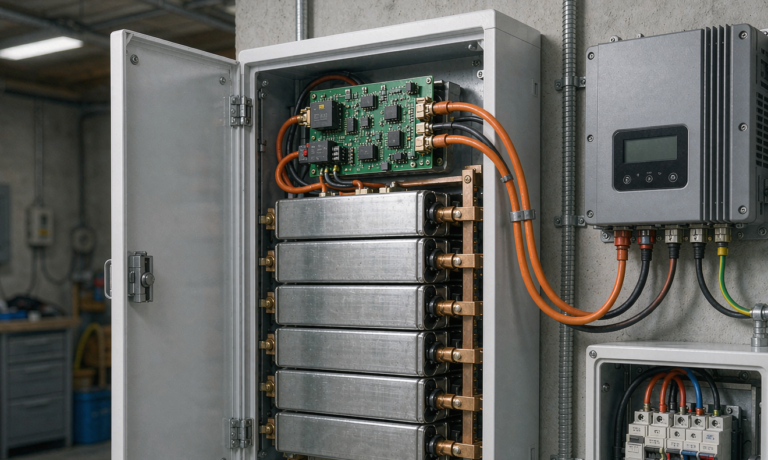
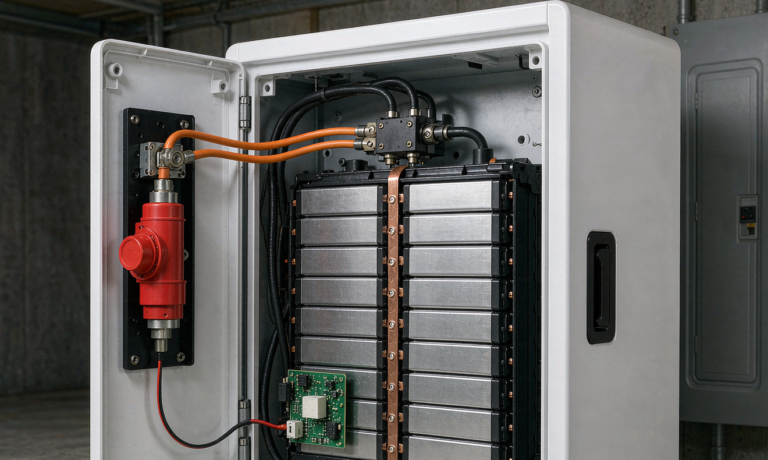
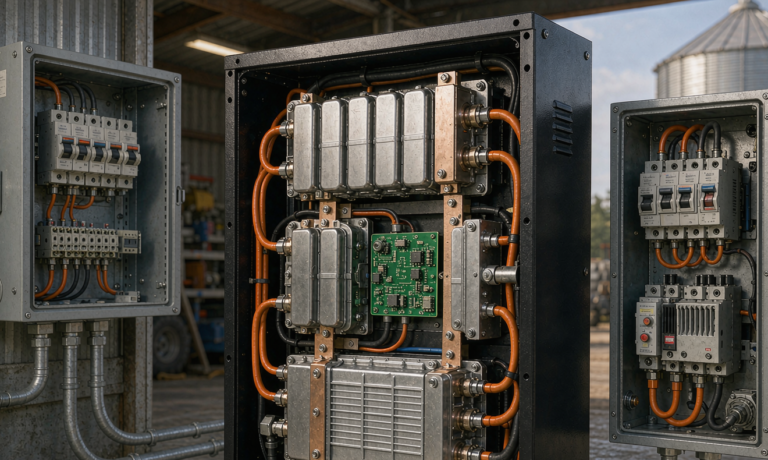
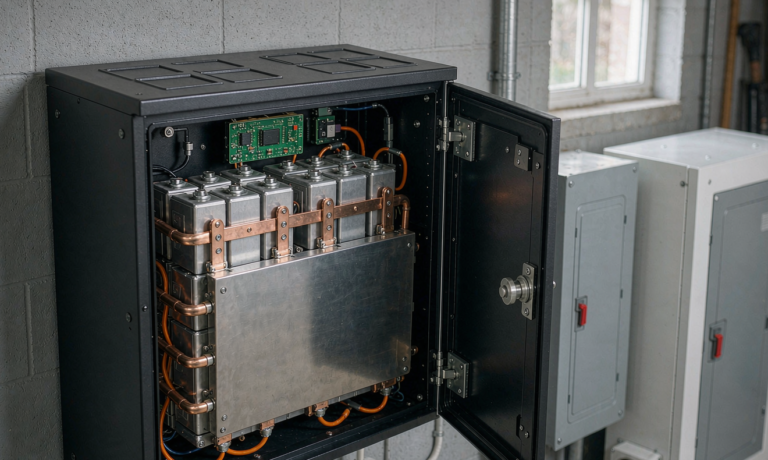
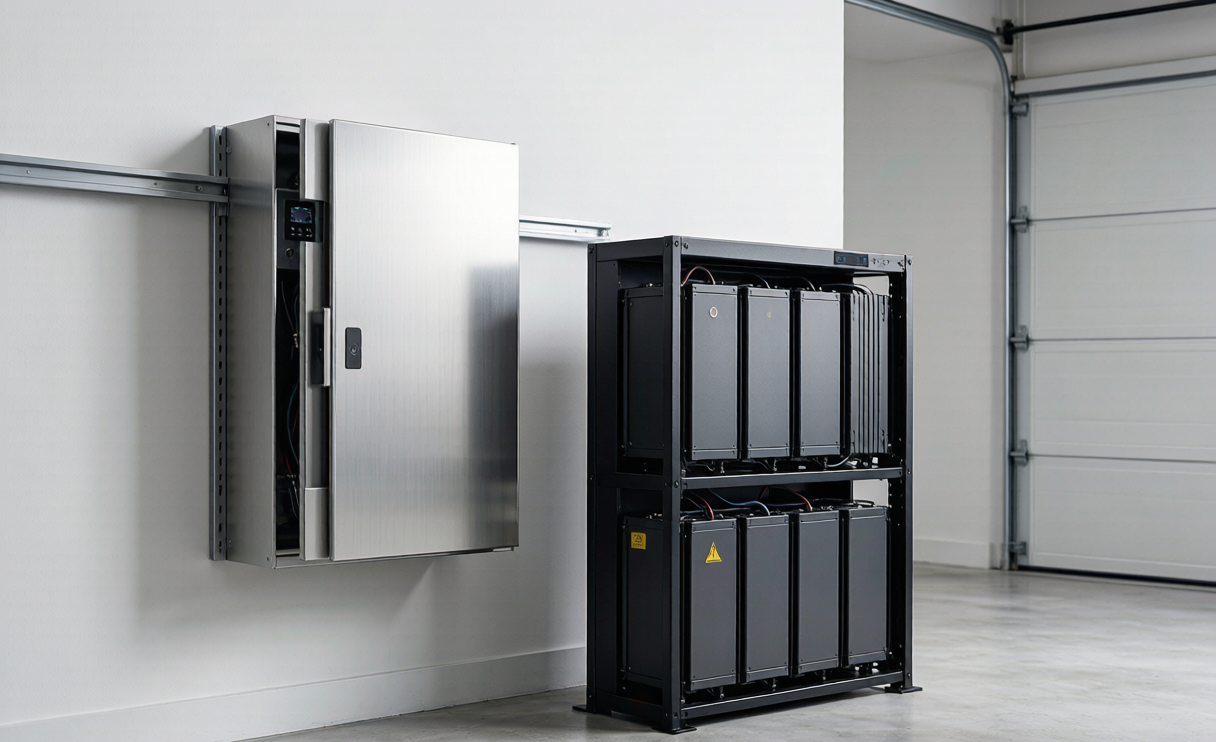
A home energy storage cabinet is a self-contained, factory-sealed enclosure. The battery modules, BMS, disconnects, and often the inverter live inside one painted steel or aluminum shell. You bolt it to a wall, land your PV and grid conductors, and walk away. It is the “appliance” approach — everything is integrated and tested as a single certified unit.
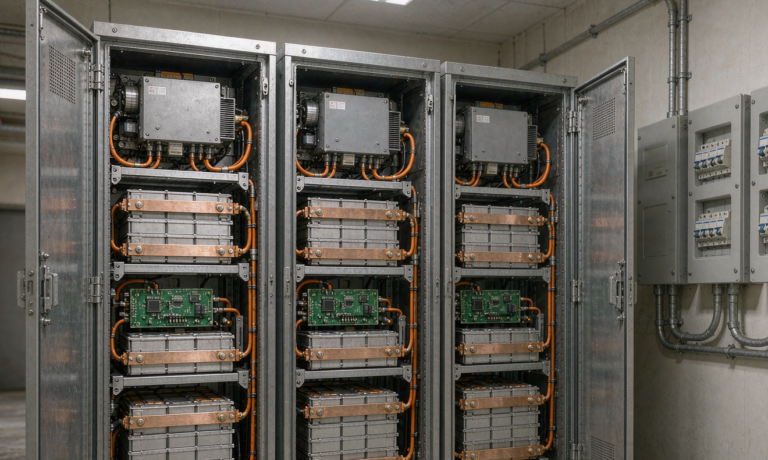
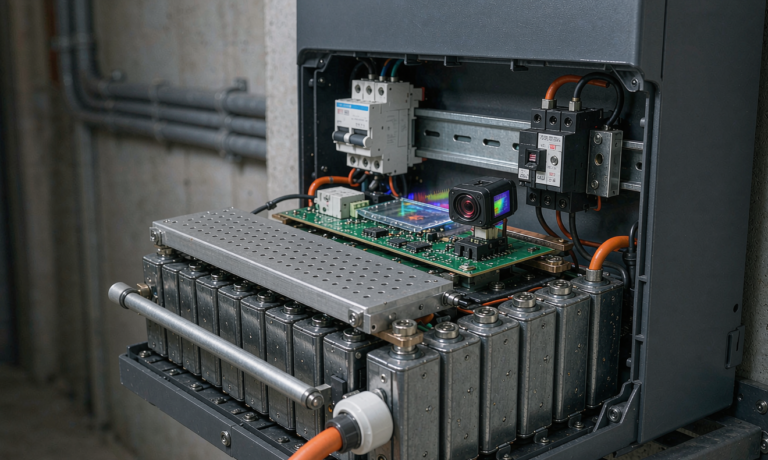
A rack mount system is modular. You install a structural battery rack (floor-standing or wall-bracket), then slide individual battery modules into it like server blades. The rack, the modules, and the inverter are usually separate certified components that you or your installer combine on site. This is the “build-your-own” approach, and it scales far more gracefully.
Neither is “better” in the abstract. They solve different problems. The cabinet wins on speed and simplicity; the rack wins on capacity headroom and serviceability. I have deployed both for clients running a home battery backup load, and the right call always comes back to the room you have and the kWh you will eventually want.
Footprint and Space Planning in Real Homes
Cabinets are designed to disappear. A typical wall cabinet is 600–900 mm wide, 400–600 mm deep, and hangs at shoulder height, so it occupies zero floor area — a big deal in a garage already full of bikes and tool benches. I routinely specify cabinets for urban townhomes where floor space is the binding constraint.
Rack mount systems need floor footprint. A 5-kW rack bay is roughly 600 mm deep and 1,200–2,000 mm tall depending on module count. But here is the trade-off most buyers miss: that same floor space can hold 20–40 kWh in a rack, where a cabinet is usually capped at 10–20 kWh before it becomes a structural wall of boxes. If your plan is to grow from a modest residential battery storage buffer into a whole-house, multi-day system, the rack pays for its floor space many times over.
- Townhome / condo / tiny home: cabinet, wall-mounted, IP54 indoor-rated.
- Suburban garage with expansion plans: floor rack, start with 2–3 modules, leave bays empty.
- Outdoor installation: cabinet with IP65 rating (see safety section), not a bare rack.
Thermal Management and Ventilation Differences
This is where engineering discipline matters. Lithium iron phosphate (LFP) cells, the chemistry that dominates residential battery storage today, are tolerant but not indifferent to heat. A sealed cabinet relies on its internal layout and passive convection; premium cabinets add a small thermostatically controlled fan and a thermal fuse on the BMS. Because the cabinet is a closed volume, cell-to-cell temperature gradient is usually tighter — good for cycle life.
A rack mount system breathes. Air moves freely between modules, which helps during high-rate discharge, but it also means the room’s ambient temperature is now your battery’s ambient temperature. I have seen rack banks in uninsulated garages lose 15–20% of their winter available capacity simply because the space dropped to 5 °C. For racks, I always specify a conditioned space or a small enclosure skirt with a thermostat.
Either way, the BMS must log cell temperatures against the limits in IEC 62619 (industrial cells) and IEC 62133-2 (portable cells). I treat the cabinet’s tighter thermal envelope as a compliance advantage, not just a comfort one.
Safety Standards and Compliance You Cannot Skip
Enclosure choice changes which codes you answer to. In North America, a listed home energy storage system must carry UL 9540 (the system standard) and the battery itself UL 1973 or UL 1642 cell-level recognition, with UL 9540A fire testing behind the enclosure. The rack structure itself should be a listed seismic-rated frame if you are in a zone with building code seismic provisions — I have had inspectors fail an unlisted racking bay on exactly that point.
Spacing is governed by NFPA 855 and the National Electrical Code Articles 706 (storage batteries) and 710 (microgrid). Cabinets usually ship with the required clearances and fire ratings baked into the listing; a rack mount assembly inherits those requirements but leaves the spacing execution to the installer. That is a real risk gap. A cabinet is “compliant by design”; a rack is “compliant if you install it right.”
For enclosure ingress, indoor cabinets are typically IP20–IP54; an outdoor or garage-adjacent unit should be IP65 to shrug off dust and hose-directed water. These ratings are tested per IEC 60529, and I verify the certificate, not the marketing claim. Note that UN38.3 (the lithium transport test, T.1–T.8) applies to how cells ship to you, and FAA/EASA rules apply to aviation transport — neither governs a stationary home unit, but I still apply the same abuse-test discipline when qualifying cells.
Scalability and Capacity Expansion
Here the rack mount system is unbeatable. Adding capacity is “slide in another module, let the BMS re-string, re-run commissioning.” With a cabinet, expansion means either buying a second cabinet (and finding wall space for it) or replacing the unit outright — both more expensive per kWh than a bare module.
For clients who tell me “we might add an EV in two years,” I steer them to rack mount every time. The marginal cost of a future module is a fraction of a future cabinet, and a custom battery solution from our side can pre-wire the rack bus so expansion is a five-minute job. Cabinets are for buyers who know their load today and do not expect it to move.
Installation, Permits, and Service Access
A cabinet is a one-day install: mount, land conductors, commission. A rack mount system is a two- to three-day job once you include rack assembly, module racking, bus wiring, and inspection. Permits are similar on paper (electrical permit + energy storage disclosure), but the rack’s larger footprint often triggers the NFPA 855 quantity thresholds that require fire department notification.
Serviceability is the sleeper benefit of racks. When a single module faults, you swap that one blade. In a sealed cabinet, a module fault can mean pulling the whole unit for RMA. For a household that depends on home battery backup for medical or business continuity, that difference is worth real money.
Cost and Total Cost of Ownership
Up front, a good cabinet often looks cheaper on a per-system basis because integration is done at the factory. But normalize to $/kWh over a ten-year horizon and the rack usually wins once you count expansion. A cabinet you outgrow at year three forces a full replacement; a rack you top up at year three costs only the modules.
My rule of thumb for B2B and prosumer buyers: if your first-day design is within 80% of your eventual target kWh, buy the cabinet and enjoy the simplicity. If there is any chance you will double capacity, start with the rack and leave the bays empty. Either way, insist on UL 9540 system listing and an IEC 62619 cell qualification — that is what protects the asset, whatever the box looks like.
Frequently Asked Questions
Can I mix a cabinet and a rack mount system in one home?
Technically yes, but I discourage it. Two different BMS dialects and enclosures mean two commissioning procedures, two warranty paths, and twice the wall space. If your load truly spans both, size one enclosure type to cover it rather than running two standards side by side.
Which is better for a garage versus an interior closet?
A garage favors a wall cabinet (no floor loss) or a floor rack if you have the room and want to expand. An interior closet usually cannot fit a tall rack, so a shallow wall cabinet rated for the space is the pragmatic choice. Either way confirm ventilation and clearances against NFPA 855.
Do rack mount systems need a seismically rated rack?
In seismic zones, yes — inspectors frequently require a listed seismic frame. A bare, unlisted rack is a common and avoidable failure at inspection. Cabinets generally carry the seismic rating inside their UL 9540 listing, which simplifies sign-off.
How do I size the enclosure to my inverter?
Match the battery’s continuous and peak discharge to the inverter’s surge rating, then confirm the enclosure’s busbar and cabling are rated for that current. I always leave 20% headroom so the BMS never clips during motor-start surges, protecting both the residential battery storage bank and the inverter.
What IP rating should an outdoor cabinet have?
For fully outdoor exposure, specify IP65 minimum so the unit resists dust ingress and water jets. Indoor garages can use IP54. I verify the IEC 60529 certificate rather than trusting the spec sheet, because a failed ingress rating is the fastest route to a corroded BMS and a voided warranty.