Lithium Battery for Home Backup During Outages: An Engineer’s Field Guide
When the grid goes dark, most homeowners reach for a generator. After fifteen years designing lithium battery packs for residential and industrial backup, I have a different recommendation: a properly sized lithium battery for home backup outages is quieter, cleaner, and far more responsive than any fuel-burning unit. I am Karl Huang, Senior Lithium Battery Engineer at Horizon Power, and I have spec’d backup systems for everything from single-family homes to 48V telecom sites. This guide walks through what actually matters when you choose a lithium battery home backup system — sizing, chemistry, safety architecture, and the certifications buyers should verify before they sign.
Why a Dedicated Lithium Battery Beats a Generator for Outage Backup
A standby generator can deliver kilowatts for as long as fuel lasts, but it has real drawbacks in a residential setting. It needs ventilation, produces carbon monoxide, requires monthly exercise, and takes 10–30 seconds to spin up after an outage. A lithium battery home backup system, by contrast, switches on in under 20 milliseconds through an automatic transfer switch — fast enough that a desktop computer never reboots. There is no exhaust, no fuel storage, and no noise at 2 a.m.
In my field experience, the tipping point is duty cycle. If your outages are short (minutes to a few hours) and frequent, a lithium battery pack pays for itself quickly through zero fuel cost and near-zero maintenance. For multi-day blackouts, the smart play is a hybrid: a lithium battery for home backup handling the instant seamless transition, paired with a generator or solar array for long-duration top-up.
Sizing Your Lithium Battery Backup: Matching kWh to Real Loads
Sizing is where most buyers go wrong. They see “10 kWh” on a spec sheet and assume it covers the whole house. It does not. You must separate critical loads from whole-house loads.
Start by listing the circuits you actually need during an outage: refrigerator (150–400 W running), a few LED lights (40–100 W), internet and router (15–30 W), a well pump or furnace fan (800–1200 W surge), and possibly a fridge-plus-freezer pair. A realistic critical-load panel usually draws 500–1500 W continuously. At 1 kWh of usable capacity from your lithium battery pack, that is roughly 40–60 minutes of runtime — but only if you respect depth of discharge.
Here is the engineering detail most guides skip: a quality LFP (lithium iron phosphate) lithium battery pack can safely use 90–95% of its nameplate capacity, while older NCM packs should stop at 80%. So a “10 kWh” LFP unit gives you ~9.2 kWh usable; a 10 kWh NCM unit gives ~8 kWh. For a typical critical-load evening of 8 kWh, I spec a 10–12 kWh lithium battery for home backup outages and add stackable modules if the homeowner wants whole-house coverage.
LFP Chemistry and Why It Dominates Residential Backup
For stationary backup, lithium iron phosphate (LFP) is the chemistry I recommend without hesitation. Its nominal cell voltage is 3.2 V, thermal runaway threshold sits around 270°C (versus ~150°C for NCM), and cycle life routinely exceeds 6,000 cycles at 80% depth of discharge. That translates to 10–15 years of service — longer than most generators survive without major rebuilds.
Energy density is lower than NCM (LFP is ~120–160 Wh/kg vs NCM’s ~200–250 Wh/kg), but for a wall-mounted backup unit that barely matters. Weight is a non-issue when the pack is bolted to a garage wall. What matters is safety margin and calendar life, and LFP wins both. Any custom battery solution I design for home backup defaults to LFP unless the customer has an unusual space constraint.
BMS and Safety Architecture in Backup Packs
The battery cells are only half the story. The battery management system (BMS) is what keeps a lithium battery pack safe across thousands of charge/discharge cycles. A competent BMS for home backup must provide:
- Cell balancing — passive or active balancing to keep series cells within ~20 mV, preventing weak-cell drift that silently kills capacity.
- Over-current and short-circuit protection — sub-millisecond disconnect on fault.
- Over/under-voltage cutoff — hard limits at ~3.65 V charge and ~2.5 V discharge per LFP cell.
- Temperature monitoring — at least two NTC sensors; the pack should derate charging below 0°C to avoid lithium plating.
- Communication — CAN bus or RS485 to the inverter so state of charge (SOC) and faults are visible, not buried.
I have rejected otherwise-good cells because the BMS firmware could not report cell-level voltage to the inverter. For a lithium battery home backup outages system, blind telemetry is a liability. Insist on a BMS that exposes per-cell data.
Inverter and Transfer Switch Compatibility
A lithium battery pack is useless without an inverter that speaks its language. Most residential backup systems use a 48V nominal lithium battery pack (16 series LFP cells) feeding a 5–10 kW hybrid inverter. Verify three things before you buy:
- Voltage window match — the inverter’s charge setpoints must align with the BMS. A 48V LFP pack floats at ~54.4 V (3.4 V/cell) and charges to ~56.0–58.4 V. Mismatched setpoints cause chronic under-charging.
- Transfer time — for seamless backup, the inverter/ATS must switch in under 20 ms. Many cheap units take 100+ ms, which reboots sensitive electronics.
- Frequency and phase — single-phase 120/240V split-phase in North America; 230V single-phase in Europe and much of Asia. Spec the inverter to your region.
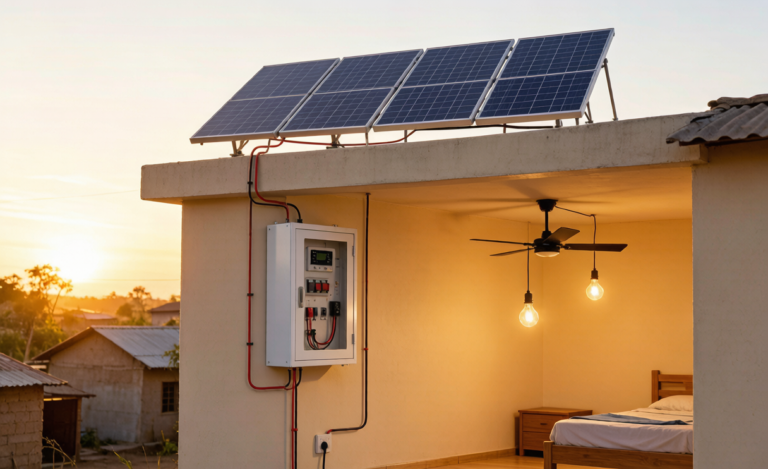
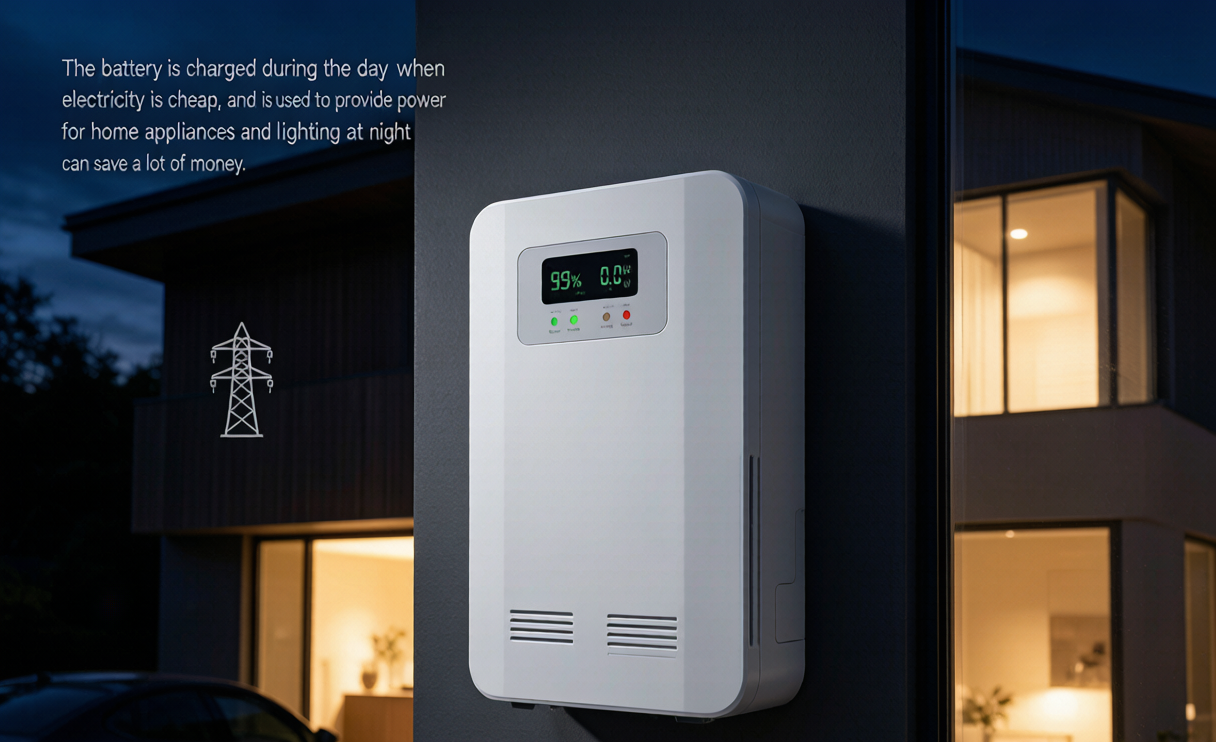
If you already have solar, choose a hybrid inverter that can charge the lithium battery for home backup outages directly from PV during the day and from grid at night on a time-of-use schedule. That turns the battery from a pure insurance policy into a daily cost-saving asset.
Installation, Certifications and Compliance
Residential battery installations live under real code. In the United States, Article 706 of the NEC governs energy storage systems, and many jurisdictions require UL 9540 (system) and UL 9540A (thermal runaway fire propagation) listing. The cells themselves should carry UN38.3 for transport safety and IEC 62619 for industrial/stationary battery safety — the stationary analogue to the IEC 62133 used for portable cells.
From a transport standpoint, a lithium battery pack over 100 Wh but under the air-shipping threshold still needs UN38.3 test summary documentation. As the engineer of record, I always supply that paperwork; if a vendor cannot produce a UN38.3 test summary, walk away. For any custom battery solution destined for the EU, CE marking and an EU declaration of conformity are non-negotiable.
Installation practicalities: mount the lithium battery pack on a non-combustible wall, maintain the manufacturer’s clearance (usually 5–10 cm rear airflow), keep it above freezing where possible, and place a smoke detector in the room. Never install in a living space bedroom. These basics eliminate the vast majority of field failures I have investigated.
FAQ
How long will a lithium battery for home backup last during an outage?
Runtime equals usable capacity divided by load. A 10 kWh LFP lithium battery pack delivering 1.2 kW to critical loads runs roughly 8 hours. Whole-house loads of 3–5 kW cut that to 2–3 hours, which is why I separate critical loads onto their own panel.
Is a lithium battery backup safe indoors?
LFP chemistry is the safest mainstream lithium chemistry, but installations must follow NEC Article 706 and use listed equipment (UL 9540). Mount in a garage, utility room, or outside enclosure — not a bedroom — and provide ventilation and a smoke detector.
Can I add more capacity later?
Yes. Most modern lithium battery for home backup outages systems are modular; you parallel additional stacks, provided the BMS and inverter support parallel operation and the bus cabling is sized for the combined current. I recommend leaving 30% headroom in the inverter.
Do I need solar for a backup battery to make sense?
No. A lithium battery pack charges from the grid too. Solar simply extends runtime during multi-day outages and lowers daily energy cost through arbitrage. The backup function works regardless of PV.
What is the realistic lifespan of a home backup lithium battery?
A well-designed LFP lithium battery pack delivers 6,000+ cycles. For a home that experiences one outage per week with a partial discharge, that is 10–15 years before capacity drops to 80% — comfortably past the typical 10-year warranty.
Choosing a lithium battery for home backup outages is less about chasing the biggest number on a box and more about matching chemistry, BMS intelligence, and inverter compatibility to your real loads. Get those three right, verify the certifications, and the system will pay you back in silence every time the lights flicker and stay on.