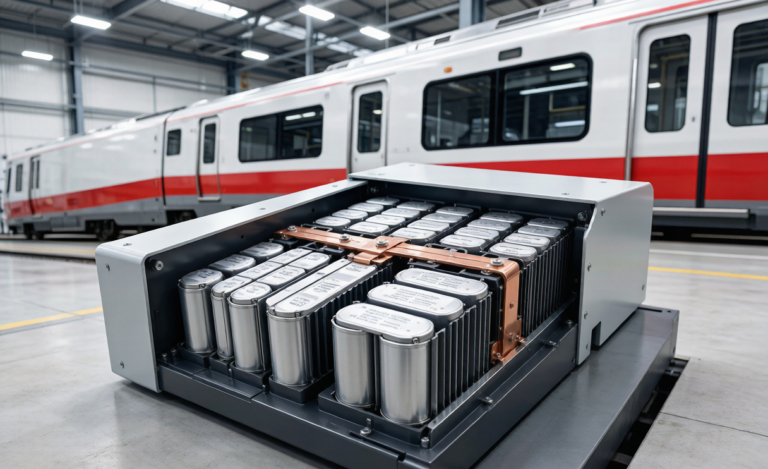
Lithium Battery for Off-Grid Communication Towers
When a mobile carrier or a utility operator asks me to keep a cell site alive where the grid stops, the conversation always lands on the same component: the lithium battery bank. I’m Karl Huang, a senior lithium battery engineer, and over the past decade I’ve specified, commissioned, and serviced dozens of off-grid telecom power systems across rural, mountainous, desert, and island sites. The tower mast gets the attention in the photos, but the quiet cabinet at its base — the one holding the lithium battery pack — is what actually decides whether a remote community keeps a signal during the next blackout. In this guide I’ll walk through how we size, certify, and monitor lithium battery storage for off-grid communication towers, with the real numbers and standards I use on the job.
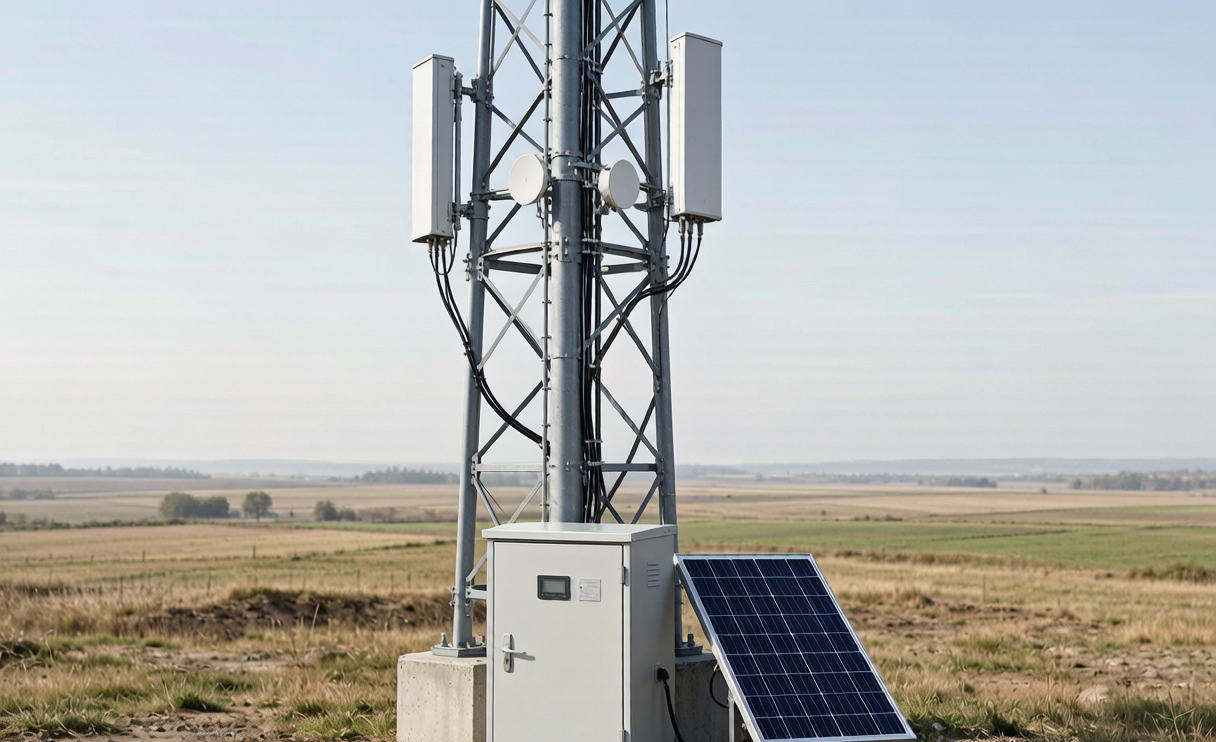
Why Off-Grid Communication Towers Need a Dedicated Lithium Battery Bank
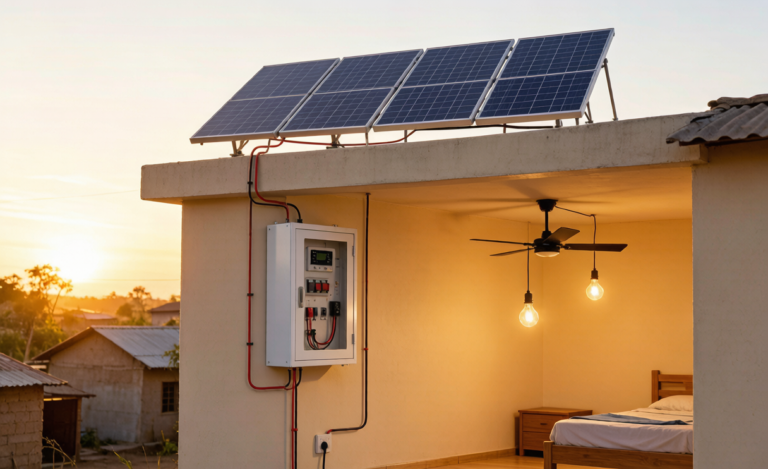
An off-grid telecom site has no utility feeder to fall back on. Its load — the radio unit, microwave backhaul, rectifier, and often a small climate-control fan — runs 24/7, and any gap in supply means a dropped coverage zone that customers notice immediately. A diesel generator can cover this, but fuel delivery to a remote ridge is expensive and unreliable, and generators fail exactly when weather is worst. That’s why most modern off-grid sites pair a modest solar array with a lithium battery bank sized for two to three sunless days of autonomy.
The reason we reach for a lithium battery instead of legacy lead-acid is brutal math. A lead-acid bank must be sized at roughly 50% depth of discharge to survive, so you buy double the nameplate capacity you actually use. A properly engineered lithium battery pack using LFP chemistry comfortably runs to 80–90% depth of discharge while still delivering 4,000–6,000 cycles. For a site that may not see a service truck for months, that cycle life is the difference between a five-year maintenance contract and a two-year headache. When you add the fuel savings from a generator that barely runs, the payback on a quality lithium battery system is often under three years.
Sizing the Lithium Battery Pack for Tower Loads
Sizing starts with the load profile, not the brochure. I measure the site’s true continuous draw — typically 200 W to 800 W for a single macro site with microwave backhaul — and multiply by the autonomy window. If a site pulls 500 W and we want 48 hours of autonomy, that’s 24 kWh of usable energy. Because we design to 80% usable depth of discharge on LFP, the installed capacity climbs to about 30 kWh.
- Step 1 — Measure load: log 24–72 hours of real draw, not the nameplate rating.
- Step 2 — Set autonomy: 24–72 hours is typical; extreme sites go to 96 hours.
- Step 3 — Apply DoD: divide usable energy by 0.80 for LFP.
- Step 4 — Add margin: I add 15% for cable loss, cell aging, and cold-temperature derate.
Telecom standardization has settled on 48 V as the canonical bus voltage. A lithium battery pack built from 16 series LFP cells (16 × 3.2 V nominal = 51.2 V) drops neatly into the rectifier ecosystem that operators already trust from the lead-acid era, so no inverter re-architecture is needed. If the site also carries solar, an MPPT charge controller feeds the same 48 V bus, and the BMS arbitrates between solar input, load draw, and battery state so the cells never sit at 100% float under a constant sunny sky — a detail that quietly doubles pack life.
Temperature matters more than most spec sheets admit. At −10 °C an LFP cell’s usable capacity can fall to roughly 80% of its laboratory rating, and charge acceptance collapses. For cold-climate towers I either oversize the bank by another 10–15% or add a low-wattage heating film the BMS triggers only during charge. Skipping this step is the most common reason a “correctly sized” bank still drops the site in February.
Chemistry Choice: LFP vs NCM for Telecom
For an unmanned, often-inspected-only-once-a-year cabinet, I almost always specify LFP (lithium iron phosphate). The safety case is the deciding factor. LFP begins thermal runaway around 270 °C, versus roughly 150 °C for NCM (nickel-cobalt-manganese). In a sealed outdoor enclosure baking under a summer sun, that 120 °C of headroom is not a detail — it’s the reason the site doesn’t burn down. LFP also tolerates floating at partial state of charge far better than NCM, which matters when solar input is erratic and the pack spends weeks between 40% and 70% charge.
There are cases where a custom battery solution using NCM makes sense — typically when weight or volume is the hard constraint and the cabinet is climate-controlled and attended. But for the standard off-grid tower, LFP wins on total cost of ownership and peace of mind. I’ve pulled swollen NCM packs from sites after venting incidents; I’ve never had to do that with a correctly specified LFP bank. The slightly lower energy density of LFP is a non-issue when the cabinet already has room for a lead-acid footprint you’re replacing anyway.
Compliance and Safety: UN38.3, IEC 62133, and Beyond
No lithium battery leaves our line for a telecom deployment without the paperwork that proves it’s safe to ship and safe to install. The two standards I cite most are UN38.3, the UN manual of tests for lithium cells in transport (altitude simulation, thermal, vibration, shock, external short, impact, overcharge, forced discharge), and IEC 62133, the international safety requirement for portable cells and batteries. For stationary industrial banks I also apply IEC 62619, which adds requirements for large-format cells, thermal propagation resistance, and battery management.
If any cells or packs are flown to an island or remote site, air-cargo rules under IATA alongside FAA and EASA provisions govern how many watt-hours per package are permitted and what labeling and state-of-charge limits apply. I keep a current test summary on file for every shipment; a missing UN38.3 report has stranded more than one deployment at a customs dock. The goal is never just “pass the test” — it’s to hold evidence the pack was built to a verifiable standard when a regulator or insurer asks two years later. For permanent installations I also align the enclosure with local fire-code spacing and, where required, a thermal isolation barrier between the lithium battery pack and the radio equipment.
BMS and Remote Monitoring Are Non-Negotiable
An off-grid lithium battery pack is only as good as the battery management system watching it. At minimum the BMS must handle cell-level voltage balancing, over- and under-voltage cutoff, over-current protection, and temperature sensing on every parallel group. For banks above roughly 10 kWh I specify a distributed (module-level) BMS rather than a single centralized board, because a centralized topology turns one corroded sense wire into a whole-bank blind spot.
The BMS must report state of charge (SOC) and state of health (SOH) over a protocol the site controller can read — typically RS485/Modbus or CAN. Remote monitoring is what turns a dumb cabinet into a manageable asset. When the BMS streams cell voltages and temperatures to the network operations center, a drifting cell shows up as a trend weeks before it becomes a failure. On one island site we caught a single weak parallel string through a 30 mV imbalance alert and swapped it during a routine visit instead of after an outage. That’s the whole value proposition of a smart lithium battery pack versus a sealed box you only open when something dies.
A Field Note From a Mountain-Site Deployment
I’ll close with a real example. Last year we commissioned a 30 kWh LFP bank for a 2,100 m relay site with no grid and a 3 kWp solar array. The site’s legacy lead-acid bank had been replaced every 18 months at a punishing fuel-and-helicopter cost. We specified 16S LFP modules with a CAN-bus BMS, wrapped them in an IP55 cabinet with passive ventilation and a heat-traced base for winter, and certified the packs to UN38.3 and IEC 62133 before shipping. Nine months in, the bank is holding 96% SOH, the generator has not run once, and the operator’s fuel spend for that site is effectively zero. That’s the outcome a well-designed lithium battery system delivers — and the reason I keep recommending the same architecture to every off-grid operator I advise.
Frequently Asked Questions
What size lithium battery do I need for an off-grid tower?
Start from the site’s measured load and desired autonomy. A 500 W site needing 48 hours of backup requires about 24 kWh usable, which becomes roughly 30 kWh of installed LFP capacity at 80% depth of discharge, plus a 15% engineering margin. Always measure real draw rather than trusting nameplate ratings, and add capacity for cold-temperature derate if the site drops below freezing.
Is LFP or NCM better for telecom battery banks?
For unmanned outdoor telecom sites, LFP is the safer and usually cheaper-over-life choice because of its higher thermal-runaway threshold (~270 °C) and tolerance for partial-state-of-charge cycling. NCM is reserved for weight- or volume-critical, climate-controlled installations where every kilogram is accounted for.
Which certifications matter for an off-grid lithium battery pack?
UN38.3 for transport safety, IEC 62133 for cell and pack safety, and IEC 62619 for stationary industrial banks. If cells are air-freighted, IATA rules with FAA and EASA provisions apply. Keep test summaries on file for customs, regulators, and insurance.
How long does a lithium battery pack last at a remote site?
A quality LFP pack sized to 80% depth of discharge typically delivers 4,000–6,000 cycles, which translates to roughly 8–12 years at a remote site with one full equivalent cycle per day. Real lifespan depends on temperature, balancing quality, and how aggressively the BMS protects the cells — which is exactly why monitoring matters.