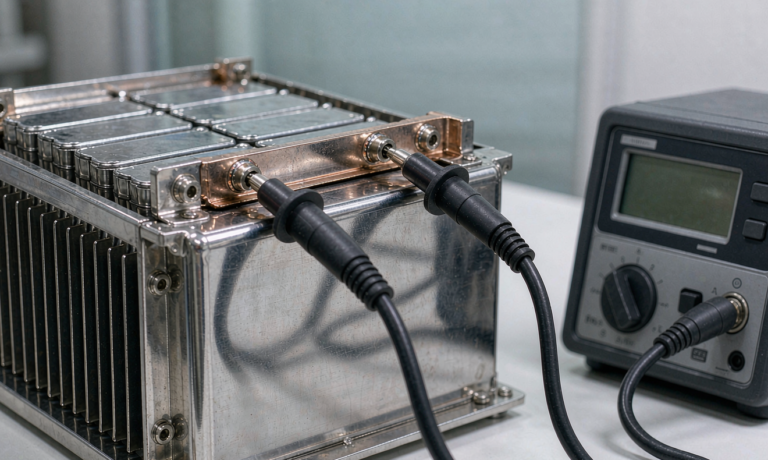
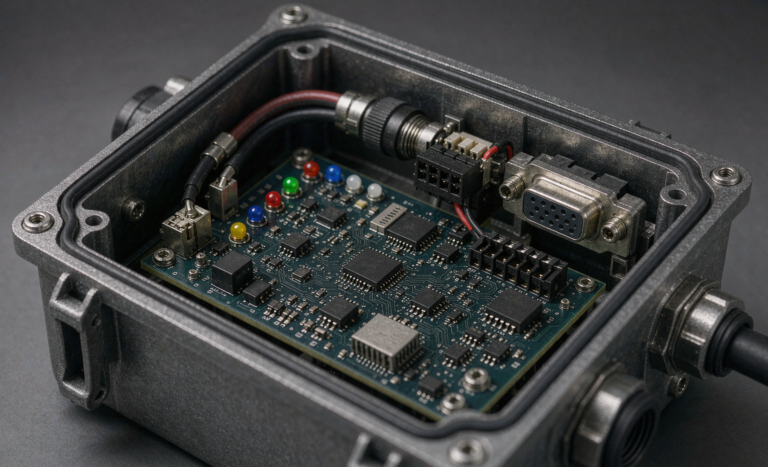
Lithium Battery for Traffic Signal Backup Power
I still remember the first intersection audit I ran with a city traffic crew. We pulled twenty cabinet doors in one day and found fifteen had battery backup cabinets that had never been exercised, four had packs that had boiled dry in the summer sun, and one had been disconnected two years earlier over a persistent monitor fault. On paper every one of those intersections had backup power. In practice a quarter of them would have kept a signal head lit through a four-hour outage.
That gap between the spec sheet and the field is why I keep coming back to this topic. A lithium battery for traffic signal backup power is not a small data center UPS in a cheaper enclosure: it lives in a metal box on a sidewalk, sees 65 °C in July and −30 °C in January, it gets touched once a year at best, and the one time it is asked to work is the one time nobody wants to think about it. In this guide I walk through the load math, the temperature problem, the voltage windows that decide whether a lithium pack is genuinely drop-in, and the verification that separates a real backup system from a green LED that means nothing.

What Actually Has to Stay Alive at an Intersection
Every sizing argument I get dragged into starts with someone quoting amp-hours and nobody quoting watts. So we start with the load: open the cabinet and inventory everything downstream of the service breaker.
Signal heads are the least of it now that LED has replaced incandescent. A 12-inch LED vehicle head draws 10–15 W for the single illuminated aspect, and one aspect per head is lit at a time. Eight heads is therefore 80–120 W, not the 800 W you would have seen twenty years ago. Pedestrian heads with countdown displays add 6–9 W each. The controller and malfunction management unit together sit around 45–70 W continuously. Detection (radar, video, or loop amplifiers) adds 15–35 W, and communications — fiber, cellular, or licensed radio — another 10–20 W. Cabinet ventilation fans are 25–40 W at a 30–50 % duty cycle depending on the thermostat.
Add it up for a typical eight-head, four-ped-head urban intersection: 190–260 W continuous in normal operation, dropping to 60–90 W in night flash. Those two numbers drive everything else, and an agency specifying four hours of full operation is buying a very different battery than one specifying two hours of operation plus eight hours of flash.
The Runtime Math and the Flash Mode Decision
The energy side is arithmetic, but you have to include the derating terms people forget. Take 220 W continuous: four hours is 0.88 kWh at the load. Now divide by inverter efficiency, typically 0.90–0.93 including the transfer switch, then by usable depth of discharge. I do not let a signal battery go below 10 % state of charge in the design case, so usable is 0.90.
That gives 0.88 ÷ 0.92 ÷ 0.90 ≈ 1.06 kWh for four hours; eight hours of continuous operation needs about 2.12 kWh. A 48 V 50 Ah lithium iron phosphate pack is 2.56 kWh nameplate, which lands almost exactly on eight hours at that load. A 48 V 100 Ah pack covers a full night and then some, and is the more common choice at agencies that have been burned once.
The most common mistake is sizing for the flash load and then discovering the intersection was supposed to run in full operation. The second is ignoring aging: by year eight, calendar and cycle losses have taken 20 % off the top, and a four-hour spec is now a three-hour reality. I size for end-of-life capacity, not nameplate, and I say so in the submittal.
Why Temperature Decides the Chemistry
Traffic cabinets are the harshest environment I put batteries into, and it is not close. NEMA TS2 qualifies cabinet equipment for roughly −34 °C to +74 °C, and a dark metal box with a solar-loaded lid over concrete will hit the top of that range inside; I have logged 68 °C at the top of a Model 336 cabinet in a Southwest city in July. Interior air at the battery shelf was 58–62 °C.
This is where valve-regulated lead acid dies. VRLA life roughly halves for every 8–10 °C above 25 °C, so a pack rated for five years at room temperature gives two years at 45 °C and sometimes eighteen months at 55 °C. Dry-out is the failure mode: electrolyte leaves through the vents, capacity walks down with it, and one morning the intersection goes dark eleven minutes into an outage instead of four hours in.
Lithium iron phosphate handles heat far better but is not immune. Calendar aging still follows Arrhenius behavior: my own field data on LFP cells at 55 °C shows 2.5–3 % capacity loss per year versus 1–1.5 % at 25 °C. The difference is that LFP does not dry out or fail open without warning. Cold is the harder problem. You cannot charge a standard LFP cell below 0 °C without plating lithium on the anode, so a pack in a Minnesota cabinet needs a charge-temperature cutoff in the BMS. I specify a 40–80 W pad heater powered from line voltage, so the pack is already warm when the outage starts and stays warm from its own discharge losses. At −20 °C plan for 70–80 % of rated capacity and noticeably more voltage sag under fan and head loads.
Voltage Windows: 15S, 16S, and What Drop-In Really Means
This is the part that trips up retrofits. A legacy cabinet has a charger built around four 12 V VRLA blocks in series: 48 V nominal, float about 54.4 V, absorption around 57.6 V. Drop in lithium and the question becomes which series count. A 16S LFP string is 51.2 V nominal and 58.4 V at full charge — healthy, but at a 54.4 V float it rests around 40–60 % state of charge, quietly throwing away much of your runtime. A 15S string is 48 V nominal and 54.75 V at full charge, so the existing float voltage actually tops it off.
For a true drop-in with no charger change I push 15S even though it is less common in catalogs; when the project includes a new charger or a complete backup assembly, 16S is fine and often cheaper. What I will not do is stack four “12 V lithium drop-in” blocks in series the way the lead-acid blocks were. Four independent BMS boards drift apart over a couple of years, each protecting its own block, and the string disconnects at 30 % remaining because one block hit its low-voltage floor. One pack, one BMS, one set of cell taps.
The other voltage issue is at the bottom. A pack BMS that cuts off at 40 V may cut off after the controller has already gone unstable, so I set the low-voltage disconnect below the equipment brownout threshold and let the system transfer to flash first — the intersection degrades gracefully instead of latching up.
A backup system is only as good as its transfer. Relays and solid-state switches in traffic battery backup systems complete transfer in 8–16 ms, and the controller’s ride-through has to cover that; anything slower produces a reboot, which looks like a dark intersection for several seconds and a service call later.
Then there is the operational question: full operation on battery, or flash? Four hours of full operation is the more protective and more expensive spec. Flash-only stretches the same pack to ten or twelve hours but puts the burden on drivers at an unsignalized intersection — a safety decision that belongs to the agency, not to me. My job is to hand them the curve: four hours full, or two hours full plus nine hours flash, and here is the cost of each.
Short-Circuit Current, Fusing, and the Physical Install
This surprises electrical crews the first time: lithium packs have very low internal resistance, so a 48 V 100 Ah LFP pack can deliver two to three thousand amps into a bolted fault, where a lead-acid string of the same rating delivers a fraction of that. The overcurrent device must be DC rated with adequate interrupting rating — a Class T or NH fuse, not a generic blade fuse or an AC-only breaker that will weld closed. I spec 10 kA as a floor and verify the installed device, because I have opened cabinets where somebody substituted an AC breaker during a “quick repair.”
Where the pack goes matters as much as what it is. Pole-mounted backup cabinets have a hard weight limit: four VRLA blocks at roughly 17 kg each is 68 kg, where a 48 V 50 Ah LFP pack at 25–30 kg is something one technician can lift. Ground-mounted and pad-mounted enclosures do not care about weight but do care about NEMA 3R or 4X sealing, bottom-entry conduit with drip loops, and separation from the fan discharge path. Terminals get ferrules on fine-strand cable, lugs get a documented torque, and the assembly gets an install-date label, because the next technician deserves to know how old the pack is without pulling out a laptop.
Telemetry: Stop Trusting the Green LED
LFP has a flat discharge curve: a cell sits near 3.3 V from roughly 20 % to 90 % state of charge, so open-circuit voltage tells you almost nothing about remaining runtime. Any system reporting “battery OK” from a voltage threshold alone is lying to you, and several on the market do. State of charge has to come from coulomb counting with periodic recalibration, plus a loaded discharge test to confirm capacity.
I ask for three things in the monitoring package: a scheduled loaded test of fifteen to thirty minutes monthly, under real load and not a no-load blip, with the result logged; cell-level voltage and pack temperature reported through the existing cabinet communications as a discrete alarm or a simple register; and an automatic flag when a test fails, because a failing battery nobody reads about is the same as no battery.
Lifecycle Cost: The Truck Roll Is the Real Number
Four VRLA blocks cost 700–1,200 USD installed and last two to four years in a hot cabinet; a 48 V 50 Ah LFP pack runs 2,200–3,500 USD and should give eight to twelve years. On a per-year basis lithium wins before labor, but labor is what moves the decision: dispatching a two-person signal crew with a bucket truck to a downtown intersection costs 400–900 USD per visit once you include traffic control. Replacing lead-acid four to six times over twelve years versus twice for lithium is where the money is — and every replacement visit is a chance to miswire a cabinet.
My rule of thumb: if the intersection is high-consequence (a coordinated corridor, a school crossing, an evacuation route) or expensive to reach, lithium pays back inside the first replacement cycle. For a low-volume rural intersection with an easy pull-off, the case is weaker and I say so.
What to Put in the Specification
When I write or review a spec for a lithium battery for traffic signal backup power, the short list is cell and pack certification to UL 1973 or IEC 62619, with cells carrying IEC 62133 or UL 1642 and UN 38.3 for transport; a listed assembly, generally to UL 9540 with a UL 9540A thermal evaluation where the authority having jurisdiction requires it; an enclosure rating of NEMA 3R or better; a published end-of-life capacity so runtime can be sized against year ten rather than day one; a BMS with low-temperature charge cutoff, cell balancing, and a low-voltage disconnect coordinated with controller brownout; a DC-rated fuse with documented interrupting rating; and a monthly loaded self-test with logged results and a remote alarm. If a submittal is missing any of those, it goes back
FAQ
How long should a lithium battery for traffic signal backup power run an intersection?
Most specifications ask for four hours of full operation, or two hours of full operation plus eight hours of flash. At a realistic 200–260 W continuous cabinet load, four hours of full operation needs roughly 1.1 kWh of usable energy and eight hours needs about 2.1 kWh, which is why 48 V 50 Ah and 100 Ah LFP packs are the common answers.
Can I drop a lithium battery into an existing traffic signal cabinet without changing the charger?
Sometimes. The voltage window is the deciding factor: a 15S LFP string is 48 V nominal with 54.75 V full charge and matches a legacy 54.4 V VRLA float well, while a 16S string floats at only 40–60 % state of charge on the same charger. Never stack four independent 12 V lithium blocks in series; use one pack with one BMS.
Why do lead-acid traffic signal batteries die so fast in summer?
Cabinet interiors routinely reach 55–65 °C with solar load, and VRLA life roughly halves for every 8–10 °C above 25 °C. The failure mode is electrolyte dry-out through the vents, so a pack rated for five years at room temperature often gives eighteen to twenty-four months in a hot cabinet.
Does the backup battery need to run the signal in flash or full operation?
That is an agency safety decision, not a battery decision. Full operation is more protective and roughly two to three times more energy-hungry; flash-only stretches the same pack to ten or twelve hours. I give the agency both curves and the cost of each so they can choose deliberately.
How does cold weather affect lithium batteries in traffic cabinets?
Standard LFP cells cannot be charged below 0 °C without lithium plating, so the BMS needs a charge-temperature cutoff and, in cold regions, a 40–80 W pad heater fed from line voltage. At −20 °C expect 70–80 % of rated capacity and more voltage sag under signal head and fan loads.
What runtime testing do inspectors expect for signal backup batteries?
A logged loaded discharge test of fifteen to thirty minutes monthly, plus an annual full-capacity test. Open-circuit voltage is not an acceptable proxy because the LFP discharge curve is nearly flat from 20 % to 90 % state of charge, so capacity has to be measured under load.
Is a pole-mounted or ground-mounted battery cabinet better for lithium?
Lithium makes pole mounting far more practical: a 48 V 50 Ah LFP pack weighs 25–30 kg against roughly 68 kg for four VRLA blocks. Ground-mounted enclosures remove the weight constraint but demand NEMA 3R or 4X sealing, bottom-entry conduit with drip loops, and clearance from the fan discharge.
What certifications should a traffic signal backup battery carry?
Look for UL 1973 or IEC 62619 at the pack level, IEC 62133 or UL 1642 and UN 38.3 at the cell level, a listed assembly to UL 9540 with a UL 9540A evaluation where the AHJ requires it, and equipment qualified to the NEMA TS2 environmental range.
Further Reading
References