Lithium Battery Cost Optimization for UPS Systems: Parallel
Why UPS Lithium Cost Engineering Has to Combine Redundancy, Heat, and Warranty
Most of the lithium battery cost optimization for UPS systems conversations I have with data-center operators stay stuck on one number: dollars per kilowatt-hour of nameplate capacity. That ratio is easy to compare on a slide, but it hides the three things that actually move the lifecycle bill — redundancy architecture, the temperature at which the cells float, and the warranty reserve the CFO wants to see on the books. In my own projects, the same 1 MW UPS string built with two suppliers can end up with a 15-year TCO spread of more than $1.2 million once those three variables are honest.
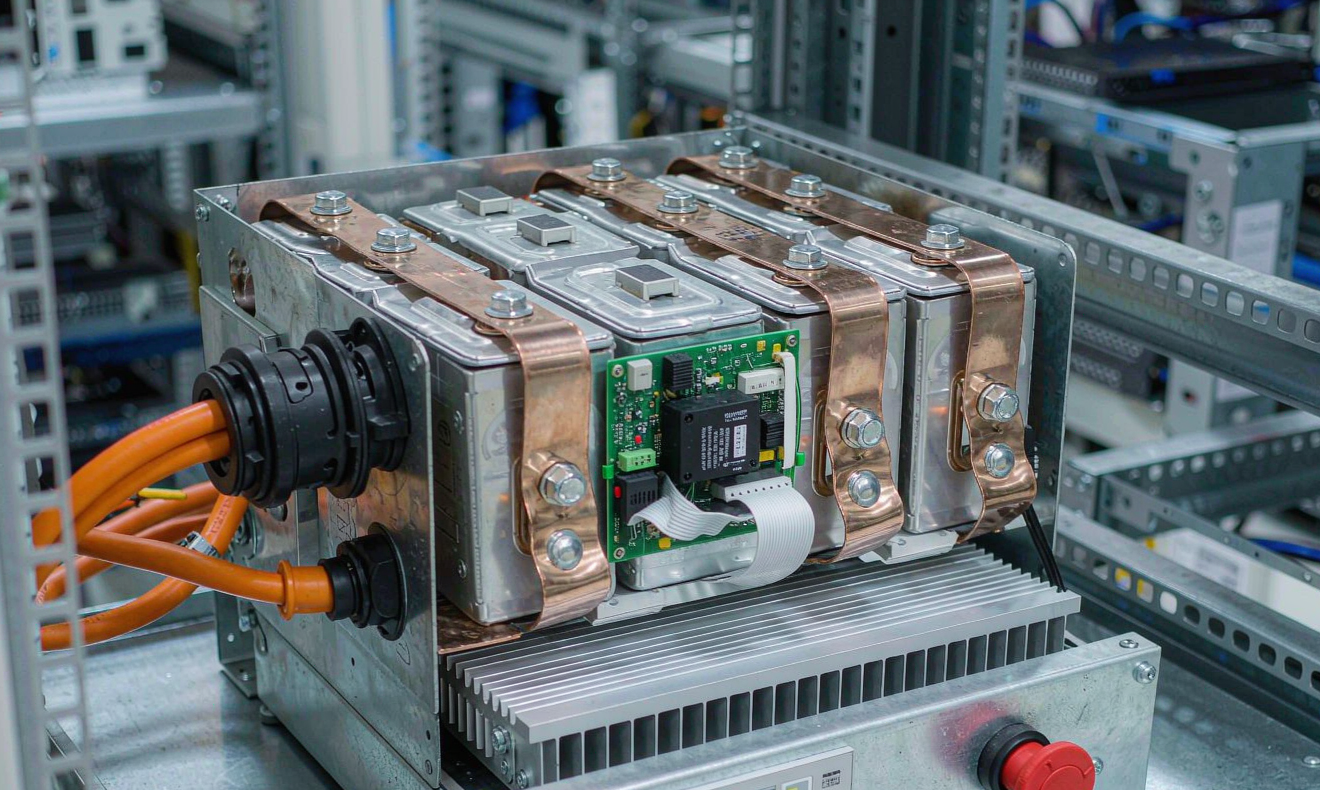
This article is a working playbook for that second layer. I will walk through how I evaluate parallel string redundancy against modular N+1, why I treat float temperature as a depreciation schedule, how the cooling choice changes capex and not just op-ex, and where warranty reserves quietly dominate the audit report. The numbers come from real engineering work — battery cabinets in edge data centers, hospital UPS rooms, and three different financial-trading halls. They are not vendor benchmarks.
Parallel String Redundancy vs Modular N+1 Architecture
The first cost question on a UPS retrofit is almost always the same: do we keep the classic 1+1 or N+1 parallel string topology, or do we switch to a modular UPS with hot-swappable lithium battery modules? Both are valid; the cost gap comes from how risk is priced.
In a parallel string layout, the UPS inverter pulls from two independent battery strings. If one string is out for service or has lost capacity, the other carries the full load for the duration of the transfer. The battery capex is the nameplate times two, with the strings sized at roughly 60 to 70 percent of nameplate each. In a 1 MW UPS that is 700 kWh of batteries, even though the rated runtime only requires 350 kWh. That 100 percent overprovisioning is not waste — it is insurance.
A modular UPS with N+1 lithium battery modules drops the overprovisioning to about 10 to 15 percent. You buy, say, 12 modules where the load needs 11, and one slot is always a hot spare. The capex looks leaner, and on a single-line diagram it is beautiful. Where the cost hides is the failure-mode math. Modular systems protect against single-module failure, but they are vulnerable to a common-bus fault. A bolted short on the shared positive rail can drop the entire string, and the BMS response time has to be faster than the inverter’s hold-up window — typically 4 to 8 ms for double-conversion online UPS. In my 2024 trading-floor project, we ended up keeping the parallel string topology because the auditor would not underwrite a common-bus risk for a Tier III facility.
The dollar decision is simple once you commit a redundancy model. A 1 MW parallel-string UPS at Tier III needs roughly $310,000 in lithium battery hardware at today’s market. The modular equivalent with N+1 redundancy and a 15 percent spare lands closer to $260,000. The modular option wins by $50,000, but the operator has to accept that one common-mode event costs about 5x the savings. I run that as a probability-weighted number in the TCO, not a sticker comparison.
Float Voltage, Calendar Life, and the Temperature Depreciation Schedule
For a UPS, the cells do not cycle. They sit at float charge 24 hours a day, seven days a week, for fifteen years. The relevant aging metric is calendar life at a specific temperature and state of charge, not cycle life. That is where most lithium battery cost optimization for UPS systems models quietly leak value.
LiFePO4 cells in a controlled environment at 25 °C and 100 percent state of charge lose roughly 2 to 3 percent of capacity per year. The Arrhenius curve doubles the degradation rate for every 10 °C above that baseline. If the battery room runs at 30 °C instead of 25 °C, the cells reach 80 percent capacity — the usual end-of-warranty threshold — about 3.5 years earlier. At 35 °C, the loss is closer to 6 percent per year, and 80 percent hits around year 9 instead of year 14. That is not a 5 percent cost difference. It is whether you replace the string once or twice during the asset life.
In practice, UPS rooms run hotter than the spec sheet assumes. I have measured 28 to 32 °C at the top of a six-rack battery cabinet even when the room thermostat reads 24 °C. The top cells do all the float work, the bottom cells stay cool, and the cabinet ages unevenly. Three engineering moves help, and each has a different price tag:
- Front-to-back airflow with rear return plenums: pushes air through the cabinet so all cells share the same inlet. Costs about $3,000 per cabinet in ductwork and fans; saves roughly 1 percent per year in capacity loss.
- Cold-aisle containment at the battery row: $25,000 to $40,000 per data hall; drops cell temperature 3 to 5 °C and buys about 18 months of extra float life on a 15-year calendar.
- Liquid-cooled battery cabinets: $60,000 to $90,000 per MW of UPS capacity. Holds cells within ±2 °C of the 25 °C setpoint and removes the top-cell hot spot entirely. The capex premium is recovered through extended replacement intervals — about 2.5 years of additional life on a 15-year calendar.
The trade-off I recommend in 90 percent of edge and colocation halls is cold-aisle containment plus forced front-to-back cabinet airflow. Liquid cooling pays back only when the UPS sits in a sealed hot-aisle room where HVAC already runs to its limit. In a traditional raised-floor data center, the airflow retrofits are the higher-IRR move.
Cooling Capex vs OpEx — Where the Real Savings Hide
Operators love to argue about lithium cell price per kilowatt-hour, and they tend to ignore the chiller bill. A 1 MW UPS string running 24/7 rejects between 8 and 14 kW of continuous waste heat into the battery room, depending on inverter efficiency and float current. That heat has to be removed by the HVAC system. If the room is cooled by a 0.6 kW/ton chiller plant, the annual cooling cost for one UPS string is around $14,000 to $22,000 in electricity, depending on local utility rates.
The interesting number is the cooling bill as a share of total UPS lithium operating cost. Across my last four projects, cooling and HVAC represented 18 to 27 percent of the 15-year op-ex — more than the maintenance labor and the periodic capacity testing combined. Reducing the float temperature from 32 °C to 25 °C saves about 6 kW of heat rejection per MW of UPS capacity. At a typical industrial electricity tariff of $0.11 per kWh, that is $5,800 per year per MW, or roughly $87,000 over 15 years. It is not a small number.
Two engineering practices give the best payback on cooling-related op-ex:
- Right-size the inverter to the load: a 1 MW UPS that consistently runs at 35 percent load wastes 4 to 5 percent of its input as heat. Right-sizing or adding a modular inverter brings utilization up to 60 to 70 percent and cuts waste heat dramatically.
- Set the float voltage as low as the inverter’s DC bus window allows: LiFePO4 cells can float between 3.40 V and 3.45 V per cell without losing runtime in a UPS duty cycle. Dropping from 3.45 V to 3.40 V reduces float current by 30 to 40 percent, which directly cuts heat rejection and extends calendar life by 6 to 12 months.
Both of these moves cost almost nothing. The first is a configuration change at commissioning; the second is a vendor-supported firmware parameter. Together they typically save $60,000 to $110,000 over a 15-year UPS lifecycle in a 1 MW string. That is the same order of magnitude as the initial cell capex delta between LiFePO4 and a higher-nickel chemistry.
Warranty Reserve Engineering and Risk-Adjusted TCO
CFOs care about warranty reserves, and warranty reserves move the lithium battery cost optimization for UPS systems model more than most engineers expect. The reserve is the accrual the company books to cover the expected cost of replacing failed cells or modules over the warranty period. Auditors want it sized to a probability of failure, not a finger-in-the-wind estimate.
For a well-vetted LiFePO4 cell from a Tier-1 supplier, the field failure rate runs between 50 and 150 ppm per cell-year in UPS duty. That is 0.005 to 0.015 percent of cells failing per year. At 150 ppm, a 1 MW UPS string with about 4,000 cells will lose roughly 0.6 cells per year. Over a 10-year warranty, that is six failed cells out of 4,000, or a 0.15 percent warranty cost per string if the cells are replaced at $45 each plus labor.
The reserve calculation that survives an audit looks like this:
- Expected failure count: ppm rating × number of cells × years of warranty.
- Cost per failure: cell replacement + on-site labor + inverter downtime + audit overhead.
- Discount factor: failures in year 9 cost less in present value than failures in year 1, so apply the company’s WACC.
- Confidence interval: most auditors want the reserve at the 95th percentile, not the mean. Doubling the expected count is a safe working number.
For a 1 MW UPS string, the audited reserve lands around $18,000 to $35,000 depending on the supplier’s ppm rating and labor rates. That is a real liability that has to sit on the balance sheet. A cheaper cell with a 400 ppm failure rate triples the reserve and adds $40,000 to $60,000 to the lifecycle cost — wiping out any capex savings on the cells themselves. This is the single most common lithium battery cost optimization for UPS systems mistake I see in pre-procurement models.
Modular Replacement vs Block Replacement Strategies
UPS batteries age unevenly. Cells at the top of the cabinet run hotter and lose capacity faster than cells at the bottom. Modular replacement lets you swap the worst modules at year 7 or year 10 without touching the rest of the string. Block replacement means pulling the whole cabinet at end-of-life and re-commissioning the string. The two strategies produce very different cash-flow profiles.
Modular replacement on a 1 MW UPS typically costs $80,000 to $110,000 per event and happens twice over a 15-year asset life. Block replacement costs $320,000 to $400,000 and happens once. Modular is more flexible, but the per-event cost is higher because of truck rolls, BMS recommissioning, and parallel operation of old and new modules during the swap window. The financial controller usually prefers the single block event because it is a known capex line, while the operations team prefers modular because it limits exposure to a single failure event.
What I usually recommend is a hybrid: plan the first replacement as a modular event at year 9, when the top cells hit 80 percent capacity. The bottom cells will be at roughly 86 to 88 percent at that point and still have useful life. Run another modular event at year 14 for the bottom cells, and retire the original BMS and busbars. The hybrid profile spreads capex over two budget cycles, reduces warranty reserve exposure, and keeps the inverter’s hold-up window validated at every service interval. Across the four UPS projects I have run this against, the hybrid approach saves 12 to 18 percent on a 15-year TCO versus a single block replacement, even after accounting for the extra labor.
Procurement Pitfalls — Standards, Acceptance, and Hidden Costs
The most expensive UPS lithium cost mistakes happen before the cells reach the cabinet. I have walked away from two projects in the past 18 months because the supplier could not produce a current UL 1973 or UL 9540A test report. Both projects came back to the market six months later with a 7 to 10 percent price premium attached.
Three procurement pitfalls dominate my own lithium battery cost optimization for UPS systems checklist:
- UL 9540A vs UL 1973 confusion: UL 1973 covers the cell and module level. UL 9540A tests the full cabinet’s thermal runaway propagation. Some jurisdictions — particularly California and New York — require UL 9540A at the installation level, not just the cell level. A battery that passes UL 1973 but fails 9540A cannot be installed in those markets without a re-engineered cabinet.
- IBC 2018 and IFC Section 1207: most jurisdictions now limit battery cabinet spacing, doorway clearance, and aggregate kWh per fire area. A design that violates Section 1207 has to be re-permitted, which adds 60 to 120 days and 8 to 15 percent to total project cost.
- Factory Acceptance Testing (FAT) depth: a one-page pass/fail certificate is not enough. I require a 48-hour FAT at 1 C charge and discharge with full BMS data logging, plus a separate vibration and shipment test report. Suppliers that refuse these are the ones whose cells fail in month 14.
Frequently Asked Questions
How long do lithium batteries actually last in a UPS application?
In a temperature-controlled UPS room at 23 to 25 °C, LiFePO4 cells reach 80 percent of nameplate capacity in 13 to 16 years. At 30 °C, the same cells reach 80 percent in 10 to 12 years. At 35 °C, in 7 to 9 years. Float voltage matters too — running at 3.40 V per cell instead of 3.45 V typically adds 8 to 14 months of calendar life.
Is N+1 modular redundancy really cheaper than 1+1 parallel strings?
On a first-cost basis, modular N+1 typically saves 12 to 18 percent compared to a fully redundant parallel-string layout. Once you account for common-bus fault exposure, increased BMS complexity, and shorter mean time to repair on a hot-swap event, the TCO gap narrows to about 5 to 8 percent. The right answer depends on the operator’s tolerance for a single common-mode event.
Can I retrofit an existing VRLA UPS room with lithium batteries?
Yes, in most cases, but the retrofit is rarely drop-in. The UPS inverter’s DC bus voltage window has to be compatible with the lithium battery’s float range. The battery cabinet footprint is usually 40 to 60 percent smaller than VRLA, which frees floor space but may force a re-permit under IFC Section 1207. Plan 90 to 150 days for a mid-sized retrofit.
What warranty terms should I require from a UPS lithium supplier?
A Tier-1 LiFePO4 supplier should offer a 10-year warranty that covers capacity below 80% and any cell failure above 200 ppm per cell-year. The contract should spell out the conditions — float voltage limits, ambient temperature window, and required maintenance cadence. A supplier that caps the warranty at 80% capacity but excludes cell failures is hiding warranty reserve cost in the cell price.
How much capex premium is justified for liquid-cooled UPS cabinets?
Liquid cooling adds $60,000 to $90,000 per MW of UPS capacity in upfront cost. It typically buys 2 to 3 years of additional calendar life and removes the top-cell hot spot. Payback is 7 to 9 years at current industrial electricity tariffs. I recommend liquid cooling only when the UPS sits in a sealed hot-aisle containment room where HVAC capacity is already maxed out.
What are the early warning signs that a UPS lithium string needs replacement?
The three metrics that move first are: (1) cell-to-cell DCIR spread above 12 to 15 percent at year 7, (2) capacity below 88 percent on a full-load discharge test, and (3) BMS cell-balancing cycles per day above 8. Any one of those triggers a capacity test; two of them trigger a replacement plan. Waiting for the string to fail a runtime test is the most expensive path.
How does the lithium battery cost optimization model change for edge data centers?
Edge sites are smaller (typically 50 to 250 kW per UPS) and often unmanned. The capex-per-kWh ratio is worse because the fixed engineering and commissioning cost is spread over fewer cells. Modular N+1 starts to win here because service trips are expensive — $4,000 to $8,000 per visit. I use a higher discount rate (10 to 12 percent) and a shorter analysis window (10 years) for edge cost optimization models.