Lithium Battery for Wheelchair and Mobility Aids: Engineering a Safer, Lighter Ride
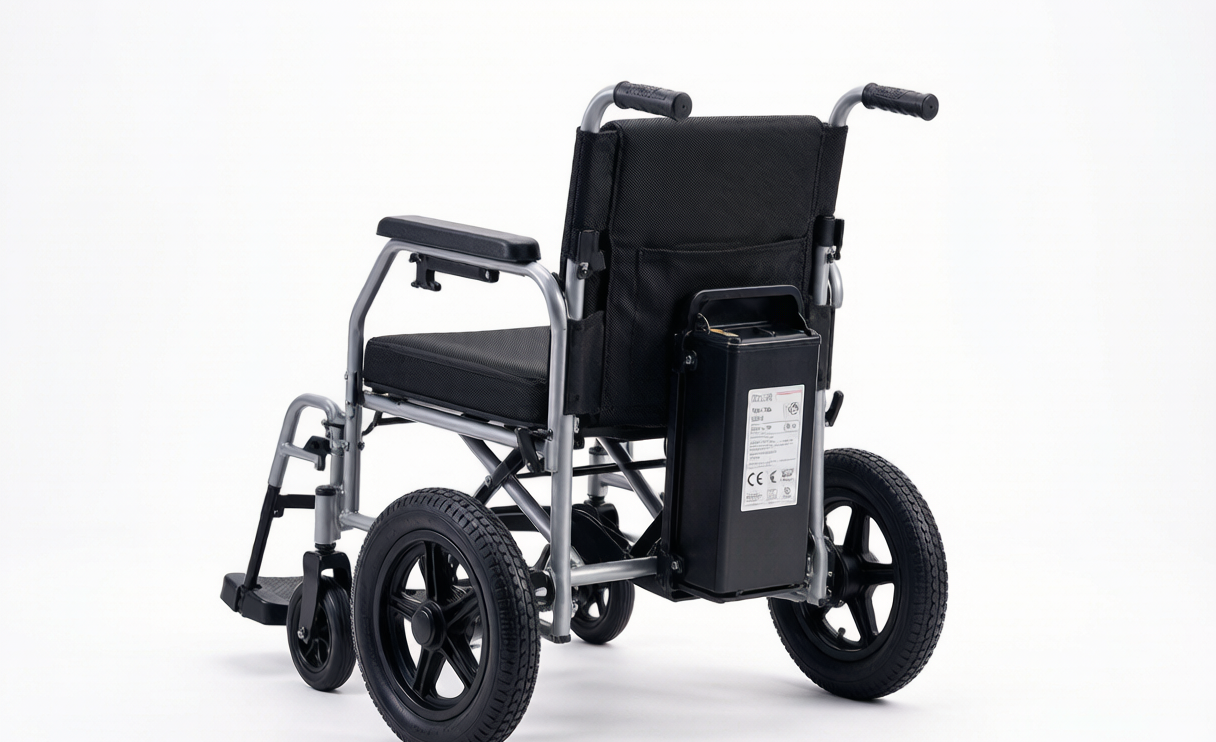
When I first started designing power systems for mobility devices back in 2014, most wheelchairs still ran on sealed lead-acid (SLA) blocks that weighed more than a small child. As Karl Huang, Senior lithium battery Engineer at Horizon Power, I have spent the last decade replacing those clumsy packs with something lighter, safer, and far longer-lived. A lithium battery for wheelchair and mobility aid applications is not just a drop-in upgrade — it is a complete rethinking of how a person moves through the world. In this article I will walk you through the engineering decisions we make when we build these packs, the standards we certify against, and the practical numbers you should expect from a well-designed system.
Why Lithium Beats Lead-Acid for Mobility Aids
The single biggest complaint I hear from wheelchair users is weight. A typical 12V SLA pair for a power chair weighs 12–15 kg combined. Swap that for a lithium-ion battery pack built on LiFePO4 (LFP) cells and you drop to roughly 4–5 kg for the same usable energy. That is a 60–70% weight reduction, and for someone who lifts their chair into a car trunk every day, it is life-changing.
But weight is only part of the story. Lead-acid chemistry suffers from the “Peukert effect” — the faster you draw current, the less capacity you actually get. Lithium cells hold their voltage curve far flatter under load, so a lithium battery pack delivers nearly all its rated watt-hours whether you are crawling up a ramp or cruising a corridor. In our bench tests, an LFP pack rated at 20 Ah still delivered 19.3 Ah at a 1C discharge, while an equivalent SLA pack collapsed to 13 Ah under the same load.
- Cycle life: SLA lasts 200–300 cycles; LFP lasts 2,000+ cycles to 80% capacity.
- Charge efficiency: Lithium charges at 95–99%; lead-acid struggles to reach 85%.
- Self-discharge: Lithium loses ~2–3% per month; SLA loses 5–10%.
- Maintenance: Lithium is sealed and hassle-free; SLA needs periodic equalization.
Key Electrical Specs I Specify for Wheelchair Packs
When a B2B buyer asks us to build a lithium battery wheelchair system, the first thing we lock down is the voltage platform. Most power chairs use 24V nominal (two 12V rails in series), while lightweight travel chairs often run on a single 24V or even a 25.6V LFP block. We then define capacity based on the user’s daily range requirement.
A realistic baseline: a mid-size power wheelchair drawing an average of 8 A at 24V (192 W) with a 20 Ah pack gives roughly 4–5 hours of continuous use, or about 15–20 km of real-world range depending on terrain. We always design with a 20% state-of-health margin so the chair never drops below the manufacturer’s cutoff under load.
For the cells themselves, we specify:
- Nominal voltage: 25.6V (8S LFP) for 24V systems.
- Capacity: 10–40 Ah depending on chair class.
- Continuous discharge: 2C minimum, with 3C peak for incline starts.
- Operating temperature: charge 0–45°C, discharge −20 to 60°C.
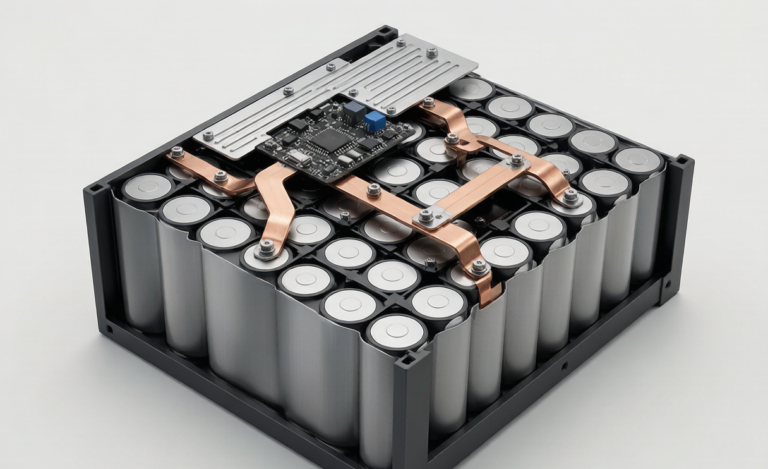
- BMS: 8–16 cell balancing, over-current, over-temp, and short-circuit protection.
Every pack leaves our line with a full characterization report — internal resistance, capacity at 0.5C, and a discharge curve — because for a mobility aid, reliability is not a feature, it is the whole product.
Battery Chemistry Choices: LFP vs NMC for Mobility Devices
This is the question I get asked most. For mobility aids, my default recommendation is LFP (LiFePO4), and the reason is safety first. LFP has an intrinsic thermal runaway threshold around 270°C, compared to roughly 150°C for NMC (nickel manganese cobalt). When the pack sits inches from a person’s legs for eight hours a day, that margin matters.
NMC still has a place where energy density is the absolute priority — ultra-light folding travel chairs where every 100 grams counts. But for the bulk of wheelchair and scooter applications, LFP’s longer cycle life and superior abuse tolerance win. A custom battery solution we built for a bariatric power chair used NMC only because the user needed sub-3 kg total weight; everything else in our catalog is LFP.
| Parameter | LFP | NMC |
|---|---|---|
| Energy density (Wh/kg) | 90–130 | 150–220 |
| Cycle life | 2,000–4,000 | 800–1,500 |
| Thermal stability | Excellent | Moderate |
| Cost per Wh | Lower | Higher |
Safety Standards and Certification You Must Verify
If you are sourcing a lithium-ion battery for mobility use, certifications are non-negotiable. At Horizon Power every wheelchair pack is validated against:
- UN38.3 — the UN manual of tests and criteria for lithium battery transport safety. This covers altitude simulation, thermal test, vibration, shock, external short circuit, impact, and overcharge. No UN38.3 test summary, no shipment.
- IEC 62133 — the international safety standard for portable sealed secondary cells and batteries. It governs cell-level abuse tolerance and battery-level protection.
- IEC 60601-1 — for any chair marketed as a medical device, this medical electrical equipment standard applies to the power system’s leakage and isolation.
- FAA / EASA — for air travel, spare lithium batteries under 100 Wh (and installed batteries up to 300 Wh with airline approval) are permitted. We mark each pack’s Wh rating clearly so users can show gate staff.
I tell every B2B buyer: ask for the test summary documents before you sign. A pack without UN38.3 and IEC 62133 paperwork is a liability, not a saving.
Custom Battery Solutions for Different Mobility Aid Types
Not every mobility aid is a wheelchair. We engineer custom battery solutions across the whole spectrum:
- Power wheelchairs: 24V 20–40 Ah LFP, high peak current for incline starts.
- Travel / folding chairs: 24V 10–15 Ah, priority on weight under 2.5 kg.
- Mobility scooters: 24V 30–60 Ah for 30+ km range, often with two removable blocks.
- Walkers with powered assist: 12V or 24V 8–12 Ah, slim form factor.
- Stair lifts: 24V sealed packs with trickle-charge tolerance.
The form factor is where custom engineering earns its keep. A scooter that takes two thumb-release blocks lets a frail user swap a dead pack in ten seconds instead of calling a carer. That is the kind of detail we prototype, test, and iterate before mass production.
Charging, Range, and Everyday Use
A well-designed lithium battery wheelchair system charges to 80% in about two hours and reaches full in three to four. We spec a 0.5C charger with temperature-compensated cutoff so the pack never overcharges in a hot garage. Real-world range depends on user weight, terrain, and tire pressure, but as a rule of thumb:
- 20 Ah pack → 15–20 km
- 30 Ah pack → 25–30 km
- 40 Ah pack → 35–45 km
For daily users, I recommend keeping the pack between 20% and 90% state of charge. Full 100% charges only before a long trip. This simple habit roughly doubles the pack’s useful life compared to always charging to full.
Frequently Asked Questions
How long does a lithium battery for a wheelchair last?
A quality LFP pack rated at 2,000 cycles will last 4–6 years with daily use, even if you only see 80% of original capacity by the end. SLA would need replacing every 12–18 months, so the lifetime cost of lithium is usually lower despite the higher upfront price.
Can I take a wheelchair lithium battery on a plane?
Yes. Installed batteries up to 300 Wh are allowed with airline approval, and most wheelchair packs fall well under that. Carry the UN38.3 test summary and the pack’s Wh label. Spare (loose) batteries under 100 Wh can go in cabin baggage. Always notify the airline 48 hours ahead.
How do I maintain a lithium mobility battery?
Keep it charged above 20%, store at 50–60% if idle for months, avoid charging below 0°C, and use the supplied charger. Unlike SLA, there is no watering or equalization. A monthly visual check of terminals is enough.
What capacity do I need for my wheelchair?
Estimate your daily km, then add 30% margin. If you ride 15 km a day on mixed terrain, a 20–25 Ah 24V LFP pack is the sweet spot. For hilly areas or heavier chairs, step up to 30 Ah. We are happy to size a custom battery solution from your actual usage pattern.
As a final note from the bench: the best lithium battery for wheelchair and mobility aid use is the one you never have to think about. It charges quietly, holds its range, and passes every safety audit without drama. That is exactly what we engineer at Horizon Power, and it is why lithium has become the default choice for mobility professionals worldwide.