Battery Solutions for Robotics and AGV Platforms
Battery Solutions for Robotics and AGV Platforms: Engineering Reliable Power for Autonomous Machines
Over the past decade I have watched autonomous handling robots move from laboratory curiosities to the backbone of modern logistics. As Karl Huang, Senior lithium battery Engineer at Horizon Power, I have personally led the development of dozens of power systems for automated guided vehicles (AGVs), autonomous mobile robots (AMRs), and service robots. In this article I want to share what I have learned on the factory floor and in the test lab about battery solutions robotics teams actually need — not the marketing brochure version, but the engineering reality of keeping a 500 kg payload moving for a full shift.
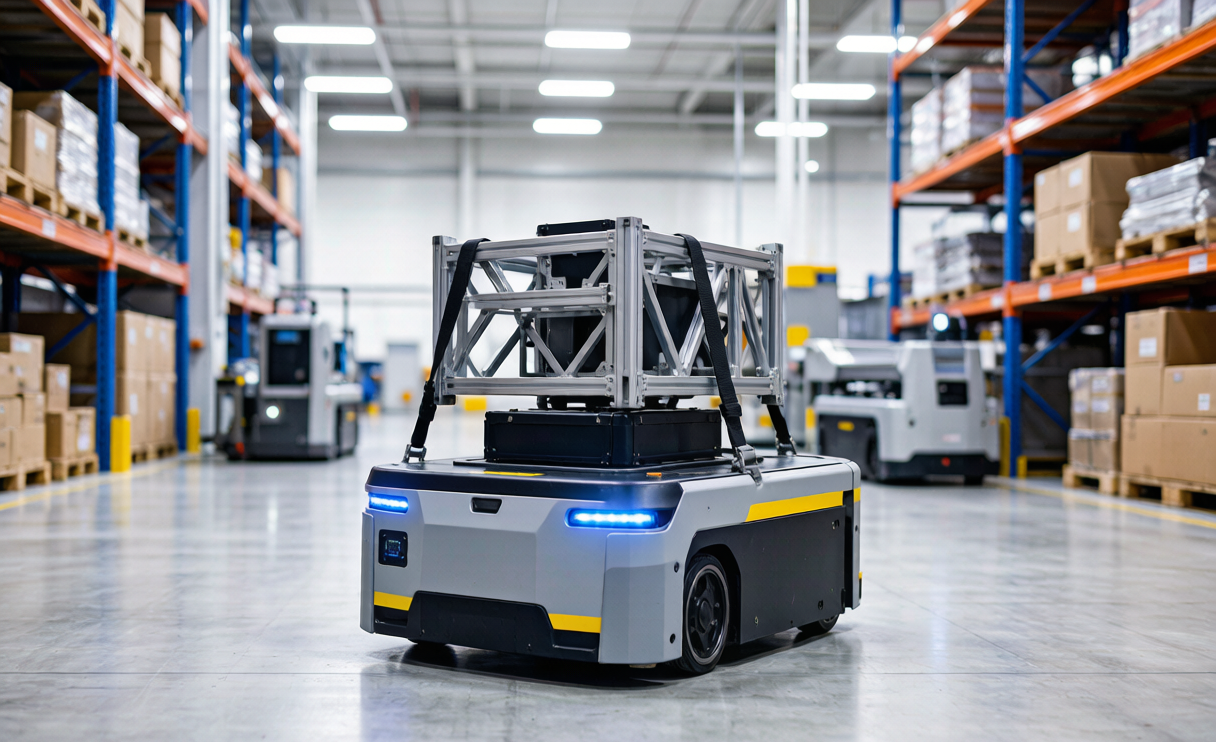
When a customer first asks us for a robot battery, they usually start with capacity: “We need 48V 60Ah.” My job is to reframe the conversation around duty cycle, peak current, and thermal envelope. A warehouse AGV is not a drone that flies for twenty minutes and lands; it is a ground vehicle that may run ten hours a day, seven days a week, with bursts of high current during acceleration and lifting. That difference changes every cell choice we make.
Why Robotics and AGV Platforms Demand a Different Battery Approach
The first lesson is that robots are power shapes, not power budgets. A service robot that delivers meals in a hotel draws a steady, modest current. An AGV that lifts a pallet and accelerates to 2 m/s draws two to four times its cruise current in a matter of seconds. If the battery pack cannot deliver that pulse without excessive voltage sag, the robot’s motor controller trips or the onboard compute reboots — and a rebooted robot in a live warehouse is a safety incident, not a nuisance.
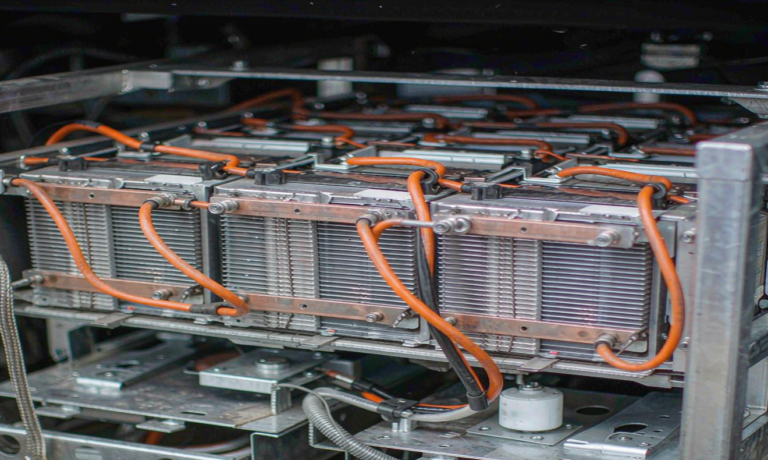
This is why I insist on high-rate lithium battery cells for almost every AGV we build. A standard 18650 energy cell may offer great watt-hours per dollar, but its internal resistance climbs under load and its cycle life collapses if you pull rated current near its maximum. For robotics we typically select power-grade cells with a continuous C-rate of 3C to 5C and pulse capability well beyond that. The trade-off is slightly lower energy density, but in a ground robot with room for a pack, that is almost always the right call.
- High-rate discharge: cells rated for repeated 3C–5C continuous output.
- Low internal resistance: minimal voltage sag during acceleration and lifting.
- Stable bus voltage: keeps motor controllers and compute happy under load.
- Mechanical robustness: packs that survive vibration and shock on the plant floor.
High-Rate Discharge and the Physics of AGV Acceleration
Let me make the physics concrete. A 48V AGV with a 600 kg total moving mass that accelerates at 1 m/s² needs roughly 600 W just to overcome inertia, plus drivetrain losses and the lift motor. During a simultaneous lift-and-go maneuver, peak demand can reach 3,000–4,000 W. At 48V that is 60–85 A. A pack built on energy-grade cells would sag toward 40V under that load; a pack built on power-grade cells holds closer to 45V. That 5V difference is the margin between a robot that completes its task and one that faults out.
In our custom battery solution work we model the entire current profile, not just the average. We log the robot’s real telemetry for a week, build a duty-cycle histogram, and size the pack so that even the 99th-percentile pulse stays inside the cell’s safe operating area. That data-driven approach is the single biggest reason our AGV packs rarely come back with field failures.
Fast Charging and Opportunity Charging in 24/7 Warehouses
The second reality of battery solutions robotics programs face is uptime. Three-shift operations cannot afford a six-hour slow charge. We design for opportunity charging: the robot tops up during a 15-minute coffee break or at a dedicated charge pad whenever it is idle. To support this, the lithium battery chemistry must tolerate repeated partial-state-of-charge (PSOC) cycles without the memory effect that plagued older nickel chemistries.
For fast charging we typically recommend a 0.5C to 1C charge rate with careful thermal control. Charging at 1C means a 60Ah pack fills in about an hour, and our battery management system (BMS) tapers current as cells approach full to protect life. We also add contactor and pre-charge circuits so the charge pads engage without arcing, and we log every charge session so the customer can prove their fleet is being maintained.
Cycle Life, Thermal Management, and Total Cost of Ownership
Robotics buyers often fixate on the upfront price of a battery pack, but the number that matters is cost per cycle. A cheap pack that dies at 800 cycles is far more expensive than a properly engineered pack that reaches 2,000 cycles, because you are also paying for downtime, labor, and the risk of a mid-shift failure. For AGVs we target 1,500–2,500 cycles at 80% depth of discharge, and we get there through three levers: conservative cell selection, active or passive balancing in the BMS, and thermal management.
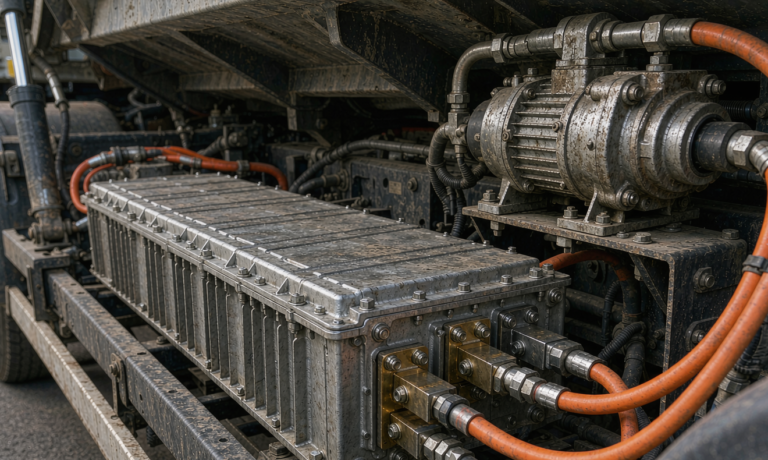
Heat is the enemy of cycle life. A pack that runs at 45°C ages roughly twice as fast as one held at 30°C. On floor-cleaning robots and outdoor AMRs we add aluminum housing with finned heatsinks; on tightly packaged AGVs we route the cells away from motor and inverter heat and use the chassis as a heat spreader. None of this is glamorous, but it is the difference between a two-year and a five-year pack.
Designing a Custom battery solution Around Your Robot
Every robot is different, so a custom battery solution starts with the mechanical and electrical envelope. We begin with four questions:
- What voltage does the drivetrain and compute require, and what is the tolerance?
- What is the real current profile, including pulses and lifts?
- What is the available volume, mass budget, and mounting geometry?
- What certification and communication bus does the platform need (CAN, RS485, SMBus)?
From there we build a prototype pack with a smart BMS that speaks the robot’s bus, validates it against the logged duty cycle, and only then move to pilot production. I have seen too many teams bolt on an off-the-shelf pack and wonder why their robot reboots under load. The BMS is not optional — it manages cell balancing, protects against over-current and over-temperature, and gives the fleet manager a window into every pack’s health.
Cross-Platform Lessons: From drone battery to AGV Pack
One of the reasons Horizon Power covers both aerial and ground platforms is that the lessons transfer. A drone battery taught us everything about pulse tolerance and weight discipline; an AGV pack taught us about thermal mass and 24/7 duty. The same high-rate cell families, the same conservative sizing philosophy, and the same obsession with BMS quality show up in both. When a robotics customer comes to us, they get the accumulated knowledge of building thousands of packs across drones, AGVs, and stationary storage.
Whether you run a small AMR fleet or a fully automated distribution center, the principle is identical: treat the battery as a system, not a component. Model the duty cycle, choose power-grade cells, engineer the thermal path, and let the BMS do its job. Do that, and your robots will run their full shift, every shift.
Frequently Asked Questions
What battery chemistry is best for AGV and robotics platforms?
For most AGVs and AMRs we recommend LiFePO4 (LFP) when safety and cycle life dominate, and high-rate NMC when energy density and weight matter more. Both are lithium battery chemistries we build daily; the choice depends on your duty cycle and certification needs.
How long does a robot battery pack last in daily use?
A well-engineered battery pack rated for 1,500–2,500 cycles at 80% depth of discharge typically lasts three to five years in a three-shift warehouse, assuming proper thermal management and opportunity charging.
Can you build a custom battery solution for a non-standard robot voltage?
Yes. We design custom battery solutions from 12V to 96V and beyond, matching the cell configuration, BMS communication (CAN/RS485/SMBus), and mechanical envelope to your specific robot platform.
Do the same cells used in a drone battery work in an AGV?
Often yes. High-rate drone battery cells share the low internal resistance and pulse tolerance that AGVs need for acceleration and lifting, though ground robots allow larger pack sizes and more aggressive thermal designs.
How do you support fast charging without hurting cycle life?
We size the pack so opportunity charging at 0.5C–1C stays within the cells’ safe window, taper current near full, and use the BMS to log every session — protecting both life and warranty.
Conclusion
Reliable battery solutions robotics teams can trust come from engineering the pack around the robot’s real duty cycle: power-grade cells, honest thermal design, and a BMS that watches every cell. If you are building or scaling an AGV or AMR fleet, talk to us about a custom battery solution designed for your shift, not someone else’s brochure.