Drone Battery Safety: Preventing Thermal Runaway in Flight
As a senior lithium battery engineer at Horizon Power, I have spent more years than I care to count on the failure bench—cutting open swollen packs, replaying flight-log data, and trying to understand the thirty seconds before a drone battery turns from a power source into a fire. Thermal runaway is the single most feared failure mode in our industry, and for good reason: once it starts inside a densely packed aircraft, you have almost no time to react. The good news is that runaway is rarely a spontaneous mystery. In nearly every case I have investigated, it was the predictable result of a known weakness that a disciplined custom battery solution process could have caught. This article is the field guidance I give every new engineer on my team.
What Thermal Runaway Actually Is
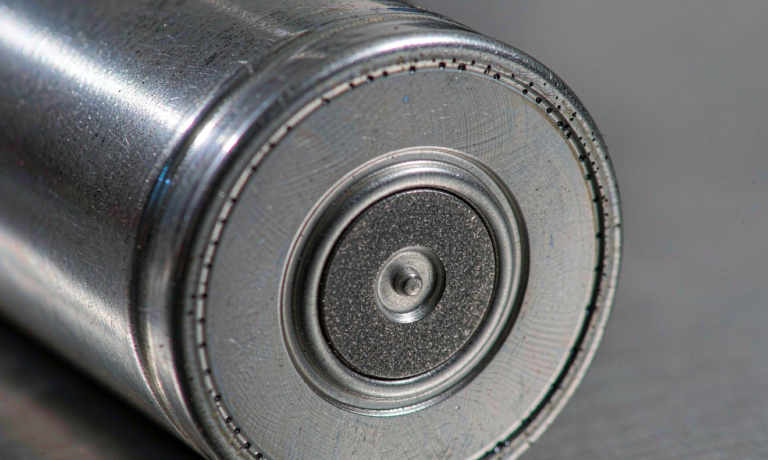
Thermal runaway is a self-sustaining exothermic chain reaction inside a lithium battery cell. It begins when internal temperature crosses a threshold—often around 80°C for a damaged Li-ion cell—and the separator melts, shorting the electrodes. That short generates more heat, which pushes the reaction faster, which generates more heat. The cell can vent flammable electrolyte, ignite, and in a fraction of a minute reach several hundred degrees. In a drone lithium battery pack, where cells sit millimetres apart, one cell going critical can cascade to its neighbours before the pilot has finished blinking. Understanding that it is a cascade, not a single event, is the foundation of every defense we build.
Why Drone Battery Packs Are Especially Vulnerable
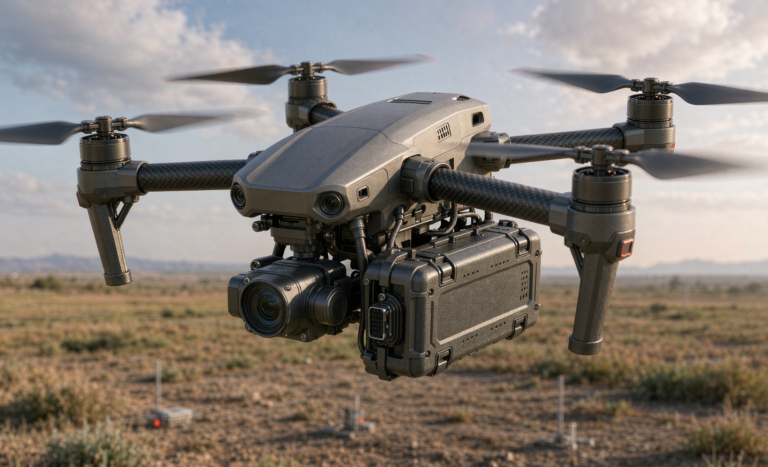
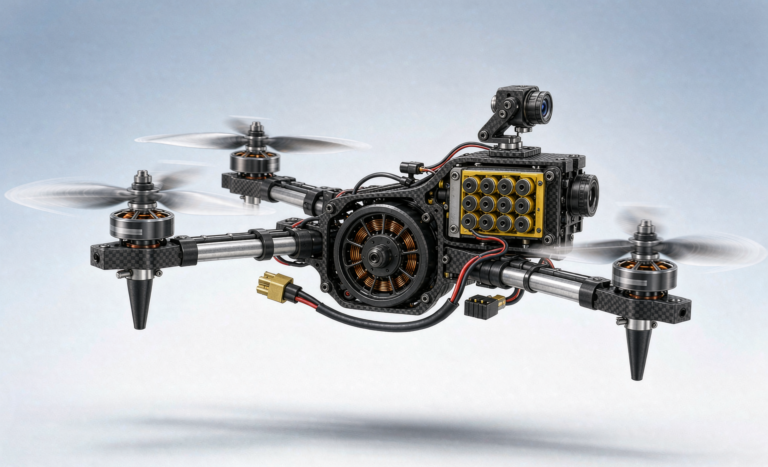
Aircraft packs are engineered for the worst possible combination: maximum energy in minimum mass, operated at high discharge rates, sometimes in extreme ambient conditions. Unlike a stationary home pack that sits in a climate-controlled room, a drone battery climbs, dives, vibrates, and bakes in direct sun. Mechanical stress can fracture a weld or pinch an insulator. High C-rate discharge heats cells unevenly. And because every gram matters, we cannot simply bury the cells in armour. The result is a narrow safety margin that depends entirely on disciplined design and pre-flight discipline. I tell clients bluntly: a lightweight pack with a weak BMS is not a savings, it is a liability you are carrying at 120 metres.
Design Defenses: From Cell Selection to BMS
Safety starts long before the pack is assembled. I specify cells with a verified abuse tolerance and a stable chemistry—for most multirotor work that means high-quality LiPo or, increasingly, semi-solid-state cells where the reduced liquid electrolyte lowers runaway risk. The single most important component, though, is the Battery Management System. A proper BMS does far more than balance cells: it monitors per-cell voltage, temperature at multiple points, and current; it opens the pack contactor on a fault; and it logs the events that let us reconstruct a near-miss. For any custom battery solution we ship, the BMS firmware is reviewed as carefully as the cells themselves. A BMS that only balances during charge is not adequate for flight.
Separator and Construction Choices
Modern cells use ceramic-coated separators that resist shrinkage at high temperature, buying critical seconds during an overheat event. I also favour packs with physical barriers between cell groups so a single failure cannot immediately bridge to the next. These details are invisible to the buyer but they are the difference between an incident and a catastrophe.
Operational Practices That Prevent In-Flight Failures
No amount of engineering replaces disciplined operation. The failures I see most often come from behaviour, not manufacturing. Never charge a pack unattended, never fly a pack that has been dropped or punctured, and never ignore a pack that gets warm during a normal flight. I mandate a cooldown period between aggressive flights so cells return to ambient before the next high-rate discharge. For commercial operators I require a logged cycle count and a retirement threshold—typically at 80%% of original capacity—because an aged lithium battery has less margin against the runaway cascade. These rules sound boring. They are also why my fleet clients rarely see an emergency.
Detecting Early Warning Signs Before Takeoff
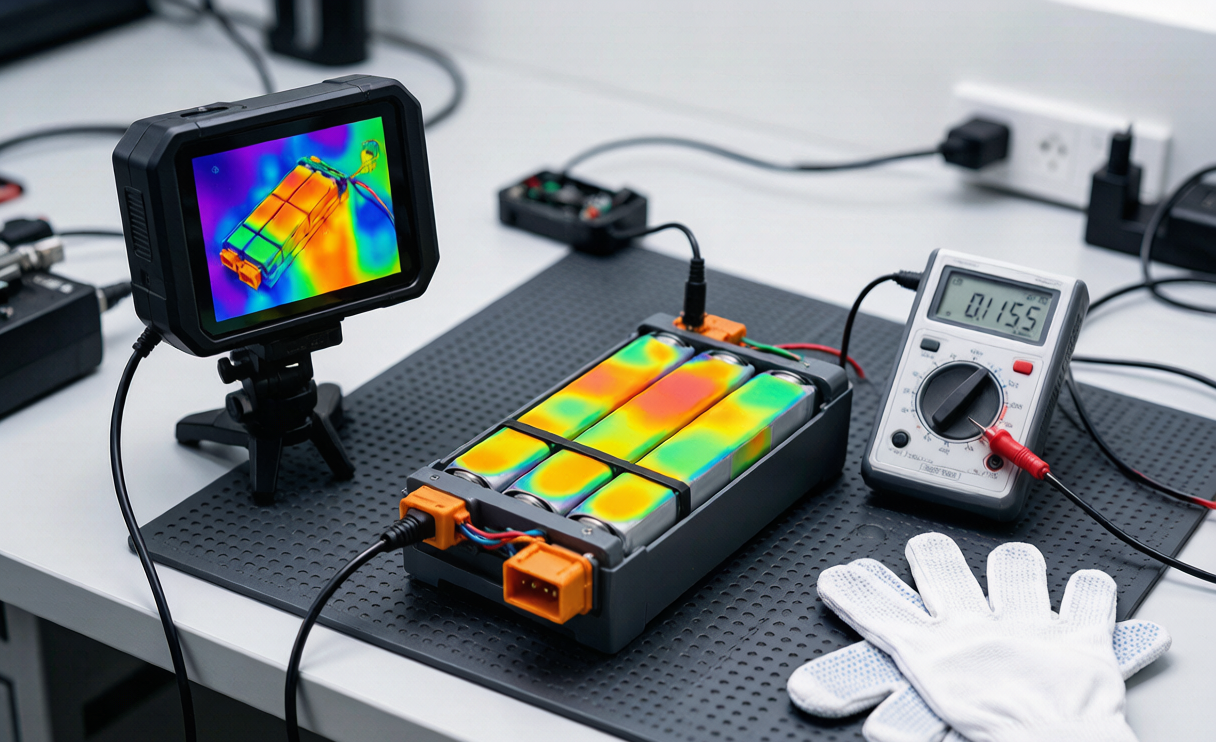
The runaway almost always telegraphs itself first. A pack that takes longer to charge than its siblings, one cell that will not balance, a swelling of even half a millimetre, or a pack that feels warm sitting on the bench—each is a signal. I train pilots to perform a pre-flight squeeze-and-sniff check: gently press for hull integrity, look for venting residue, and trust their nose. Chemical smells are non-negotiable grounds to ground the aircraft. On the data side, I review the last flight’s temperature peaks; any pack that ran more than 10°C above its stable baseline gets quarantined for bench testing. A disciplined drone lithium battery program is built on catching these whispers before they become explosions.
My Field Checklist for Every Deployment
Before any aircraft leaves the ground under my supervision, the battery passes this list: visual hull intact with no swelling; BMS log shows balanced cells within 20 mV; external temperature at ambient with no hot spots; cycle count below the retirement limit; no history of impact or puncture; and a verified charge from a calibrated, temperature-monitored charger. If any single item fails, the pack stays on the ground. It is a simple rule, but it has prevented more incidents than any single component upgrade. Safety is a habit, not a feature you buy once.
Transportation and Storage Safety Between Missions
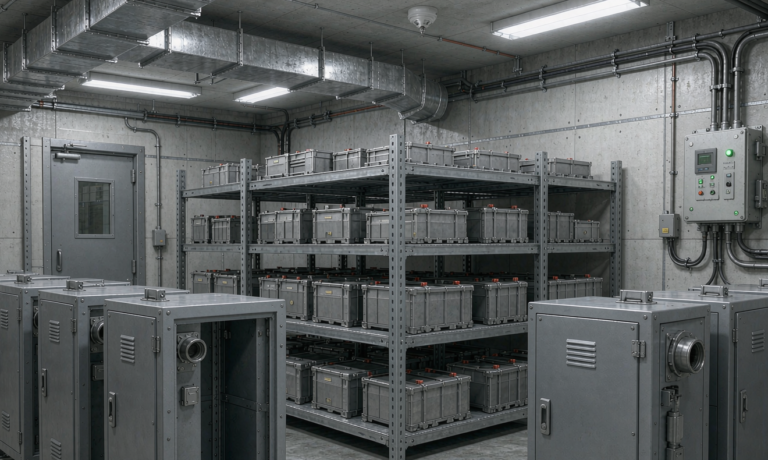
Most drone battery incidents I am called to investigate did not happen in the air—they happened on the bench, in the car, or in storage. A lithium battery that is fully charged and left in a hot vehicle is under exactly the stress that triggers runaway. I store packs at roughly 40%% state of charge in a cool, dry, non-combustible cabinet, and I transport them in purpose-built fireproof bags with the connectors taped. For air travel, compliance with IATA and UN38.3 is not optional: the pack must be carried in cabin, below the airline’s watt-hour limit, and with terminals protected. A disciplined custom battery solution includes a handling manual, not just the pack, because the safest cell in the world still fails if a warehouse clerk stacks it under a pallet.
Building a Safety Culture Across the Team
Technology alone does not prevent fires; habits do. I build programs where any pilot can ground a pack without explanation and be thanked for it, where near-misses are logged and shared rather than hidden, and where retirement rules are enforced by software rather than memory. We run quarterly teardown reviews on randomly pulled packs to catch drift in our own manufacturing. The goal is boring predictability: every pack, every flight, same checklist. When a client asks me what single change most improved their safety record, the answer is never a component—it is making inspection a non-negotiable part of the culture around every drone lithium battery they fly.
Regulatory and Standards Backdrop
Safety is also written into law, and a responsible manufacturer designs to it rather than around it. Every pack we build is qualified to UN38.3 for transport shock and thermal abuse, and to IEC 62133 for cell-level safety. For aircraft-mounted systems, guidance such as RTCA DO-311A outlines minimum airworthiness considerations for rechargeable batteries on airborne platforms. I treat these standards as a floor, not a ceiling—internal testing always exceeds the listed pass conditions because a certificate proves the sample passed, not that every production pack will. When you specify a drone battery, ask the supplier which standards they actually test to, and request the report. A vague answer is itself a warning sign.
Frequently Asked Questions
Can a drone battery catch fire without any warning at all?
It is extremely rare for a healthy, undamaged pack to fail with zero prior signal. In my experience the warning is almost always there—a slight imbalance, a warm cell, a small swelling—but it was missed because nobody was looking. That is exactly why pre-flight inspection and BMS logging matter so much.
Is LiPo more dangerous than other lithium chemistries for drones?
LiPo offers the best energy density for flight, which is why it dominates, but its gel electrolyte is more volatile than the ceramic-supported cells in newer formats. That does not make it unsafe; it means the supporting systems—BMS, charging discipline, retirement policy—must be taken seriously. A well-managed drone battery of any chemistry is far safer than a neglected one.
What should I do if a pack starts overheating mid-flight?
Land immediately in the safest available area,功率 down gently, and evacuate the vicinity once landed. Do not attempt to handle a hot pack with bare hands. Keep a Class D or lithium-specific extinguisher on site, and never store a suspected-faulty pack indoors. Document the BMS log—it is the evidence that prevents the next failure.
How does a good BMS actually stop thermal runaway?
It cannot always stop a cell that has already gone critical, but it prevents the conditions that lead there: it cuts charge when a cell overvolts, opens the circuit on overcurrent, and isolates a hot cell before its neighbours are affected. The BMS is your early-warning and first-response system in one, which is why I treat it as mission-critical hardware.