Lithium Battery State of Charge Calibration Best Practices
As a senior lithium battery engineer at Horizon Power, I have lost count of how many “faulty” battery packs were returned to us with nothing actually wrong except a confused state-of-charge reading. The pack was fine; the meter was lying. Lithium battery state of charge (SOC) calibration is one of the most misunderstood and most neglected maintenance steps in our industry, and yet it is cheap, fast, and enormously impactful on both user trust and pack longevity. A well-calibrated pack tells the truth about its remaining energy; a poorly calibrated one either strands equipment early or pushes cells into deep discharge. This article is the calibration playbook I hand to every integrator we work with.
What State of Charge Really Means
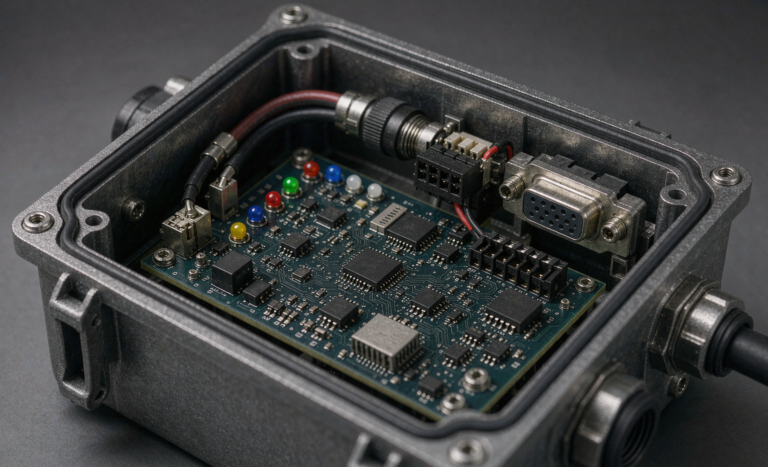
State of charge is the available capacity of a lithium battery expressed as a percentage of its rated capacity. At 100%% the pack holds its design energy; at 0%% it is empty. Sounds simple, but SOC is not directly measured—it is estimated. The BMS infers it from voltage, current integration (coulomb counting), and temperature models. Each method drifts, and over months of partial cycles the estimate can wander far from reality. Calibration is the process of re-anchoring that estimate to a known reference point so the displayed percentage matches the true energy remaining. Without it, a custom battery solution that is electrically perfect will still frustrate users with inaccurate runtime predictions.
Why SOC Drifts in a Lithium Battery
Several forces push the estimate off target. Coulomb counting accumulates tiny measurement errors on every charge and discharge; a 1%% current-sense error compounds into a meaningful gap over dozens of cycles. Voltage-based estimation is distorted by the flat discharge curve of chemistries like LFP, where voltage barely moves across 20–80%% SOC, leaving the algorithm guessing. Temperature further bends the curve. And partial charging—the modern habit of topping up at 60%%—means the pack rarely sees a full 0–100%% sweep that would naturally re-anchor the model. The result is a reading that slowly decouples from physics. I have seen packs report 30%% while actually sitting near empty, a dangerous condition for any drone battery still expected to complete a mission.
The Calibration Procedure I Use
My standard calibration is deliberately simple and repeatable. First, discharge the pack at a controlled, moderate rate to the manufacturer’s cutoff voltage—this defines true 0%%. Then charge it slowly, uninterrupted, to full cutoff, defining true 100%%. During both phases the BMS logs and the coulomb counter resets at each endpoint. For packs with communication, I trigger the BMS “learn” or “calibrate” flag at the endpoints so the firmware adopts the measured capacity as the new reference. The whole procedure takes one full cycle and catches both offset errors and capacity fade in a single pass. We bake this into the commissioning step of every custom battery solution we deliver.
Temperature Matters During Calibration
Always calibrate inside the pack’s specified temperature band—typically 15–30°C. Cold cells read a falsely high voltage, and the calibration will bake that error into the model. I keep packs at room temperature for at least two hours before a calibration cycle so the cells are thermally settled.
How the BMS Estimates SOC
Understanding the algorithm helps you calibrate it correctly. Most BMS units blend two approaches: an open-circuit voltage lookup (accurate only at rest) and coulomb counting (accurate only over short windows). A good estimator fuses them with a Kalman filter, but the filter still needs periodic ground truth. This is why a full 0–100%% cycle remains the gold standard—it is the only moment the algorithm gets a hard reference at both ends. Skipping it leaves the filter interpolating across an ever-widening guess. For mission-critical lithium battery deployments, I schedule this full cycle quarterly rather than waiting for complaints.
Common Calibration Mistakes
The errors I see repeatedly are easy to avoid. Calibrating on a fast charger that terminates early teaches the BMS a false 100%%. Calibrating only at the top, by topping up without a full discharge, re-anchors only one end and lets the bottom drift. Calibrating a warm pack bakes in temperature error. And perhaps worst, calibrating a pack that already has a weak cell gives a plausible-but-wrong capacity number that hides the failing cell. I always pair calibration with a cell-balance and internal-resistance check so the reading is both accurate and honest about pack health.
Calibration for Different Chemistries
LFP and NMC need different handling. LFP’s flat voltage curve makes voltage-based SOC almost useless across the mid-range, so coulomb counting and periodic full cycles dominate—calibrate LFP more often, I suggest every 30 cycles. NMC and LiPo have a more expressive voltage curve, so voltage lookups are more reliable between calibrations, but they are also less tolerant of deep discharge, so the 0%% anchor must use the correct cutoff, not a guessed value. A drone battery built on LiPo, for instance, should never be drained to the pack’s absolute cutoff during calibration if the cells specify a higher safe minimum; protect the cells, then teach the BMS the true usable window.
When to Recalibrate in the Field
Recalibrate whenever the symptom appears: runtime no longer matches the displayed percentage, the pack shuts down with charge still showing, or the BMS reports capacity differently than last quarter. For fleet operators I automate it—every tenth charge is a slow, uninterrupted, full-cycle calibration logged to our backend. This turns a neglected chore into a quiet background process. The payoff is measurable: integrators who adopt scheduled calibration report dramatically fewer “battery died early” support tickets, because the pack finally tells the truth about its lithium battery state.
Calibration and the Custom Battery Solution Lifecycle
Calibration is not a one-time commissioning step; it belongs in the full lifecycle of any custom battery solution. I document the baseline capacity at first calibration and track it across the pack’s life, because the slope of that curve predicts end-of-life far better than a calendar date. When a pack drops below 80%% of baseline, our system flags it for retirement before it can disappoint a customer in the field. This turns calibration from a meter-fixing chore into a predictive maintenance signal—one of the highest-leverage habits an integrator can adopt for a lithium battery fleet.
Tools and Logging for Reliable Calibration
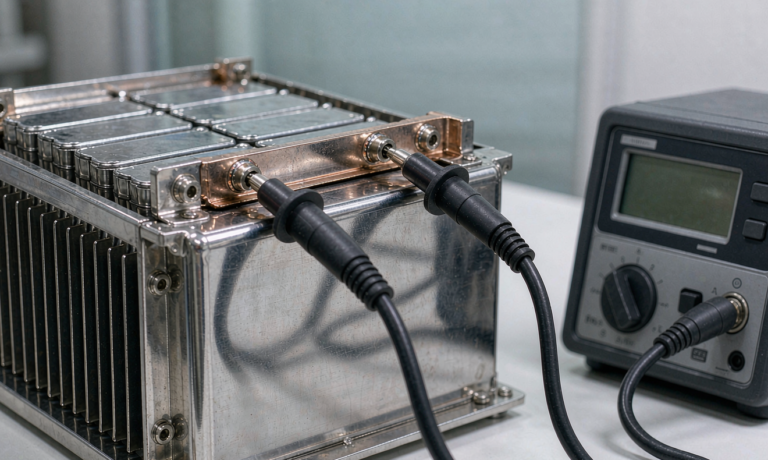
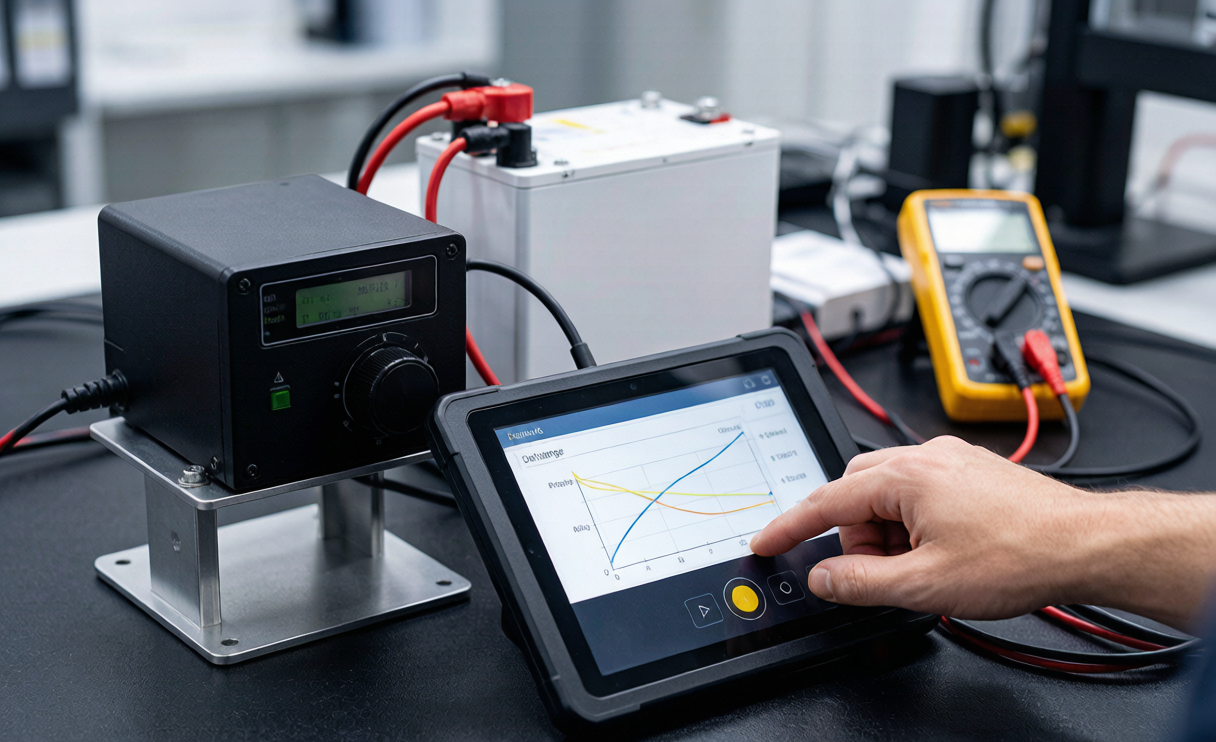
Good calibration needs good instruments. I use a calibrated load or charger with verified current accuracy, a temperature-controlled environment, and BMS logging that captures every volt and amp of the cycle. The log is not just for the moment—it becomes the pack’s health record, comparable quarter to quarter. For a drone battery used commercially, that record is also compliance evidence: when a regulator or insurer asks how you verify pack safety, a calibration log is a far stronger answer than a spec sheet. Invest in the logging once, and every future calibration gets cheaper and more trustworthy.
Safety Considerations During Calibration
Calibration drives a pack to its extremes, so respect the hazards. Perform full discharge cycles in a monitored, non-flammable area with a fire extinguisher rated for lithium fires nearby, and never leave a pack at true 0%% for long—deep rest at empty accelerates capacity loss and risks reversal in weak cells. For high-energy drone battery packs, I cap the discharge rate during calibration to keep temperatures moderate and avoid stressing welds. The goal is an accurate reading, not a stress test; if a pack cannot survive a gentle calibration cycle, it should not be flying. Safety and accuracy are the same discipline seen from two angles.
Frequently Asked Questions
How often should I calibrate a lithium battery?
For most stationary and light-duty packs, a full calibration every 30–50 cycles is sufficient. For LFP chemistries with flat voltage curves, lean toward every 30 cycles. Mission-critical or heavily cycled packs—including many drone battery systems—benefit from monthly or per-quarter scheduled calibration. The cost is one cycle; the benefit is trustworthy runtime.
Can I calibrate without a full discharge?
A partial calibration that only re-anchors the top end will correct offset at high SOC but leaves the lower range unverified, where most surprises happen. I strongly recommend a true 0–100%% cycle for the first calibration of any pack and for diagnosing inaccurate readings. Quick top-end resets are a band-aid, not a calibration.
Does calibration fix a degraded battery?
No—and that is the point. Calibration reveals true remaining capacity; it does not restore lost capacity. If a pack calibrates to 80%% of its original rating, that is honest news about wear, not a meter glitch. Treat a sudden capacity drop after calibration as a health signal and inspect the cells.
Is calibration the same as cell balancing?
They are related but distinct. Balancing equalises voltage across series cells; calibration aligns the SOC estimate to true capacity. A well-balanced pack can still show a wrong SOC if the estimator has drifted. I run balancing during the slow charge phase of calibration so both happen in one efficient procedure.