Lithium Ion vs Lithium Polymer Battery
Every month in our Horizon Power engineering lab, an OEM customer sends the same question: “Should we use a lithium ion vs lithium polymer cell for our new product?” After fifteen years designing lithium battery packs for drones, medical devices, and home storage, I have learned that this is rarely a chemistry question at all. It is a system-design question — about shape, safety envelope, weight budget, and how the cell mechanically integrates with your enclosure. In this article I will walk you through the real, measurable differences between Li-ion and LiPo from the perspective of someone who has shipped both into production.
I want to be clear about my lens. I am an engineer, not a marketer, so I will give you numbers you can put into a spec sheet and trade-off curves you can defend in a design review. The two cell families are often pitched as rivals, but in practice they coexist in our catalog because each solves a different problem. My goal is to help you pick the one that fits your product instead of the one with the louder brochure.
What “Lithium Ion” and “Lithium Polymer” Actually Mean
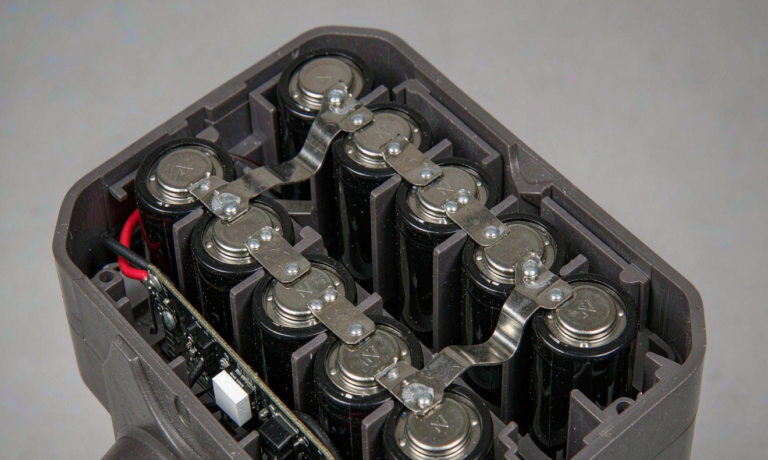
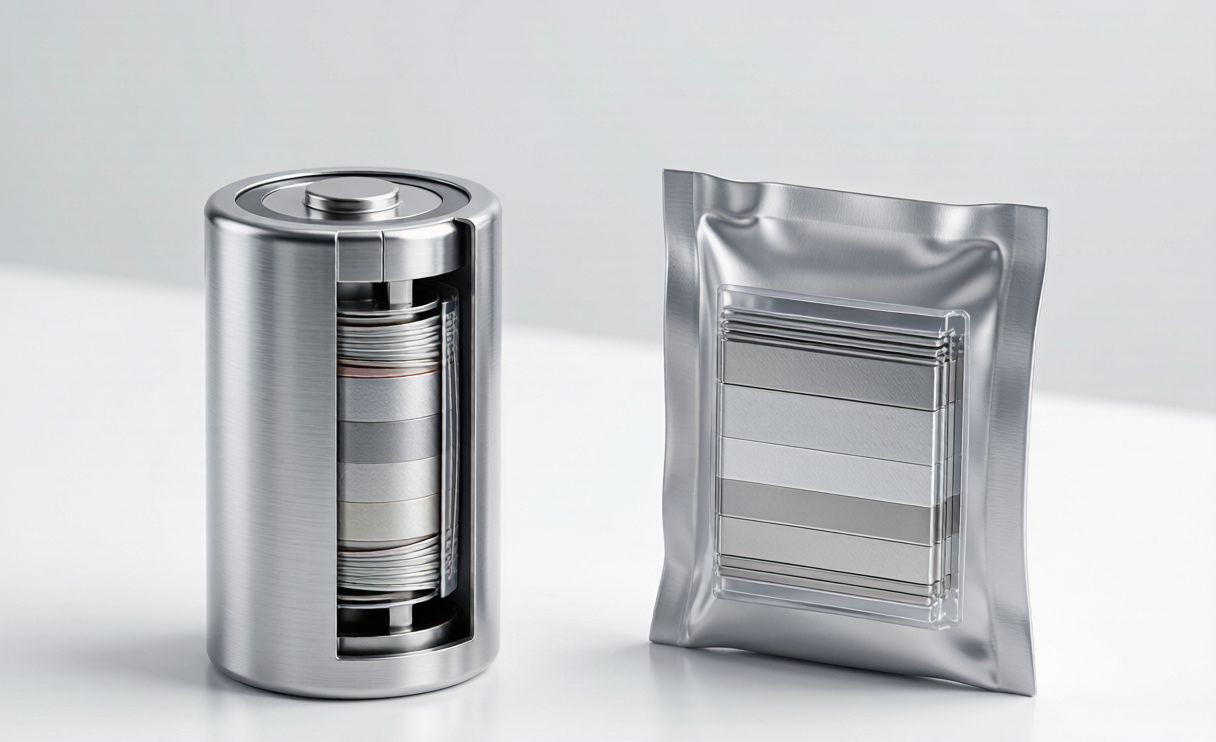
The naming is the first trap. Both are rechargeable lithium cells that move Li+ ions between anode and cathode. The difference is in the electrolyte and the container, not the underlying electrochemistry. A standard Li-ion cell uses a liquid or gel electrolyte sealed inside a rigid metal can — most commonly the 18650, 21700, or 26650 cylindrical formats, or a hard prismatic aluminum case.
A lithium polymer (LiPo) cell replaces the liquid electrolyte with a dry or gel-like polymer separator and seals it inside a flexible laminated aluminum-foil pouch. There is no metal can. That single change drives almost every trade-off you will read about below. In our production lines we treat the two as different battery pack building blocks rather than different chemistries.
A subtle but important note: the term “lithium polymer” is sometimes used loosely to mean any pouch cell, even when the electrolyte is still a liquid held in a polymer matrix. True solid-polymer cells exist but need heating to perform, so almost every commercial LiPo you buy is a gelled or liquid-in-polymer pouch cell. For OEM design purposes, treat “LiPo” as “pouch format” and verify the actual electrolyte spec with your supplier before you commit a qualification budget to it.
Energy Density and Weight: The Form-Factor Advantage
On a cell level, gravimetric energy density is closer than most spec sheets suggest. A good cylindrical NMC Li-ion cell lands around 200–260 Wh/kg, while a quality LiPo pouch typically reaches 180–230 Wh/kg. The real weight win for LiPo comes from the absence of the steel or aluminum can: you carry more active material per gram of total cell mass.
- Cylindrical Li-ion (NMC): ~200–260 Wh/kg, ~500–700 Wh/L volumetric.
- LiPo pouch: ~180–230 Wh/kg, but higher pack-level density because there is no dead metal shell.
- LFP (LiFePO4) Li-ion: lower at ~120–160 Wh/kg, but excellent thermal stability and cycle life.
For a drone airframe where every gram costs range, the pouch’s pack-level density usually wins. For a ground cabinet where volume matters less than ruggedness, cylindrical cells are often the smarter call.
Safety and Thermal Behavior
This is where I am most opinionated, because I have seen both fail. A cylindrical Li-ion cell has a metal wall that contains swelling and gives the pack structure. Many include pressure-release vents and positive temperature coefficient (PTC) devices. LiPo pouches have no rigid wall: if they are overcharged or punctured, they swell, can bulge, and in worst cases vent flame with little containment.
That said, the chemistry choice inside matters more than the can. An LFP cell — whether pouch or cylindrical — is far more abuse-tolerant than an NMC cell of either shape. When an OEM tells me “safety is our top priority,” my first recommendation is to pick LFP, then argue about form factor second.
Thermal runaway is the failure mode everyone fears. In our abuse testing we heat cells to 130–150°C and watch onset. A vented cylindrical can channel the energy out a designated path; a pouch tends to rupture along a seal edge. Neither is “safe” once it reaches runaway, which is exactly why we insist on a certified battery management system (BMS) with over-voltage, under-voltage, and over-temperature cutoffs for every pack we ship, regardless of cell shape.
Shape Freedom and Mechanical Integration
Here LiPo is unbeatable. A pouch cell can be made thin, curved, or oddly contoured to follow your product’s shell — a phone, a wearable, a drone arm. Cylindrical cells only come in fixed diameters and lengths, so the pack ends up a brick of round cells with air gaps that waste space.
In one recent battery pack program for a handheld medical scanner, the customer’s enclosure had a 6 mm thick curved cavity. A pouch was the only viable option; a 18650 would never have fit. Conversely, for a high-vibration agricultural drone, we chose cylindrical cells because the metal can survives shock better and is easier to pot and fixture.
Internal Resistance and Discharge Performance
For high-power applications, the cell’s internal resistance and allowable discharge rate (its C-rating) decide whether your product performs. Cylindrical 18650 and 21700 cells are engineered for high continuous current — quality NMC cells comfortably sustain 10C–15C and peak higher. Specialty LiPo pouches built for radio-controlled models can advertise 50C–100C burst rates, but those are thin-film, low-energy-density constructions not suited to long-life OEM products.
In our drone programs the discharge profile matters more than peak rating. A survey drone pulls a steady 3C–5C; an FPV racer spikes to 20C+. For the steady-draw case, a well-built cylindrical Li-ion cell often wins on cycle life and thermal margin, while a purpose-designed LiPo wins on absolute burst power and weight. Match the cell to the duty cycle, not to the marketing number on the label.
Cycle Life and Total Cost of Ownership
Cycle life depends more on chemistry than container. An NMC Li-ion or LiPo cell typically delivers 500–1,000 full cycles before dropping to 80% capacity. An LFP cell — again, any shape — reliably reaches 2,000–4,000 cycles. For home storage and industrial duty cycles, that difference dominates the lifetime cost.
On unit price, LiPo pouches look cheaper per cell because they are simple to make, but they need careful mechanical support, balancing, and protective enclosures, which shifts cost back into the pack. Cylindrical cells cost more per cell but simplify pack assembly and thermal management. My rule of thumb: LiPo lowers bill-of-materials cost; cylindrical lowers system-engineering cost.
There is also a manufacturing-yield angle few buyers consider. Pouches are sensitive to dust and edge nicks during assembly, so a cleanroom and disciplined process control are mandatory — costs we absorb in our factory but pass through in lead time. Cylindrical cells arrive pre-sealed and forgiving, which shortens qualification and lets an OEM scale faster. If your program needs volume in under eight weeks, that alone can settle the debate.
How We Recommend at Horizon Power
When an OEM comes to us, we start from the application, not the cell. For consumer drones and wearables where shape and weight rule, we specify LiPo. For power tools, e-bikes, and harsh-environment equipment where shock and abuse resistance matter, we specify cylindrical Li-ion. For stationary home storage and long-lifecycle assets, we default to LFP prismatic or cylindrical packs regardless of the lithium polymer debate.
The “lithium ion vs lithium polymer” decision is therefore the last question, not the first. Get the chemistry, energy budget, and safety envelope right, and the container choice usually answers itself.
Frequently Asked Questions
Is lithium polymer safer than lithium ion?
Not inherently. Safety depends mostly on the cathode chemistry (LFP is safest) and on battery management. LiPo pouches lack a rigid metal can, so they are more prone to swelling and physical damage, while cylindrical Li-ion cells are mechanically tougher. With proper protection circuits, both are safe in production.
Which lasts longer, Li-ion or LiPo?
Cycle life is set by chemistry, not shape. NMC-based cells of either type give roughly 500–1,000 cycles, while LFP cells reach 2,000–4,000 cycles. Choose LFP if longevity is the priority, then pick the form factor that fits your enclosure.
Can I swap a Li-ion cell for a LiPo in my design?
Only after re-validating the pack. LiPo needs mechanical support and different swelling clearance, and the two formats have different internal resistance and thermal behavior. Treat it as a pack redesign, not a drop-in substitution.
Why are drone batteries usually LiPo?
Drones prize pack-level energy density and shape freedom. LiPo pouches follow the airframe contour and avoid the dead weight of a metal can, which extends flight time. The trade-off is that they need careful handling and a robust enclosure.
Do LiPo batteries degrade faster than Li-ion?
Not because of the pouch itself. Both degrade through the same lithium-loss and SEI-growth mechanisms. What accelerates LiPo failure is mechanical abuse and swelling from poor balancing; what hurts cylindrical cells is heat from high internal resistance under load. With matched chemistry and a good BMS, both reach similar calendar life in their intended use.
Which should a startup OEM choose for a first product?
If your volume is low and your shape is custom, LiPo lets you fit the enclosure and iterate tooling cheaply. If you need to scale fast, pass safety certification easily, and tolerate rough handling, start with cylindrical Li-ion. Either way, bring your battery partner in at the concept stage rather than after the mechanical design is frozen.