How to Source a Reliable Lithium Battery Manufacturer in
I am Karl Huang, a senior lithium battery engineer with more than a decade spent inside Chinese cell plants, pack houses, and customer return labs. If you are reading this, you are probably asking the same question my clients ask every quarter: how do I find a lithium battery manufacturer China buyers can actually trust? The short answer is that reliability is not a line item on a quotation—it is the sum of process control, traceable materials, and engineering honesty. In this guide I will walk you through exactly how I qualify a supplier, from the first spec sheet to the first container shipped.

Start With a Clear Battery Specification, Not a Price Request
The single biggest mistake B2B buyers make is opening the conversation with “send me your best price for a lithium battery.” A serious lithium battery manufacturer China cannot quote responsibly without knowing your application. Before you contact anyone, lock down four things: the nominal and cutoff voltage, the continuous and peak discharge current, the operating temperature range, and the target cycle life. I always attach a one-page application brief that also lists the connector type, the enclosure constraints, and the expected annual volume, because those details change the production line a supplier will assign to your job.
Chemistry choice follows directly from the use case. For stationary storage and long-life industrial packs, LFP (LiFePO4) is my default because of its thermal stability and 2,000–4,000 cycle window. For weight-sensitive drones and power tools where energy density rules, NMC (LiNiMnCoO2) or NCA cells win despite the tighter safety envelope. A competent supplier will push back on your chemistry if it does not fit the duty cycle—that pushback is your first quality signal. A Li-ion cell specified for the wrong job fails in the field, and the finger-pointing that follows costs more than any upfront saving. I have seen a buyer insist on NMC for a 24/7 backup cabinet and then watch calendar aging destroy the pack in eighteen months; LFP would have doubled the service life at a lower total cost.
How I Audit a Lithium Battery Manufacturer’s Factory
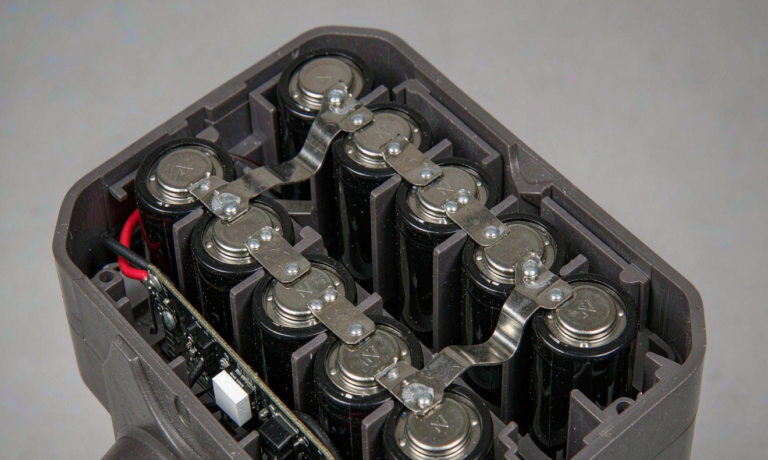
A factory audit is non-negotiable for volume sourcing. I have flown into Shenzhen, Dongguan, and Hefei specifically to walk the line, and the visit tells you more in two hours than thirty emails. During an audit I check six stations in order: cell incoming inspection, spot-welding or laser-welding quality, BMS firmware validation, potting and thermal interface, final pack sealing, and the traceability log at shipping.
The detail that separates a real plant from a trading company is material traceability. A genuine lithium battery manufacturer China can show you the cell lot number, the supplier COA, the weld parameter recipe, and the test record for the exact pack you are holding. If the salesperson cannot produce a batch record on the spot, I walk. I also watch the workers: are they using calibrated torque tools, wearing ESD straps, and logging every failed cell? Discipline on the floor predicts discipline in your shipment. During one audit I caught a line where operators reused nickel strips from a rejected batch; the manager who fixed that process within the hour earned my long-term business, while the plant next door that argued the practice was “fine” never got an order.
I also verify the incoming cell inspection station separately from final test. A factory that grades every purchased cell by capacity and internal resistance before welding is protecting your pack variance. A factory that trusts the cell vendor blindly is passing that risk straight to you. Ask to see the grading histogram for the last lot—a tight distribution is the proof.
Certifications That Separate Real Manufacturers From Trading Companies
For export, certifications are the toll you pay to cross borders and satisfy insurers. At minimum I expect UN38.3 for lithium battery transport, IEC 62133 for consumer and industrial cells, and CE marking for the European market. In North America, UL 1642 for cells and UL 2054 or UL 1973 for packs are frequently mandated by distributors. For stationary energy storage, IEC 62619 is becoming the baseline buyers ask for.
Do not accept a PDF screenshot as proof. I ask for the full certificate with the manufacturer’s legal entity name matching the audit badge, the valid date window, and the testing lab’s accreditation. A trading company will often show a certificate belonging to a different factory. A trustworthy Li-ion supplier registers the certificate under its own name and renews it before expiry. I keep a folder of every cert I verify and re-check it each reorder, because a lapsed certification can hold a container at customs for weeks. The same tell exposes intermediaries generally: if a vendor refuses a live floor tour, cannot name its cell supplier, and leans on generic stock photos, it is almost certainly a trading company rather than a real lithium battery manufacturer China. Trade with them knowingly and at intermediary pricing—never mistake them for the plant.
Sample Testing: What I Run Before Approving a Supplier
Never move to mass production on a paper promise. I require a paid engineering sample and run it through a battery pack test plan before releasing a purchase order. My standard protocol covers capacity verification at 0.2C and 1C, internal resistance distribution across the pack, a thermal ramp to confirm the BMS cut-off, and a 50-cycle aging check to estimate real degradation versus the quoted curve.
For safety-critical programs I add nail penetration, overcharge, and short-circuit abuse tests on sacrificial cells. The goal is not to pass a test but to understand the failure mode. A transparent lithium battery manufacturer China will share its own test videos and raw data logs; a shaky one will dodge the request or send curated clips. I have rejected two otherwise-cheap suppliers purely because they refused to show me the overcharge protection event on their BMS.
Understanding MOQ, Lead Time, and Real Production Capacity
Price only makes sense inside capacity reality. A small workshop may quote a seductive unit cost but cap out at 5,000 packs a month, while your launch needs 40,000. I always verify the actual daily throughput, the number of SMT and welding lines, and the cell inventory buffer. A credible battery pack maker states MOQ openly—typically 500 to 1,000 units for custom designs, lower for catalog products—and explains the tooling and NRE charge.
Lead time is where promises drift. I build in a buffer of two to three weeks beyond the quoted date and confirm the critical-path component, usually the cells or the BMS IC, because that is what stalls lines. NMC cells in particular can face allocation during demand spikes. A manufacturer that is honest about its capacity ceiling is worth more than one that says “no problem, any quantity” and then misses your product launch.
Building a Long-Term Supplier Relationship
The best sourcing outcome is not the cheapest first order; it is a supplier that improves your pack with you over years. I onboard new partners with a three-stage ramp: prototype validation, a small pilot batch of 200–500 units for field trial, then staggered volume. At each stage I share return data and ask for a corrective action report. The lithium battery manufacturer China that treats my failure analysis as its own R&D input becomes a strategic asset, not just a vendor.
I also negotiate a written quality agreement: AQL level, traceability retention period, and a clear process for handling field returns. When both sides sign that, the relationship scales smoothly and my customers stop calling about warranty surprises. Over a five-year horizon the right partner typically lowers your landed cost through yield improvement and co-designed cost-downs, which a transactional trader will never offer. That compounding advantage is why I invest the effort up front instead of chasing the lowest quote.
Frequently Asked Questions
How do I verify a lithium battery manufacturer in China is a real factory?
Request a live video walkthrough of the production line, confirm business registration and the certificate entity name match, and ask for a batch traceability record of a recently shipped pack. A real plant shows you the floor, the welders, and the test logs without hesitation.
What certifications should a lithium battery manufacturer China hold for export?
At minimum UN38.3 for transport and IEC 62133 for cells. Add CE for Europe, UL 1642 and UL 2054 or UL 1973 for North America, and IEC 62619 for stationary storage. Always verify the certificate names the manufacturer’s own legal entity and is within its valid date.
What is a typical MOQ for custom Li-ion battery packs?
For custom designs most serious suppliers set MOQ between 500 and 1,000 units plus tooling or NRE fees. Catalog and semi-custom packs can start lower. Beware any factory claiming unlimited small-quantity custom work at volume prices—it usually signals trading-company markup.
How long does sample testing take before mass production?
Budget two to four weeks. Engineering sample build is typically 7–10 days, then my test plan adds 1–2 weeks depending on the cycle-aging portion. Rushing sample validation is the most expensive shortcut in battery sourcing.