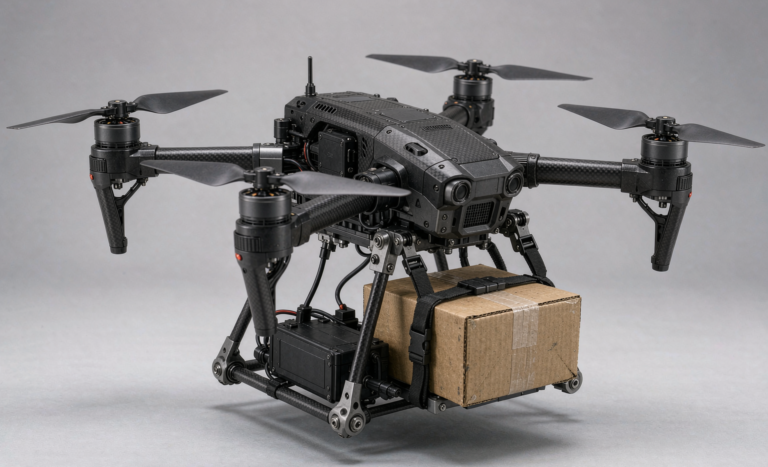
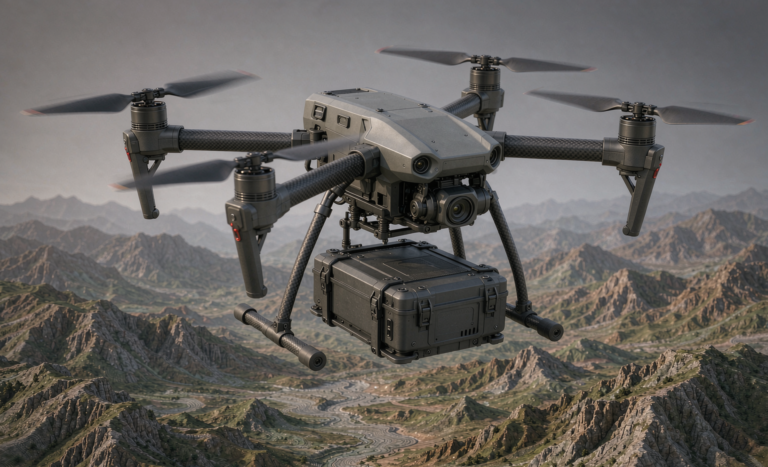
High Discharge Drone Battery
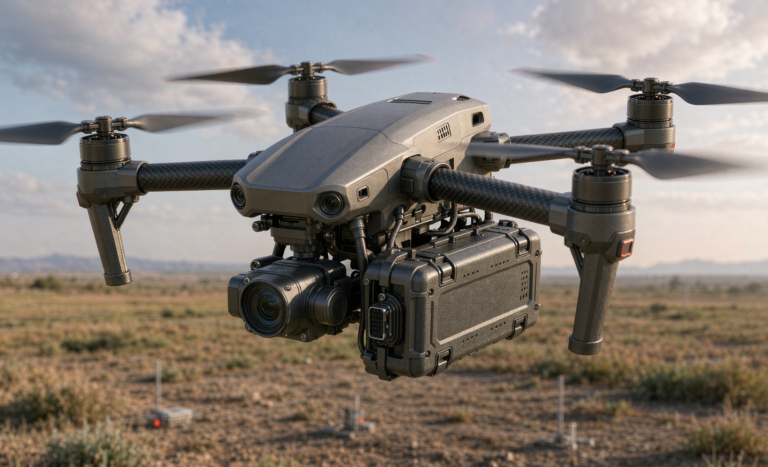
As a senior lithium battery engineer at Horizon Power, I have spent the last decade on the test bench with drone battery packs that either throttled at 80% throttle or melted their balance leads on the first hard climb. When buyers spec a heavy-lift airframe — agriculture sprayers, cinelifter cinematic rigs, industrial payload drones — they almost always fixate on capacity (mAh or Ah) and weight. Those matter, but the single number that determines whether the drone lifts its payload or sags into the dirt is the C-rating, or more precisely the discharge C-rate your pack can sustain without voltage collapse.
In this guide I walk through how I actually specify a high discharge drone battery for heavy-lift programs: what C-rating means in engineering terms, how to read it against real motor current, why internal resistance and cell grade dominate, and how we design a custom battery solution that survives EASA and FAA field limits while staying inside UN38.3 and IEC 62133 safety envelopes.
What C-Rating Actually Means (and What It Doesn’t)
A C-rating is a multiplier on capacity. A 6S 22.2V 10,000mAh pack rated at 25C can theoretically deliver 10Ah x 25 = 250A continuous. A 50C burst rating implies 500A for short windows. But here is the trap I see every procurement team fall into: the printed burst C-rating on a cheap label is a marketing number, not a datasheet guarantee.
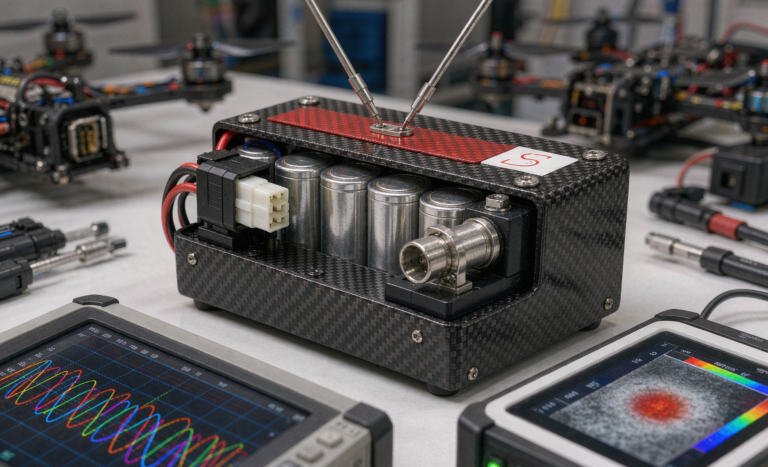
In our lab we validate every drone lithium battery against the actual voltage sag at the rated current. A genuine 25C continuous pack should hold above ~3.3V per cell (about 19.8V on a 6S) at the rated load to end-of-discharge. Cells that sag below that either have high internal resistance (IR) or are grade-B recycling cells dressed up as Grade A. For heavy lift, where a single climb can pull 80-120A from a 10Ah pack, IR is the difference between a 24-minute mission and a 14-minute one. This is why I refuse to quote a C-rating to a client without first running the pack on our discharge rig.
Calculating the Real Current Your Motors Demand
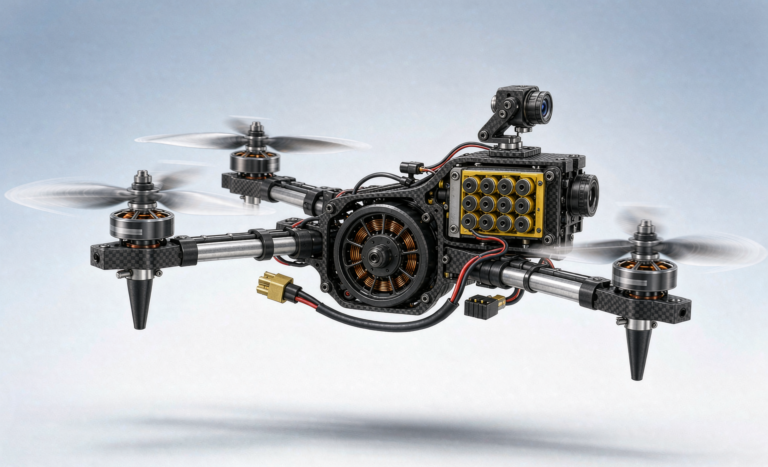
The first step in any custom battery solution is to measure, not estimate. Using a current shunt on the bench with the real prop, ESC, and payload, we log peak and RMS current across the flight envelope: hover, aggressive climb, fast forward flight, and hard braking. A typical 15 kg MTOW heavy-lift quad at full collective can momentarily pull 150-200A total, or 37-50A per 6S brick if you parallel two. That translates to a required continuous C-rating of roughly 15-20C on a 10Ah brick — but I always spec 25-30C continuous to preserve headroom and cell life.
Rule of thumb from the field: never run a drone battery above 70% of its validated continuous C-rating in normal operations. The margin absorbs cold-weather IR spikes, aging, and the inevitable “one more kilogram” the mechanical team adds at the last minute. I have lost count of the projects where the airframe grew 2 kg between prototype and production and the original pack could no longer hold voltage.
Internal Resistance, Cell Grade, and Why It Drives Discharge
Two packs with identical mAh and identical printed C-ratings behave nothing alike if their IR differs. High discharge drone battery performance is gated by IR more than by chemistry label. We grade cells by IR (typically 3-4 mOhms or below for quality high-C LiPo at cell level) and match them within a pack to +/-0.3 mOhms. Mismatched IR causes one parallel group to shoulder the current, heat unevenly, and fail first — a classic cause of in-flight swelling.
For B2B buyers, the verification step is simple: request the IR distribution histogram from your lithium battery manufacturer. If they cannot produce it, treat the C-rating claim as unverified. UN38.3 and IEC 62133 testing cover transport safety and basic abuse tolerance, but neither guarantees the discharge performance printed on the label. A battery that passes UN38.3 can still sag to 2.9V per cell at rated load, which is useless for a heavy-lift airframe.
Series, Parallel, and Why Heavy Lift Often Means Both
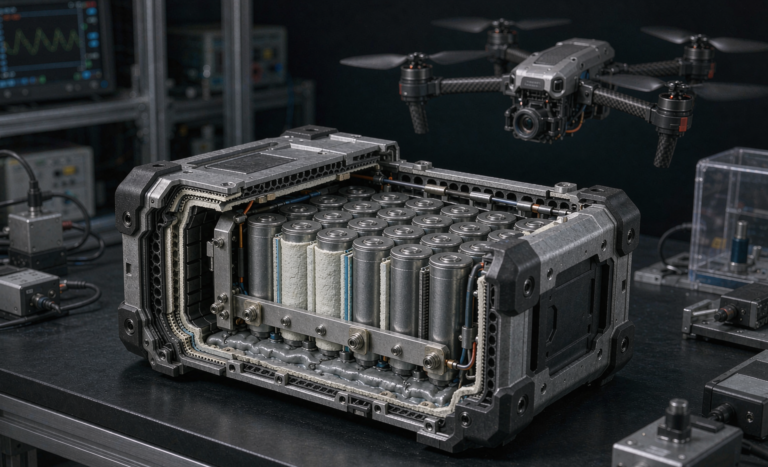
Heavy-lift airframes usually need both voltage (S-count) for motor KV and capacity (Ah) for endurance. A common build is two 6S bricks in parallel to a 12S system, or a native 12S high-C pack. The key point is that whether you build a custom drone battery or buy off-the-shelf, the C-rating you care about is the pack-level deliverable current, which drops as you add series cells (same Ah, more cells in string) and rises as you add parallel groups.
We often advise clients to parallel two moderate-C packs rather than chase an extreme single 60C brick. Two 25C 10Ah bricks in parallel give you 20Ah at 25C — 500A available — at lower per-cell stress and better redundancy than one fragile ultra-high-C pack. When one brick in a parallel pair degrades, the aircraft still flies; when a single extreme pack fails, you are picking pieces out of a field.
Connectors, Cables, and the Other Half of the C-Rating
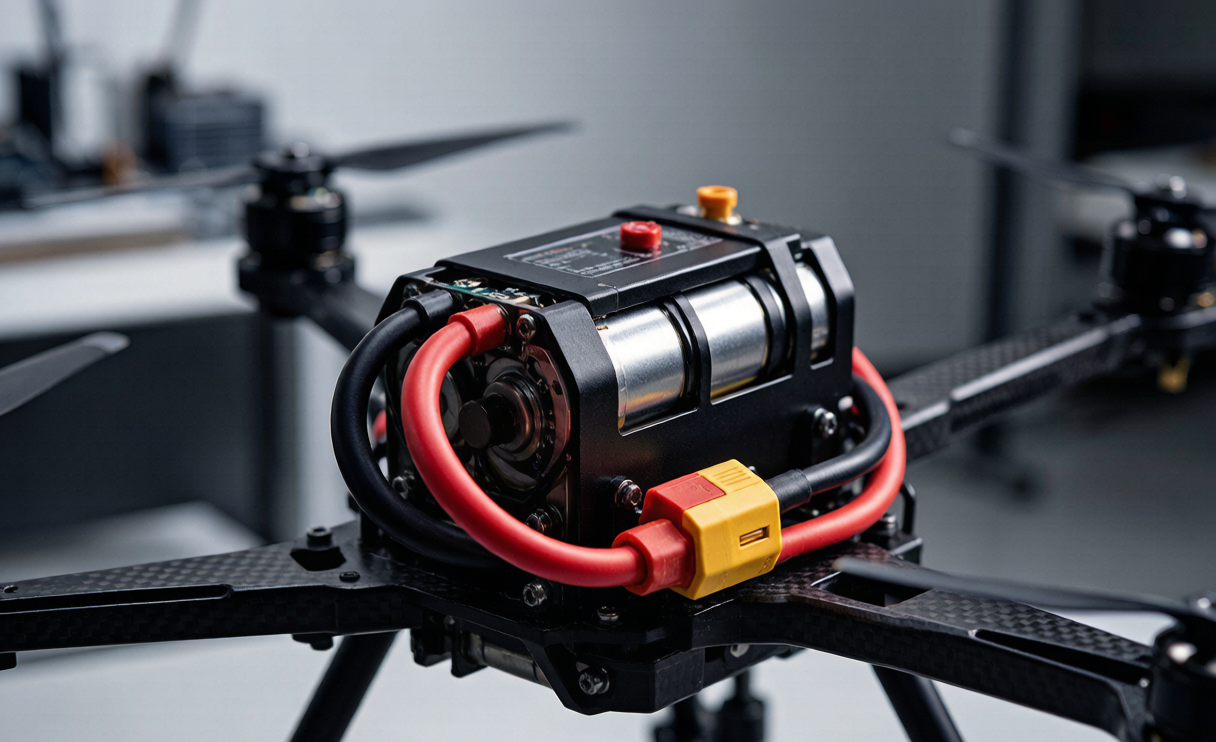
A high discharge drone battery is only as good as the path out of it. A 200A draw needs at least 6 AWG (or better 4 AWG) silicone cable and an XT90 or AS150 connector rated for the current; an XT60 will fuse itself shut at that load. In one field failure I investigated, the pack was fine but the 10 AWG leads and XT60 melted at 110A, dropping the drone. For heavy-lift programs we standardize on XT90 or EC5 for loads up to 120A and bolted bus bars or AS150 for anything above.
Cable length matters too. Every extra centimeter of undersized wire is IR you are adding outside the pack. We keep main leads short and oversized, then transition to the airframe harness only after the high-current run is done. This is the part of a custom battery solution that separates a bench prototype from an airworthy production pack.
Thermal Management During Sustained High Discharge
Every amp you pull from a high discharge drone battery becomes heat, and heat is the enemy of both power and life. At 200A a pack with even 5 mOhms of total pack resistance dissipates P = I^2 x R = 40,000 x 0.005 = 200W of internal heat. Left unchecked, that drives cell temperature past 60C, where LiPo begins to swell and LFP begins to lose capacity permanently. For heavy-lift missions longer than a few minutes we design the enclosure with vented side panels and, on enclosed airframes, a passive chimney path so warm air rises away from the cells.
We also watch the BMS thermistor placement. A sensor stuck to the outer wrap reads 10-15C cooler than the core during a hard climb, and a pack that “looks safe” on telemetry can already be degrading inside. For any custom drone battery above 30C continuous discharge we recommend a core-mounted NTC and a conservative 50C cutoff, with the BMS logging temperature against current so the failure is traceable after the fact.
From Prototype to Certified Heavy-Lift Pack
Designing the custom battery solution is only half the job; certifying it is the other. For commercial operations under EASA and FAA frameworks, the battery must carry UN38.3 transport certification, and the pack should be documented against IEC 62133 for cell-level safety. We deliver each pack with a test report: IR matching, capacity verification at 0.2C, discharge curve at rated C, and a thermal-runaway-abuse summary. That paperwork is what lets your drone clear customs and your operators clear compliance.
For logistics, a high discharge drone battery above 100Wh per pack also triggers IATA Section II handling for air freight, so we pre-stage the UN38.3 test summary and lithium handling labels before the first shipment leaves the factory. Skipping this step is the fastest way to have a pallet of packs stuck at an airport while your production line waits.
FAQ
What C-rating do I need for a 10 kg payload drone?
For a 15 kg MTOW heavy-lift quad pulling roughly 150-200A peak, spec a continuous 25-30C pack on 6S 10Ah bricks paralleled as needed. Never run above 70% of validated continuous C to preserve headroom and cycle life.
Is a higher C-rating always better?
Not always. Ultra-high-C packs trade energy density and cycle life for current capability, and often use thinner separators that age faster. Spec to your real measured current plus headroom, not to the biggest number on the shelf.
How do I verify a supplier’s C-rating claim?
Request the IR distribution histogram and a discharge curve at the rated C. Validate that pack voltage stays above about 3.3V per cell at rated load. UN38.3 and IEC 62133 cover safety, not performance claims.
Why did my XT60 connector melt on a heavy-lift pack?
XT60 is rated around 60A continuous. At 100A plus it overheats. Use XT90 or EC5 for loads up to 120A and bolted bus bars or AS150 above that. The connector is part of your C-rating path.
Is it better to parallel two packs or buy one high-C pack?
For heavy lift, paralleling two moderate-C bricks usually gives better redundancy, lower per-cell stress, and comparable current at lower cost than a single extreme-C pack. Design the custom battery solution around your airframe layout.
Do I need certification for a heavy-lift drone battery?
Yes. UN38.3 is mandatory for air transport; IEC 62133 documents cell safety; EASA and FAA commercial operations expect documented battery compliance. Work with a lithium battery manufacturer who supplies the test reports, not just the pack.