Drone Battery Recycling and End-of-Life Handling
Over the past eight years on the production floor and in the field, I have watched drone fleets scale from a handful of units to hundreds operating daily. One issue almost every operator underestimates is what happens when a drone battery reaches the end of its useful life. A pack that quietly retires from duty does not simply disappear; it becomes a concentrated store of energy, reactive chemistry, and valuable metals that demand a deliberate plan. In this guide I will walk through how we handle drone lithium battery end-of-life at Horizon Power, the standards we design around, and the practical steps a fleet manager or OEM can take today.
Why Drone Battery End-of-Life Demands a Real Plan
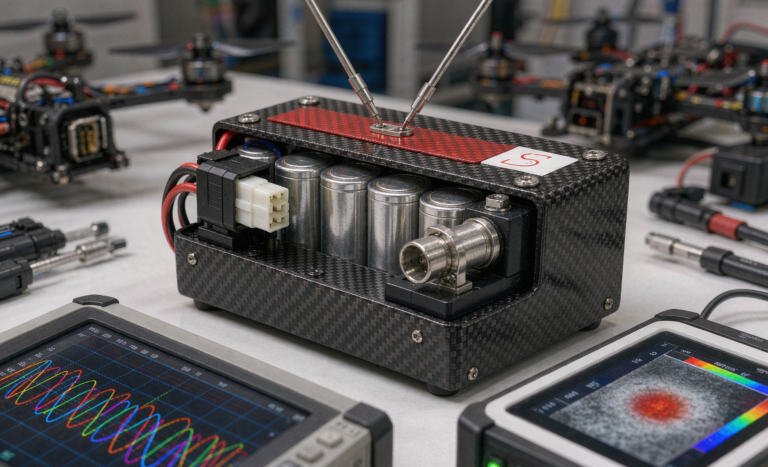
A modern drone battery is usually a high-energy-density lithium pouch or cylindrical pack, often rated at 22.2 V (6S) to 44.4 V (12S), with capacities between 4,000 mAh and 22,000 mAh. Even at 80% state of health, a retired pack can still deliver a dangerous short-circuit current. Left in a warehouse corner, a swollen cell can vent, ignite, and take an entire inventory with it. The engineering reality is simple: end-of-life handling is a safety discipline first and a sustainability exercise second.
From a compliance standpoint, every pack we ship or collect falls under transport and waste rules that treat lithium cells as hazardous until proven discharged and packaged. Ignoring this is not just risky; it is a regulatory liability. I have seen operators fined simply for stacking damaged packs in a cardboard box marked ‘electronics.’
What Is Actually Inside a Drone lithium battery pack
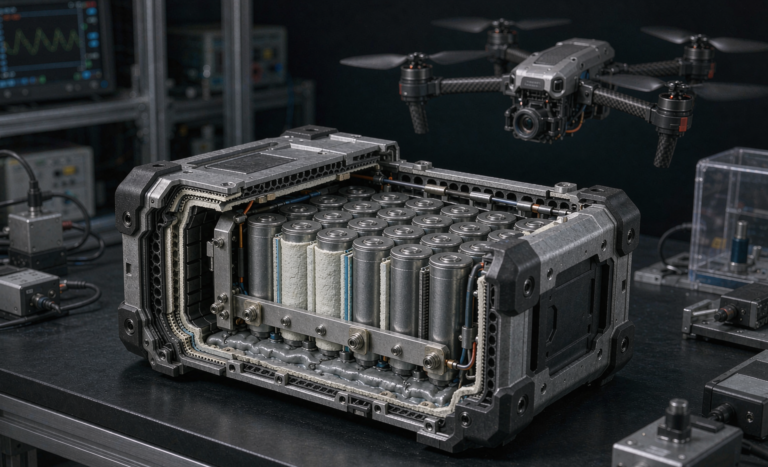
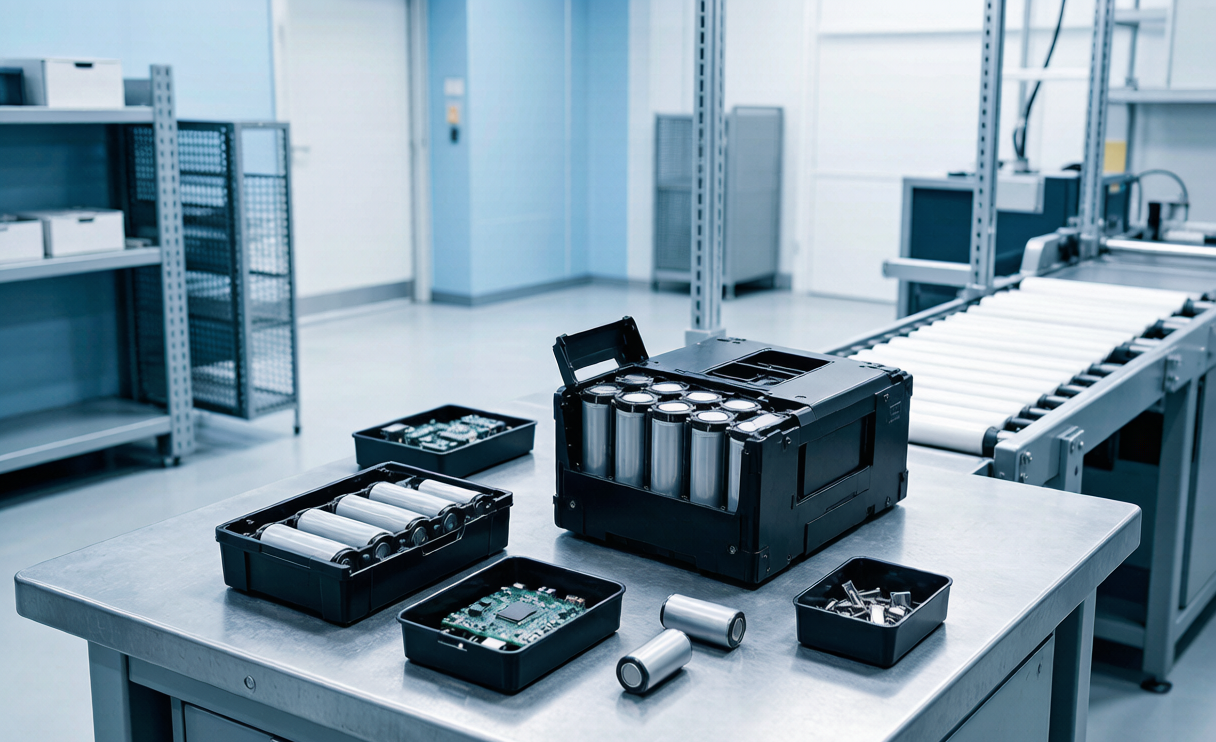
To recycle intelligently you must know the bill of materials. A typical drone lithium battery contains:
- High-purity lithium cobalt oxide (LCO) or lithium polymer cathode material in smaller consumer packs, or NMC (nickel-manganese-cobalt) in higher-capacity units.
- Graphite anode coated on copper foil.
- Aluminum and copper current collectors, worth recovering on their own.
- A BMS, connectors, and a shrink-wrap or hard case of mixed plastics.
The metal content is the reason recycling pays. A kilogram of recovered cobalt or copper offsets a meaningful share of the logistics cost. When we design a custom battery solution for a client, we now document the exact chemistry and cell format so the recycler downstream is not guessing.
Handling Swollen or Damaged Packs Safely
Swelling is the most common end-of-life signal, usually caused by gas generation from electrolyte decomposition after deep over-discharge or thermal abuse. Our internal handling procedure, aligned with IEC 62133 abuse-testing lessons, treats any bulged pack as potentially unstable:
- Quarantine in a fire-rated cabinet, never in open racks.
- Discharge to below 3.0 V per cell under controlled current using a resistive load, then verify with a multimeter.
- Label with date, chemistry, and hazard class before storage.
- Never puncture, incinerate, or compress a swollen cell.
UN38.3 sets the baseline for how cells and packs must behave during altitude, thermal, vibration, shock, external short-circuit, impact, overcharge, and forced-discharge tests. A pack that failed UN38.3 in service, or one that shows casing rupture, is handled as damaged goods under the same ‘dangerous goods’ logic, even after retirement.
The Recycling Stream: What Can Truly Be Recovered
Not all recycling is equal. The two dominant routes are pyrometallurgy (smelting) and hydrometallurgy (chemical leaching). Pyro recovers cobalt, nickel, and copper but loses lithium to slag. Hydrometallurgy recovers lithium too and is gaining ground for lithium battery feedstock. In 2026, several plants in Europe and East Asia report cobalt and nickel recovery above 95% and lithium recovery around 85% using optimized leach processes.
For a fleet operator, the practical takeaway is to keep packs intact and sorted by chemistry. Mixed streams get downcycled; clean NMC streams get premium pricing. We advise clients to bale or palletize packs in the same orientation and avoid crushing, which contaminates the copper and aluminum fractions.
FAA, EASA and Transport Rules for End-of-Life Shipment
Moving retired packs to a recycler is itself a regulated act. Under IATA and equivalent FAA/EASA frameworks, lithium cells shipped for disposal must be at a state of charge not exceeding 30% and packaged in UN-approved, non-conductive containers with insulation between cells. Damaged or defective batteries require even stricter Class 9 handling and often ground transport only.
I always tell OEM clients: build the shipping declaration into your end-of-life kit. A custom battery solution that ships with a pre-labeled return satchel and a protective insert removes the single biggest barrier to participation, which is operator confusion at the moment of disposal.
Designing for Recyclability From Day One
The cheapest recycling decision is made on the design table, not in the scrap bin. Three changes we routinely spec:
- Standardize cell formats across a product line so one recycling partner handles the whole fleet.
- Use mechanical fastening or easily cut welds instead of permanent potting where safety allows, so packs can be opened without shredding.
- Print a permanent, laser-etched chemistry code on the case so sorters never misclassify an LCO pack as LFP.
These steps also make a drone lithium battery easier to service mid-life, extending the first life before recycling is even considered. Designing for disassembly is good engineering and good economics.
Building a Take-Back Program That Actually Works
A take-back program fails when it relies on good intentions. In our deployments, the programs that hit high return rates share a pattern: a clear drop point, a small refund or credit incentive, and transparent reporting. For an agricultural spraying client running 60 units, we set up quarterly collection crates at their base. Return rate climbed past 70% within two seasons because the path of least resistance was returning the pack, not binning it.
Regulations such as the EU Battery Regulation now push producer responsibility further, requiring minimum recycled-content thresholds and digital battery passports. Designing your documentation now, while volumes are small, avoids a painful retrofit later.
First-Life Extension Before Recycling
Recycling should be the last step, not the first. A drone battery retired from flight missions at 75% capacity may still serve a ground-based, low-stress role such as powering a base-station radio or a test bench. We grade every returned pack: those above 70% SOH with no swelling are routed to secondary applications, and only true end-of-life cells enter the recycling stream. This ‘second life’ step stretches the embedded energy and material investment before recovery.
Documenting the Battery Passport for Traceability
A growing requirement I now brief every OEM about is the digital battery passport. In practice this means each drone lithium battery carries a scannable identifier linking to a record of chemistry, cycle count, max temperature exposure, and repair history. At end-of-life, that record tells the recycler exactly what is inside without destructive testing, and it lets regulators verify recycled-content claims. We embed a laser-etched QR or NFC tag during the custom battery solution build so the data travels with the pack from first flight to final recovery. It sounds like paperwork, but it converts an anonymous scrap item into a tracked, valuable asset and removes the single biggest friction in sorting mixed fleets.
What Inaction Actually Costs
The cost of ignoring end-of-life handling is rarely a single event; it is cumulative. Unsorted packs clutter storage, tie up floor space, and create fire-insurance exposure that underwriters increasingly price into premiums. I have audited operations where the ‘free’ pile of retired drone battery units quietly represented both a safety hazard and thousands of dollars of recoverable metal left on the table. A disciplined program, by contrast, turns that liability into a measurable material return and a cleaner compliance posture. The math is straightforward once you track it for a single quarter.
Frequently Asked Questions
Can I throw a dead drone battery in regular recycling?
No. Lithium packs are classified as hazardous and can cause fires in standard waste streams. They must go to a licensed lithium battery recycler or a manufacturer take-back point, ideally discharged and packaged per UN guidance.
What state of charge should a pack be at for shipping to recycling?
Regulations generally require the cells to be at or below 30% state of charge, discharged under controlled conditions, and packed in non-conductive, UN-approved containers. Damaged packs may require ground-only Class 9 transport.
Is it worth recovering material from small drone packs?
Yes, at fleet scale. While a single 6S pack holds little metal, a hundred retired packs represent meaningful cobalt, nickel, copper, and aluminum. Sorting by chemistry and keeping packs intact maximizes the rebate and recovery rate.
How do I know if a pack is too damaged to reuse?
Swelling, casing rupture, burnt odor, or a cell that will not hold even a partial charge are clear end-of-life signals. Such packs should never be reused and must be handled as damaged dangerous goods until recycled.
Does designing for recyclability cost more upfront?
Usually marginally, but it pays back through higher resale value of sorted material, easier compliance, and stronger customer trust. A custom battery solution built with disassembly in mind is simpler to service and ultimately cheaper to retire responsibly.
Are there global rules I should track as an OEM?
Yes. Beyond UN38.3 and IEC 62133 for safety, watch the EU Battery Regulation, regional producer-responsibility laws, and evolving transport interpretations from FAA and EASA. Building documentation and a take-back path early keeps you ahead of mandates.
End-of-life handling is no longer a back-office afterthought. Treat every retired drone lithium battery as both a hazard and an asset, design for disassembly from the start, and the result is a safer operation and a defensible sustainability story. If you are specifying a new platform, talk to us about a custom battery solution with recyclability and take-back built into the brief.