Lithium Battery for Golf Carts and Low-Speed EVs
I am Karl Huang, Senior Lithium Battery Engineer at Horizon Power. Over the last decade I have specced, tested, and certified hundreds of packs for neighborhood electric vehicles, campus shuttles, and utility golf carts. If you build or operate a low-speed EV, the single biggest reliability upgrade you can make is swapping the flooded lead-acid bank for a properly engineered lithium battery system. This guide walks through what actually matters when you move a golf cart or low-speed EV onto lithium—chemistry choice, pack architecture, sizing, safety certification, and total cost of ownership.
Why Low-Speed EVs Are Finally Ditching Lead-Acid
The classic golf cart runs on six 8V flooded lead-acid cells in series. They work, but they are punishing. A typical flooded bank delivers only 300–500 cycles at 50–60% depth of discharge, loses capacity in cold weather, needs monthly distilled-water top-ups, and vented hydrogen during charging. In a fleet, that means a battery changeout every 12–18 months and a constant maintenance burden.
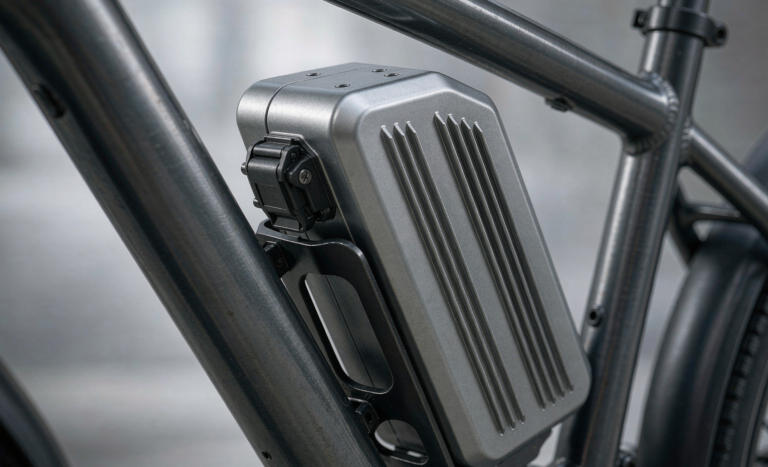
A lithium ion battery pack of the same voltage and roughly the same usable energy weighs 55–65% less and lasts 2,000–4,000 cycles. For a golf cart that means four to eight years of daily use before the pack hits 80% state of health. The weight savings alone improves braking, reduces tire wear, and lets you carry more payload or passengers. That is why the lithium battery golf carts low speed EV conversion market has grown from a niche upgrade into the default specification for new low-speed vehicles.
Cell Chemistry: LFP vs NCM for Golf Carts
When we talk about a lithium battery pack for a low-speed EV, we are really choosing between two cathode families. The LFP battery (lithium iron phosphate, LiFePO4) runs at a 3.2V nominal cell voltage, offers exceptional thermal stability, and tolerates abuse—nail penetration, overcharge—far better than alternatives. Cycle life is 2,000–4,000 at 80% DoD in well-managed packs. The NCM battery (nickel-cobalt-manganese) runs at 3.6–3.7V and packs more energy per kilogram, but its thermal runaway window is narrower and it is more sensitive to overcharge and high ambient temperature.
For golf carts, campus EVs, and most low-speed duty, LFP wins almost every time. Energy density is “good enough” at 120–160 Wh/kg in finished pack form, the safety margin is larger, and the chemistry is cobalt-free, which simplifies both sourcing and end-of-life. I only reach for NCM when a customer has an extreme mass budget—rare in this vehicle class.
Pack Architecture: Building a 48V Lithium Battery Pack
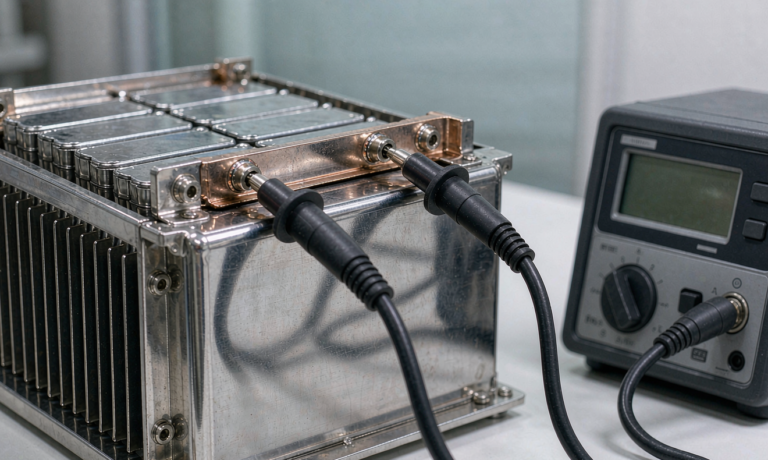
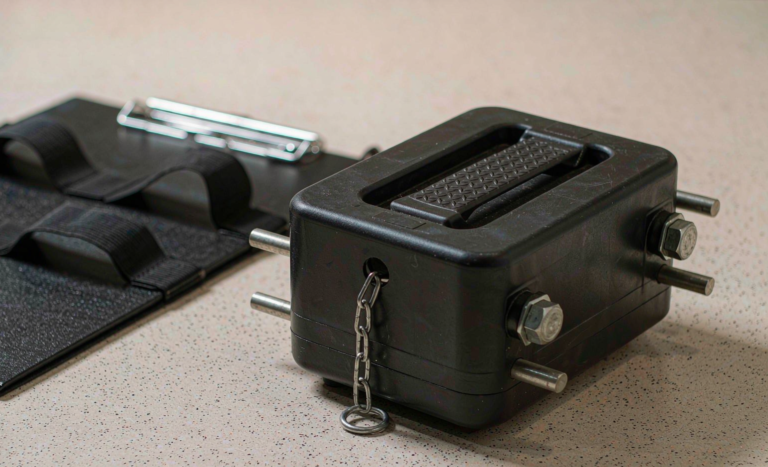
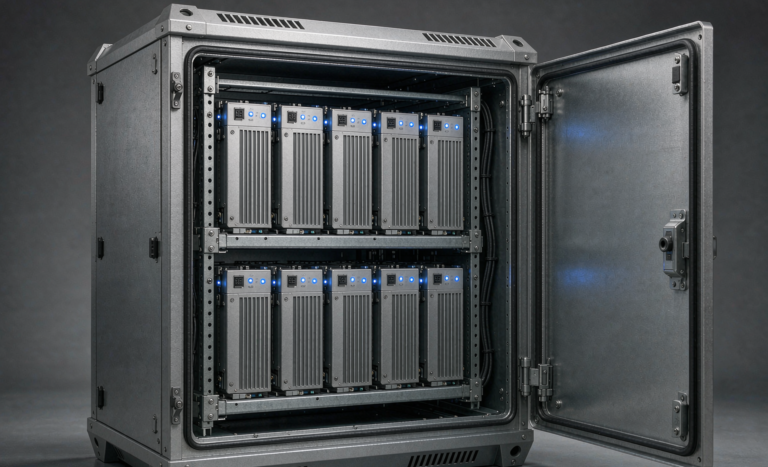
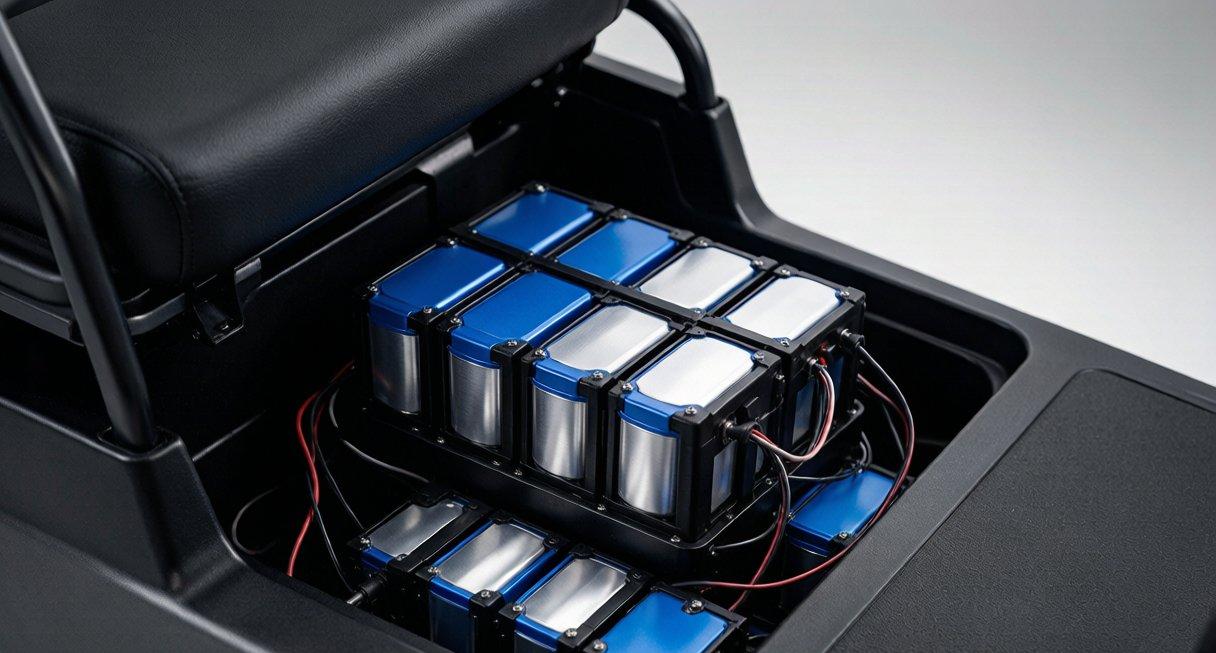
Most golf carts and low-speed EVs use a 48V bus. With LFP cells at 3.2V nominal, that means a 16-series (16S) configuration giving 51.2V nominal and about 58.4V at full charge. We build this from 12v lithium battery modules—typically four 4S modules in series—because modular construction simplifies shipping, service, and replacement. Each module contains its own sense wiring, a module-level fuse, and often balancing taps.
The pack enclosure must handle vibration, occasional water spray, and thermal events. We use aluminum-backed cell holders, laser-welded nickel busbars (not crimped leads), and an automotive-grade contactor on the main positive path. A lithium battery pack that looks like loose cells in a box is a reliability and safety risk; the mechanical and electrical integration is where most of the engineering actually lives.
Sizing the Pack: kWh, Range, and Duty Cycle
A common starting point is a 48V 100Ah lithium battery pack, which stores 5.12 kWh. For a light golf cart on flat terrain, that yields roughly 30–45 km of range at a steady 20–25 km/h. But range is dominated by duty cycle, not just capacity. Stop-start campus shuttles, hill climbs, and payload all draw far above the average. I always size from the peak current and the worst-case hill, then add 20–30% headroom so the pack lives in the 20–80% state-of-charge band where it ages slowest.
Regenerative braking is worth capturing on low-speed EVs with frequent stops. Even modest regen recovers 5–10% of energy on a shuttle loop and reduces brake wear. The BMS must support charge-current limiting during regen so the pack is never overcharged on a long descent.
BMS and Safety Compliance
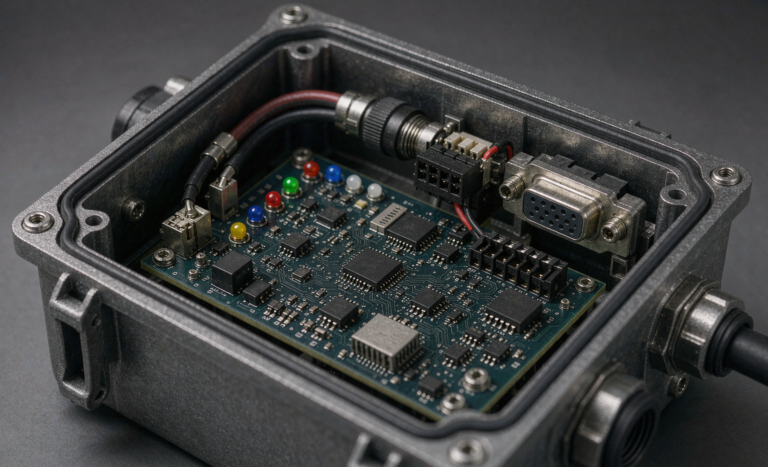
The battery management system is the brain of any lithium low-speed EV pack. At minimum it monitors per-cell voltage, pack current, and temperature; performs active or passive balancing; and opens the contactor on overvoltage, undervoltage, overcurrent, or overtemperature. For a golf cart, I specify a BMS with at least a 2C continuous rating and clear, field-readable fault codes.
Certification is non-negotiable for a commercial vehicle. Every cell and pack we ship passes UN38.3 for transport safety (altitude simulation, thermal, shock, vibration, external short, impact, overcharge). Cells carry IEC 62133 for portable secondary-cell safety. For the vehicle itself, the relevant frameworks are UN R136 (ECE regulation on electric power train safety for L-category vehicles) and ISO 6469 for EV electrical safety, with UL 2580 or IEC 62619 referenced for the energy-storage assembly depending on market. If a vendor cannot show these marks, walk away—a golf cart battery that fails a single-cell crush test is a liability, not a product.
Charging, Cold Weather, and Fleet Management
Low-speed EV packs charge with a standard CC-CV (constant-current, constant-voltage) profile. A 48V lithium battery pack charges from 20% to 90% in roughly 2–3 hours on a 15–20A charger, versus 8+ hours for lead-acid. Smart chargers that handshake with the BMS prevent overcharge and extend life.
Cold weather is the one real weakness of lithium. Below about 0°C, charging a lithium ion battery without heating damages the anode. In cold-climate fleets I specify packs with a self-heating film or a heated enclosure, and the BMS blocks charge until cell temperature clears the limit. Discharge is less sensitive—most LFP packs still deliver 80%+ capacity at −20°C—but range drops with heater load.
For any fleet, I add CAN-bus telemetry so a central dashboard can read state-of-charge, state-of-health, temperature, and fault history from every cart. That turns the battery from a black box into a managed asset: you catch a weak module before it strands a vehicle, schedule chargers around peak demand, and prove to insurers that your lithium battery fleet is operated inside its certified envelope. On a 20-cart campus, this visibility typically pays for itself in reduced downtime within the first season.
Total Cost of Ownership vs Lead-Acid
A lithium battery conversion costs three to five times the price of a lead-acid set upfront. But the lifecycle math is decisive. At 2,000+ cycles versus 400 for lead-acid, a single lithium pack replaces five or more lead-acid sets over its life, and it eliminates water maintenance, equalization charging, and the labor of handling heavy, corrosive batteries. For any cart running more than a few hours a day, payback is usually under two years, after which the lithium pack is essentially free energy relative to the lead-acid alternative.
From Prototype to Certified Volume Production
If you are an OEM launching a low-speed EV, do not treat the battery as a catalog part. The best results come from a custom battery solution engineered around your exact voltage, envelope, and duty cycle. As a custom battery solution provider, we run a structured path: EVT (engineering validation) to prove the cell and topology, DVT (design validation) for the full pack against UN38.3 and IEC 62133, and PVT (production validation) to lock yield and traceability before volume. A well-run program turns a concept cart into a certified, shippable vehicle in months, not years, with a battery that is lighter, safer, and cheaper to own than anything lead-acid could offer.
How many kWh does a golf cart lithium battery need?
For a standard 48V golf cart, start at 5.12 kWh (100Ah). Increase to 7.6–10 kWh if you run hilly terrain, heavy payload, or all-day shuttle duty. Size from peak current and worst-case grade, then add 20–30% headroom.
Is LFP or NCM better for a low-speed EV?
LFP is the better choice for nearly all golf carts and low-speed EVs. It is safer, cobalt-free, and lasts 2,000–4,000 cycles. NCM only wins when you have an extreme mass budget, which is rare in this vehicle class.
Can I retrofit my existing golf cart to lithium?
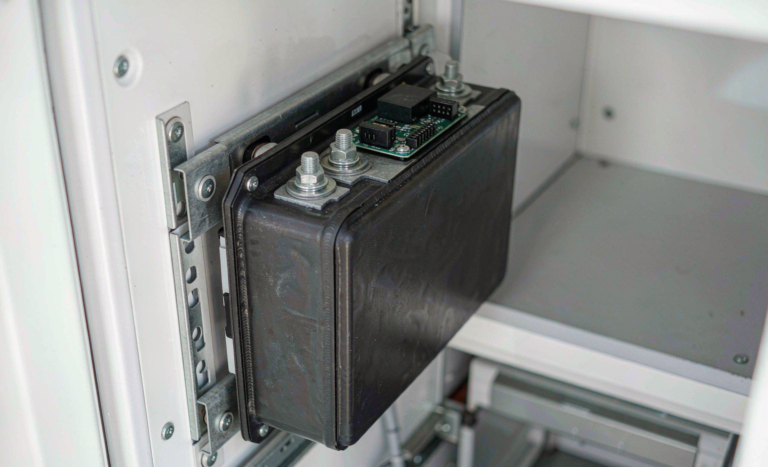
Yes. Most 36V and 48V carts accept a drop-in lithium battery pack with a compatible BMS and charger. You should also remove or bypass the old lead-acid charger and confirm the controller’s low-voltage cutoff matches the lithium discharge curve.
How long does a lithium golf cart battery last?
A properly sized and managed LFP pack lasts 2,000–4,000 cycles, which is typically four to eight years of daily use before it reaches 80% state of health. Keeping it in the 20–80% window maximizes that lifespan.
What certifications should a low-speed EV battery pack have?
At minimum UN38.3 for transport and IEC 62133 for cells, plus vehicle-level frameworks such as UN R136 and ISO 6469, with UL 2580 or IEC 62619 for the storage assembly depending on the market.
How do I charge a 48V lithium battery pack safely?
Use a CC-CV charger that communicates with the BMS and respects its voltage and temperature limits. In cold climates, ensure the pack has self-heating or a heated enclosure so charging is blocked below the safe temperature threshold.