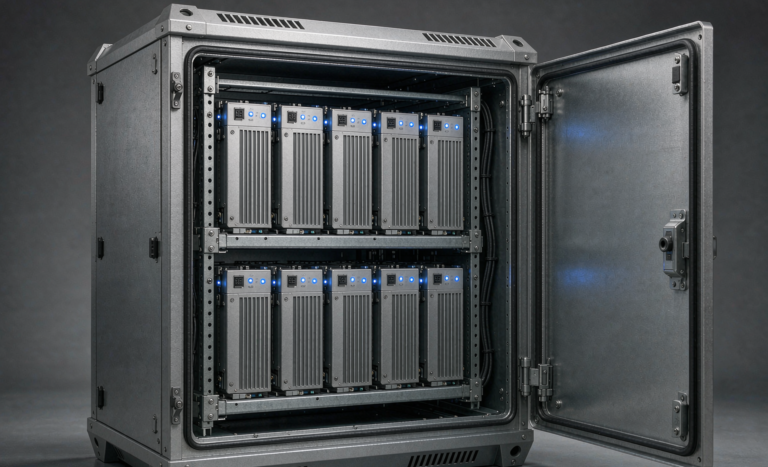
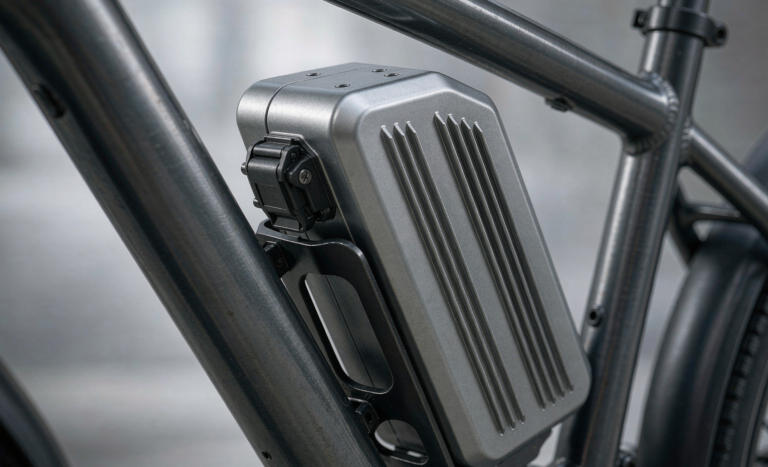
Lithium Battery for Solar Street Lights
When a municipality or a contractor asks me to specify a lithium battery for solar street lights, the conversation is rarely about peak power. Street lighting is a slow, unglamorous duty cycle: a modest LED load draws down the pack through the night, a rooftop panel trickles it back up by day, and the whole assembly sits unattended for eight to ten years through summer heat and winter frost. Over the last twelve years as a senior lithium battery engineer I have sized hundreds of these packs, and the same lessons keep surfacing. Get the chemistry right, respect the depth of discharge, and a solar street light lithium battery will outlive the luminaire it powers. Rush the sizing and you will be replacing swollen packs from a cherry picker within two years.
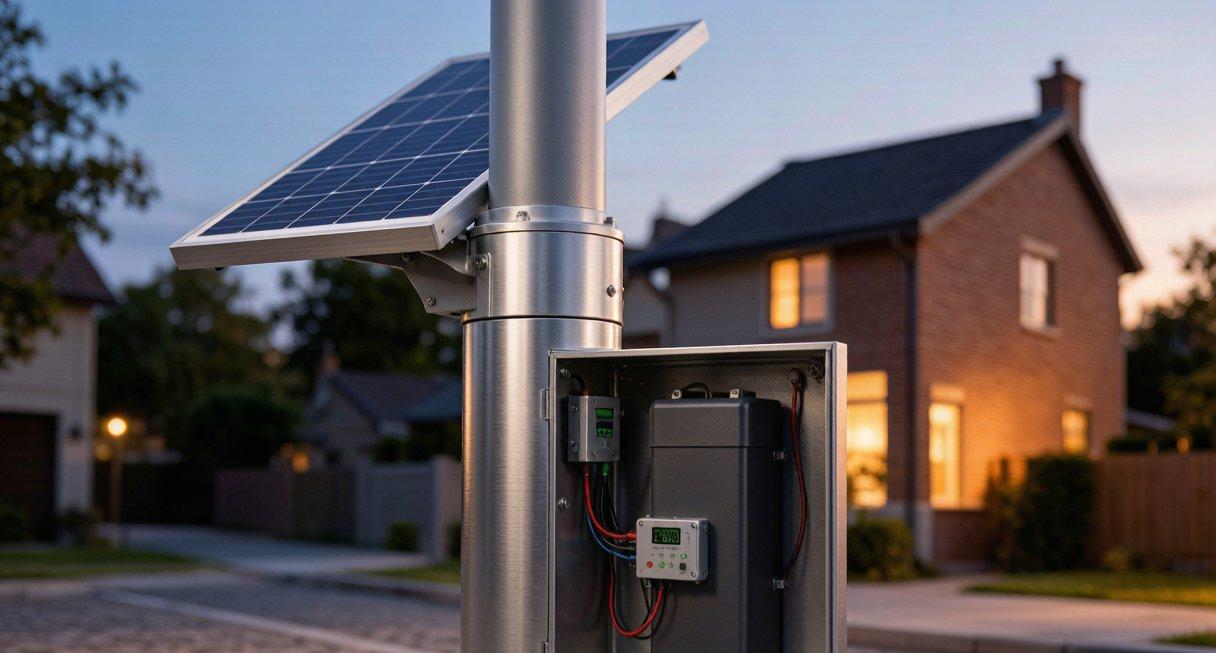
Why Lithium Replaced Lead-Acid in Street Lighting
The older generation of solar street lights ran on flooded or AGM lead-acid. Those banks were cheap per watt-hour on paper, but they forced a brutal compromise. A lead-acid cell can only safely deliver about 50% of its nameplate capacity before voltage collapses and sulfation sets in. That means you install twice the battery you actually use. A lithium battery changes the math completely. An LFP lithium battery pack comfortably delivers 80% to 90% of its rated capacity every night without damage, so the installed nameplate drops by roughly half for the same usable energy. You also shed 60% to 70% of the weight, which matters when the pack hangs nine meters up a pole.
There is a second reason lithium won. Lead-acid loses capacity fast in the cold and hates being left partially charged. Street lights live outdoors, so those two weaknesses bite immediately. A well-built lithium battery pack shrugs off partial state of charge and keeps most of its capacity down to -10°C, which is exactly the envelope a street light occupies.
Sizing the Pack for the Real Duty Cycle
Sizing is the step most installers get wrong because they size for the average day instead of the worst week. Start with the load. A typical modern luminaire draws 40 to 80 watts. Assume ten hours of operation per night and you land at 400 to 800 watt-hours per day. Add 15% to 20% for driver and cabling losses, then multiply by the number of autonomous days you need — the run of cloudy weather the system must survive with no sun. Three days of autonomy is the industry norm for public lighting; remote sites often spec five.
Here is the worked example I use in client briefs. A 60 W LED running 10 hours needs 600 Wh per night. With 20% losses that is 720 Wh. For three autonomous days, 2,160 Wh of usable energy. At 80% depth of discharge an LFP pack needs a 2,700 Wh nameplate. On a 12.8 V nominal system that is about 211 Ah. This is why the classic 12v lithium battery format — four LFP cells in series — is so common in this application: it matches the voltage the LED driver and charge controller already expect.
One trap worth flagging: do not size to the panel’s peak output. Size to the worst-case solar input for your latitude in December, not the lab figure under standard test conditions. I have seen perfectly sized packs fail in their first winter simply because someone used the summer irradiance number and forgot the short, cloudy days.
LFP vs NCM: Which Chemistry for Outdoor Lighting
For street lights the choice is almost always LFP, but it is worth stating why. An LFP battery (lithium iron phosphate) delivers 2,000 to 6,000 cycles depending on how deeply you discharge it, runs cooler, and is far more tolerant of abuse and heat. Its downside is lower energy density, but a street light pole has room to spare, so density is not the constraint. A NCM battery (nickel cobalt manganese) is lighter and more compact, but it is pricier, runs hotter, and degrades faster in heat — precisely the conditions a sealed pole enclosure creates. I only reach for NCM when a project has a hard weight or volume ceiling that LFP cannot meet.
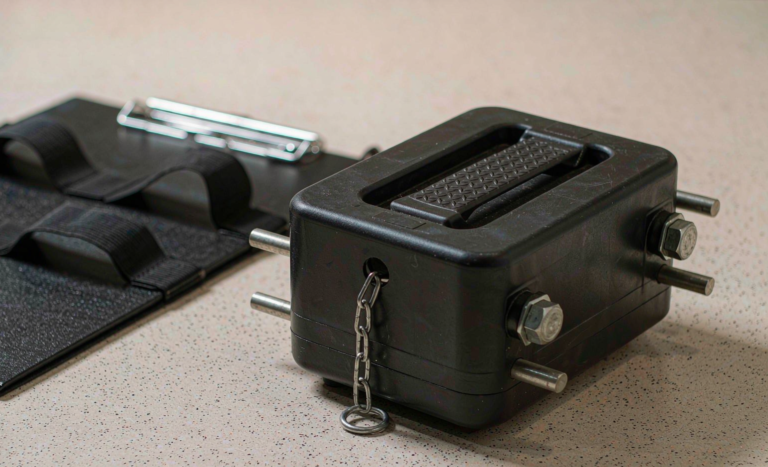
This is also where a custom battery solution earns its keep. Street light poles come in a dozen incompatible shapes, and a standard brick pack rarely fits the cast housing. We design the cell arrangement, busbars, and enclosure around the pole, which is cheaper in volume than retrofitting a generic pack with brackets and spacers that rattle in the wind.
Temperature, Depth of Discharge and Cycle Life
Cycle life is not a single number; it is a curve, and depth of discharge is the steering wheel. In our lab data an LFP lithium battery pack rated for 2,000 cycles at 100% DoD will deliver closer to 3,500 cycles at 80% DoD and over 5,000 at 60% DoD. The practical takeaway: if you size the pack 20% larger than the nightly load strictly requires, you effectively double its service life. That single design decision usually pays for the extra cells within the first three years.
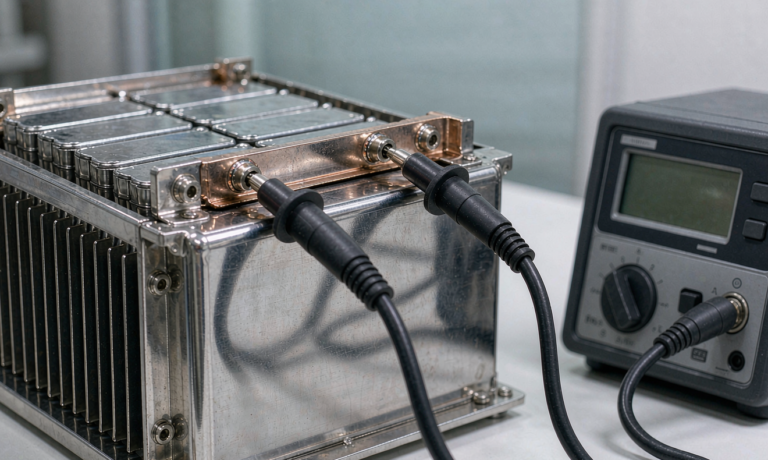
Cold is the other axis. Discharging a lithium ion battery at -20°C is fine; charging it there is not. Below 0°C the plating risk on the anode rises sharply, and a BMS that allows charging in hard frost will quietly destroy the pack. Any lithium battery for solar street lights destined for cold regions needs a charge cutoff or a low-power heater below the freezing line. We validate this against IEC 62619 stationary requirements and the UN38.3 transport simulation before a design leaves the building.
BMS, Protection and the Certifications That Matter
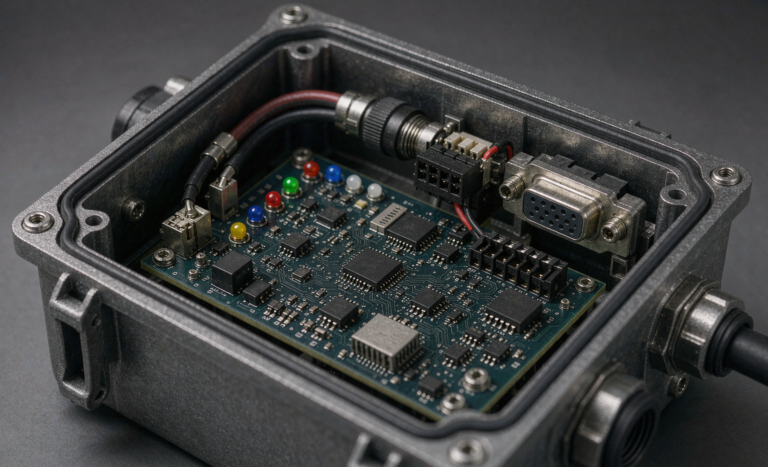
A bare cell stack is not a product. The BMS solution is what turns cells into a safe, communicative pack. At minimum it must monitor every series group for over-voltage and under-voltage, track temperature at two points, balance the cells, and open the contactor on a fault. For an unattended street light, I also insist on a low-temperature charge lockout and a shallow-discharge cutoff that protects the luminaire from brownout.
Certifications are not paperwork; they are the filter that keeps unsafe packs off the pole. UN38.3 is mandatory for shipping the cells. For the installed product, IEC 62133 covers portable cell safety and IEC 62619 covers stationary industrial packs — the latter is the one street light integrators should actually ask for. The enclosure itself needs an IP rating appropriate to the local climate, typically IP65 for exposed pole bases, and the whole assembly should pass the relevant IEC 60529 ingress test. A credible lithium battery manufacturer will hand you the test reports without being asked.
Installation, Maintenance and End-of-Life
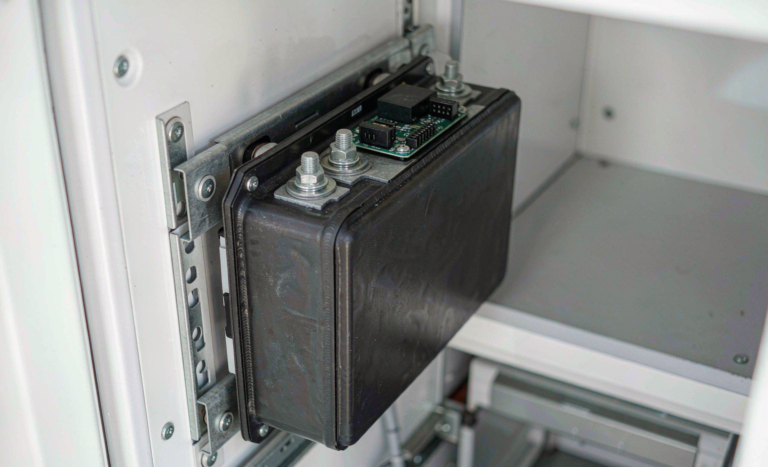
Where you mount the pack matters as much as what you buy. Keep the battery out of direct afternoon sun; a pole base that bakes at 60°C will halve cycle life versus a shaded, ventilated housing. Leave serviceable access — you will thank yourself in year six when a connector needs torque. Add a simple state-of-health telemetry feed if the budget allows; a single voltage reading per week catches imbalance long before a light goes dark.
End of life is now a design input, not an afterthought. An LFP lithium battery pack is straightforward to recycle, and we document the cell passport so the recycler knows exactly what chemistry it is handling. Plan the take-back route at procurement time rather than discovering, at year ten, that local rules forbid landfilling the pack you specified. A good custom battery solution provider will already have a documented recycling pathway for the cells it sells you.
Commissioning is where many projects quietly lose years of life. Before the luminaire goes live, verify the charge controller setpoints against the cell datasheet: bulk, absorption, and float voltages for an LFP lithium battery pack are not the same as for lead-acid, and a controller left in lead-acid mode will overcharge and cook the cells within a season. Confirm the low-temperature charge lockout actually trips, balance the series groups to within 10 mV, and log the resting open-circuit voltage. Those fifteen minutes of commissioning checks are the difference between a pack that reaches year ten and one that fails a warranty claim at year three.
Frequently Asked Questions
How many kWh do I need for a solar street light?
For a 60 W luminaire on a 10-hour night with three days of autonomy and 20% losses, plan on roughly 2.7 kWh nameplate for an LFP pack, or about 211 Ah at 12.8 V. Scale linearly with wattage and autonomous days.
Can I use a car battery instead of a lithium battery pack?
You can, but it is a false economy. A starter battery is built for short bursts, not deep nightly discharge, and will fail inside a year outdoors. A dedicated deep-cycle lithium battery pack is the correct tool for the job.
How long does a solar street light lithium battery last?
A properly sized LFP pack at 80% depth of discharge typically delivers 3,000 to 5,000 cycles, which translates to eight to ten years of nightly use in most climates.
Do I need battery heating for cold climates?
Only for charging. Discharge is fine to -20°C, but the BMS must block charging below 0°C unless a low-power heater keeps cells above freezing. Without that lockout the pack degrades rapidly.
What certifications should the battery have?
UN38.3 for transport, IEC 62133 or preferably IEC 62619 for the installed pack, and an IP65-rated enclosure validated to IEC 60529. Ask the supplier for the actual test reports, not a summary.
Is LFP or NCM better for street lights?
LFP wins for nearly every street light: longer life, better heat tolerance, and lower cost. Reserve NCM for projects with a hard weight or volume ceiling that LFP cannot meet.