Lithium Battery for UPS and Backup Power Systems
Introduction
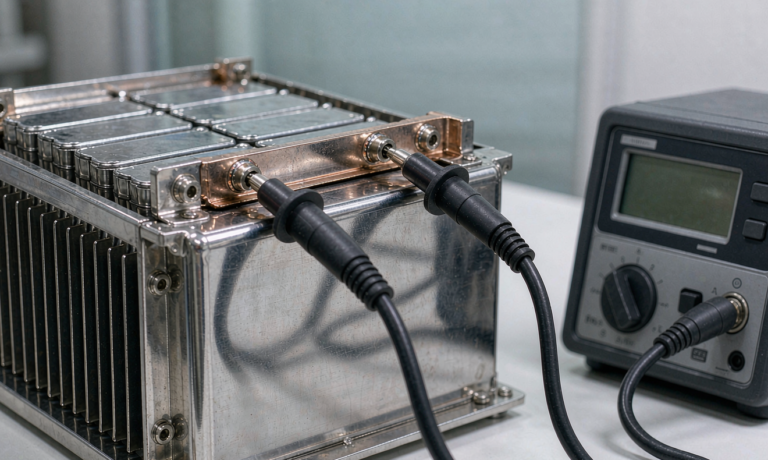
As a senior lithium battery engineer at Horizon Power, I have spent the last decade moving data centers, telecom sites, and industrial facilities off lead-acid and onto lithium-ion battery backup systems. The question I hear most from procurement teams is deceptively simple: “Can we just drop a lithium battery into our existing UPS?” The short answer is yes, but the engineering behind a reliable lithium battery backup is anything but trivial. In this guide I walk through how we size, protect, and certify lithium battery packs for uninterrupted power supply (UPS) and critical backup duty.

Why Lithium Replaced Lead-Acid in UPS Applications
Legacy UPS units shipped with valve-regulated lead-acid (VRLA) batteries for one reason: low upfront cost. But VRLA degrades fast in float service, typically delivering only 200 to 400 cycles before capacity collapses to 80% of nameplate. A lithium battery, by contrast, routinely delivers 2,000 to 6,000 cycles at the same 80% threshold depending on chemistry and depth of discharge. For a facility running monthly discharge tests, that difference means a lead-acid string is replaced every two or three years, while a lithium battery pack can outlast the UPS inverter itself.
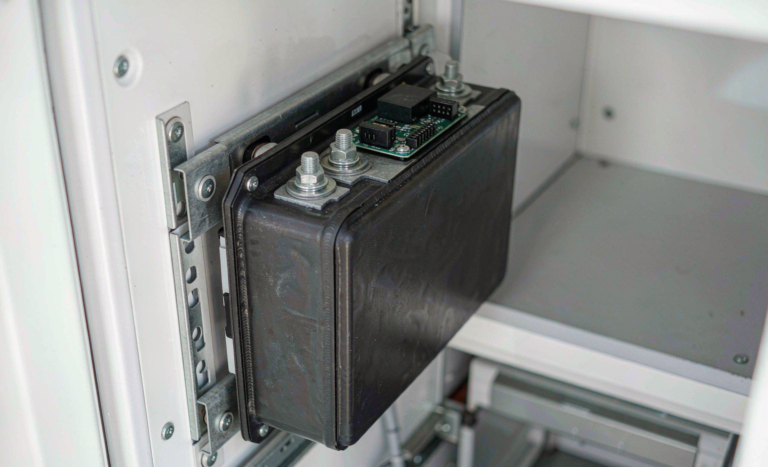
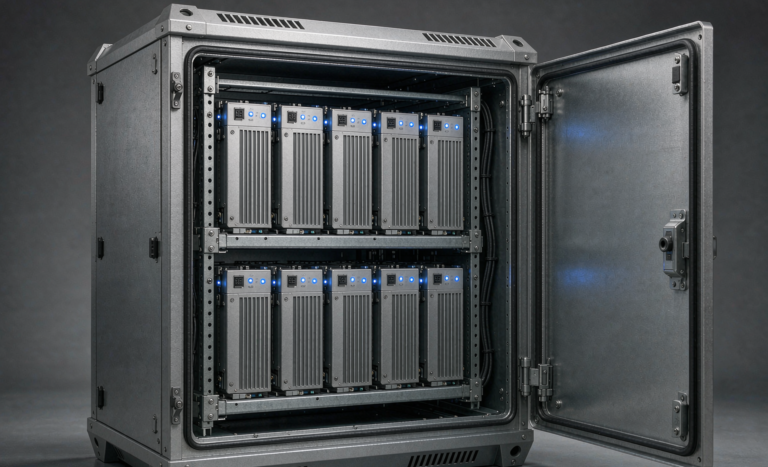
The second driver is energy density. A 48V 100Ah lithium-ion battery pack occupies roughly one-third the footprint and half the weight of an equivalent lead-acid bank. In retrofit projects where floor load and rack space are constrained, this is often the deciding factor. We have swapped a four-shelf VRLA cabinet for a single 3U lithium module without touching the room layout.
Sizing a Lithium UPS Battery: From VA to Watt-Hours
Correctly sizing a lithium battery backup begins with load, not with battery marketing specs. Start from the UPS VA rating and the real power factor of your load. A 10kVA UPS at 0.9 PF supports about 9,000 W. If your critical load draws 4,500 W and you need 30 minutes of runtime, the energy requirement is 4,500 W x 0.5 h = 2,250 Wh. Accounting for a typical 90% inverter efficiency and a conservative 80% usable depth of discharge (DoD) on an LFP lithium battery, you need a pack of at least 2,250 / (0.9 x 0.8) = approximately 3,125 Wh.
That translates to a 48V system of roughly 65Ah, or a 51.2V LFP module at about 60Ah. I always remind clients that usable DoD is the single biggest lever: specifying 80% DoD instead of 50% cuts the required lithium battery capacity by nearly 40%. A custom battery solution sized to your actual load profile almost always beats an off-the-shelf pack that was engineered for someone else’s duty cycle.
BMS and Protection Architecture for Backup Packs
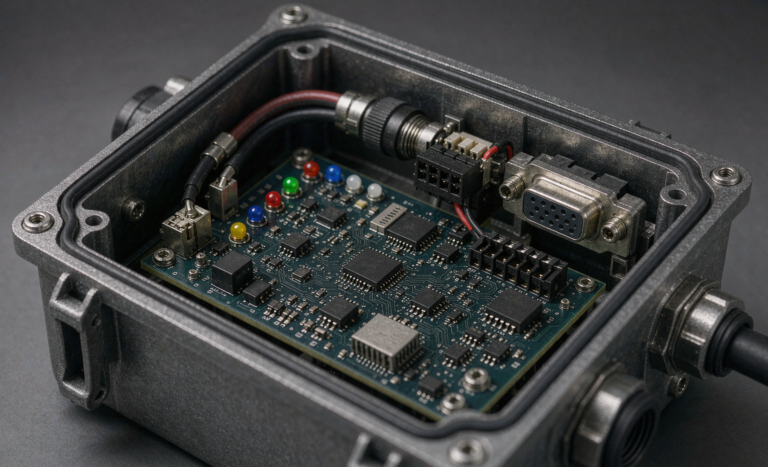
A UPS lithium battery lives in float-charge limbo: rarely cycled, occasionally hammered by a grid event, then recharged. That duty demands a robust battery management system (BMS). At minimum, the BMS must provide over-voltage, under-voltage, over-current, and over-temperature protection, plus cell balancing to keep series cells within a few millivolts. For telecom-grade backup we specify a BMS solution with redundant voltage sensing and a contactor that physically opens on fault.
Our packs are validated to UN38.3 for transport safety and IEC 62133 for portable cell safety, and the full system is built to IEC 62619 for industrial stationary applications. These are not optional checkboxes: a lithium battery that cannot show UN38.3 and IEC 62133 documentation will fail customs and most enterprise acceptance tests. The BMS also reports state of charge (SOC) and state of health (SOH) over CAN or RS485, which lets the UPS controller predict remaining runtime instead of guessing.
Chemistry Choice: LFP vs NCM for Backup Duty
For stationary backup, lithium iron phosphate (LFP) is the default chemistry, and for good reason. LFP operates at a lower cell voltage (3.2V nominal) but offers exceptional thermal stability, a long cycle life, and tolerance to high temperatures. Nickel-cobalt-manganese (NCM) packs are lighter and more energy-dense, which matters for mobile or space-constrained installs, but they run hotter and cost more to certify for indoor stationary use.
In our field data, an LFP lithium battery at 25°C holding a 50% float-like state of charge loses roughly 1 to 2% capacity per year, versus 5 to 8% for NCM under the same conditions. For a UPS that may sit idle for months between discharges, that calendar-life margin is decisive. We only recommend NCM when weight or volume is the binding constraint and the enclosure is actively cooled.
Scaling Runtime with Parallel Strings and Modules
One of the underrated advantages of a lithium UPS battery is modular scaling. Because each module carries its own BMS, the BMS solution scales naturally with the rack: you add identical modules to extend runtime without redesigning the pack. Adding a second 51.2V 100Ah module to an existing string simply doubles available watt-hours, provided the busbars and connectors are rated for the combined current.
The engineering caveat is balancing. Parallel lithium battery strings must be matched in state of charge before connection, or the stronger string will dump current into the weaker one through the bus. We pre-charge and balance every module on the bench, then document the matched pair in the build record. A disciplined custom battery solution provider will hand you that record; if they cannot, treat it as a red flag.
Installation, Ventilation, and the Standards That Matter
Lithium battery backup systems do not need the explosive-venting cabinets that lead-acid demands, but they are not set-and-forget either. We install modules in ventilated racks with at least 50mm of clearance on the heat-exhaust side, and we keep them away from direct sunlight and heat ducts. Enclosures are typically rated to IP20 for indoor telecom rooms and IP54 or higher for semi-outdoor cabinets.
On the compliance side, the inverter-plus-battery system should align with IEC 62040 for UPS performance and safety, UL 1973 for stationary battery systems, and UL 9540A for energy storage fire propagation testing where local codes require it. EMC to IEC 61000 keeps the BMS telemetry from interfering with adjacent sensitive equipment. A well-designed BMS solution also logs every fault event to the site controller for audit. None of these replace a site-specific risk assessment, but together they form the baseline a serious lithium battery manufacturer should be able to meet.
When a Lithium UPS Battery Pays for Itself
The business case is straightforward. A lead-acid bank might cost 40% less up front, but over a 10-year horizon the lithium battery wins on replacement count, floor space, and maintenance labor. In one regional hospital project, the client replaced VRLA every 28 months; switching to an LFP lithium battery backup eliminated four battery change-outs and the associated downtime windows. The payback landed inside 3.5 years, after which the system ran at near-zero battery cost.
For facilities with frequent grid instability, the score is even better, because every discharge event wears lead-acid far faster than lithium. If your site sees more than a handful of meaningful outages per year, the lithium option is not a luxury, it is the lower-risk architecture.
Frequently Asked Questions
How long will a lithium UPS battery last in backup service?
Cycle life depends on depth of discharge and temperature. At 80% DoD and 25°C, an LFP lithium battery typically delivers 2,000 to 4,000 full cycles; at shallow backup discharges it can serve 8 to 10 years of calendar life. Lead-acid in the same duty rarely exceeds 3 to 4 years.
Can I retrofit lithium into an existing UPS?
Often yes, but the charger profile must be compatible. Lead-acid chargers use a constant-voltage float that can over-charge lithium. We either reprogram the UPS charger or insert a DC-DC stage managed by the BMS. A qualified lithium battery manufacturer should verify this before you swap anything.
What capacity do I need for a two-hour runtime?
Use load watts x 2 h / (inverter efficiency x usable DoD). For a 3,000 W load at 90% efficiency and 80% DoD, that is about 8,330 Wh, or a 51.2V 160Ah lithium battery pack. A custom battery solution sized to your exact load avoids over-buying.
Is a lithium battery safe indoors for UPS duty?
Yes, when built to IEC 62619 with a certified BMS and installed with basic ventilation. LFP in particular is highly resistant to thermal runaway. The UN38.3 and IEC 62133 certifications confirm the cells passed abuse testing.
How do I read state of charge on a lithium UPS?
The BMS reports SOC over CAN or RS485 to the UPS controller, which displays remaining runtime. Unlike lead-acid, where voltage is a poor SOC proxy, a lithium battery gives a stable, accurate SOC reading throughout the discharge.
When does a lithium UPS pay off versus lead-acid?
If you replace lead-acid more than once in the system’s life, or your site has frequent outages, lithium wins inside 3 to 5 years. For rarely-cycled, cost-only bids it can take longer, but the reliability upside is immediate.