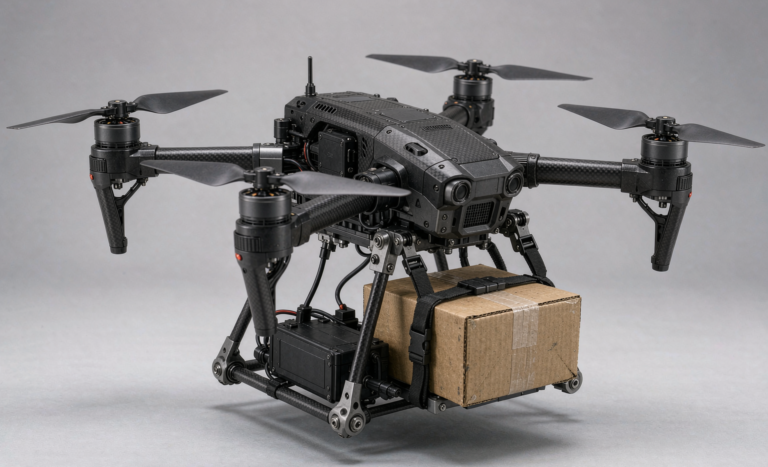
Drone Battery Redundancy and Fail-Safe Power Design
When a drone loses power at 120 meters, it does not glide down like an airplane. It drops. In my years as a senior lithium battery engineer building packs for inspection, delivery, and defense programs, I have seen a single weak cell take down an entire mission — and occasionally an airframe. That is why drone battery redundancy and fail-safe power design is not a luxury feature; it is the difference between a recoverable incident and a write-off. In this guide I will walk through the architectures we actually use, the fail-safe logic we specify, and the validation data that proves a redundant system is worth the extra mass.
Why a Single Battery Is a Single Point of Failure
Most consumer and prosumer drones run a single drone battery on one power bus. That pack feeds the flight controller, ESCs, motors, and payload through a single battery management system (BMS). If one cell goes into over-discharge, if a weld joint fatigues, or if a connector walks loose, the whole aircraft loses power at once. There is no graceful degradation — only a fall.
In a hobby context that is an annoyance. In a commercial inspection flight over a refinery, a mapping mission across a remote coastline, or a defense sortie, a single point of failure is unacceptable. The first principle of redundancy design is simple: no single component failure should be able to remove all propulsion power. Once you accept that rule, the rest of the architecture follows.
Redundancy Architectures That Actually Work
There are three levels at which you can add redundancy, and in practice we almost always combine at least two of them.
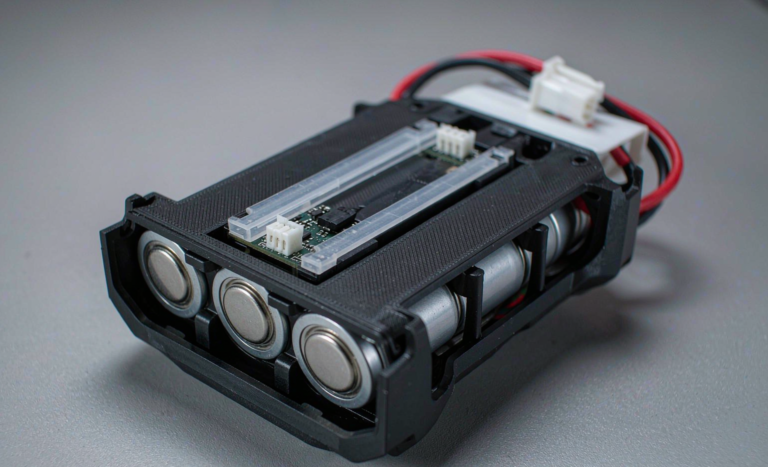
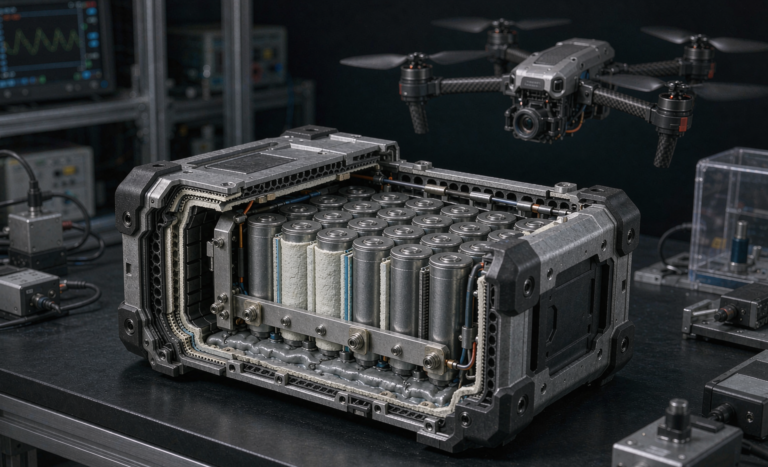
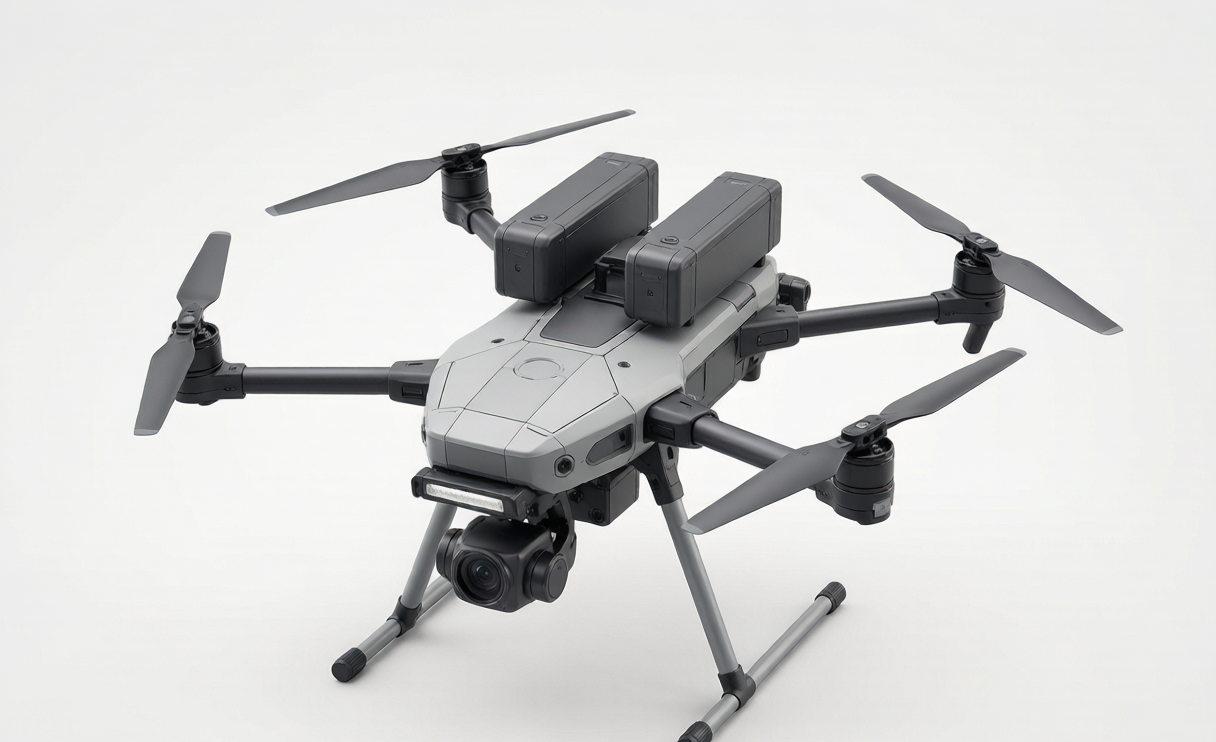
- Parallel module redundancy. Two independent drone lithium battery packs sit in parallel on a shared bus. Each has its own BMS. If one pack fails open, the other keeps the motors spinning. The key engineering detail is isolating each pack with ideal diodes or back-to-back MOSFETs so a short in one module cannot drag down the other.
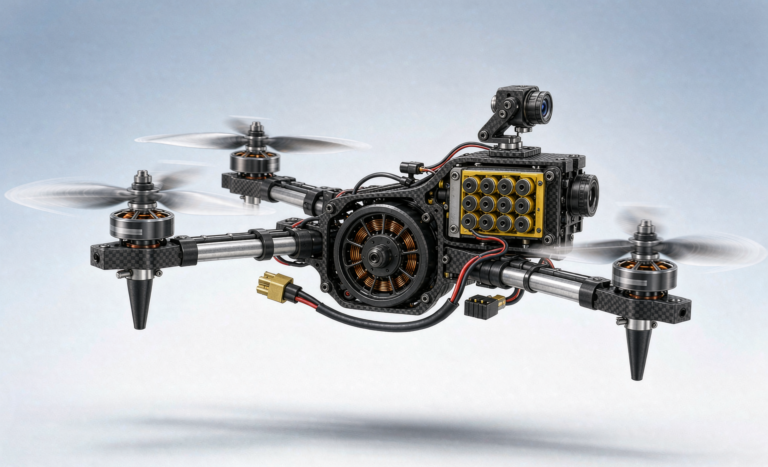
- Dual independent power buses. Instead of paralleling batteries, you split the airframe. On a hexacopter, three arms draw from bus A and three from bus B, each fed by its own pack. A total failure of one bus still leaves three rotors — enough for a controlled descent in most configurations.
- Cell-level sparing. Less common but elegant: design the pack with N+1 cells per series group, so one cell can be bypassed by the BMS without dropping the string voltage below the motor’s minimum. This is more complex and we reserve it for high-value programs.
For the majority of B2B programs, parallel module redundancy gives the best balance of cost, mass, and reliability. It is also the easiest to retrofit onto an existing airframe without re-architecting the whole power distribution network.
Fail-Safe Mechanisms Every Engineer Should Specify
Redundancy is only as good as the logic that controls it. These are the fail-safe functions I insist on for any mission-critical lithium battery deployment:
- Independent under-voltage lockout (UVLO) per module. Each pack disconnects itself at a safe cell floor (we use 3.0 V/cell for LCO blends, 2.5 V for LFP) before it can damage cells or drag the shared bus.
- Isolation switching. Back-to-back MOSFET “ideal diode” bridges prevent a faulted pack from sourcing or sinking current into a healthy one. Reverse current is the silent killer of parallel designs.
- Cross-monitoring BMS. Two BMS units watch each other. If the primary stops reporting telemetry for 200 ms, the secondary forces a controlled handoff rather than waiting for a hard fault.
- Telemetry-driven early warning. We stream per-pack voltage, temperature, and impedance to the ground station. A 15% rise in internal resistance on one module triggers a return-to-home long before it becomes a failure.
The goal is not just survival of a fault — it is detectable, predictable survival, so the operator can make a safe decision.
A Real Design Example: 6S Dual-Module Inspection Pack
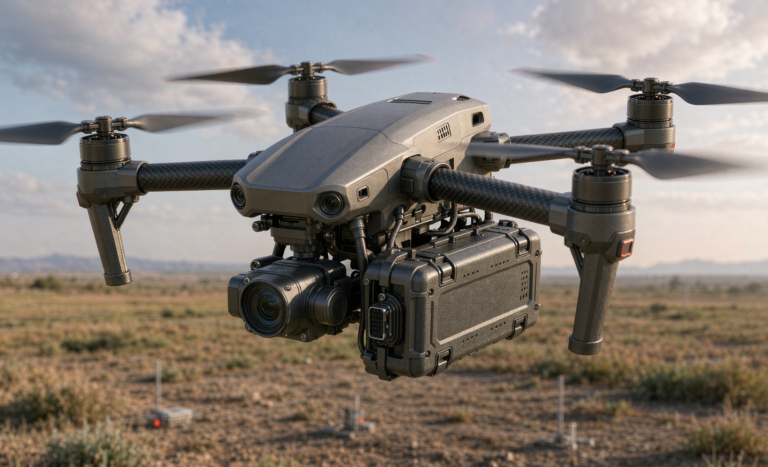
Here is a configuration we delivered for a pipeline-inspection hexacopter. The aircraft needed 25 minutes of hover with a 1.2 kg sensor payload and the ability to land safely on one pack.
- Per module: 6S1P, 22.2 V nominal, 10,000 mAh, Grade-A NMC cells rated at 15C continuous.
- Two modules in parallel through ideal-diode bridges; combined 20,000 mAh at 22.2 V.
- Per-module BMS with UVLO at 3.0 V/cell, over-current at 60 A, and cell-balancing to ±10 mV.
- Combined mass: 1.9 kg for both packs versus 1.05 kg for a single equivalent pack — a 0.85 kg penalty for full redundancy.
Flight test data: with one module intentionally disconnected at 90 seconds, the aircraft held altitude and completed a controlled descent with 38% state of charge remaining in the surviving pack. That is the number that sold the program — not a spec sheet, but a demonstrated safe landing.
Standards and Validation We Actually Run
Redundant power systems still have to clear the same compliance bar as any other drone battery, plus a few extras. The certifications our B2B buyers ask about most:
- UN38.3 — mandatory for air transport. Both parallel modules must be tested independently and as a system.
- IEC 62133 — cell and pack safety for portable applications; our baseline for internal short-circuit and thermal abuse testing.
- DO-160G — environmental conditions for airborne equipment. Relevant for vibration, altitude, and temperature cycling on the power system.
- MIL-STD-810H — often requested for defense and industrial UAV programs; drives our shock and ingress (IP) validation.
- FAA / EASA operational frameworks — not a product standard, but they shape how we document fault tolerance for BVLOS (beyond visual line of sight) waiver applications.
We also run a fault-injection campaign: deliberately disabling one module in flight, simulating a cell open-circuit, and verifying the handoff logic. No redundant design ships without at least 50 documented fault-injection flights.
When a custom battery solution Beats Off-the-Shelf
You can buy a perfectly good standard drone lithium battery off the shelf, and for many programs that is the right call. Redundancy usually pushes you into custom territory for three reasons. First, off-the-shelf packs rarely expose the parallel-bridge and isolation interfaces you need. Second, the BMS cross-monitoring logic has to be co-designed with the airframe firmware. Third, the mass and form-factor budget is tight enough that the pack has to be shaped to the airframe, not the other way around.
That is where a custom battery solution pays for itself. We typically start with a brief covering mission profile, payload, environmental envelope, and the required fail-safe behavior, then iterate from a reference cell into a flight-qualified redundant pack in 8–12 weeks. For a fleet of even 20 aircraft, the non-recurring engineering cost is recovered quickly in avoided crash losses.
Frequently Asked Questions
How much redundancy is enough for a delivery drone?
For a last-mile delivery quadcopter carrying a valuable parcel, I recommend parallel module redundancy as the minimum. A quad cannot sustain flight on two rotors, so within a single bus you still want two independent packs. For fixed-wing or hexacopter platforms, dual independent buses can be sufficient. The right answer depends on your acceptable loss rate — we model it against your fleet size and mission value.
Can I hot-swap a drone battery mid-flight?
Not safely on a single-bus aircraft, because removing the only pack kills propulsion. With parallel module redundancy you can swap one module while the other carries the load — but only on the ground between sorties in practice, because the mechanical and connector reliability of in-flight mating is hard to certify. We design the bays for fast ground swap, not aerial swap.
Does redundancy double the weight?
No. Because you can size each redundant module closer to its actual share of the load, the total mass penalty is typically 40–70% over a single equivalent pack, not 100%. In our 6S inspection example the penalty was about 0.85 kg on a 1.9 kg total — roughly 45% over the single-pack baseline, bought back many times over by avoided crashes.
Which standards apply to redundant drone power systems?
You still need UN38.3 for transport and IEC 62133 for pack safety, tested per-module and as a system. For airborne and defense programs add DO-160G and MIL-STD-810H environmental validation. If you fly BVLOS, document your fault-tolerance behavior for the FAA or EASA reviewer — they care more about demonstrated fail-safe behavior than about any single certificate.
If you are specifying power for a mission where a single failure is not an option, bring us the mission profile early. Redundancy designed in from day one is cheap; redundancy bolted on after a crash investigation is expensive.