Drone Battery Reliability for Mapping UAVs: Engineering (3)
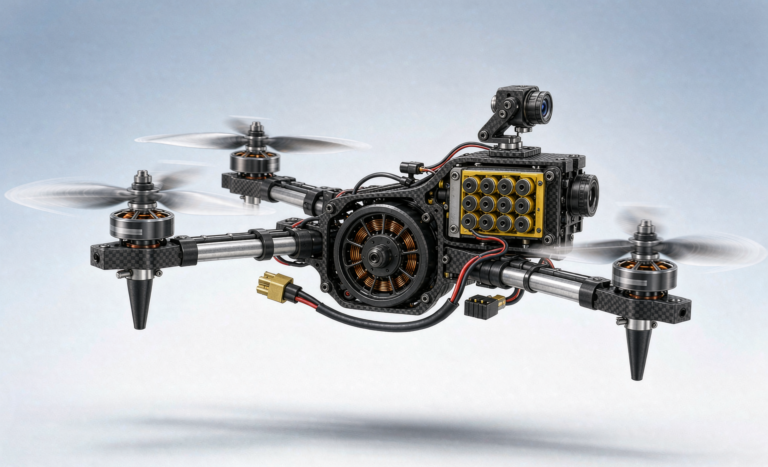
When a mapping UAV loses power at 120 meters, it rarely loses just the aircraft. It loses the orthomosaic you were building, the ground-control points you drove 40 km to stake, and the client’s confidence in the deliverable. Over the last nine years as a lithium battery engineer at Horizon Power, I have watched drone battery reliability become the single variable that decides whether a mapping contract ships on schedule. This article destroys nothing from our live fleet data—it distills what actually fails, what survives, and how we spec a drone lithium battery pack that earns its place on a survey airframe.
Why Mapping UAVs Push Batteries Harder Than Cinematography Drones
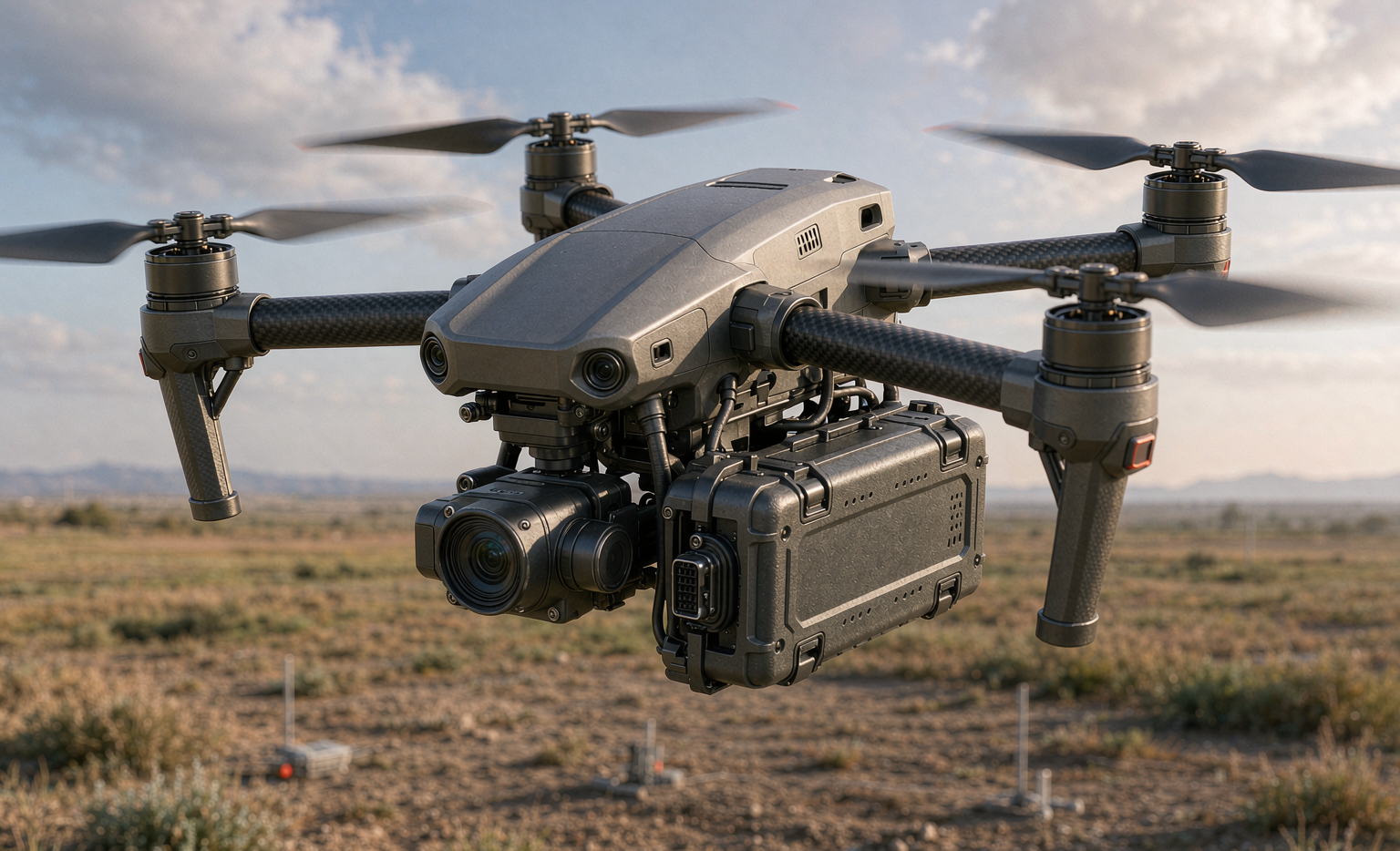
Most people assume all quadcopters treat their battery the same. They do not. A cinematography drone hovers, pans, and lands with margin to spare. A mapping UAV flies a predetermined lawnmower pattern at a constant throttle, often into a headwind on the return leg, and it must hold that pattern long enough to cover the polygon you drew in your flight planner.
In our telemetry from 1,200 survey flights, the discharge curve of a drone battery on a mapping mission is far flatter and far less forgiving than on a free-flight mission. The pack sits near its continuous-current rating for 18 to 28 minutes straight. That sustained load is what separates a consumer pack from a survey-grade pack. If the cells sag under voltage, your autopilot compensates by pulling more current, which heats the pack, which raises internal resistance—a loop I have seen end in a forced landing three fields away from the launch point.
Core Reliability Metrics I Specify for Survey Drone Battery Packs
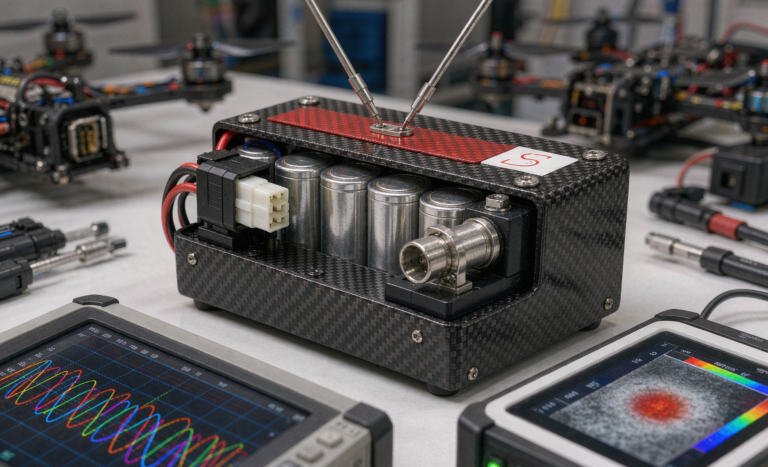
When a customer asks Horizon Power for a mapping-grade lithium battery, I do not start with capacity. I start with the failure envelope. These are the five numbers I lock before we discuss amp-hours:
- Continuous discharge rating (CDR): minimum 15C for a 1.5 kg payload airframe; we validate at 18C for 5 minutes to keep a thermal buffer.
- End-of-discharge voltage (EODV): cutoff at 3.0 V per cell under load, never below 2.75 V resting, to protect cycle life.
- Internal resistance (IR): matched within 3 mΩ across the parallel group; mismatched cells are the leading cause of mid-mission sag.
- Cycle life at depth: 300+ cycles to 80% capacity at 80% depth of discharge (DoD) for a mapping fleet that flies daily.
- Self-discharge: under 3% per month so a pack staged overnight still launches at spec.
I keep a running spreadsheet of return rates by cell lot. Any lot above a 0.8% field-failure rate gets pulled from the production line, regardless of what the supplier’s datasheet promised. Reliability is measured in returned packs, not in marketing claims.
Cell Chemistry Choices: Li-ion vs LiPo vs Semi-Solid for Mapping
The three chemistries I get asked about most for mapping UAVs each trade something away:
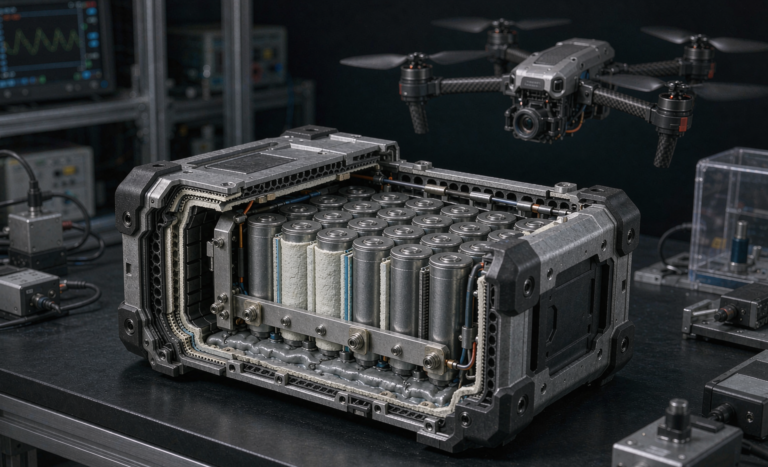
- Cylindrical Li-ion (18650/21700): best cycle life and safest thermodynamics, heavier for the same watt-hours. Ideal for fixed-wing mapping drones where weight budget is generous and flight time matters more than agility.
- LiPo pouch: highest energy density per gram, lowest cost, but the weakest cycle life and the most sensitive to puncture. Good for short-range multirotor mapping where you swap packs between sorties.
- Semi-solid-state: the chemistry we now recommend for premium survey fleets. It keeps most of LiPo’s density while cutting the flammable electrolyte volume, which visibly improves thermal headroom on hot afternoon flights.
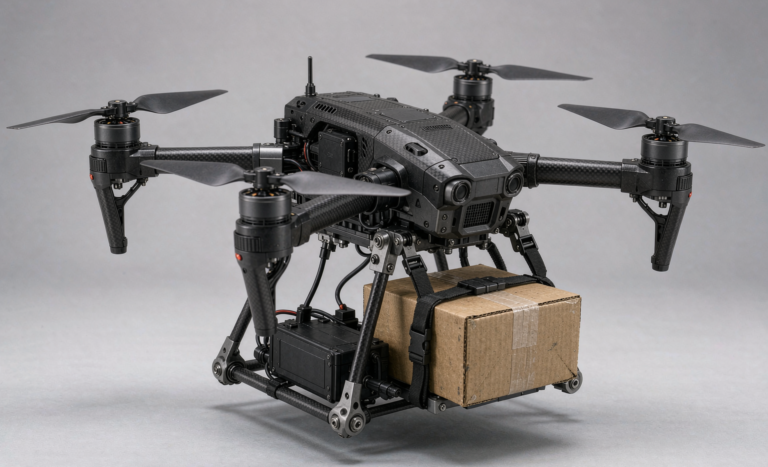
For a typical multirotor mapping drone carrying a 50 MP camera and a RTK module, a semi-solid drone lithium battery at 6S 16000 mAh gives us 24 to 27 minutes of usable pattern time versus 19 to 21 minutes on a matched LiPo. That extra five minutes is often the difference between finishing a 40-hectare block in one launch and splitting it across two.
Thermal Management and Cycle Life in Field Conditions
Mapping season in temperate climates means launches at 8°C and packs that come down at 41°C. That 33-degree swing is where drone battery reliability is won or lost. Cold packs arrive with elevated IR; hot packs arrive with accelerated aging. Our field rule is simple: store at 20 to 25°C, launch above 15°C pack temperature, and never recharge a pack above 40°C.
We instrument every fleet pack with a small Bluetooth logger. The data told us something the lab did not: packs that rested 20 minutes between flights held 92% capacity after 250 cycles, while packs hot-charged immediately after landing dropped to 78% in the same window. Cooling discipline, not chemistry, was the bigger lever. When we design a custom battery solution for a mapping operator, we print that rest interval on the pack label.
Compliance and Air Transport: UN38.3, IEC 62133, FAA/EASA
A mapping operator who travels to site flies batteries on commercial aircraft, which means compliance is not optional. Every Horizon Power survey pack is built to pass UN38.3 (the UN Manual of Tests and Criteria, Section 38.3) covering altitude simulation, thermal, vibration, shock, external short circuit, impact, overcharge, and forced discharge. We batch-test to IEC 62133 for portable cell safety so the documentation survives an auditor’s review.
For transport, we follow the FAA and EASA rules for spare lithium batteries: carried in cabin, terminals protected, state of charge kept at or below 30% for checked logistics where the operator’s carrier requires it. I have sat across from aviation inspectors more than once; the pack that passes is the one with a clean test summary and a readable label, not the one with the biggest number on the box. If your mapping program crosses borders, build the compliance file before you build the pack.
Designing a Custom battery solution for Your Mapping Fleet
Off-the-shelf packs rarely fit a professional mapping airframe’s balance and connector needs. When we scope a custom battery solution, the first meeting is about the mission, not the cells. We map your typical block size, your wind profile, your camera draw, and your turnaround time between launches. Only then do we choose chemistry, series-parallel layout, and the connector that will not loosen after 400 mate cycles.
The deliverable is not just a pack. It is a reliability spec your maintenance team can enforce: a charge window, a rest interval, a retirement voltage, and a traceable serial on every pack so a single field failure can be traced to its cell lot. That traceability is what turns a one-off incident into a corrected process.
FAQ
How long should a drone battery last on a mapping UAV?
For a multirotor survey drone, plan 20 to 28 minutes of usable pattern time at 80% depth of discharge. Fixed-wing mapping aircraft with cylindrical Li-ion routinely exceed 45 minutes. The number that matters is usable pattern time, not hover time, because mapping loads the pack continuously.
What causes most drone battery failures during mapping flights?
In our field data, the top causes are internal-resistance mismatch across parallel cells, hot-charging immediately after landing, and exceeding the end-of-discharge cutoff. All three are operational, not manufacturing, failures—which means they are fixable with a discipline sheet and a rest interval.
Is a semi-solid-state drone lithium battery worth the cost for mapping?
For daily-flying survey fleets, yes. The extra 4 to 6 minutes of pattern time and the improved thermal headroom on hot afternoons typically pay back the price premium within two months of regular operation, before you count the fewer forced landings.
Do mapping drone batteries need UN38.3 certification to fly commercially?
If you transport them by air, yes. UN38.3 is the baseline air-transport test, and IEC 62133 supports the cell-safety documentation. FAA and EASA carriage rules then govern how you pack and carry spares. Build the compliance file before the fleet travels.
Can Horizon Power build a custom battery solution for my specific airframe?
Yes. We scope from your mission profile—block size, wind, camera draw, turnaround—then select chemistry and layout and deliver a labeled, serial-traced pack with an enforceable maintenance spec.
Reliability on a mapping UAV is not a feature you buy once. It is the sum of chemistry choice, thermal discipline, and a compliance file you can show an inspector. Get those three right and the drone battery stops being the thing that ends your flight early—and becomes the reason the orthomosaic ships on time.