Drone Battery for Long-Endurance Fixed-Wing UAVs: Engineering for Hours, Not Minutes
Why Fixed-Wing Endurance Is a Battery Problem First
When procurement teams ask me about a drone battery for long-endurance fixed-wing UAVs, they almost always start with airframe drag and wing loading. In my fifteen years as a senior lithium battery engineer at Horizon Power, I’ve learned the opposite lesson: endurance is decided on the cell bench, not in the wind tunnel. A fixed-wing platform cruises efficiently, so the single largest energy consumer on a multi-hour mission is the battery pack itself. If the pack is 8% heavier than it needs to be, or 5% less efficient in discharge, you lose those hours of flight you were designing for. That is why I treat the drone battery long endurance fixed wing UAV requirement as a system-level specification from day one, not a component to source after the airframe is frozen.
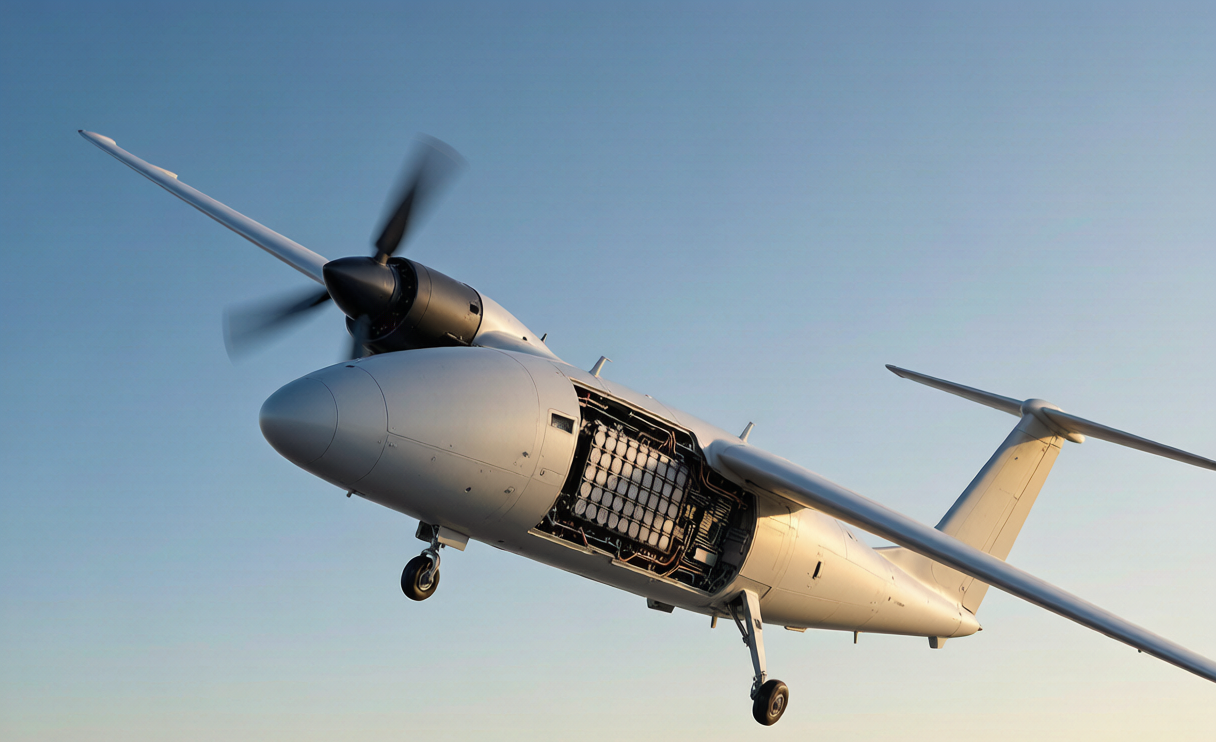
Over the last three years I’ve supported survey, mapping, and border-patrol programs where the mission profile demanded 6 to 12 hours of continuous flight. None of those programs succeeded on off-the-shelf packs. They needed a custom battery solution built around specific chemistry, discharge rate, and thermal behavior. In this article I’ll walk through the engineering decisions that actually move the endurance needle, the standards we certify against, and the trade-offs you should be ready to make.
Energy Density vs Discharge Rate: The Core Trade-Off
The temptation is to chase the highest Wh/kg number on the datasheet. For a drone lithium battery in a fixed-wing, that instinct is half right. Energy density sets your ceiling, but cruise discharge in a fixed-wing is typically a steady 1C to 3C, far gentler than a multirotor’s burst loads. That means we can favor high-energy cells over high-power cells, gaining usable capacity without paying the weight penalty of aggressive current capability we won’t use.
In practice, for a 8-hour mapping UAV, I specify NMC or semi-solid-state cells rated at 220–280 Wh/kg depending on budget, with a continuous discharge rating comfortably above the worst-case cruise plus payload servo load. We leave a 30% margin between sustained draw and the cell’s rated continuous current. That margin is what keeps the pack cool and lets it survive thousands of cycles. A lithium battery pushed to 90% of its discharge limit will age fast and swell; the same chemistry at 60% load will outlast the airframe.
Sizing the Pack: From Wh/W to Real Flight Time
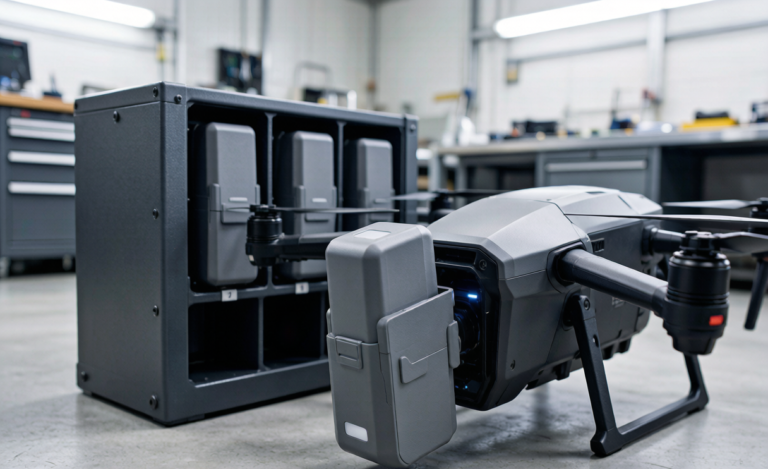
I size every drone battery pack backwards from the mission. Start with the avionics and payload draw in watts, add the propulsion power at cruise (pulled from the airframe team’s thrust curve), sum to total watts, then divide required flight hours to get watt-hours. From there, divide by usable state-of-charge — I rarely plan below 20% remaining, so usable capacity is about 80% of nominal. The result tells you the pack size; the cell energy density then tells you the mass.
For one recent 10-hour maritime patrol UAV, the math landed at roughly 1,600 Wh needed. Using 250 Wh/kg cells, that is about 6.4 kg of cells before enclosure and BMS. The airframe had a 9 kg battery bay budget, so we had margin for a robust structural case and a redundant BMS. Had we used 180 Wh/kg cells, the pack would have been 8.9 kg and the program would have needed a redesign. This is exactly why a custom battery solution pays for itself: standard packs in that size class were either too heavy or too low-capacity.
Thermal Behavior on Long Cruises
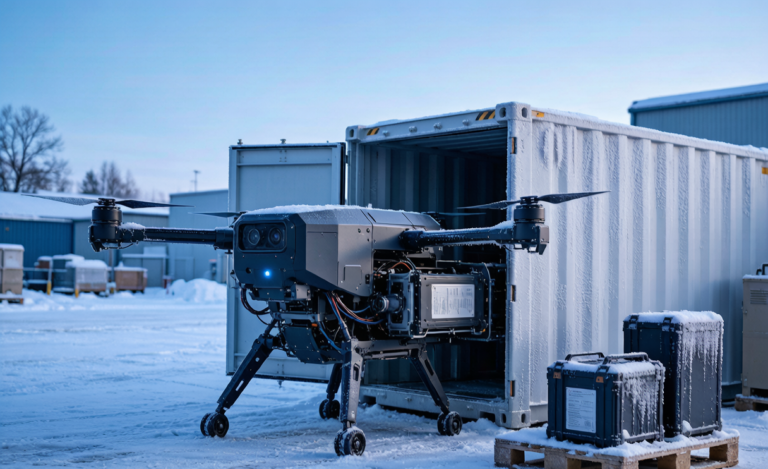
Fixed-wing flights are deceptive thermally. There is no hovering heat dump, but a 10-hour mission means the pack sits at elevated temperature for a very long time, and calendar aging accelerates with both temperature and time-at-voltage. I specify cells with a low self-heating rate and design the enclosure for passive convection. At cruise altitude, ambient can be -20°C to +40°C depending on latitude and season, so the BMS must manage both cold-soak pre-heat and hot-climate current derating.
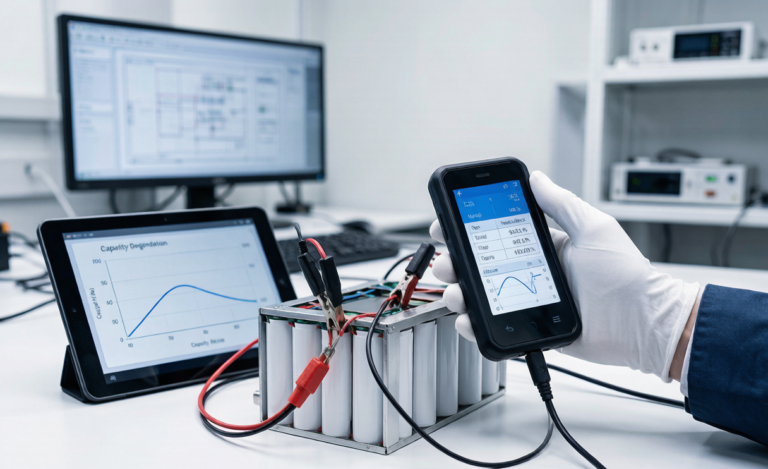
We validate every drone lithium battery build with a 12-hour thermal soak test at the expected cruise temperature, logging cell-to-cell delta T. If delta exceeds 4°C across the pack at steady state, I redesign the busbar layout or add thermal padding. A pack that drifts out of balance after hour six is a pack that lands the aircraft early — or worse, triggers a protection event mid-mission.
Certifications That Actually Matter for Cross-Border UAV Programs
Long-endurance fixed-wing UAVs are almost always cross-border programs, which means air transport compliance is not optional. Every pack we ship is built to UN38.3 for lithium battery transport, with IEC 62133 covering cell-level safety. For operators flying in or through the EU and US, we align documentation with EASA and FAA expectations for battery carriage and, where the UAV itself is certified, the pack becomes part of the type-approval evidence chain.
I keep a master compliance folder per program: UN38.3 test summary, MSDS, a declared watt-hour label, and a transport classification sheet. When a logistics manager asks whether a 1,600 Wh pack can fly as cargo, the answer depends entirely on that paperwork. A well-documented drone battery clears customs in days; an undocumented one sits in a warehouse for weeks.
Redundancy and Fail-Safe Architecture
For missions where losing power means losing the airframe, I design the battery as two independent strings with diode isolation, so a single cell fault drops one string without killing the pack. The BMS monitors each string, and the avionics see a graceful capacity reduction rather than a sudden cutoff. This is a standard part of the custom battery solution we deliver for defense and industrial UAV programs, and it is the difference between a recoverable return-to-base and a crash.
FAQ
What is the realistic endurance gain from a optimized drone battery?
On a fixed-wing platform, moving from a generic 180 Wh/kg pack to a purpose-built 250 Wh/kg drone battery typically yields 25–40% more flight time at equal mass, or the same endurance at significantly lower weight. The exact gain depends on how mass-constrained the airframe is. In mass-limited designs the benefit compounds, because a lighter pack lets you shrink the wing or add payload.
Which chemistry is best for long-endurance fixed-wing UAVs?
For most programs, high-energy NMC lithium cells remain the pragmatic choice, balancing density, cost, and cycle life. Where budget allows and certification pathways exist, semi-solid-state cells push usable density higher still. I would not recommend LFP for endurance-focused fixed-wing work — its lower energy density costs you flight time you cannot recover elsewhere.
How do you keep the pack safe on a 10-hour flight?
Through conservative discharge margins, a dual-string redundant architecture, and a BMS that derates current in hot conditions and pre-heats in cold. We also run full UN38.3 and IEC 62133 certification and validate thermal behavior with a 12-hour soak test before any production build ships.
Can a standard off-the-shelf pack work instead of a custom battery solution?
Sometimes, for short proof-of-concept flights under two hours. But the moment endurance, altitude, or cross-border compliance enters the requirement, an off-the-shelf pack usually fails on weight, form factor, or documentation. A custom battery solution aligns the pack to the airframe instead of the other way around.
How does cold weather affect a drone lithium battery on long cruises?
Below 0°C, usable capacity drops and internal resistance rises, so a pack sized for 10 hours at 20°C may deliver only 7 at -15°C. We compensate with cold-soak pre-heat and by sizing the pack with a winter margin, and the BMS logs temperature so operators can trust the remaining-flight-time estimate.