Lithium Battery Cell to Pack Design Basics: A Practical Engineering Guide
What “Cell to Pack” Actually Means (and Why It Replaced Module-Based Design)
When I first started building packs for industrial customers a decade ago, almost every lithium battery we shipped was built in three layers: cells, modules, and the final pack. We would weld groups of cylindrical cells into a module, drop those modules into a metal enclosure, and wire them together. It was safe and easy to service, but it wasted a shocking amount of space.
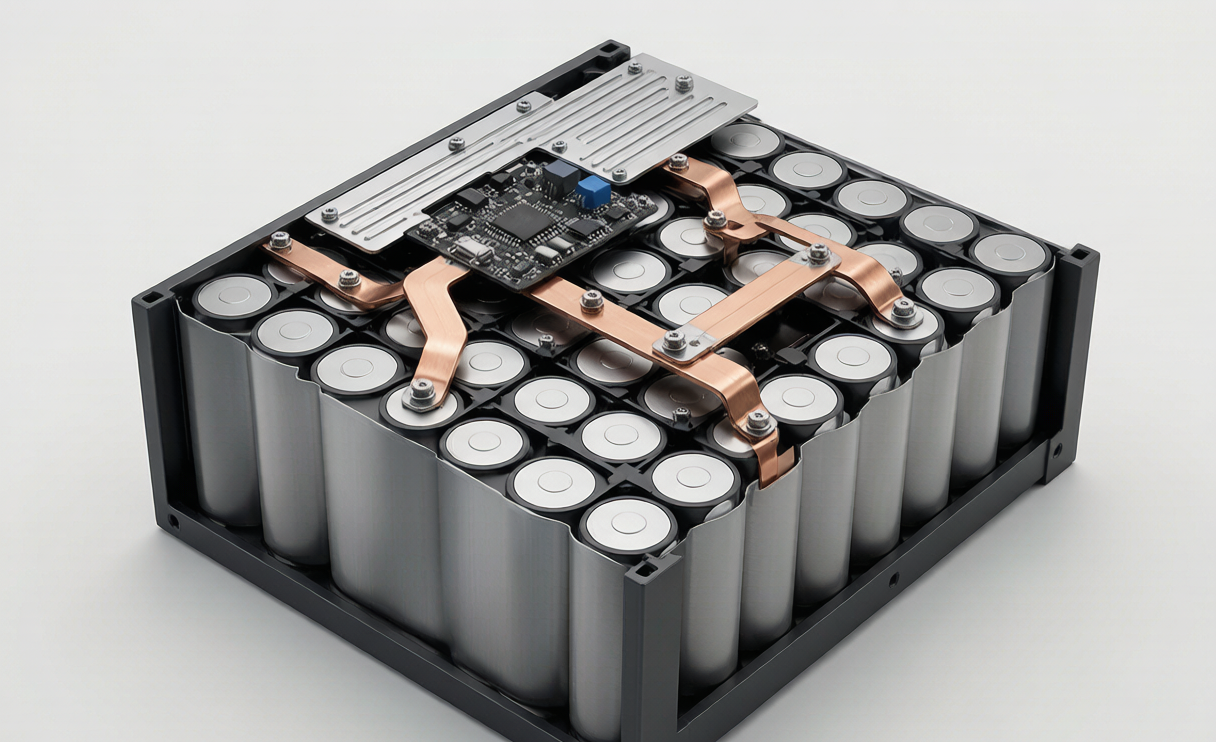
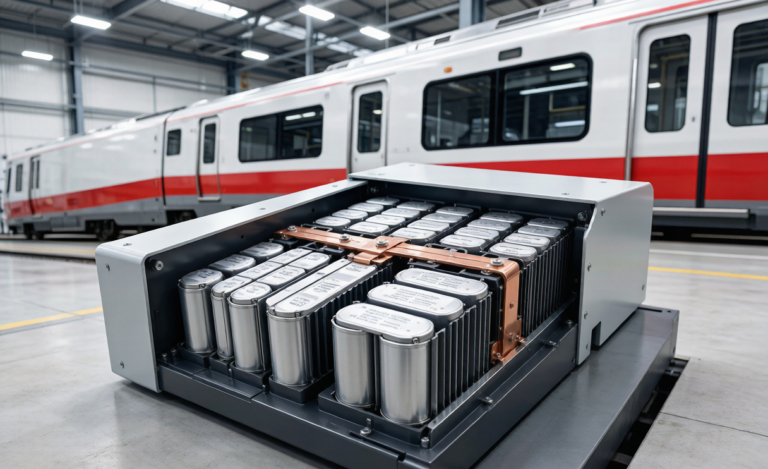
Cell to pack design — what the industry now calls CTP — removes the module layer entirely. The individual cells are mounted directly into the pack structure, and the pack housing itself becomes part of the mechanical and thermal path. In our own drone battery programs at Horizon Power, moving from a module-based layout to CTP recovered roughly 15–20% of usable volume and pushed pack-level energy density from about 180 Wh/kg up to 210–230 Wh/kg. For a drone lithium battery, that single change often translates into an extra three to five minutes of flight time on the same airframe.
The trade-off is engineering complexity. Without modules to absorb shock and localize failures, the pack housing, busbars, and battery management system have to do far more work. That is exactly why a solid cell to pack design process matters more than the marketing around it.
Core Components: Cells, Busbars, Thermal Management, and the BMS
A clean lithium battery cell to pack design rests on four pillars, and I treat them as a single system rather than separate parts:
- Cells — the energy source. Chemistry choice (NMC, LFP, or a semi-solid blend) drives everything downstream.
- Busbars and interconnects — carry current between cells. Their cross-section is sized from continuous and peak discharge, not from nominal rating.
- Thermal management — spreads heat during high-C discharge and keeps cells in a safe window.
- Battery management system (BMS) — the brain that balances cells, watches temperature, and cuts off faults.
In a CTP layout, the busbars are usually part of a stamped or CNC-machined structural plate. On a recent custom battery pack for an agricultural spraying drone, we integrated the cell-to-cell nickel busbars into a single aluminum top plate that also acted as the heat spreader. One part did three jobs, which is the entire point of CTP.
Mechanical and Electrical Architecture Decisions
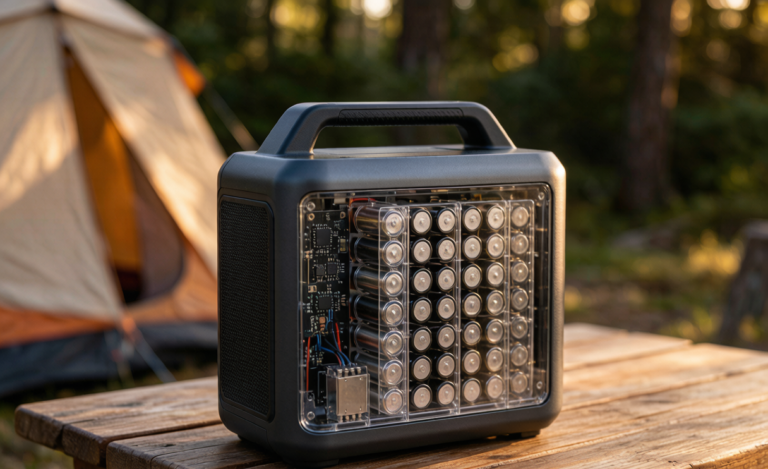
The first question I ask a customer is what cell format fits their product, because it dictates the whole pack. Cylindrical cells like 21700 are mechanically robust and easy to cool between cells, which is why they still dominate high-discharge drone battery designs. Prismatic cells pack tightly and simplify CTP stacking for home energy storage. Pouch cells give the best volumetric density but need external compression to stay safe.
Electrically, I design around three numbers: nominal pack voltage, continuous current, and peak current for short bursts. A typical heavy-lift drone lithium battery might run at 44.4 V (12S) with a continuous 60 A draw and 120 A peaks during climb. The busbar and fuse must survive the peak without overheating, and the BMS must log it. I always leave a 30% margin on interconnect temperature rise — rated for the burst, not just the cruise.
Thermal Management: The Make-or-Break Factor
If I had to name the single biggest reason CTP packs fail in the field, it is thermal design. Removing the module shell means there is less buffer between a hot cell and its neighbors. In our test lab we measure cell-to-cell temperature spread under a simulated mission profile; a good pack stays within about 5°C across all cells at 3C discharge.
For air-cooled packs we use extruded aluminum rails in direct contact with the cells. For sealed or high-power units we switch to phase-change padding or, in extreme cases, dielectric liquid cooling. The key in lithium battery cell to pack design is to treat heat as a first-class constraint from day one, not something you bolt on after the prototype melts a connector.
Safety Standards You Cannot Skip
No lithium battery leaves our facility for transport or aviation use without clearing the certifications that actually matter. The big three I brief every new engineer on:
- UN38.3 — the transport test suite (altitude, thermal, vibration, shock, external short, impact, overcharge, forced discharge). Mandatory for moving cells and packs by air, sea, or road.
- IEC 62133 — the international safety standard for portable sealed cells and batteries, covering short circuit, overcharge, and temperature abuse.
- FAA / EASA rules — for drone battery and other aviation payloads, the carriage limits (typically 100 Wh per battery for unchecked transport, with larger packs needing operator approval) and the requirement that batteries be carried protected from short circuit.
We build the test plan into the design schedule, not after. A pack that fails UN38.3 vibration at week 11 of a 12-week program is a pack that ships late and costs a fortune to redesign. I have lost count of how many “simple” custom battery solution requests turned into months of rework because someone treated certification as paperwork.
How We Validate a New Pack at Horizon Power
Our own validation flow for a new lithium battery pack runs in five gates. First, electrical characterization on a sample cell batch. Second, a thermal mock-up to confirm the cooling path. Third, mechanical drop and vibration testing on the empty housing. Fourth, the full UN38.3 and IEC 62133 suite on finished packs. Fifth, a field pilot — usually 20–50 units on real customer hardware for 200+ charge cycles.
Only after gate five do we call the cell to pack design released. This is slower than shipping a pretty prototype, but it is why our drone battery and home energy storage packs come back with failure rates we are comfortable putting our name on.
Frequently Asked Questions
What is the difference between module-based and cell to pack design?
Module-based design groups cells into enclosed modules before assembling them into a pack, adding structure and serviceability but wasting space. Cell to pack design mounts cells directly into the pack housing, removing the module layer to gain energy density and volume, at the cost of more demanding mechanical and thermal engineering.
How do you choose between cylindrical, prismatic, and pouch cells?
Cylindrical cells suit high-discharge and easy cooling, common in drone battery packs. Prismatic cells simplify CTP stacking for stationary storage. Pouch cells win on volumetric density but require external compression. The choice depends on your discharge profile, space, and cooling method.
What certifications does a lithium battery pack need for drone use?
At minimum, UN38.3 for transport and IEC 62133 for cell safety. If the pack flies, you also follow FAA or EASA carriage rules on watt-hour limits and short-circuit protection. Regional marks like CE or UL may apply depending on the market.
How long does cell to pack design validation take?
For a new custom battery pack, plan eight to twelve weeks including electrical, thermal, mechanical, certification, and a field pilot. Rushing the certification gates is the most common cause of late, expensive redesigns.