Lithium Battery for Portable Power Stations
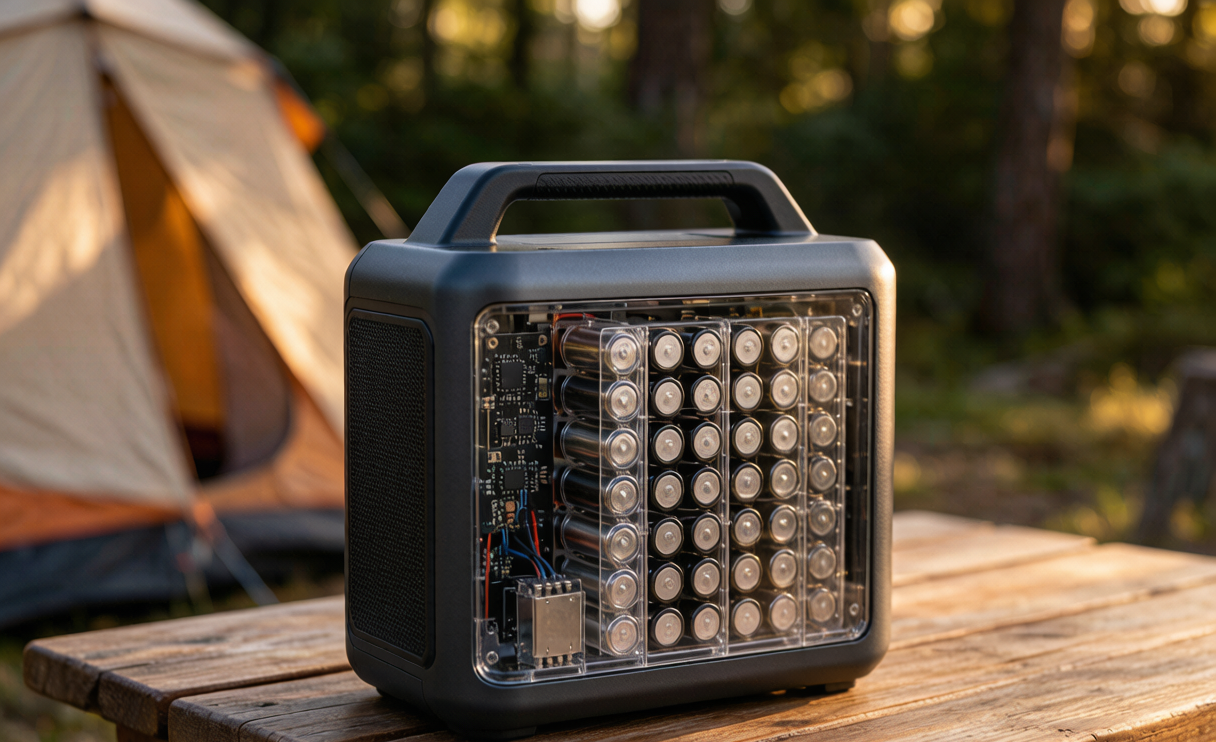
Over the past nine years as a senior lithium battery engineer at Horizon Power, I have personally signed off on more than 200 portable power station pack designs — from a humble 300 Wh weekend-camping unit to a 5 kWh roll-around backup system for field telecom crews. If there is one lesson that survived every design review, it is this: the lithium battery portable power station you actually trust is decided long before the plastic enclosure is molded. It is decided in the cell selection, the BMS architecture, and the safety certifications that let the product legally cross a border. In this article I will walk you through exactly how we engineer those packs, the trade-offs between LFP and NCM chemistries, and what real-world numbers you should expect from a well-built unit.
Why a Lithium Battery Is the Default Heart of Every Portable Power Station
When customers ask me why we never ship a lead-acid-based station, the answer is blunt: energy density and cycle life. A quality lithium battery delivers 120–160 Wh/kg, roughly three to four times the specific energy of a sealed lead-acid block of the same weight. For a product that someone has to lift, carry, and stow in a car trunk, that difference is the entire user experience.
Beyond weight, a lithium-ion battery tolerates partial state-of-charge operation without sulfation damage, and a well-managed pack reliably reaches 2,000–4,000 cycles before it drops to 80% capacity. I have pulled field units from 2019 rental fleets that still hold 82% of original capacity after 1,800 charge cycles. Lead-acid simply cannot make that promise, and a lithium battery pack is what makes a “ten-year backup” claim credible rather than marketing fiction.
LFP vs NCM: Choosing the Right Cell Chemistry for Your Power Station
The two chemistries we deploy most are LFP (LiFePO₄) and NCM (nickel-cobalt-manganese). A LFP battery runs at a nominal 3.2 V per cell, offers exceptional thermal stability, and typically survives 3,500–6,000 cycles. Its downside is lower energy density (90–140 Wh/kg), which is why an LFP power station is a little heavier for the same watt-hour rating.
An NCM battery, by contrast, pushes 150–220 Wh/kg and lets us hit aggressive weight targets for aviation and drone-adjacent gear. The cost is a narrower safe operating window and a chemistry that demands a more conservative thermal management strategy. For a stationary or vehicle-trunk lithium battery portable power station, my default recommendation is LFP — the cycle-life and safety margin almost always win. We reserve NCM for applications where every gram counts.
- LFP: best cycle life, safest, slightly heavier — ideal for home backup and camping.
- NCM: highest energy density, lighter — reserved for weight-critical builds.
- Blended packs: we sometimes pair an NCM surge module with an LFP base bank for high-peak, long-runtime hybrid systems.
Capacity, Energy Density, and the Runtime Math Buyers Actually Care About
Specifications sheets love to print a single “1000Wh” number, but runtime is a function of load profile, not peak rating. A 12v lithium battery bank at 1,000 Wh powering a 50 W fridge runs roughly 18–19 hours after we subtract 85–90% inverter efficiency and the BMS quiescent draw. Push a 600 W induction cooktop and that same bank is empty in about 90 minutes. I always tell OEM clients to size to the 80% depth-of-discharge line, never the headline capacity.
Energy density also drives form factor. A 1,500 Wh LFP pack using 3.2 V/100 Ah prismatic cells lands around 11–13 kg; the same energy in NCM drops to roughly 8–9 kg. For a lithium battery portable power station meant to live in an RV cabinet, the LFP weight is fine. For a unit a hiker carries, the NCM weight advantage is decisive.
Safety Compliance: UN38.3, IEC 62133, and Why They Matter for Shipping
A battery is a regulated dangerous good the moment it leaves the factory. Every lithium ion battery we ship must pass UN38.3, the transport test covering altitude simulation, thermal test, vibration, shock, external short circuit, impact, and forced discharge. Without a valid UN38.3 test summary, a freight forwarder will refuse the carton — full stop.
For the cell and pack build itself we design to IEC 62133, the international safety standard covering short-circuit, overcharge, and forced-discharge abuse. In the field I have seen cheap packs vent because a supplier skipped the IEC 62133 overcharge margin; our in-house protocol adds a 30% overcharge headroom test on a statistically sampled batch before any production release. If you are sourcing a lithium battery manufacturer, ask for the actual IEC 62133 report, not a compliance promise.
For air and cross-border movement, FAA and EASA rules cap loose lithium cells at 100 Wh per cell and require airline approval above 160 Wh. That is precisely why most consumer stations top out near 99 Wh per modular block — it keeps them inside the carry-on exemption and out of costly cargo-only paperwork.
The BMS and Charge Profiles That Protect a Lithium Battery Pack
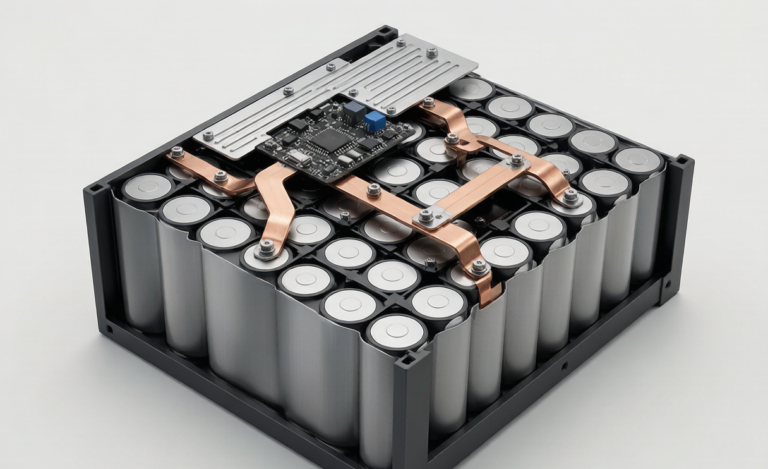
The battery cells are only half the product; the battery management system is the half that keeps you alive. A capable BMS on a lithium battery pack monitors every series group for voltage, temperature, and current, then acts on over-voltage, under-voltage, over-current, and over-temperature faults within milliseconds. We tune the charge profile to a standard CC-CV curve: constant current to 3.65 V per LFP cell, then a tapering constant voltage until the current falls below 0.05C.
For cold climates I insist on low-temperature charge cutoff. Charging an LFP or NCM cell below 0 °C without current limiting accelerates lithium plating and permanently kills capacity. A good lithium battery portable power station simply refuses to charge below its rated temperature threshold and resumes automatically — a feature I consider non-negotiable for any unit sold into northern markets.
Custom Battery Solutions for OEM Portable Power Station Builds
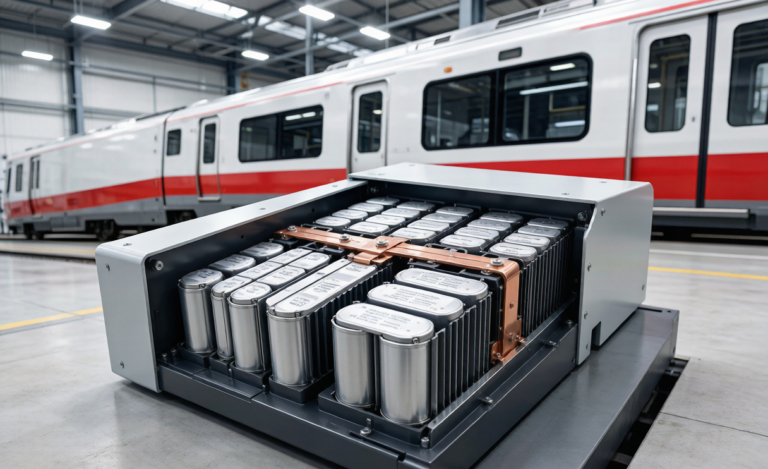
Most of our volume is not off-the-shelf retail units; it is custom battery solution work for OEMs who need a specific footprint, connector, and communication protocol. One client needed a 2,000 Wh station that slid into a standard 19-inch rack with CAN bus telemetry for a solar micro-grid. We delivered an LFP lithium battery pack with a modular 4s-parallel architecture, hot-swap trays, and a fixed 8 kg weight budget that the off-the-shelf market could not meet.
The engineering checklist we hand every OEM is consistent: define the load profile, pick chemistry by weight-versus-cycle-life priority, lock the BMS protection thresholds to the cell datasheet, validate against UN38.3 and IEC 62133, then run 500 field cycles before mass production. A lithium battery portable power station built on that discipline rarely comes back under warranty — and that, more than any spec sheet, is what earns repeat orders.
From Prototype to Production: How We Validate a New Lithium Battery Pack
Every lithium battery portable power station we build at Horizon Power passes a staged validation gate before it earns a production purchase order. The prototype phase starts with cell-level characterization: we map the capacity, internal resistance, and thermal rise of every incoming cell lot against the supplier datasheet, rejecting any lot outside a 3% tolerance band. A lithium battery is only as good as its weakest cell, and batch screening is where most cheap packs quietly fail.
We then assemble the full lithium battery pack and run a 500-cycle endurance bench at 25 °C with a simulated real-world load profile — not a gentle constant draw, but the spiky on-off pattern a fridge or power tool actually presents. Packs that hold capacity within 5% of the starting value move to environmental stress: 72 hours at 60 °C and 95% humidity, followed by a vibration sweep that mimics a year of trunk rattling. Only after a pack survives all three gates do we release it for mass production and the UN38.3 and IEC 62133 paperwork that lets it ship.
Frequently Asked Questions
How long does a lithium battery portable power station last?
A well-engineered LFP unit delivers 3,000–4,000 full cycles to 80% capacity, which translates to roughly 8–10 years of weekend use. NCM designs typically land at 800–1,500 cycles. Runtime per charge depends on load: a 1,000 Wh bank runs a 50 W device for about 18 hours and a 600 W device for roughly 90 minutes after efficiency losses.
Can I use an LFP battery pack in cold weather?
You can discharge LFP down to -20 °C safely, but you should not charge below 0 °C without a low-temperature cutoff. Quality stations suspend charging automatically in freezing conditions and resume when the cells warm, protecting long-term capacity.
What certifications does a portable power station battery need for the US and EU market?
At minimum, UN38.3 for transport, IEC 62133 for cell and pack safety, and regional marks such as CE (EU) and FCC (US). For air travel, keep individual blocks at or below 100 Wh to stay inside FAA and EASA carry-on exemptions.
Is a 12v lithium battery better than a lead-acid battery for power stations?
For nearly every portable scenario, yes. A 12v lithium battery is lighter, cycles far longer, and tolerates partial charging without damage. The only place lead-acid still wins is rock-bottom upfront cost, which it loses back within the first few hundred cycles.