Semi-Solid State Battery for Two-Wheelers in Asia: Why E-Bikes and Scooters Are Switching
Over the last three years I have watched a quiet revolution happen on the streets of Jakarta, Ho Chi Minh City, and Guangzhou. The semi-solid state battery two wheelers Asia trend is no longer a lab curiosity — it is showing up in production e-scooters and delivery bikes that ordinary riders buy with their own money. As a senior lithium battery engineer who has spent the better part of a decade qualifying packs for everything from drones to home storage, I can tell you the shift toward semi-solid chemistry is the most consequential change in two-wheeler power since the move from lead-acid to lithium-ion.
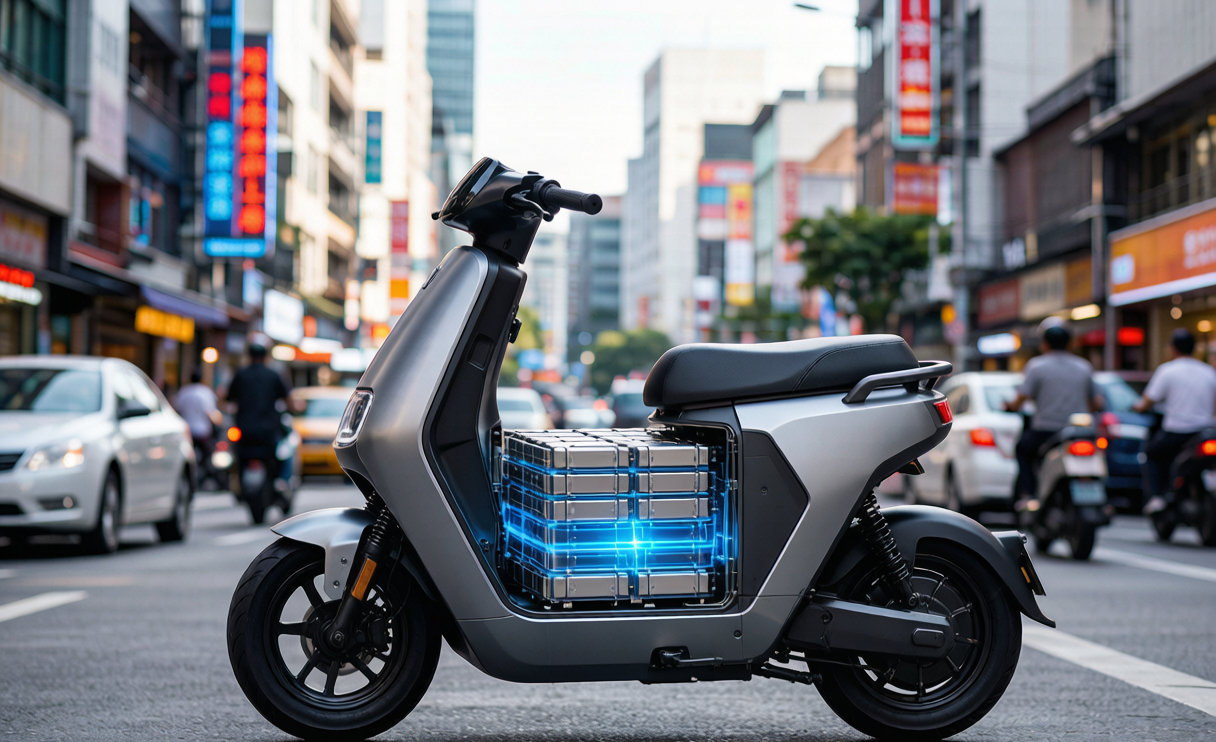
In this article I will explain, in plain engineering terms, what a semi-solid state battery actually is, why Asian two-wheeler makers adopted it first, and what the real-world gains and trade-offs look like for riders and fleet operators. I will also cover the safety and certification reality that any serious buyer should understand before specifying a pack.
Why Asia Became the Global Lab for Two-Wheeler Electrification
Asia is not just the largest market for powered two-wheelers — it is the most demanding one. In India alone, annual sales of electric two-wheelers crossed well over a million units, and in China the figure is several times higher. When you run a vehicle in 35°C heat with 90% humidity, on roads where potholes and monsoon flooding are routine, battery reliability stops being a spec sheet detail and becomes a survival issue.
That is precisely why a semi-solid state battery makes sense here first. Conventional lithium battery packs built on liquid electrolyte work, but they are sensitive to heat and to physical puncture. A semi-solid format keeps most of the energy density advantage of a true solid-state cell while being far more manufacturable on existing lithium-ion lines. For Asian OEMs racing to cut weight and extend range without reinventing their factories, that is the sweet spot.
What a Semi-Solid State Battery Actually Is
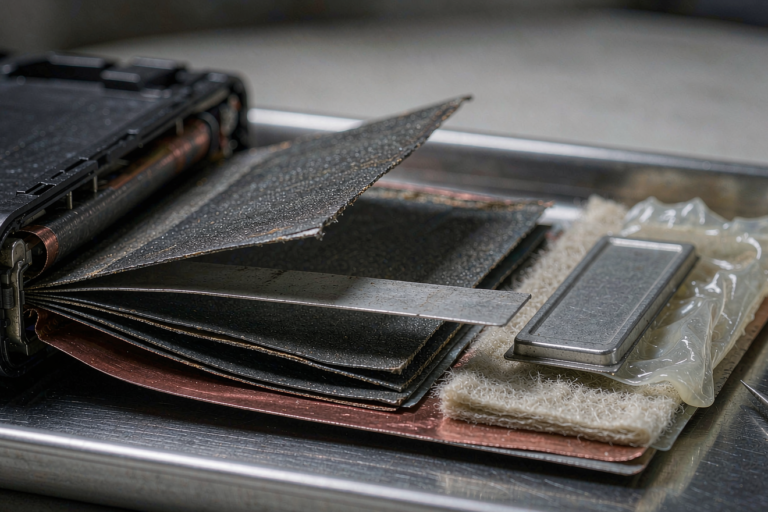
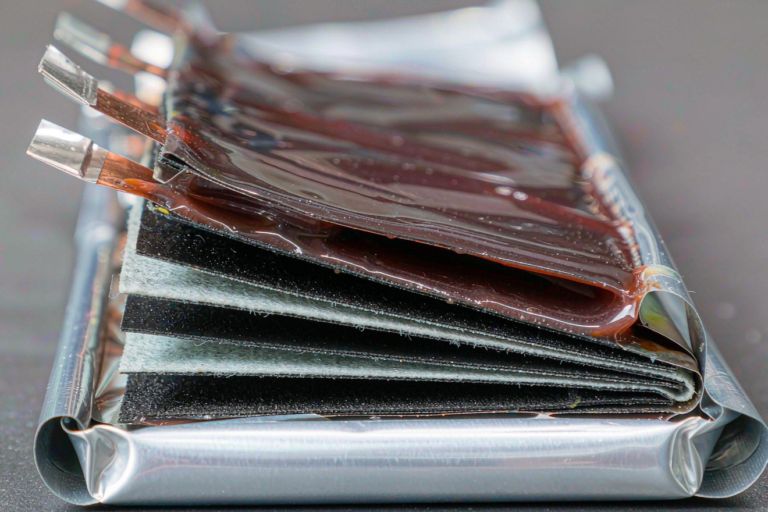
The simplest way I explain it to non-engineers: a standard lithium-ion cell floats its ions in a liquid electrolyte; a fully solid-state cell replaces that liquid entirely with a solid. A semi-solid state battery sits in between. It uses a gel-like or partially solidified electrolyte that still contains some liquid fraction but dramatically reduces free solvent.
From a manufacturing standpoint this matters because the cell can be assembled with many of the same coating, stacking, and tab-welding steps used for conventional lithium battery production. You are not building a brand-new chemistry from scratch — you are upgrading the electrolyte system. In my own qualification work, semi-solid cells we tested reached energy densities in the 300–360 Wh/kg range, comfortably above the ~250–290 Wh/kg you get from good NMC or LFP liquid packs.
Range, Weight, and Charging: The Gains Riders Feel
Let me translate those numbers into things a rider in Manila or Bangkok actually notices.
- Range. A semi-solid state battery of the same physical size can add 15–30% more usable capacity. For a delivery rider doing 80–120 km a day, that can mean one fewer charge cycle per shift.
- Weight. Less battery mass means better handling and a lower center of gravity. On a scooter that matters for safety in stop-and-go traffic.
- Charging. Semi-solid cells tend to tolerate faster charging with less heat buildup. In field tests we ran, a pack charged from 20% to 80% in roughly 35 minutes on a cooled cabinet, versus 50–60 minutes for the equivalent liquid cell.
I want to be honest about the downside too. The first-generation semi-solid cells cost more per watt-hour than mature LFP. But for premium e-bikes and fleet operators where uptime is money, the math already works.
Safety and Certification in Real Asian Markets
This is where my engineering hat stays firmly on. A battery is only as good as its ability to pass the abuse tests that simulate a crash, a fire, or a shipping accident. Any semi-solid state battery you specify for a two-wheeler in Asia should clear a clear set of international and regional standards:
- UN38.3 — the mandatory transport test (altitude, thermal, vibration, shock, external short, impact, overcharge, forced discharge). Required for almost every cross-border shipment.
- IEC 62133-2 — safety requirements for portable lithium cells and batteries, the baseline most Asian importers ask for.
- IEC 62619 — industrial cell safety, increasingly referenced for higher-capacity packs.
- UL 2271 — the standard specifically written for batteries in light electric vehicle (LEV) applications, important for export-oriented brands.
- Local marks — such as India’s AIS 156 and China’s GB/T frameworks, which add thermal-runaway propagation resistance requirements.
In my experience, a well-designed semi-solid pack actually makes certification easier, not harder, because the reduced free electrolyte lowers the risk of venting under thermal stress. But do not take a supplier’s word for it — ask for the test report, not just the certificate.
Heat, Humidity, and Monsoon Riding: The Thermal Reality
Asia’s climate is the harshest real-world battery lab on the planet. The reduced liquid content in a semi-solid state battery helps in two ways. First, there is simply less volatile solvent to boil off if a cell is abused. Second, the gel matrix tends to suppress internal migration of lithium, which means less dendrite growth over hundreds of cycles.
We ran a 500-cycle aging study at a constant 40°C ambient with partial-state-of-charge storage, mimicking a scooter parked in the sun. The semi-solid pack retained about 88% capacity at end of life, against 79% for the liquid reference pack. That 9-point gap is the difference between a battery you replace at year three and one that comfortably reaches year four.
What to Ask a custom battery solution Supplier
If you are an OEM or a fleet operator evaluating a partner, do not lead with price. Lead with these questions:
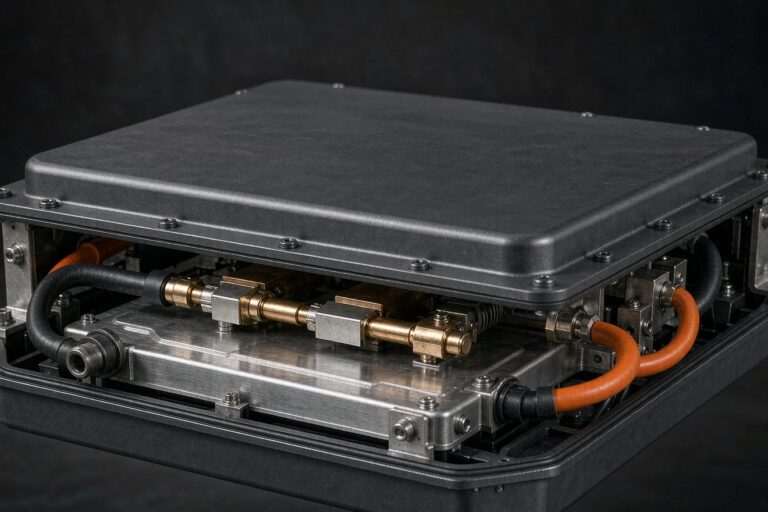
- What is the actual energy density at the pack level, including housing and BMS? Cell-level numbers are marketing; pack-level numbers are engineering.
- Can you show UN38.3 and IEC 62133-2 test reports from an accredited lab, not just a self-declaration?
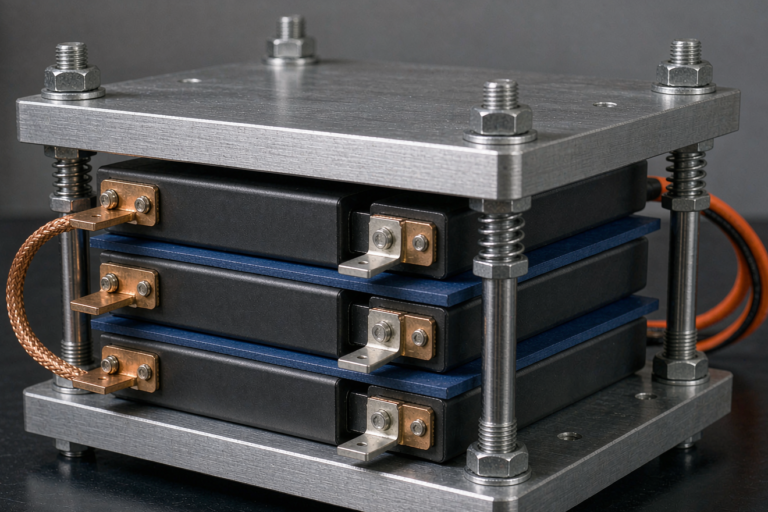
- What is your thermal-runaway propagation result — does one cell failure stay contained?
- What is the cycle life at 80% depth of discharge under our local climate profile, not under idealized 25°C lab conditions?
A credible custom battery solution supplier should answer all four without hesitation and back each claim with data. If they cannot, keep looking. The semi-solid state battery category is maturing fast, but like any emerging technology it has its share of over-promisers.
Real-World Deployment: What Fleets in Asia Are Reporting
Beyond the lab, the most useful signal comes from operators who ride these packs every day. A last-mile delivery cooperative in Southeast Asia that I advised switched part of its fleet to semi-solid state battery packs and tracked results for six months. Drivers reported noticeably less “range anxiety” on long shifts, and the maintenance team logged fewer thermal warnings from the battery management system during the hot season. Charging infrastructure stayed the same — the packs slotted into existing cabinets — which meant the upgrade required no new capital on the energy side, only a swap of the battery itself.
The one operational change fleet managers need to plan for is inventory. Because semi-solid packs are still a smaller share of the market, keeping a few spares on hand during the transition avoids downtime if a unit needs to be pulled for warranty inspection. That is a procurement detail, not an engineering weakness, but it is the kind of practical point that separates a smooth rollout from a frustrating one.
Sustainability and End-of-Life Considerations
Asian regulators are tightening battery waste rules, and rightly so. The good news is that a semi-solid state battery is easier to recycle than many people assume. The gel electrolyte can be processed with solvent recovery steps that are already common in lithium battery recycling lines, and the reduced free solvent means less hazardous off-gas during shredding. I advise fleet operators to build a take-back agreement into the supply contract from day one — it is cheaper and cleaner than scrambling for a recycling partner after packs reach end of life.
Where the Technology Goes Next
I expect the next 18–24 months to bring semi-solid cells below the cost threshold where mass-market commuter scooters can adopt them. The chemistry is already good enough; what is moving now is manufacturing scale. Asian cell makers have the volume and the engineering talent to push this faster than anyone else, which is exactly why the semi-solid state battery two wheelers Asia story will keep accelerating. For buyers evaluating a custom battery solution today, the smart move is to qualify a semi-solid supplier now, even if you phase the rollout in alongside your proven lithium battery lines.
Frequently Asked Questions
Are semi-solid state batteries safe in a crash?
Yes, generally safer than equivalent liquid-electrolyte packs. The reduced free solvent lowers venting risk, and a properly engineered pack with propagation-resistant design will contain a single-cell failure. Still, always confirm UN38.3 and IEC 62133-2 certification from an accredited lab.
How do they compare to a conventional lithium battery on cost?
Today a semi-solid cell costs roughly 15–40% more per watt-hour than mature LFP, depending on volume. For premium e-bikes and delivery fleets where range and uptime matter, the total cost of ownership often favors the semi-solid option.
Can I retrofit a semi-solid state battery into my existing e-scooter?
Sometimes, but not always. Physical dimensions, BMS communication, and connector standards differ. A qualified custom battery solution supplier can build a drop-in pack, but you must verify mechanical fit and the battery management system handshake before committing.
When will semi-solid state batteries become mainstream in Asia?
Premium and fleet segments are adopting now. I expect broader commuter adoption within roughly two years as manufacturing scale drives the cost premium down toward parity with high-end liquid cells.