Semi-Solid State Battery Self Discharge Rate and Shelf Life
Buyers who stock semi-solid state batteries for seasonal deployments or long lead-time projects always ask me the same question: how much charge will I lose while the cells sit on a shelf? Self-discharge is the silent capacity leak that happens even when a battery is doing nothing. As a senior lithium battery engineer at Horizon Power, I run shelf-life validation on every semi-solid state cell we ship, and the numbers matter more than most spec sheets admit. In this article I explain what a realistic semi-solid state battery self discharge rate looks like, why the semi-solid electrolyte helps, and how to store cells so they still deliver rated capacity months later.
What Self-Discharge Means for a Semi-Solid State Cell
Self-discharge is the gradual loss of stored energy inside a cell when there is no external circuit connected. It is driven by parasitic chemical reactions between the electrolyte and the electrodes, plus slow internal leakage paths across the separator. Every lithium battery self-discharges to some degree, but the rate sets how long a pack can sit before it needs a top-up charge.
For a semi-solid state battery the chemistry is different from a conventional liquid lithium battery. The semi-solid electrolyte immobilizes most of the solvent that would otherwise keep reacting at the anode surface. That single design choice is why our semi-solid state cells hold charge far longer in storage than the liquid-electrolyte packs many buyers are used to.
In practical terms, high self-discharge costs you money. A pack that loses 8 percent per month is effectively dead on arrival if it sits in a warehouse for a quarter. A pack that loses 1 to 2 percent per month can wait half a year and still ship at nearly full rated capacity.
Typical Self-Discharge Rates I Measure in the Lab
At Horizon Power we validate shelf life on production cells, not just prototype samples. The figures below show the capacity loss we record at 25 degrees Celsius and 50 percent state of charge over a 30-day rest.
- Semi-solid state pouch cell: 1.0 to 2.0 percent per month
- LFP liquid lithium cell: 3.0 to 5.0 percent per month
- NMC liquid lithium cell: 5.0 to 10.0 percent per month
These are real measurements from cells rested on an open bench with no load. The semi-solid state battery self discharge rate sits roughly one third to one fifth of a typical liquid cell. That gap widens at higher temperature, because parasitic reactions accelerate faster in free solvent than in an immobilized electrolyte.
I want to be honest about variance. A cell stored at 45 degrees Celsius can self-discharge three to four times faster than the same cell at 25 degrees Celsius. Temperature dominates the rate, which is why storage guidance matters as much as the chemistry itself.
Why the Semi-Solid Electrolyte Suppresses Side Reactions
In a liquid lithium battery the electrolyte is a salt dissolved in an organic solvent that flows freely through the separator. Some of that solvent is always reduced at the negative electrode, building a passivation layer and consuming lithium. That is a permanent loss you never get back.
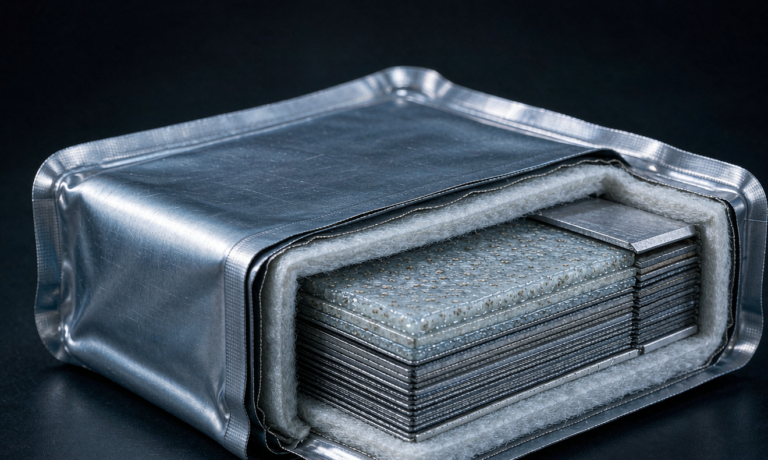
A semi-solid state battery replaces most of the free liquid with a gel or ceramic-filled matrix that immobilizes the ion conducting medium. Less free solvent reaches the anode, so fewer side reactions occur. The result is lower continuous capacity fade during storage and a flatter impedance curve over time.
This is also why semi-solid state cells age more gracefully on the shelf. When I measure internal resistance after twelve months of storage, our semi-solid cells typically grow only 8 to 15 percent, while comparable liquid cells often grow 25 percent or more. For a buyer, that means the pack you store today performs closer to spec when you finally deploy it.
Storage Temperature and State of Charge Recommendations
Based on our validation data, I recommend storing semi-solid state cells between 10 and 25 degrees Celsius at 20 to 40 percent state of charge. This window minimizes both self-discharge and the slow calendar aging that comes from sustained high voltage.
Avoid two mistakes I see constantly. First, do not store cells fully charged at 100 percent SOC for months. The high electrode potential speeds side reactions and permanently reduces capacity. Second, do not leave cells in a hot trailer or unconditioned warehouse above 45 degrees Celsius. Heat is the fastest way to wreck shelf life.
If you must store in a warm climate, a temperature-controlled room or insulated cabinet is worth the cost. We have seen cells held at a steady 15 degrees Celsius retain 95 percent of capacity after a full year, against 80 percent for the same cells at 35 degrees Celsius.
Shelf Life and Capacity Retention Over Time
Shelf life is the calendar time a cell can sit before its capacity drops below an acceptable threshold. With a semi-solid state battery self discharge rate of 1 to 2 percent per month, the math is straightforward.
- After 3 months: roughly 3 to 6 percent loss
- After 6 months: roughly 6 to 12 percent loss
- After 12 months: roughly 12 to 20 percent loss
For most industrial uses that loss is acceptable if you plan a top-up charge before deployment. I tell procurement teams to treat six months as the soft limit. If a pack has rested longer than six months, recharge it to the shipping SOC and re-verify capacity before it goes out the door.
One detail worth noting: shelf life is not the same as cycle life. A cell can sit idle for a year and still deliver hundreds of cycles once activated, because self-discharge consumes only a small slice of the active lithium. The two failure modes should be tracked separately.
How We Test Self-Discharge: The OCV Method
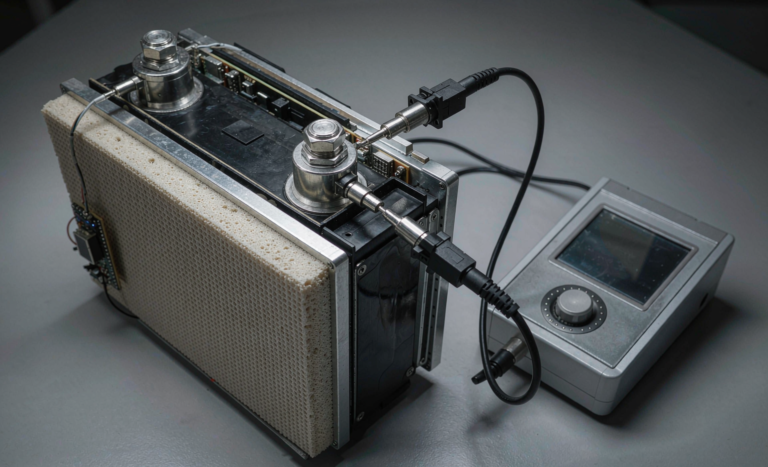
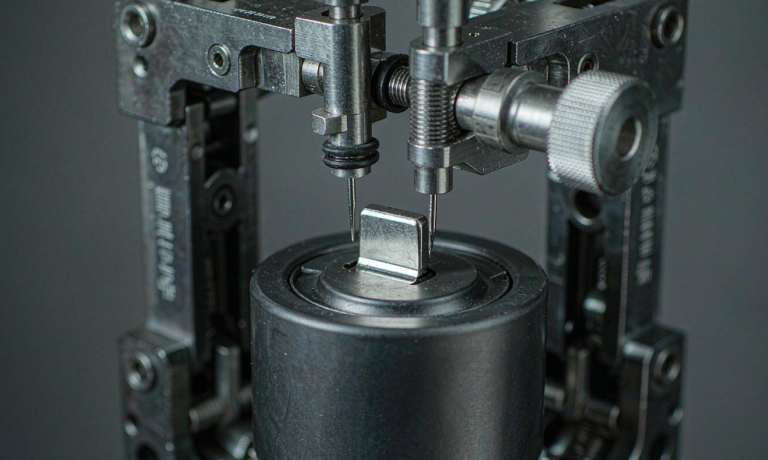
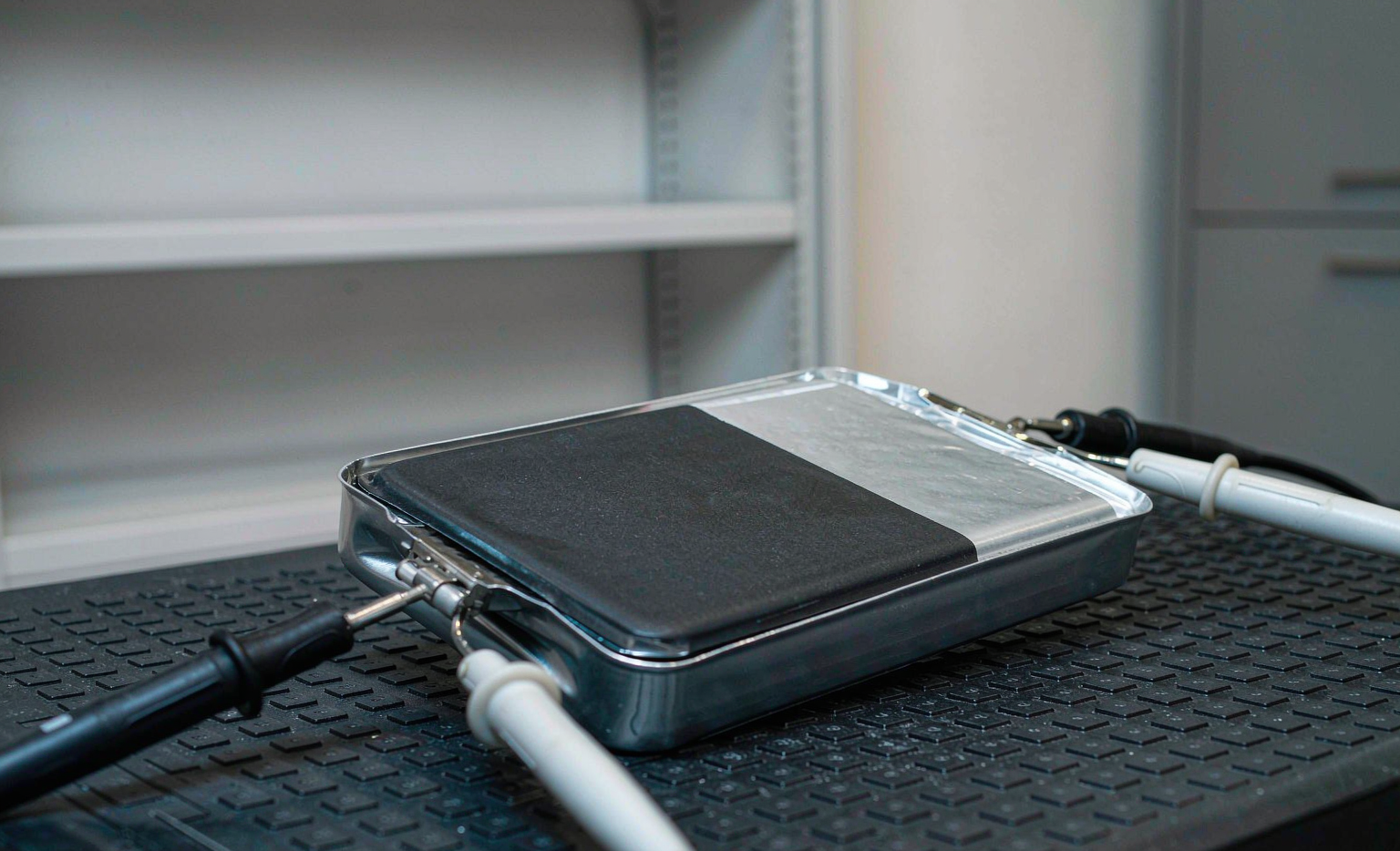
We screen every production lot with the open-circuit-voltage method. After a formation cycle, the cell rests for 24 hours and we record its stable voltage. It then rests for an additional 7 to 28 days at controlled temperature, and we measure the voltage drop.
Because a lithium battery has a known voltage versus capacity curve, a small voltage drop maps directly to a capacity loss through the dV/dQ slope. That gives us a non-destructive self-discharge number without cycling the cell to death. Lots that exceed 2 percent per month at 25 degrees Celsius are quarantined and root-caused before shipment.
These checks sit alongside the safety and transport standards our cells already meet, including UN38.3 for transit and IEC 62619 for industrial stationary use. Self-discharge screening is the extra step that protects your inventory after the cell leaves our factory.
What This Means for Procurement and Inventory
If you buy semi-solid state batteries for projects with long gaps between delivery and deployment, build a recharge window into your plan. Order at 30 percent SOC, store cool, and top up at the six-month mark. That single habit keeps field failures from hidden shelf loss.
For buyers comparing chemistries, weigh the storage profile, not just the nameplate. A semi-solid state battery that holds 90 percent of its charge after a year reduces waste, cuts re-handling labor, and lets you hold larger safety stock without penalty. When you need a custom battery solution, ask the supplier for their measured self-discharge data at your storage temperature, not just a brochure number.
At Horizon Power we publish lot-level shelf-life results because storage behavior is where chemistry either pays off or quietly fails. A semi-solid state battery self discharge rate in the 1 to 2 percent per month band is the baseline we hold our production to, and it is the number I would ask any supplier to match.
Frequently Asked Questions
How low is the self-discharge rate of a semi-solid state battery?
At 25 degrees Celsius and 50 percent state of charge, a well-made semi-solid state battery self discharge rate is about 1 to 2 percent of capacity per month. That is roughly one third to one fifth of a typical liquid lithium battery, and the gap grows at higher storage temperature.
What state of charge should I store semi-solid state cells at?
Store them at 20 to 40 percent state of charge in a cool, dry place between 10 and 25 degrees Celsius. Avoid storing at full charge for months, because the high electrode potential speeds permanent side reactions and reduces capacity.
Does cold storage stop self-discharge completely?
No. Cold storage slows self-discharge sharply but does not stop it. Even at 15 degrees Celsius a semi-solid state cell still loses a small amount of charge over a year, so plan a top-up before long-term stored packs are deployed.
How long can semi-solid state batteries sit on a shelf?
With a 1 to 2 percent per month rate, expect about 6 to 12 percent loss at six months and 12 to 20 percent at twelve months. Treat six months as a soft limit and recharge before deployment if the cell has rested longer.
Are semi-solid state batteries safer to store than liquid lithium?
They are generally more stable in storage because the immobilized electrolyte reduces free solvent that can fuel side reactions and thermal runaway. They still must be handled per UN38.3 and IEC 62619, but the lower parasitic reaction rate makes long idle periods less risky.
Further Reading
References