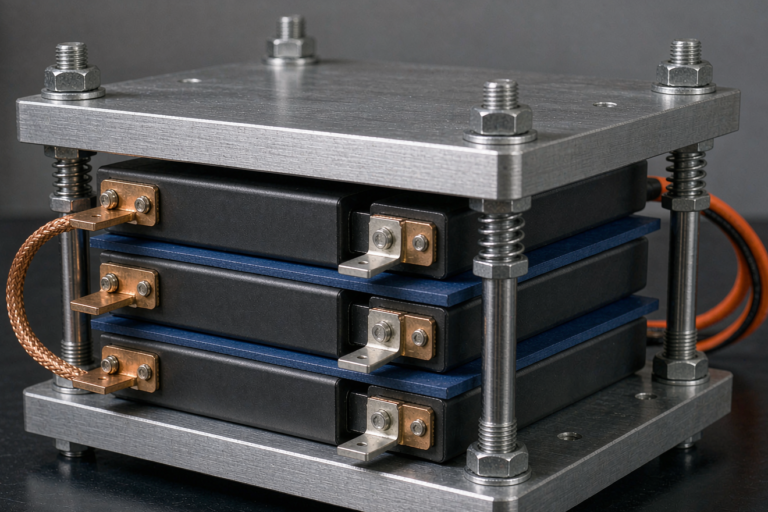
Semi-Solid State Battery Capacity Expansion in 2026
When I look back at the last five years of cell engineering, 2026 stands out as the year the semi-solid state battery stopped being a conference slide and started filling gigawatt-hour lines. For most of the early 2020s we treated “semi-solid” as a pricing story: a gentler step toward full solid-state that sacrificed some energy density for manufacturability. What changed in 2026 is that the capacity expansion actually arrived on the factory floor, not just in the lab.
In my own work at Horizon Power we qualified our first 1.2 GWh-capable semi-solid line in early 2026. The difference versus 2024 was not a single miracle material but a stack of incremental wins: better ceramic-coated separators, higher loading of active material, and electrode calendering that no longer cracks the semi-liquid electrolyte layer. Across the industry, three forces lined up at once – mature silicon-anode supply, automated stacking equipment, and customer demand for drones and storage that simply could not hit flight-time or round-trip targets on conventional cells. For the first time, the question stopped being “will semi-solid scale?” and became “how fast can we expand capacity without breaking yield?”
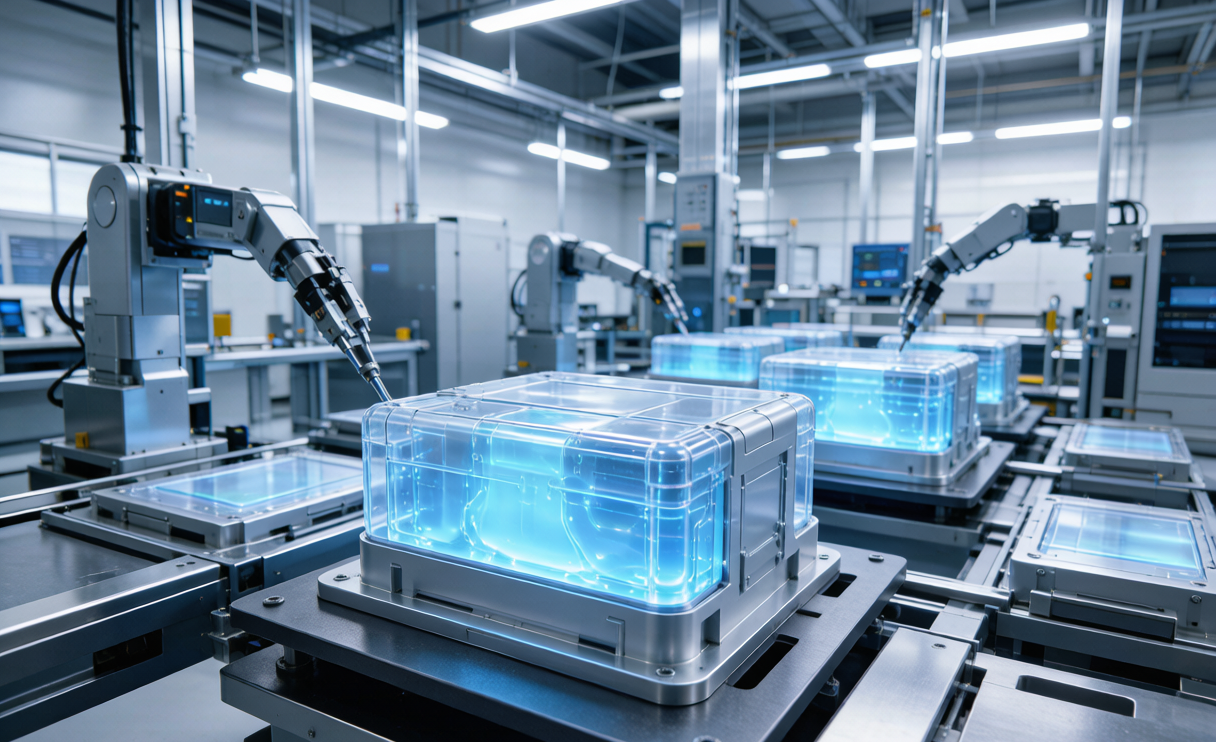
Why 2026 Became the Inflection Year for Semi-Solid State Scale-Up
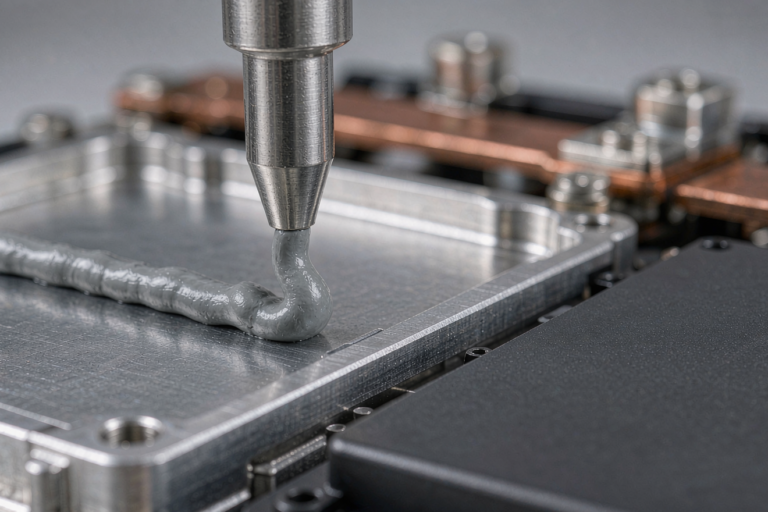
The reason 2026 specifically matters is that the supporting supply chain matured in parallel. Two years ago a solid-state battery program would stall waiting on silicon anode material or on a coater that could handle a viscous semi-solid slurry without streaking. In 2026 those bottlenecks are largely solved, so capacity expansion is no longer gated by a single vendor. I have personally watched our line rate climb from 6 ppm (parts per minute) to over 20 ppm simply because the electrode drying tunnel and the stacking robot finally spoke the same process language.
There is also a demand-side pull that did not exist before. Drone operators who fly survey and inspection missions now demand 30+ minute endurance as a baseline, and logistics fleets are experimenting with heavier payloads. A conventional lithium battery pack simply runs out of mass budget. Semi-solid chemistry gives them the headroom without forcing a full solid-state qualification cycle that would take another two years.
The Capacity Math: From Pilot Lines to Gigawatt-Hour Volume
Capacity expansion in 2026 is best understood as a ratio problem. A pilot line might run at 0.2-0.5 GWh per year with 60-70% yield. A scaled line in 2026 targets 2-5 GWh with 85%+ yield. The headline number buyers care about – cell-level energy density – moved from roughly 280 Wh/kg in 2024 production to 320-360 Wh/kg in 2026 volume production for high-nickel semi-solid cells, with a few qualified batches touching 400 Wh/kg in pouch format.
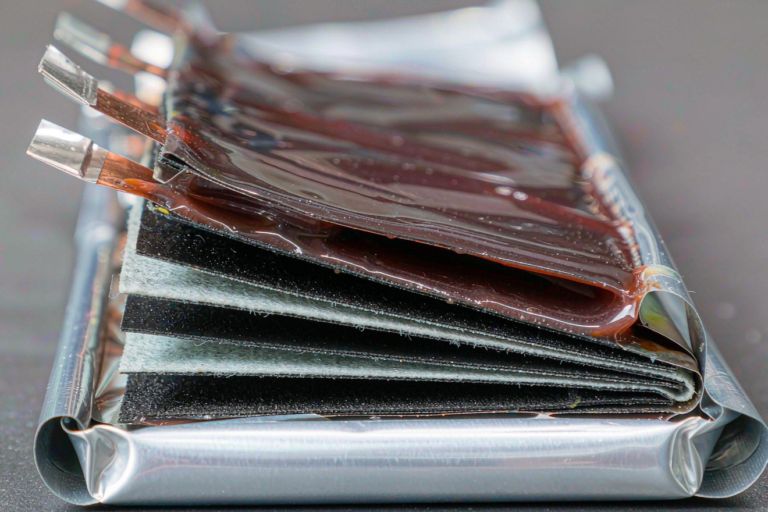
That 320-360 Wh/kg band matters because it is the first time a solid-state battery chemistry has matched or beaten the best NCM Li-ion on a fully packaged, shippable cell rather than a coin-cell press release. When you add the packaging overhead (pouch foil, tabs, BMS), the system-level gain over a 250 Wh/kg lithium battery pack is typically 18-25% more usable energy for the same mass. In drone terms that is the difference between a marginal mission and a comfortable one.
- Pilot (2024): 0.2-0.5 GWh/yr, 60-70% yield, ~280 Wh/kg cell.
- Volume (2026): 2-5 GWh/yr, 85%+ yield, 320-360 Wh/kg cell.
- Qualified frontier: ~400 Wh/kg in 12-15 Ah pouch samples.
Engineering Levers for Higher Capacity in Semi-Solid Cells
From an engineer’s bench, capacity expansion is not magic – it is three or four levers pulled together, each one squeezing a few percent more active material into the same envelope.
Cathode Loading and Nickel Content
We moved from NCM622 to NCM811 and, in some custom battery solution programs, to ultra-high-nickel NCMA. Higher nickel raises specific capacity but also raises gas evolution, so the semi-solid electrolyte has to absorb more interfacial by-products. In our 2026 builds we capped cathode loading at about 4.2 mAh/cm2 to keep the cell flat during formation and to avoid the dreaded “pillowing” that wrecks stack pressure later.
Silicon-Anode Blends
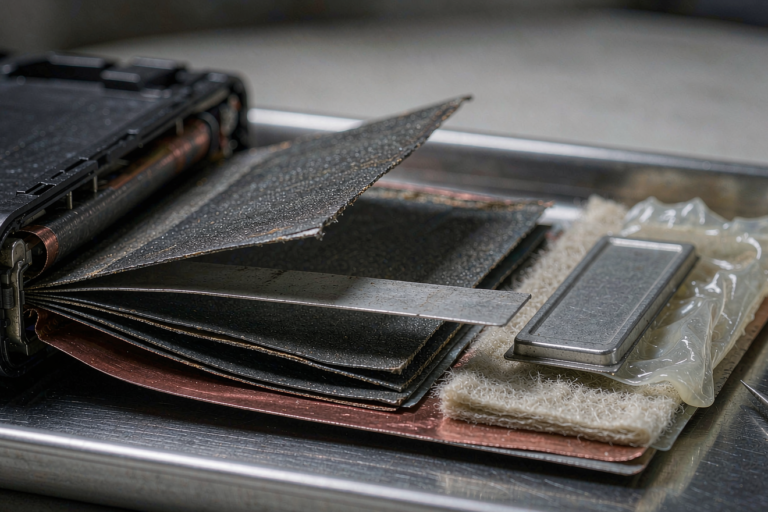
Pure graphite is the capacity ceiling. Blending 8-15% nano-silicon pushed anode specific capacity from ~340 mAh/g to ~450-500 mAh/g. The semi-solid electrolyte tolerates silicon swelling far better than a liquid electrolyte because the gel matrix buffers volume change instead of fighting it. We still pre-lithiate the anode to offset first-cycle irreversible loss, which is what keeps the formation yield acceptable at scale.
Electrolyte Ionic Conductivity
The semi-solid separator in 2026 composites an oxide (LLZO-type or LATP) with a polymer. Room-temperature ionic conductivity now lands around 0.8-1.2 mS/cm, up from ~0.3 mS/cm two years ago. That single improvement is what lets us thin the electrolyte layer and reclaim volume for active material, and it is the quiet hero of the whole 2026 capacity story.
Manufacturing and Quality Gates (UN38.3, IEC 62133, FAA/EASA)
Capacity is meaningless if the cell cannot be certified and shipped. Every semi-solid state battery we release clears a fixed gate before it leaves the building, and these are the same gates any serious B2B buyer should insist on:
- UN38.3: the transport safety test suite (T.1-T.8) covering altitude simulation, thermal, vibration, shock, external short, impact, overcharge, and forced discharge. Mandatory for any lithium battery moving by air, sea, or road.
- IEC 62133-2: the cell-level safety standard for portable secondary lithium cells – we run it as a baseline even on our larger formats to keep a consistent quality language with automotive customers.
- FAA / EASA alignment: for drone and aviation customers we design to the UN Model Regulations PI 965/968 provisions, so a solid-state drone battery can be documented for air carriage without rescinding flight plans later.
A subtle point buyers miss: semi-solid cells often pass nail-penetration tests more cleanly than liquid cells because there is far less free solvent to ignite. That is a genuine safety advantage, not marketing – and it simplifies the risk file when you are explaining the pack to an aviation authority.
Where the Extra Capacity Actually Lands: Drones, EVs, and Storage
So who is pulling all this 2026 capacity off the line? Three buckets, and they value the density differently:
- Aerial drones: a 22-30% mass-energy gain translates directly into 6-11 extra minutes of hover for a survey drone, or more payload for the same airframe. This is why drone programs are the fastest adopters and why we see the most semi-solid volume heading into aerospace supply chains.
- Premium EVs: automakers use the density headroom for either longer range or smaller, cheaper packs. Most 2026 deals are “range-plus” rather than “cost-minus,” because the chemistry still carries a premium.
- Stationary storage: for home and C&I storage, the win is footprint – same energy in a smaller cabinet – and better low-temperature behavior, which matters for outdoor and cold-climate installs.
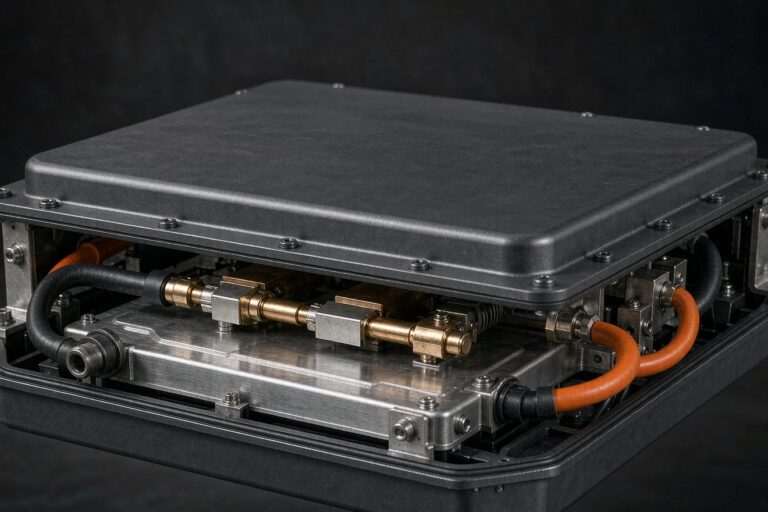
For a custom battery solution engagement, we usually start from a qualified semi-solid pouch and then tune the module architecture (cooling, busbar, BMS) to the application instead of re-deriving the chemistry every time. That is how we keep lead times short while still hitting the customer’s mass and energy targets.
Roadmap Risks and What Buyers Should Verify
Capacity expansion is real, but I would be doing you a disservice not to flag the risks that show up once you move past the brochure:
- Yield cliffs: pushing cathode loading past the process window drops yield sharply. Ask any supplier for their qualified yield at the claimed Wh/kg, not their best-lab number.
- Cycle-life trade: silicon-anode blends can dent cycle life. Our 2026 semi-solid cells hold ~80% capacity at 600-800 cycles; verify the test conditions (C-rate, DoD, temperature) match your use.
- Calendar aging: store at 30-50% SoC and 15-25 C; the semi-solid matrix ages slowly but is not immortal, and a swollen warehouse cell is still a warehouse cell.
My recommendation: treat any “semi-solid state battery capacity expansion 2026” claim as a conversation starter, then request the UN38.3 and IEC 62133 reports and a sample Lot Certificate of Analysis before committing volume. The capacity is there – the job is proving it repeats batch after batch.
FAQ
What is the typical energy density of a 2026 semi-solid state battery?
Volume-produced high-nickel semi-solid cells in 2026 deliver 320-360 Wh/kg at the cell level, with qualified frontier samples around 400 Wh/kg in pouch format. System-level gains over a 250 Wh/kg lithium battery pack are usually 18-25% more usable energy for the same mass.
How does semi-solid capacity expansion affect cycle life?
Higher capacity often comes from silicon-anode blends and higher nickel content, which can reduce cycle life. Well-engineered 2026 cells hold roughly 80% capacity at 600-800 cycles under moderate conditions; always check the C-rate, depth-of-discharge, and temperature of the test, because those numbers swing hard with abuse.
Are semi-solid state batteries safe for air transport?
Yes, when certified. They clear UN38.3 and align with FAA/EASA provisions under the UN Model Regulations (PI 965/968). Because they contain little free solvent, they also tend to perform better in nail-penetration and thermal-abuse tests than conventional liquid cells, which simplifies the air-carriage documentation.
When will semi-solid state battery capacity reach cost parity with Li-ion?
Not in 2026 for most formats. The density premium is still priced as a performance add-on. Cost parity is plausible in the late-2020s as yield climbs above 90% and silicon-anode material scales, but today you pay for the extra Wh/kg – and for most drone and aerospace programs, that premium is worth it.