Battery Solution Manufacturing for Sensors: An Engineer’s
When a customer calls me about powering a sensor node, the conversation is rarely about energy density. It is about survival. A wireless temperature probe bolted to a pipeline in the Kazakh winter, a soil-moisture mesh node buried for five years, a wearable medical patch that cannot fail mid-shift — these are not drones, but the engineering discipline behind them is the same one we apply to every drone battery that leaves our line. In my fifteen years as a senior lithium battery engineer at Horizon Power, I have learned that battery solution manufacturing for sensors is a game of margins: microamps of quiescent draw, single-digit percent of annual self-discharge, and a weld that holds through a thousand thermal cycles. This guide walks through how we actually design and build those packs, from cell selection to the final potting pass.
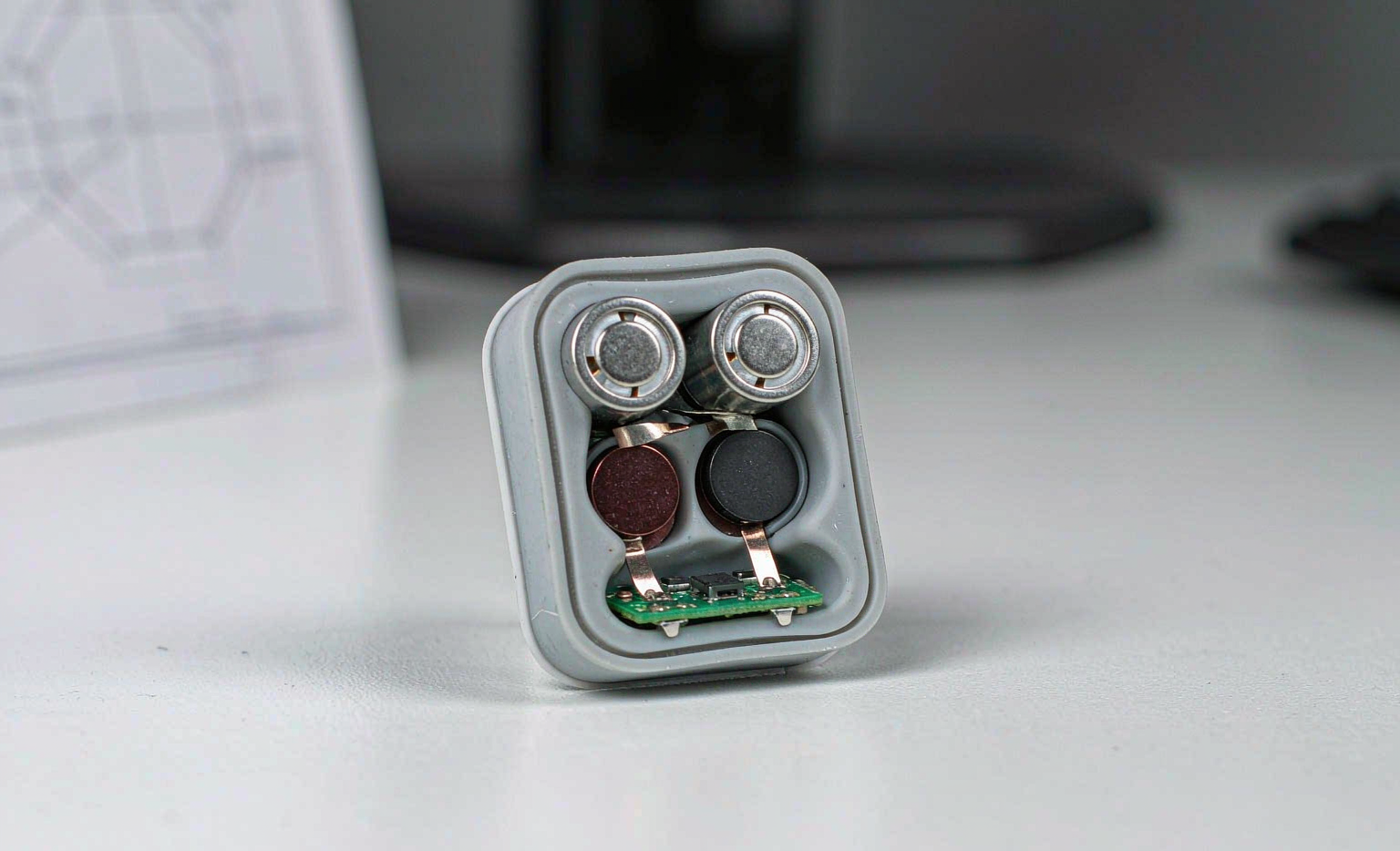
Choosing the Right Cell Chemistry for Sensor Loads
The first decision is chemistry, and for sensors the field divides cleanly into primary (non-rechargeable) and secondary (rechargeable) cells. A primary lithium battery such as Li-SOCl2 (thionyl chloride, 3.6 V) offers the lowest self-discharge in the industry — typically below 1% per year — and an energy density around 500–700 Wh/kg. For a sensor that must run unattended for a decade, that is decisive. Li-MnO2 (3 V, coin and cylindrical) is the workhorse for moderate-drain devices, while Li-FeS2 finds use where a higher pulse is needed from a small form factor.
- Li-SOCl2 — best for ultra-low-drain, long-shelf-life nodes; beware the passivation film that limits high pulse.
- Li-MnO2 — balanced for mesh sensors and meters with periodic bursts.
- Li-Po / Li-ion — choose when the sensor is rechargeable, energy-harvesting, or high-drain.
- NiMH — only when a customer explicitly forbids lithium for regulatory reasons.
In practice, when a client asks for a custom battery solution, I start by measuring their actual load profile rather than trusting the datasheet’s “average current.” A 20 mA average can hide a 500 mA, 50 ms radio burst that a Li-SOCl2 cell will refuse to deliver without voltage sag. That mismatch is the single most common cause of premature field failure I see.
Sizing Capacity Against Duty Cycle and Pulse Demand
Capacity sizing for sensors is not a simple mAh ÷ mA calculation. You must model the duty cycle: sleep current in the microamp range, wake current in the milliamp range, and transmit pulse in the hundreds of milliamps. I build a spreadsheet that integrates current over a 24-hour cycle, then apply a derating factor for temperature and age.
For Li-SOCl2 at –40 °C, usable capacity can drop to 40–50% of the room-temperature rating, and the internal resistance climbs sharply. A sensor specified for a Siberian deployment therefore needs either a cell with a rated low-temperature electrolyte or a hybrid configuration pairing Li-SOCl2 with a lithium capacitor to absorb pulses. We routinely add a 0.5–2 F supercapacitor bridge for exactly this reason.
The derating rule I teach junior engineers: take the nameplate capacity, cut it by the temperature factor, cut it again by 20% for end-of-life, and only then compare it to the integrated daily load. If the margin is under 30%, the pack is undersized.
Protection Circuit and Battery Management for Micro-Packs
Even a tiny sensor pack needs protection, but the architecture differs from a large pack. For single-cell Li-Po, a classic DW01A + 8205A dual-MOSFET protector handles over-charge (4.25–4.35 V), over-discharge (2.4–3.0 V), and over-current (typically 1–3 A). For primary cells, a protector is less common, but we still add a resettable PTC fuse and, where the load can short, a tiny e-fuse IC.
The subtlety is quiescent current. A protection IC that draws 3 µA is 3 µA the sensor cannot use. On a 10-year node, that is roughly 260 mAh of wasted capacity — enough to kill a marginal design. We spec protectors under 1 µA where possible and disable the balancing stage entirely for single-cell primaries.
Fuel gauging is a related decision. A coulomb-counter IC is accurate but draws current and assumes a rechargeable chemistry; for primaries we instead use a voltage-informed impedance model or simply log cumulative pulse counts in the host MCU. The host almost always has spare compute, so pushing the estimation there keeps the pack simpler and cheaper. I also insist on a visible polarity marker and a keyed connector — field technicians swapping packs in poor light make mistakes, and a reversed lithium pack is a fire risk I will not accept.
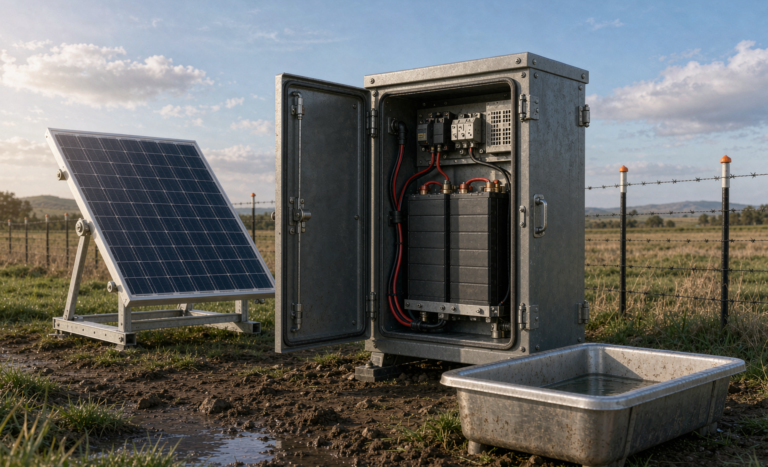
When the battery solution is rechargeable and sits in an energy-harvesting loop (solar, thermal, vibration), I add a charge-management stage tuned to the harvest profile. A TP4056-style linear charger is fine for tens of milliamps; above that, a switched-mode charger avoids cooking the pack in a sealed enclosure.
Manufacturing Steps: From Cell Welding to Encapsulation
Our manufacturing line for sensor packs follows a disciplined sequence, and deviations are the source of most field returns:
- Cell grading — every incoming cell is capacity-binned and impedance-tested; we reject anything outside ±3% of nominal.
- Spot welding — nickel or nickel-plated steel tabs are welded, never soldered directly to the can (heat damages the seal). We use 2–4 ms pulses at controlled current.
- PCB assembly — protector, fuel-gauge (if used), and wire harness are reflowed and inspected under microscope.
- Electrical test — open-circuit voltage, short-circuit current, and a guarded functional load test.
- Encapsulation — potting with two-part epoxy or silicone for shock, moisture, and strain relief.
The welding step deserves respect. A cold weld has high resistance and heats under pulse load; a hot weld punches through the can and vents electrolyte. Both fail silently in the field. We audit weld nugget diameter on a destructively sampled basis every production lot.
Thermal, Sealing, and Environmental Rating
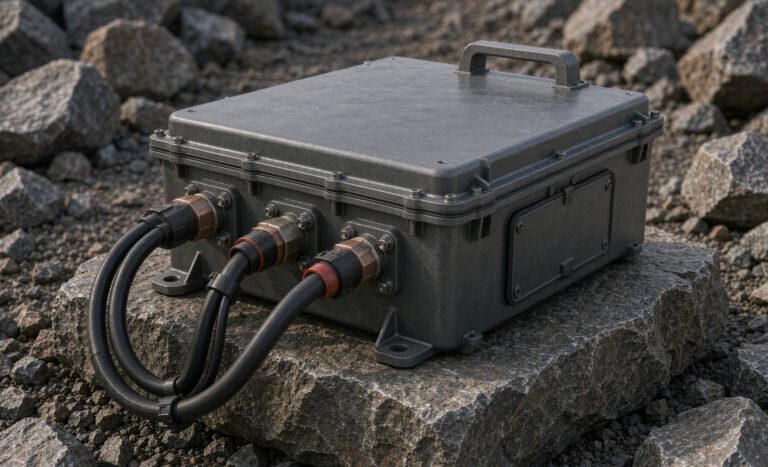
A sensor pack is often the least protected component in the device, yet it faces the harshest environment. For outdoor or industrial nodes we target an IP67 rating on the pack itself, achieved through ultrasonic welding of the enclosure or through full silicone potting with no seams. Potting also dampens vibration — a real concern for sensors mounted on motors or pipelines.
Temperature is the other axis. We qualify packs across the full –40 °C to +85 °C industrial band and annotate the usable-capacity curve on the datasheet. For high-heat locations, we switch the separator chemistry and reduce the charge ceiling by 50 mV per 10 °C above 45 °C to protect cycle life.
Compliance and Certification
No lithium battery pack ships from our factory without clearing the regulatory gauntlet. The non-negotiables are UN38.3 (transport simulation: altitude, thermal, vibration, shock, external short, impact, overcharge, forced discharge) and IEC 62133 for portable cells and batteries containing alkaline or lithium systems. For the U.S. and EU markets we align to UL 1642 (cell) and the relevant IEC 60086 series for primary batteries.
For sensor packs that may travel by air — think deployed environmental loggers shipped internationally — we prepare the test summary required by the 2020 revision of the lithium battery transport rules. I keep a standing dossier so a customer’s customs hold never lasts more than a day.
Field Lessons From Real Sensor Deployments
The most instructive failures are the ones no simulation caught. One agricultural soil network lost 30% of nodes in the first spring because condensation formed inside the enclosure during the day-night thermal swing; we fixed it by switching to a breathable membrane plus desiccant and moving the cells off the enclosure wall. Another wearable medical sensor passed every bench test but swelled after two weeks on-skin — the harvest circuit was trickle-charging a Li-Po past its ceiling because the fuel gauge had drifted. A firmware guard band solved it.
These are why I insist that a custom battery solution is never “done” at the prototype stage. We run a 500-hour accelerated aging pass and a smaller live-field pilot before volume release. It costs a little time; it saves a product recall.
On the manufacturing side, volume changes everything. A pack that is easy to build at ten units becomes a reliability lottery at ten thousand unless the process is locked. We standardize jigs so weld pressure and alignment are set by the fixture, not the operator, and we trend internal-resistance and capacity data from every lot to catch cell-supplier drift before it reaches the customer. Traceability matters too: each pack carries a lot code that links back to the cell batch, the welder calibration, and the test record. When a field return arrives years later, that paper trail is what lets us answer “was this ours, and what changed?” in an afternoon rather than a week.
Frequently Asked Questions
What is the best battery for a 10-year sensor deployment?
For a true decade of unattended life with microamp sleep currents, Li-SOCl2 primary cells are the standard, thanks to sub-1% annual self-discharge. If the sensor has frequent high pulses, pair them with a supercapacitor bridge and protect against the passivation voltage drop on first load.
Can sensor battery packs be rechargeable?
Yes. When the device harvests energy or is serviced regularly, a Li-Po or Li-ion battery solution with a sub-1 µA protector is ideal. The trade-off is higher self-discharge (2–5% per month) and a shorter absolute shelf life than primaries.
How do you keep the pack from failing in extreme cold?
We derate capacity for temperature, specify low-temperature electrolytes, and add a pulse-absorbing capacitor so the cell never sees a current it cannot supply. Below –20 °C we often recommend a hybrid chemistry rather than pushing a single cell past its limits.
Why not just use a standard coin cell?
Coin cells are cheap and fine for low-duty consumer gadgets, but they lack the welded connections, protection, and sealing a field sensor needs. A purpose-built battery solution manufacturing for sensors approach gives you the environmental rating and reliability the application demands.
Do these packs need UN38.3 certification?
Absolutely. Any lithium cell or battery shipped commercially must pass UN38.3, and we maintain IEC 62133 and UL 1642 alignment as well. We provide the test summary so logistics and customs move without friction.
How small can a custom sensor pack be?
We have built sealed packs under 5 cc using coin cells and a flex-PCB protector. The limiting factor is usually the connector and the pulse requirement, not the cells themselves. Tell us the load profile and we will size the smallest viable lithium battery architecture.