Lithium Battery Manufacturing for Solar Kits
When a homeowner opens a solar kit box, they rarely think about the factory that built the battery. But after fifteen years on the production floor — running lines for everything from a drone battery to residential storage — I can tell you the manufacturing step is where solar kits either earn their ten-year warranty or quietly fail it. Lithium battery manufacturing solar kits is not the same discipline as building a mobility pack or a power-tool cell. The duty cycle is gentler on paper and far crueler in reality: partial state-of-charge cycling, intermittent charge from an unpredictable panel, long idle periods at high SoC, and a temperature swing between a freezing garage and a 55 °C rooftop enclosure. Most of the packs we build use LFP, a lithium-ion battery chemistry chosen specifically because its thermal-runaway onset sits near 270 °C versus roughly 210 °C for NMC — a margin that matters the moment a pack sits unattended in a shed for a decade. In this article I walk through the production-floor protocol my team uses to turn loose cells into a battery pack that survives that abuse.
Why Solar-Kit Manufacturing Is Its Own Discipline
A solar kit lithium battery lives a strange life. It is not discharged daily like a mobility device, nor pulsed like a power tool. It sits at 80–100% SoC for weeks, takes a trickle charge at noon, and occasionally delivers a deep discharge during a grid outage. That profile stresses the chemistry in ways a spec sheet never shows. Cell imbalance grows silently; passivation forms on lightly cycled lithium-ion cells; and a weak weld that passes a bench test today corrodes under three summers of thermal cycling.
I treat solar-kit manufacturing as a reliability problem disguised as a build problem. The goal is not a pack that works on the test bench — it is a lithium battery pack that still delivers 90% round-trip efficiency after 600 partial-SoC cycles and a decade of standby. That changes every station on the line, from incoming QA to the end-of-line gate.
Incoming Cell Grading — The First Quality Gate
Every pack is only as good as its worst cell, so grading is non-negotiable. We receive cells in lots and sort them before a single weld is made:
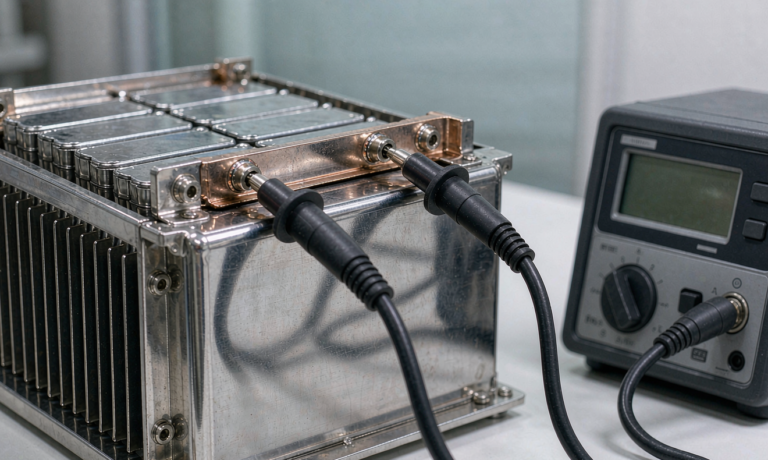
- Capacity grading: every cell is discharged and charged on a 4-wire fixture; we reject lots where capacity coefficient of variation (CoV) exceeds 6%. A pack built from a ±6% spread will drift to a ±15% spread within two years.
- DCIR measurement: direct-current internal resistance is taken with a 4-wire Kelvin method at 50% SoC, 25 °C. We require DCIR CoV under 10%; high-DCIR cells become hot spots during surge discharge.
- Self-discharge (K-factor): we store graded cells at 50% SoC for 7 days and measure voltage drop; anything above 1.0 mV/day is a micro-short suspect and is pulled.
- Genealogy: each cell gets a DataMatrix code linking supplier, lot, and test result to the final serial number. This is what lets us trace a field return to a specific production batch.
For solar kits we grade a little tighter than for a drone lithium battery because the pack spends so much time idle — a slightly leaky cell drains its neighbours through the balancing resistors and the whole bank creeps toward a nuisance fault. When the customer has spec’d NMC instead of LFP, we grade even harder: NMC’s higher energy density is real, but its narrower thermal window and lower runaway threshold mean a 4% capacity spread that would be harmless in LFP can accelerate imbalance in a lithium-ion battery bank that idles at 95% SoC for months. The chemistry choice is therefore a manufacturing parameter, not just a procurement one.
Cell-to-Pack Laser Welding That Survives Decades Outdoors
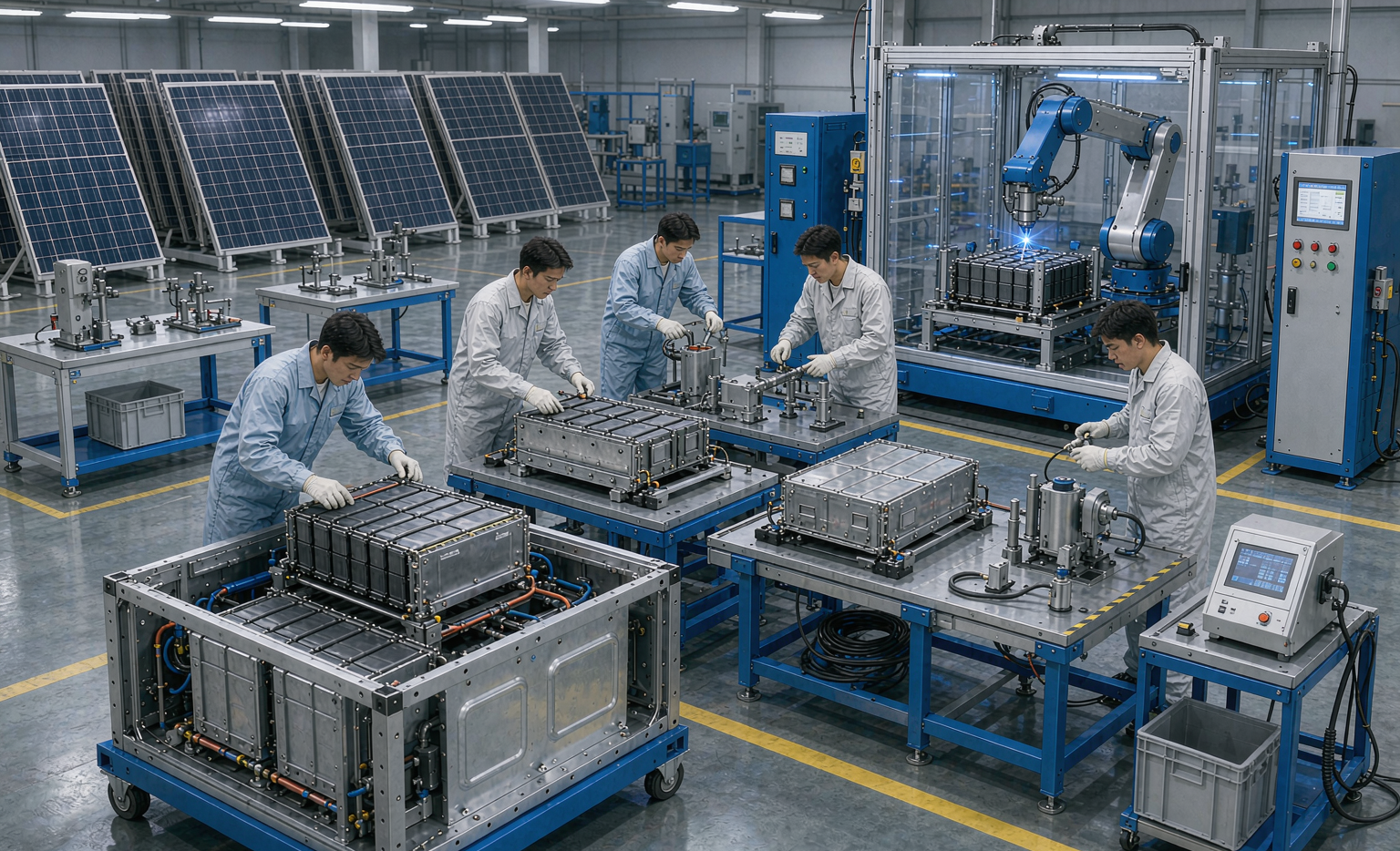
The busbar joint is the most failure-prone part of any storage pack, so we laser-weld, never solder. Pure nickel strips are welded to cell terminals with a pulsed fibre laser tuned to a spot resistance below 0.15 mΩ at a 25 N pull, with a process capability index (Cpk) of at least 1.67. Below that, a joint that looks fine today can open after a few hundred thermal cycles.
For the flat-stack LFP modules we use in solar kits, we also apply a controlled 0.3–0.7 MPa preload against the cooling plate. Without even compression, the middle cells bow, the weld line shifts, and DCIR climbs. We verify preload with a force gauge on a sampling basis and log it to the build record. The result is a lithium battery pack whose internal resistance stays flat across its warranty life instead of quietly rising every summer.
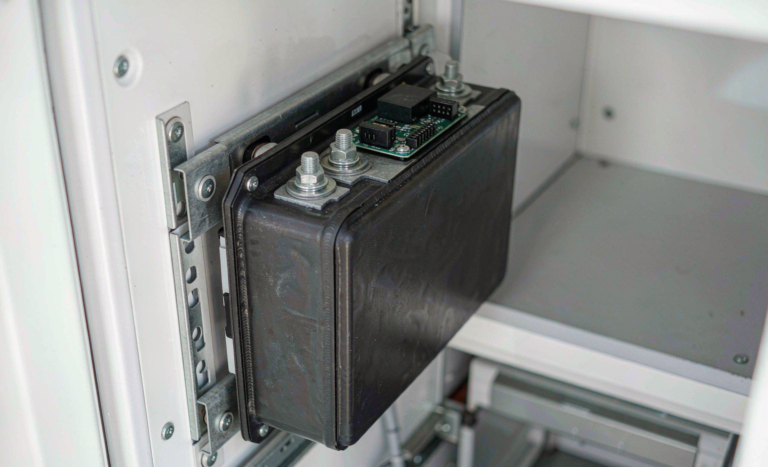
The enclosure is part of the weld station’s responsibility, not a separate afterthought. A solar enclosure has to shed heat on a hot afternoon yet stay sealed through a monsoon season, so we design a thermal path from cell surface to the aluminium shell and pair it with an ePTFE breather that equalises pressure without wicking in moisture. A lithium ion battery that is perfectly welded but trapped in a sealed, unvented box will still cook itself in a heatwave — the mechanical and thermal design have to be commissioned together, on the same line, before the lid goes on.
BMS Commissioning and Firmware Handshake
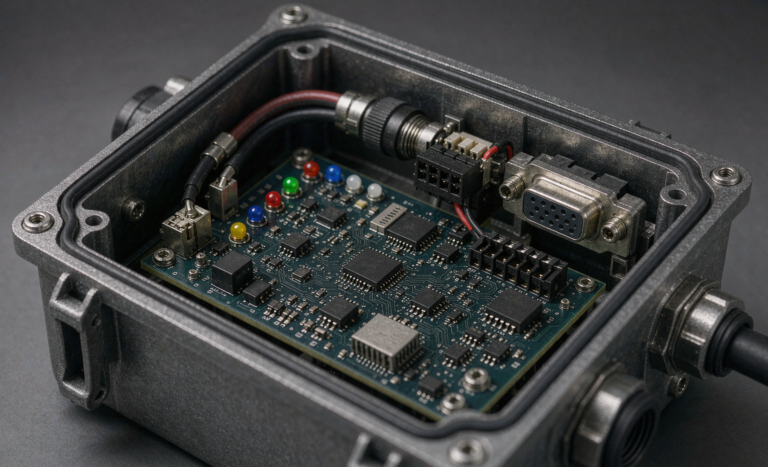
A solar-kit battery is only as smart as its battery management system, and the BMS has to be commissioned, not just plugged in. On our line each pack runs through a BMS functional test:
- Charge handshake with the MPPT: the BMS must accept CC-CV charging at 14.4–14.6 V for a 4S LFP block and report SoC back to the inverter over CAN 2.0B or RS485.
- Temperature-compensated charge lockout: below 0 °C the BMS blocks charge entirely. A solar kit that trickle-charges a frozen pack is a lithium-plating incident waiting to happen.
- Cell balancing: we verify active or passive balancing to within 20 mV during the burn-in cycle, because solar duty leaves cells at different SoC for long stretches.
- Protection layers: over-current protection under 200 ms, short-circuit protection, pre-charge relay to limit inrush, and a firmware image that is hash-checked and updatable in the field.
We never ship a pack whose BMS firmware does not pass a scripted handshake against a reference inverter. That single test catches more latent defects than any visual inspection.
Formation, Burn-In, and the End-of-Line Gate
New LFP cells need formation cycles to stabilise the SEI layer, so every solar-kit pack runs a formation profile before it leaves the building. Then comes multi-stage burn-in:
- Charge to 100%, rest, discharge to 80% — repeated while we log temperature and voltage.
- Environmental screen to MIL-STD-810H Method 514.8 (vibration) and 516.8 (shock), plus an IP65/66 spray test with an ePTFE breather that equalises pressure without letting moisture in.
- The end-of-line gate: we accept only packs at ≥98% rated capacity, DCIR within +10% of grade, and terminal-voltage spread ≤30 mV.
Any pack that fails the gate is teardowned, not reworked blindly. The teardown data feeds back into cell grading and weld-parameter tuning — that closed loop is what separates a custom battery solution built for the field from a commodity pack built for the bench.
The Standards Floor and Field Traceability
A solar-kit battery crosses borders and sits in homes, so the standards floor is part of the build, not a sticker at the end. Every pack we manufacture is built to:
- UN38.3 T.1–T.8 transport certification, and we ship at or below 30% SoC under IATA Section II for air freight.
- IEC 62133-2 (portable cell safety) and IEC 62619 (industrial stationary cells) as the baseline chemistry qualifications.
- UL 1973 for stationary storage, with UL 9540 / UL 9540A and NFPA 855 informing the enclosure and containment design.
- IEEE 1547 and IEC 62477 for grid-interactive and power-conversion safety, plus FCC/CE marking for the electronics.
Every unit leaves with a DataMatrix serial linking the cell lots, weld parameters, BMS firmware hash, and burn-in log. When a customer calls about a pack three years later, we can pull the exact build record. For integrators who want a turnkey custom battery solution, that traceability is usually the deciding factor — and it is exactly the discipline we apply when we build a drone battery or any other pack that has to perform where nobody is watching.
Frequently Asked Questions
What makes solar-kit battery manufacturing different from other lithium packs?
The duty cycle. A solar kit lithium battery spends most of its life at high SoC with intermittent, irregular charging and long idle periods, then occasionally takes a deep discharge. That favours tight cell grading, strong balancing, and a charge lockout below 0 °C far more than raw pulse power does.
Why laser weld instead of solder the cells?
Solder joints creep and corrode under the thermal cycling a rooftop or garage enclosure sees. Laser-welded pure-nickel joints below 0.15 mΩ at 25 N pull, with Cpk ≥ 1.67, stay mechanically and electrically stable for the full warranty life of the lithium battery pack.
How do you guarantee a pack will last ten years?
We do not guarantee it with a number — we build it in. Incoming cell grading (capacity CoV < 6%, DCIR CoV < 10%), even compression, commissioned BMS, and a multi-stage burn-in gate at ≥98% capacity with ≤30 mV spread, all recorded under a DataMatrix serial for traceability.
Which certifications matter most for a home solar battery?
For stationary storage the core set is UN38.3 for transport, IEC 62133-2 and IEC 62619 for cell safety, UL 1973 for the pack, and UL 9540 / NFPA 855 for system installation, with IEEE 1547 covering grid interconnection. A credible manufacturer builds to all of them from the first prototype.
Conclusion
Lithium battery manufacturing solar kits is a discipline of patience: grade hard, weld clean, commission the BMS, burn in, and trace everything. The packs that survive a decade on a rooftop are not the ones with the biggest cells — they are the ones built by a line that treats the field as the real test bench. If you are specifying storage, ask your supplier for the burn-in data and the traceability record; a custom battery solution that cannot show you those is guessing, and a solar kit is a ten-year bet you do not want to lose.