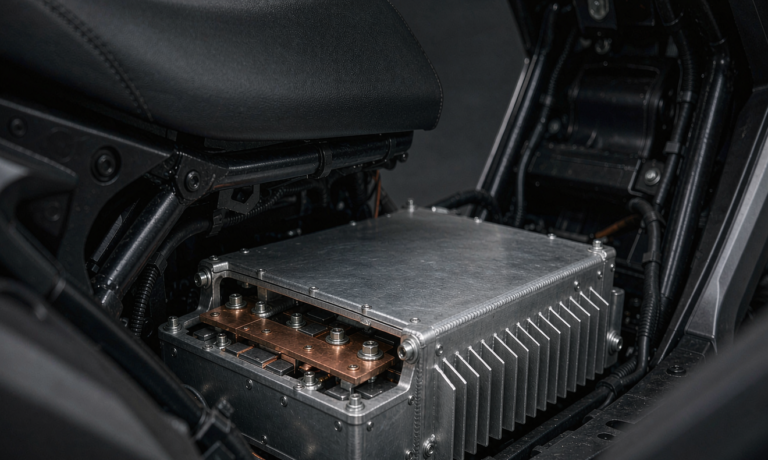
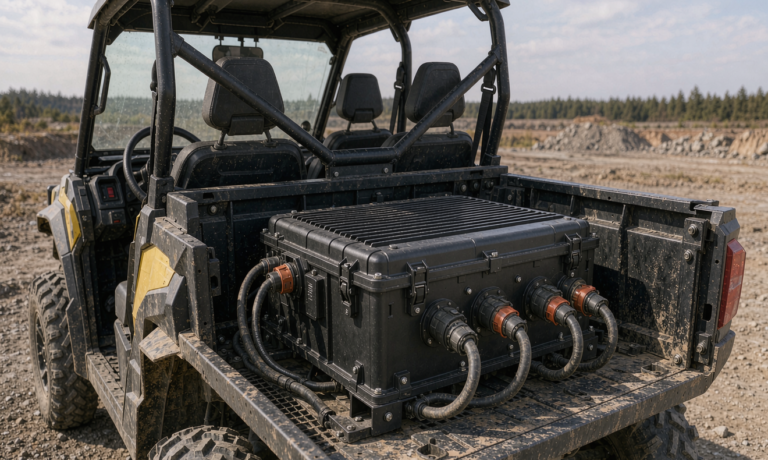
Lithium Battery for Ambulance and Emergency Vehicles
Why Ambulance Power Demands Differ From Passenger Cars
When I first started building battery packs for emergency medical fleets in 2014, the thing that surprised my younger engineer self was how little the engine actually ran during a call. A passenger car spends most of its life moving. An ambulance spends long stretches idling at a scene, light bar flashing, HVAC running, defibrillator charged, ventilator breathing for the patient, refrigerator holding drugs at 2 to 8 degrees Celsius, and a radio stack talking to dispatch. The starter battery was never designed for that.
The auxiliary load on a modern EMS vehicle regularly sits between 1.5 and 4 kilowatts once you add patient-care equipment. At a multi-casualty incident a crew can draw that for an hour or more without the engine turning over. A lead-acid house battery dies in minutes under that profile, and a depleted house battery can also strand the vehicle when it is time to leave. That is why a lithium battery for ambulance service is now the default specification I write for any fleet doing more than a few calls per shift.
I remember one winter call where a rival fleet’s lead-acid house battery sagged so hard that the defibrillator dropped into its low-battery alarm mid-transfer. Nobody was hurt, but the crew lost confidence in the truck. After that the service speced lithium across the whole fleet within a season. The lesson I keep repeating to procurement teams is simple: the battery that runs the patient compartment is a life-safety component, not a comfort option, and it should be engineered and tested like one.
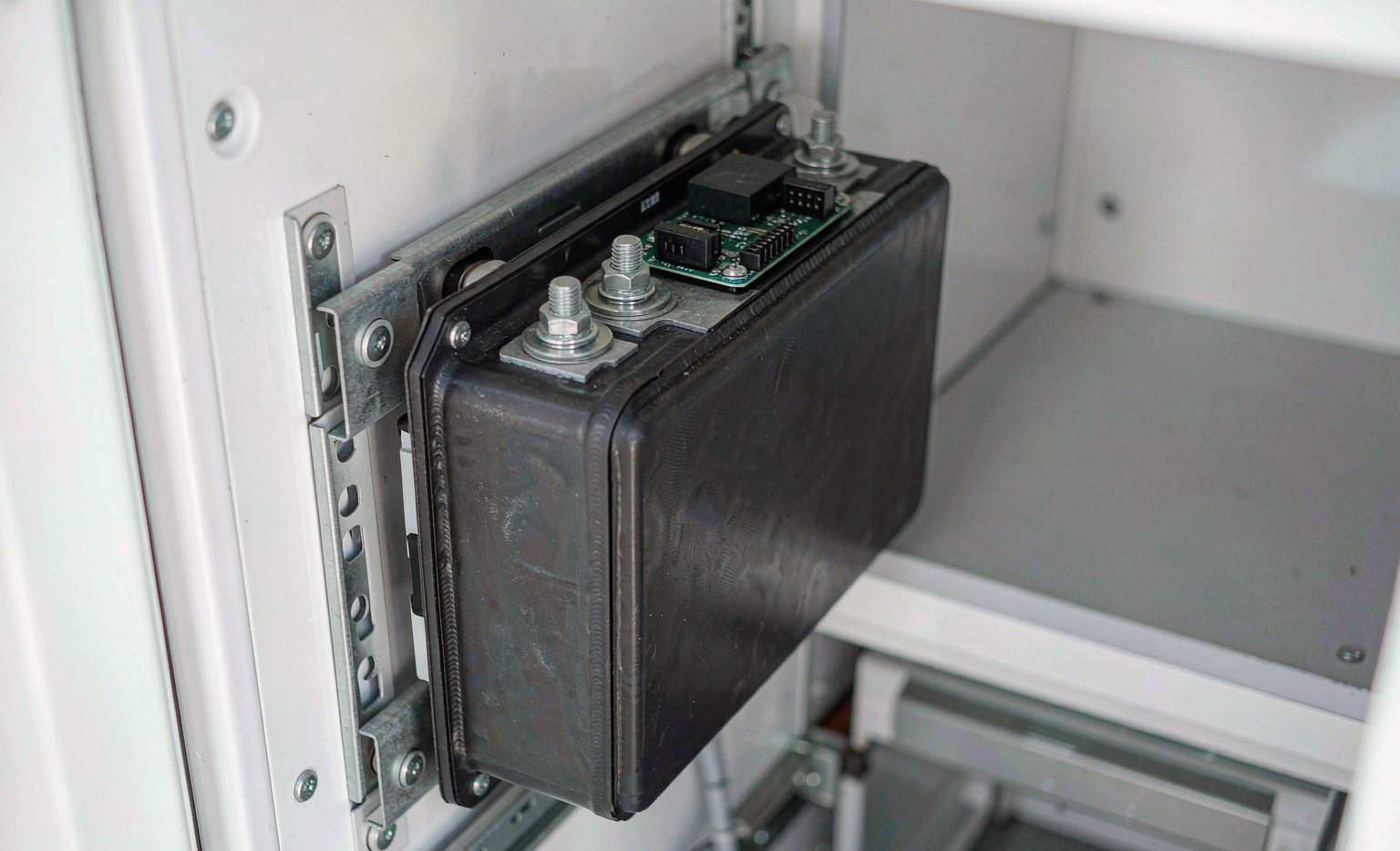
Pack Architecture and Capacity Sizing for EMS Duty Cycles
Most ambulances still run a 12 volt or 24 volt chassis electrical system, but the patient module is a different world. I normally specify a dedicated lithium battery pack sized to the measured duty cycle, not to a catalog number. Step one is a power audit: list every device, its watts, and how long it runs per call. A typical Type II or Type III ambulance lands at 5 to 15 kilowatt-hours of auxiliary storage once you include a buffer for back-to-back calls.
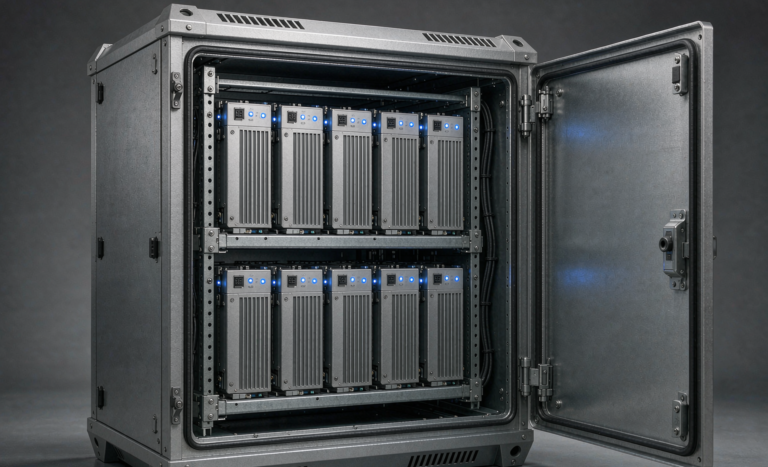
Chemistry choice matters. I prefer lithium iron phosphate, often written LiFePO4, for anything mounted inside the patient compartment. It is thermally stable, it tolerates partial-state-of-charge cycling, and it gives 2000 to 4000 full cycles before reaching 80 percent capacity. Nickel manganese cobalt cells pack more energy per kilogram, but for an enclosed space with people and oxygen equipment I will trade energy density for the safety margin every time. A custom battery solution lets me split the pack into two isolated banks so a fault in one never takes down ventilation and defibrillation at once.
- Bank A feeds life-support and comms, the loads you cannot lose.
- Bank B feeds comfort loads: lighting, cabin heat, drug fridge.
- A static transfer switch moves non-critical loads to the engine alternator the moment the vehicle starts moving.
Communication is the part crews forget until they need it. I put a CAN bus or at least a simple RS485 link from each bank BMS to the cab display so the driver sees state of charge, cell spread, and fault codes without opening the cabinet. For fleets running telematics I log pack data to the same gateway as the engine, which turns a silent battery into a measurable asset you can trend across the whole garage.
Thermal Management and Cold-Weather Readiness
Cold is the quiet enemy of any lithium battery pack. Below 0 degrees Celsius internal resistance climbs and usable capacity drops, sometimes by 20 to 30 percent at minus 10 degrees Celsius depending on cell grade. Emergency calls do not wait for spring, so I build in either self-heating film between cell layers or a thermostatically controlled insulated enclosure fed from Bank B.
The rule I teach crews: never charge a cold pack hard. Forcing high current into a cell near freezing causes lithium plating and permanent capacity loss. A good BMS holds charge current near zero until cell temperature rises above about 5 degrees Celsius, then ramps up. I have seen fleets in northern climates gain a full year of pack life just by enforcing that one limit.
There is also the comfort angle that doubles as safety. A warm patient compartment keeps IV fluids and the crew functional, and a pre-conditioned pack charges faster at the station. I set the enclosure heater to a thermostat around 15 degrees Celsius so the cells sit in their happy band between calls, then let the engine alternator top up the pack on the way back. The energy cost is tiny next to the reliability gain.
Certification and Compliance for Mobile Medical Batteries
An emergency vehicle battery is a shipped hazardous good and an installed electrical component, so it carries two compliance streams. Transport is governed by UN38.3, the test regime covering altitude simulation, thermal, vibration, shock, external short, impact, overcharge and forced discharge. Every cell and pack I ship carries the UN38.3 test summary. For the cells themselves, IEC 62133 is the portable-cell safety standard my suppliers must meet, and for larger industrial packs I also reference IEC 62619.
In the United States the vehicle side follows FMVSS and NFPA 1917 for automotive ambulances; in Europe the EASA framework and regional roadworthiness rules apply to the chassis, while the medical equipment inside follows IEC 60601-1. None of those replace the battery standards, they layer on top. I keep a compliance folder per fleet because an inspector will ask for the UN38.3 summary and the cell datasheets on the same day.
Installation, Isolation and Redundancy in the Patient Compartment
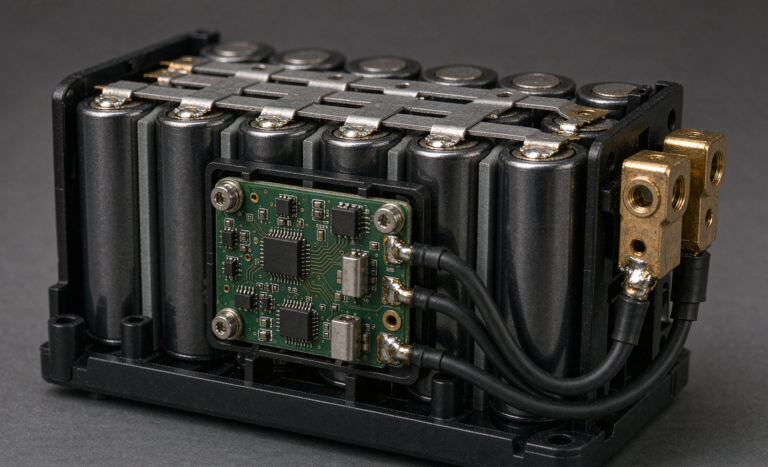
Where you mount the pack decides how safe it is. I never put a lithium battery pack where it can be struck, soaked, or cooked by defibrillator waste heat. The enclosure is sealed to IP54 or better, vented to outside air, and separated from the patient by a non-combustible barrier. Cables run in conduit, crimped not soldered, with ring terminals and torque-checked busbars.
Redundancy is not optional in EMS. I specify two independent battery banks with automatic isolation, so a short in the comfort bank cannot pull down the life-support bank. The BMS on each bank reports state of charge, cell voltage spread, and temperature to a dashboard the crew can read at a glance. If Bank A drops below 30 percent during a call, the transfer switch pulls from the engine and the crew gets an audible warning before the patient equipment is at risk.
Vibration is the other killer nobody budgets for. An ambulance rides rough, and a loose cell strap will fatigue into an open circuit faster than any calendar aging model predicts. I spec padded cell holders, lock-washers on every terminal, and a torque re-check at the 1000 kilometer mark. One loose busbar on a life-support bank is one call you do not want to be on, so the mechanical build gets the same review as the electrical one.
Maintenance, State of Health and Fleet Rotation
A lithium battery for ambulance duty is not fit-and-forget. I set up the BMS to log cycle count, throughput, and the maximum cell-voltage spread at top of charge. When spread grows past about 50 millivolts the pack is telling you a cell or a sensor is drifting, and that is the moment to balance or service, not when the ambulance fails on a highway.
For fleet managers I recommend a rotation rule: pull a pack at 70 percent state of health, not at failure. At that point it still runs a call safely but its cold-weather margin is gone. Retired ambulance packs make excellent stationary storage for the depot, which closes the loop and lowers the cost per vehicle-year. Track every pack by serial number and you will see exactly which duty cycles wear cells fastest.
I also train the depot to do a monthly insulation-resistance check on the pack, especially after a vehicle has been through a wash bay or a flooded street. Moisture in a connector is the most common cause of a nuisance ground fault, and a five minute megger test catches it before it becomes a roadside shutdown. Log the reading next to the serial number and the trend will tell you which vehicles need new seals.
Frequently Asked Questions
What capacity lithium battery does an ambulance need?
Most auxiliary loads land at 5 to 15 kilowatt-hours after a duty-cycle audit, with a buffer for back-to-back calls. Size from measured watts and runtime, not from a catalog number.
Are lithium ambulance batteries allowed under UN38.3?
Yes. UN38.3 is the transport test standard every cell and pack must pass, covering altitude, thermal, vibration, shock and abuse tests. I ship each pack with its UN38.3 test summary.
How do you manage lithium battery temperature in winter?
I use self-heating film or an insulated enclosure and set the BMS to block hard charging below about 5 degrees Celsius, ramping current up only after the cells warm.
Can a lithium battery run ambulance life-support equipment?
Yes, with the right architecture. I split the pack into an isolated life-support bank and a comfort bank so a fault in one never drops ventilation or defibrillation.
How long do ambulance lithium batteries last?
A LiFePO4 pack typically delivers 2000 to 4000 full cycles, often four to eight years in service, after which I rotate it at 70 percent state of health.
What certifications does an emergency vehicle battery need?
UN38.3 for transport, IEC 62133 for cells, IEC 62619 for industrial packs, plus chassis rules such as NFPA 1917 or the European roadworthiness framework for the vehicle.
Further Reading
References