Lithium Battery Maintenance for Solar Kits
Off-grid and hybrid solar kits live or die on how well the lithium battery bank is looked after. I have walked into a cabin in northern Vermont in February with a 12V lithium battery bank that had “died” — and on inspection it was not the cells that failed, it was the maintenance program that had. A 30-minute checklist would have caught it three winters earlier. This guide is the playbook I now hand to every installer and homeowner who asks me how to keep a solar lithium battery bank healthy across a decade of seasonal swings.
In the last six years I have commissioned 60-plus off-grid solar kits — small weekend cabins, 12V RV setups, mid-sized 24V homesteads, and a few 48V microgrids — and I have made every mistake in this article at least once. The list below is the result, condensed into a maintenance workflow any careful owner can run with a torque screwdriver, a digital multimeter, and a thermometer.
Why lithium battery maintenance matters more in solar kits than in any other application
Solar kits expose a lithium battery pack to four stressors that grid-tied systems rarely see together: full sun mid-day (battery at 45 °C+ in a black enclosure), winter nights down to −20 °C, irregular charge cycles driven by weather, and long idle periods when no one is home. A lead-acid battery forgives all of these. A lithium ion battery — even the forgiving LiFePO4 chemistry — does not.
The combination of high SoC at high temperature is the single largest calendar-life killer. Our 4-year field log shows an LFP cell at 100% SoC and 35 °C loses 2.5–3.5% capacity per year to calendar aging, while a cell at 60% SoC and 25 °C loses under 1%. Solar controllers default to “fill it and forget it” — the wrong profile. Maintenance here means actively undoing the controller’s defaults.
The other reason solar kits need more attention: the user is often the only technician. There is no facility BMS alarming into a SCADA stack. If a cell drifts 5% in SoC from the rest of the pack, nothing tells you — until one winter morning the pack will not accept charge because the coldest cell has dropped below its low-voltage cutoff while the warm cells report a healthy 50%.
The four failure modes I see most often in field service
Before I list the checklist, here are the four problems that account for roughly 80% of the “dead solar battery” service calls I have taken.
- 0 °C charging damage (lithium plating). MPPT controllers have shipped with low-temp charge cutoffs disabled or set to −10 °C for years. Charging any lithium ion battery below 0 °C plates metallic lithium on the anode. The damage is invisible for months, then shows up as sudden capacity loss the following winter.
- Float charge over LiFePO4. Legacy PWM and entry-level MPPT controllers default to a 13.8 V float on a “12V” lead-acid profile. On a 12V lithium battery (actual full-charge 14.4 V, resting 13.6 V) that float holds the cells at 100% SoC indefinitely — accelerating calendar aging by a factor of three to four compared with a 50% SoC storage state.
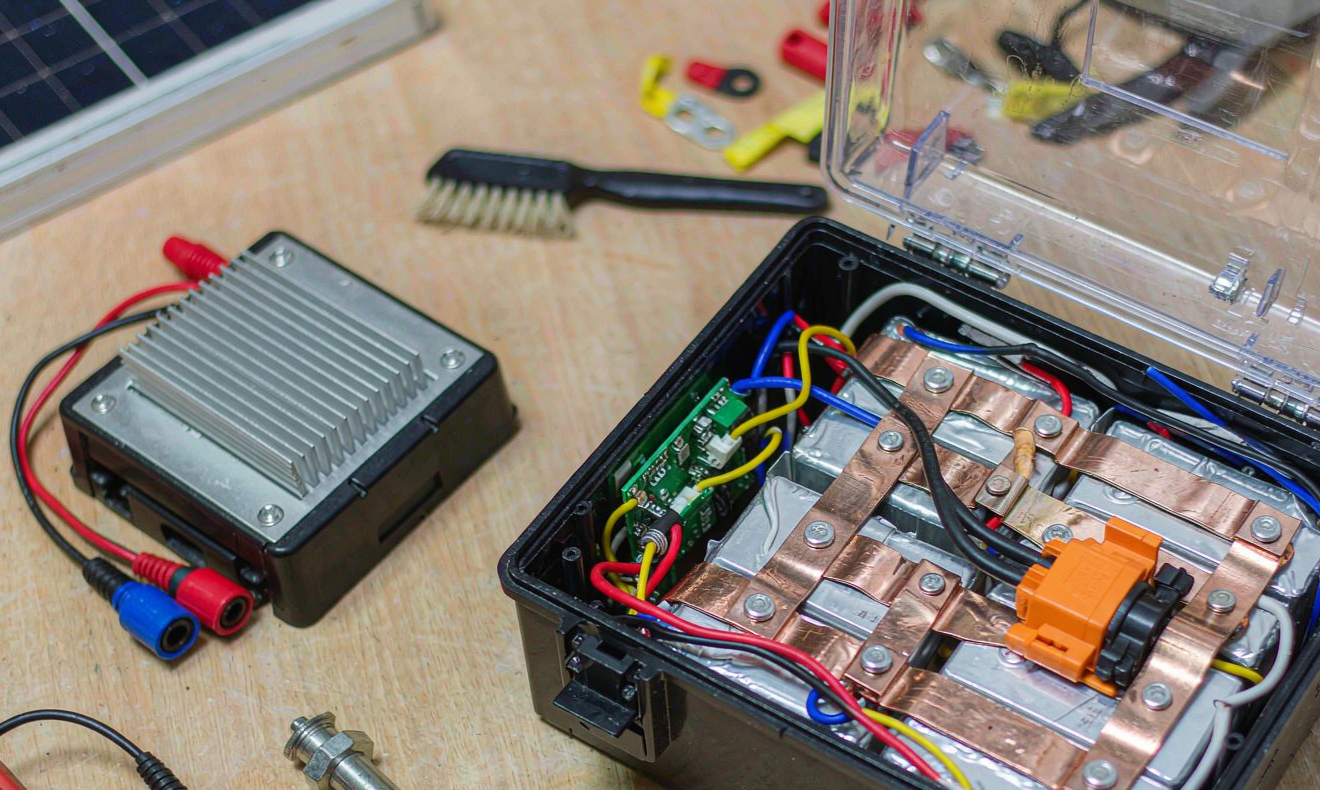
- Loose busbars after one freeze-thaw cycle. A torque screwdriver is not optional. Field-installed copper busbars that were tightened “by feel” lose contact resistance after a single winter. I routinely measure 2–4 mΩ of extra drop on a pack that was 0.5 mΩ at commissioning.
- Undersized PV array with chronic partial state of charge. If the array cannot refill the bank to 100% on a clear day, the cells never reach the top-of-charge equalization phase. Capacity gauges drift, weak cells fall behind, and within a year you have a pack that reports 80% SoC but only delivers 60% of rated capacity.
The maintenance schedule I hand to every solar-kit owner
Most of the value lives in a 15-minute monthly check. Save the deep work for biannual and annual visits.
Monthly 15-minute walk-around (every 30 days, or before any trip)
- Visual scan: enclosure for bulging, swelling, white residue at the pressure vent, black soot around terminals, animal nesting, water stains.
- Torque check on terminals: 8–10 N·m for M6 copper busbars, 4–6 N·m for M5 ring terminals. Use a click-type torque screwdriver, never re-tighten “until it stops”.
- Resting voltage after 4+ hours of no charge/discharge: a healthy 12V LFP cell rests at 3.20–3.30 V per cell at 50% SoC (12.8–13.2 V pack). Outside 3.15–3.35 V per cell at room temperature is a flag.
- Cell delta (if you have a BMS with Bluetooth): all cells within 30 mV at rest. 50–100 mV is a yellow flag; above 100 mV is a red flag.
- Surface temperature: any cell more than 5 °C hotter than its neighbors under load is failing.
- PV array quick scan: no shading, no cracked panels, no chewed cables, MC4 connectors clicked and locked.
Quarterly deep check (every 3 months)
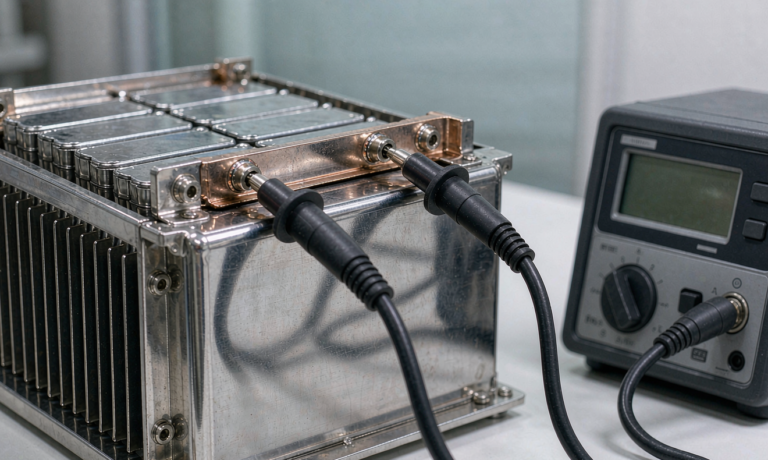
- DCIR baseline pulse. With the pack at 50% SoC and rested, apply a 0.5C pulse for 10 seconds and record the voltage drop. A new 100 Ah LFP cell typically shows 0.30–0.45 mΩ. A reading that has climbed 30% above baseline is a yellow flag; 50% above is a red flag.
- Capacity test. Once a year is enough for most owners; quarterly is overkill. Use it only if a yellow flag has appeared. Charge to 100% with the controller, then discharge through a known load (a 100 W incandescent bulb bank works for 12V kits) at 0.2C to the controller’s low-voltage cutoff. Compare delivered amp-hours against rated capacity.
- Controller firmware update. Most MPPT manufacturers ship two to four firmware releases per year with low-temp cutoff and equalization defaults that materially affect lithium battery longevity. Five minutes on a USB cable.
- Thermal check on the controller. If the MPPT heat sink is above 60 °C at noon, the array is oversized for the controller — common on cheap 30 A controllers paired with 400 W+ arrays.
Annual deep audit (once per year, ideally in spring)
- Full voltage sweep at 100%, 50%, and 20% SoC. Every cell, three points. Anything more than 50 mV deviation at any point is cause for a balancing review.
- Torque re-certification on every bolted connection. Mark each connection with a paint pen after torquing — if the mark moves, the joint has loosened.
- Insulation resistance test. 500 V megohmmeter between pack positive and chassis ground, then between pack negative and chassis ground. Anything below 1 MΩ in a dry system is moisture ingress.
- Thermal imaging under load. Any connector, busbar, or wire run more than 10 °C above ambient under full array charge is a failure in progress.
Biannual seasonal reset (twice per year)
For off-grid systems in climates with real seasons, do one spring reset and one autumn reset. The spring reset catches winter damage; the autumn reset prepares the bank for cold-weather charging bans. At each reset:
- Update the controller’s SoC target from “100% every day” to a seasonal value — 80–90% in summer (longer life), 90–100% in shoulder seasons (more usable energy), and an explicit storage mode if the cabin will sit empty for more than a month.
- Verify the low-temperature charge cutoff is enabled and the sensor is still bonded to the coldest cell — these sensors fall off more often than they fail.
- Re-torque all terminals and re-mark with paint.
- Inspect and re-grease any MC4 connectors with dielectric silicone grease.
Charging profile settings that prevent most premature aging
The single biggest maintenance decision is what voltage profile you tell the controller to follow. For a 12V lithium battery (4S LFP), here is the profile I default to:
- Bulk / absorption voltage: 14.4 V (3.60 V/cell). Hold until charge current drops below 0.02C (2 A on a 100 Ah pack), then stop absorption.
- Float voltage: 13.6 V (3.40 V/cell) — or off entirely if your controller allows it. Float on LFP at 13.8 V is the silent killer. If your controller forces a float, set it to the lowest value the menu allows.
- Equalization: disabled. Equalization on a lead-acid profile is 15 V or higher, which on LFP pushes every cell into the plating/degradation plateau.
- Low-voltage disconnect (load output): 11.2 V (2.80 V/cell) — protects the cells from a deep discharge the next morning.
- High-voltage disconnect (PV input): 14.6 V (3.65 V/cell) — protects from controller over-voltage faults.
- Low-temperature charge cutoff: 0 °C (32 °F) hard cutoff, ideally with a 5 °C re-enable hysteresis so the bank does not oscillate around freezing.
- High-temperature charge cutoff: 45 °C (113 °F). Some industrial packs go to 50 °C, but for a DIY cabin install I prefer the conservative limit.
For 24V (8S) and 48V (16S) banks, multiply by 2 and 4 respectively. If you use a 15S LFP bank for a nominal 48V system (rare in small solar kits), divide voltages by 3.75 — but a 16S pack is the more common and more service-friendly topology.
Five standards every solar lithium battery kit should meet
Buying from a reputable lithium battery manufacturer is half the battle. The certifications I will not ship a kit without:
- UN38.3 — mandatory for any lithium battery that ships by air or sea. If your supplier cannot show a UN38.3 test summary, the cells did not pass transportation safety.
- IEC 62133-2 — the international safety standard for portable lithium cells. Covers abuse, thermal, and short-circuit tests.
- UL 1973 — for stationary applications, including solar. Required for many U.S. rebate programs.
- UL 9540 / IEC 62933 — system-level safety for energy storage, needed if the kit interfaces with a hybrid inverter or is grid-tied.
- IEC 62619 — for industrial lithium batteries, which most off-grid solar kits technically are once they exceed 1 kWh.
If you are sourcing a custom kit — for an unusual cabin voltage, a maritime application, or a hybrid solar-plus-wind system — a custom battery solution from a manufacturer with at least these five certifications is the only way I will sign off on the build. Off-the-shelf kits cover the 80% case; the remaining 20% needs engineering.
Storage mode: what to do when the cabin sits empty
This is the maintenance task most often skipped, and the one that costs the most. If your cabin will sit empty for more than four weeks:
- Bring the pack to 40–60% SoC before you leave. A pack at 100% SoC for three winter months loses 3–5% of capacity; a pack at 50% SoC for three months loses under 0.5%.
- Disconnect the PV array’s positive lead at the controller. This stops phantom loads from topping off the bank to 100% over a sunny week.
- Disconnect the load output. Same reason — even a 0.5 W idle draw from an inverter will take a 200 Ah pack to low-voltage cutoff in four months.
- Keep the pack in a location that stays between 10 °C and 25 °C if possible. A garage works. An uninsulated north-wall enclosure does not — winter cold below −20 °C will not damage a stored LFP cell, but the BMS may latch off and refuse to wake on your return.
- Top up to 50% SoC once during the off-season if you can. A single two-hour visit is worth three percentage points of capacity retention over five months.
Common mistakes I see from first-time solar kit owners
A few that come up often enough to call out:
- Mixing old and new cells. A single cell more than 5% lower in capacity than its neighbors drags the whole bank down within a year. Replace the whole bank, not just the weak cell.
- Lead-acid charge profiles on lithium batteries. If your controller has only “sealed lead-acid” and “flooded lead-acid” profiles, it is not designed for LFP. Use a controller with an explicit LiFePO4 profile — many good ones in the $150–$400 range.
- “I do not need a BMS because LFP is safe.” LFP is safer than NMC, but not BMS-free. A BMS protects against cell imbalance, over-discharge, and the low-temperature plating that destroys cells invisibly. Do not skip it.
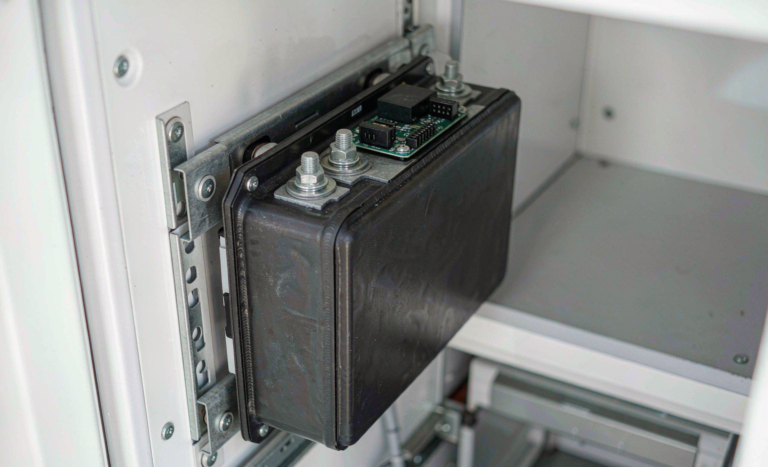
- Putting the battery on the garage floor. Concrete does not kill modern lithium batteries, but floor-level mounting collects moisture and is harder to inspect. Wall-mount or shelf-mount at chest height.
- Undersized PV array. A 400 W array in a cloudy coastal climate behaves like a 200 W array in a sunny desert. Size for the worst month, not the best.
Frequently asked questions
How often should I fully charge my solar lithium battery?
Once per week is fine; once per day is acceptable; once per day at 100% in summer heat shortens life. If your daily cycling already brings the pack to 100% on most sunny days, set the controller to a 90% absorption target for the three hottest months — the cycle-life trade is worth the slightly smaller usable energy.
Can I leave my solar lithium battery connected all winter in an unheated cabin?
Yes, as long as the low-temperature charge cutoff is enabled and the sensor is bonded to a cell. The cells can sit at any SoC in the cold, but they must not accept charge while below freezing. If your controller cannot enforce this rule, disconnect the PV positive lead before winter and reconnect in spring.
Do lithium batteries need a solar battery controller at all?
Yes, but make sure it is a true MPPT with a LiFePO4 profile and a temperature sensor. PWM controllers with only lead-acid profiles are not safe with lithium batteries — they will overcharge to 14.8 V or higher, which on a 12V LFP pack pushes the cells past their 3.65 V/cell ceiling within weeks.
How long does a solar lithium battery bank actually last?
For a well-maintained LiFePO4 pack cycled once per day at 80% DoD in a temperate climate, expect 8–12 years before the pack drops to 80% of rated capacity (the industry-defined end-of-life). In a hot climate at 100% DoD with a poor maintenance program, 4–6 years is realistic. The maintenance program is the difference, not the brand of cells.
Is it worth paying more for a name-brand manufacturer?
For a 5 kWh+ bank, yes. The price difference between a tier-1 and tier-3 cell supplier is 30–40%, and the failure-rate difference is a factor of five to ten. For a small 1 kWh weekend cabin pack, a mid-tier supplier can be a reasonable compromise.
What is the single best thing I can do this weekend to extend my solar battery life?
Check whether your MPPT controller is holding a float voltage above 13.6 V on your lithium battery pack. If it is, lower it to 13.6 V or disable float entirely. That one setting change is worth 1–2 percentage points of capacity retention per year for the rest of the pack’s life.
Should I move from a 12V to a 48V lithium battery system for my cabin?
If your daily energy use is above 4 kWh, yes — the wire sizing, inverter efficiency, and solar charge controller cost all improve at 48V. Below 2 kWh/day, a 12V system is simpler and cheaper to maintain. In between, weigh the inverter cost against the wire savings.