Semi-Solid State Battery Formation Cycling and Yield
Formation is the step where a stack of coated electrodes and a semi-solid electrolyte stops being a set of parts and becomes a battery. Nearly everything I judge when I qualify a cell – usable capacity, DCIR, self-discharge, and how tight the capacity bins are – gets locked in during the 24 to 72 hours a semi-solid cell spends in a formation fixture. Most yield disputes that surface at pack assembly were actually created weeks earlier, in wetting time, stack pressure, or the first charge step. This guide explains what formation cycling does inside a semi-solid state battery, where line yield is won and lost, and what a B2B buyer should ask before signing a supply agreement.
What Formation Does Inside a Semi-Solid Cell
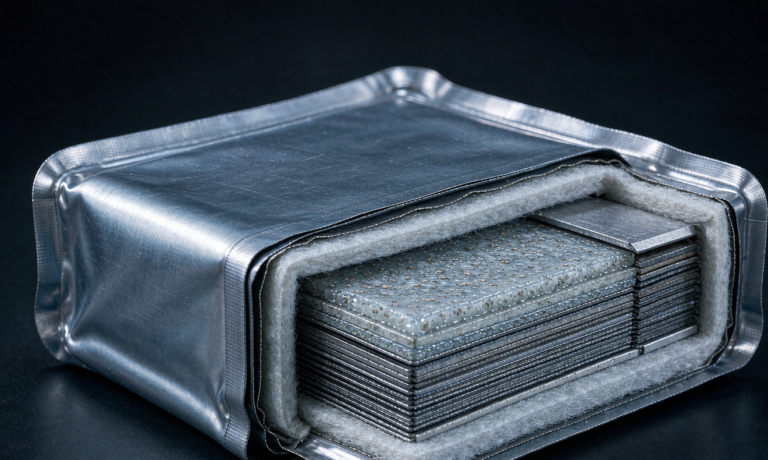
In a conventional lithium battery with liquid electrolyte, formation is mostly about building the solid electrolyte interphase, the SEI, on the graphite anode. In a semi-solid state battery the job is bigger. The semi-solid or gel electrolyte often finishes curing inside the cell, so formation is also the step where the electrolyte network settles against both electrodes, where residual solvent gets consumed or trapped, and where the interphase forms on whatever anode the cell uses, whether that is graphite, a silicon blend, or lithium metal.
The measurable output of formation is the first charge-discharge cycle. When we charge a fresh cell, some lithium is consumed irreversibly building the interphase instead of remaining cyclable. First-cycle Coulombic efficiency, or CE, is discharge capacity divided by charge capacity. On the semi-solid cells I have qualified, first-cycle CE typically lands between 85 and 92 percent, a point or two lower than a mature liquid-electrolyte graphite cell, because the semi-solid matrix has more internal surface area to passivate. That difference is not a defect; it is lithium inventory we budget for at design time, and it is one reason semi-solid cells are often specified with a small cathode capacity excess.
What formation must not do is create scatter. Two cells built from the same lot should finish formation within a fraction of a percent of each other in capacity and DCIR. When they do not, the cause is almost always a process variable that was allowed to drift.
Stack Pressure Is a Process Variable, Not a Fixture Detail
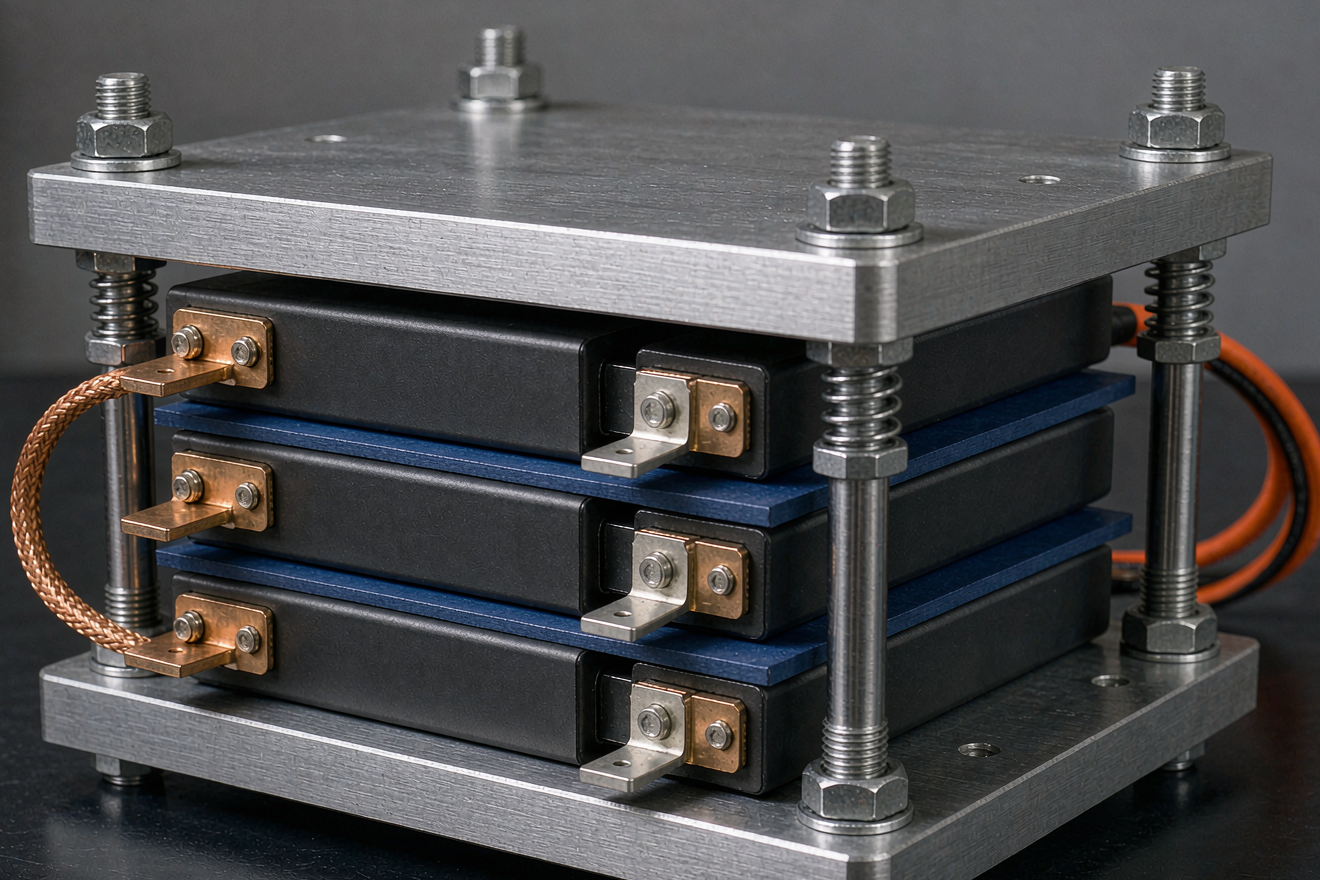
Semi-solid electrodes are softer and more compliant than fully dried liquid-electrolyte electrodes, so the pressure applied during formation changes the electrochemical result, not just mechanical handling. Under-pressure, and the electrode stack can micro-delaminate: the electrolyte wets unevenly, local voids survive into service, and those voids concentrate current, which is the classic precursor to lithium plating on the anode. Over-pressure, and you squeeze the semi-solid matrix toward the separator or close pore structure, raising interfacial impedance permanently.
On the lines I have worked with, formation stack pressure for prismatic semi-solid cells sits in the 0.2 to 1.0 MPa range, set at the fixture and re-checked as the stack expands during first charge. Cells grow a few tenths of a percent in thickness on first charge, and a rigid fixture that ignores that growth turns a set pressure into an uncontrolled one.
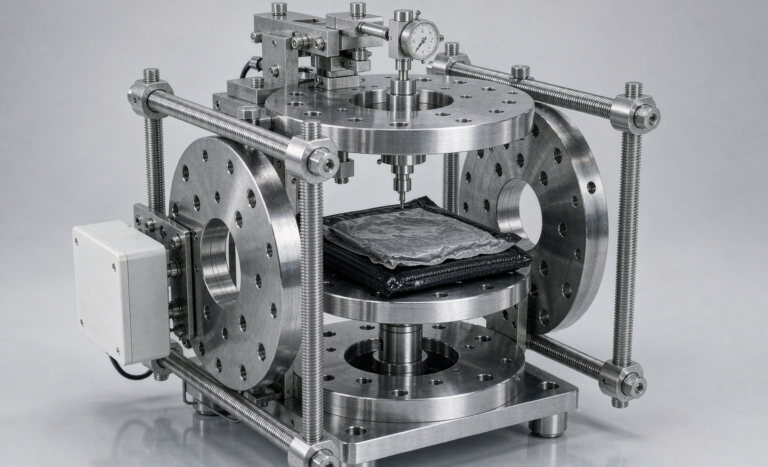
Uniformity matters more than the number itself. What you want is every cell in a fixture seeing pressure within roughly 10 percent of its neighbors, which depends on pressure-plate flatness, bolt torque sequence, and spring or pneumatic compliance. This is why I treat fixture maintenance as a yield lever: a warped plate in position 37 does not fail loudly, it quietly produces cells with slightly high DCIR, and you find it weeks later in the grading data as a cluster. When I audit a supplier, I ask to see fixture pressure verification records, not just the specification sheet.
Building the Formation Recipe: Wetting, Current Steps and Temperature
A semi-solid formation recipe has four ingredients: wetting time, current steps, rest windows, and temperature.
Wetting comes first. The cell is held at a controlled temperature, commonly 40 to 60 degrees Celsius, for 8 to 24 hours before any current flows, so the semi-solid electrolyte penetrates the full electrode thickness. Rushing this stage saves hours today and buys capacity scatter tomorrow, because partially wetted regions behave like small cells with higher internal resistance nested inside a bigger one.
Then the first charge runs in slow steps, often C/20 to C/50 for the initial portion, sometimes with a hold at an intermediate voltage while the electrolyte system finishes curing in-situ, before stepping up toward full charge. Degassing and venting management between steps matters on chemistries that generate gas while the interphase forms. After the first discharge, cells rest 12 to 36 hours while we log open-circuit voltage drift.
The arithmetic of the first cycle is worth internalizing. A cell that charges 3.42 Ah and discharges 3.05 Ah has a first-cycle CE of 89.2 percent; the missing 0.37 Ah is gone for the life of the cell. Multiply that by a million cells and you can see why formation recipe changes are change-controlled documents at any serious battery manufacturer, with retention samples pulled before and after every revision.
Where Yield Is Won and Lost on the Line
Yield loss is a waterfall, and formation is one of the deepest pools in it. On a maturing semi-solid line, I expect formation and grading together to reject somewhere between 5 and 12 percent of cells, and I get nervous when the number is much lower, because that usually means the rejection criteria are loose rather than the process perfect.
The useful discipline is attribution. On a recent 10,000-cell lot, the reject waterfall looked like this: 3.1 percent low capacity, 2.4 percent high self-discharge, 1.8 percent high DCIR, and 1.5 percent swelling or electrolyte leakage, with the remainder caught at other stations. Each bucket points to a different upstream cause: capacity scatter traces to coating and wetting, self-discharge to metallic particulates or separator defects, DCIR to pressure and interface quality, and swelling to gas generation.
Formation is also where the money sits. Fixtures are capital-intensive, a cell occupies one for 24 to 72 hours, and floor space, energy and fixture count scale directly with cycle time. A room of 500 fixtures cycling every 30 hours produces about 400 cells per day; shortening the recipe by 6 hours buys 25 percent more throughput from the same capital, which is why recipe compression is the most contested engineering argument on any production ramp. My rule is to compress only what the data proves is idle time, never the wetting or rest windows that grading data validates.
Grading and Binning: Turning Cells Into Matched Packs
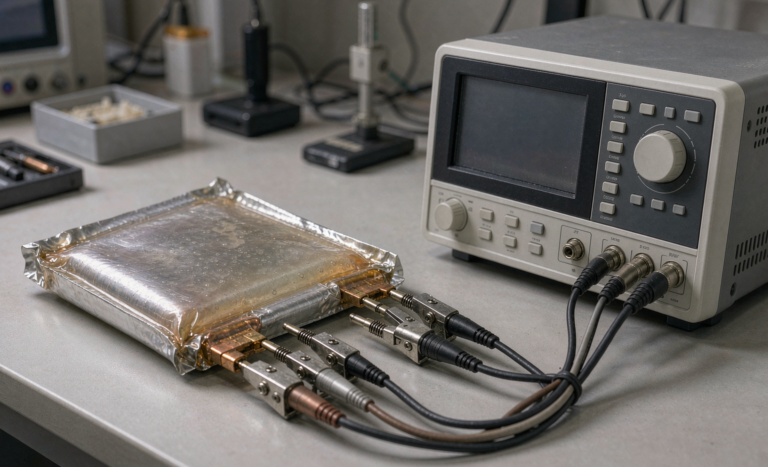
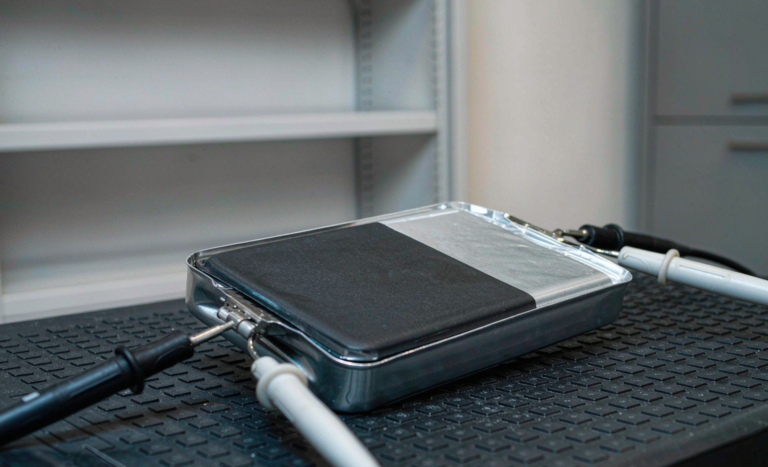
After formation, every cell is graded: full-capacity measurement, DCIR at a defined state of charge and temperature, open-circuit voltage, and self-discharge tracked as voltage drop over time, often quoted as a K-value in millivolts per day. Then cells are sorted into bins.
Typical bins I specify are capacity within plus or minus 1.5 percent, DCIR spread under 10 percent within a bin, and OCV matched within 10 millivolts. Why so tight? Because a pack is governed by its weakest cell. Put a cell 3 percent below its neighbors into a series string and, without aggressive balancing, the pack delivers roughly 3 percent less usable energy forever, and that cell cycles deeper every round, ages faster, and drags the whole string with it.
For semi-solid packs the stakes are slightly higher because cell-to-cell spread can run wider than on mature liquid-electrolyte lines, especially early in a program. That is not a reason to avoid the technology; it is a reason to buy from a manufacturer who bins honestly and tells you the bin mix you will receive across a production year. Ask how bin consistency is guaranteed for repeat orders, because a pack designed around one capacity bin behaves differently when month-eight shipments arrive dominated by a different bin.
What to Ask a Manufacturer About Formation and Yield
If you are sourcing semi-solid cells or a custom battery solution built on them, formation and yield data is the fastest way to separate a real factory from a trading office. Before I sign a supply agreement, my checklist looks like this:
- First-cycle Coulombic efficiency distribution for the lot you will actually receive, not a datasheet headline number.
- How formation stack pressure is set, verified and maintained across fixtures, and how often pressure-plate flatness is re-checked.
- The K-value rejection threshold and the sampling plan behind it, because self-discharge defects are statistical and a 100 percent screen needs a defined method and dwell time.
- DCIR test temperature, bin definitions, and whether bin mix is guaranteed across your order schedule.
- Traceability from finished cell back to fixture position, because pressure clusters are only findable with that mapping.
- How yield is reported: by lot, by station, with Pareto charts and root-cause notes.
A manufacturer who can produce that data on request is a manufacturer who manages formation rather than surviving it, and that discipline shows up later as pack consistency in your field fleet.
Frequently Asked Questions
How long does formation take for a semi-solid state battery?
For a prismatic semi-solid cell, expect 24 to 72 hours end to end: 8 to 24 hours of wetting or soak, slow first charge with rest windows, first discharge, then 12 to 36 hours of aging and self-discharge observation before grading. Cycle time is the main driver of formation cost, so suppliers constantly work to compress it, and the ones worth buying from compress only the steps their grading data proves are idle.
What is a good first-cycle Coulombic efficiency for a semi-solid cell?
Between 85 and 92 percent is typical for the semi-solid cells I have qualified, slightly below mature liquid-electrolyte graphite cells because the semi-solid matrix passivates more internal surface area. What matters more than the absolute number is consistency: a tight first-cycle CE distribution signals a controlled process, while scatter of more than a couple of points lot-to-lot predicts capacity binning pain downstream.
Why does stack pressure matter during formation?
Semi-solid electrodes are compliant, so pressure controls how the electrolyte network and the interphase develop. Too little pressure invites micro-delamination and voids that concentrate current and can trigger lithium plating; too much squeezes the matrix and raises impedance permanently. Pressure also changes as the stack expands on first charge, so fixture compliance and verification records matter as much as the setpoint itself.
Can yield problems from formation be fixed later in pack assembly?
No. Formation defects are baked into the cell. Grading at pack assembly can only route bad cells out, not repair capacity loss, high self-discharge or elevated DCIR. That is why I treat pack-level rejection rates as a lagging indicator: when assembly starts rejecting cells, the root cause sits in formation wetting, pressure or recipe drift, and the fix belongs on the formation line.
How much does formation add to battery cost?
Formation is typically one of the largest non-material cost items in cell manufacturing because it ties up capital-intensive fixtures for one to three days per cell. Fixture count, floor space and energy all scale with cycle time, so a room of 500 fixtures cycling every 30 hours yields roughly 400 cells per day. Recipe compression converts directly into capacity, which is why it dominates ramp economics at every growing battery manufacturer.
What should I request from a supplier to verify formation quality?
Five things: the first-cycle CE distribution for your lot, fixture pressure verification and maintenance records, the K-value rejection threshold with its sampling plan, DCIR test temperature plus bin definitions with a bin-mix guarantee for repeat orders, and cell-to-fixture traceability. A supplier who answers all five with data instead of marketing pages is managing formation as a process rather than hiding it, and that is the supplier whose packs stay consistent across a fleet.
Further Reading
References