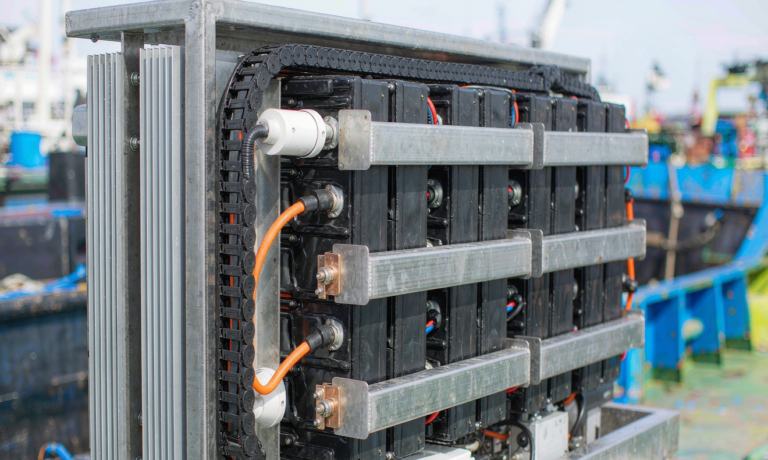
Battery Solution for Border Checkpoints and Remote Gates
Why Border Checkpoints Need Reliable Standalone Power
From my years deploying battery systems for transport and security sites, I have learned that a border checkpoint is one of the harshest places to keep electronics alive. Many checkpoints sit far from a stable grid, or they lose mains power during storms and still have to lift barriers, read license plates, and log every vehicle. A gate that will not open is more than an inconvenience. It is a security gap that stops trade and puts staff at risk.
A purpose-built battery solution for border checkpoint remote gate control removes that single point of failure. Instead of depending on a cable that can be cut or a transformer that can trip, the site runs on a local energy buffer sized for the real load. In this article I walk through how I size, build, and certify these systems for Horizon Power clients operating in remote and cold environments, and why lithium beats lead-acid once the site is more than a few hours from a service depot.
Sizing the Battery for Gate Barriers and ANPR Cameras
The first step is load profiling. A typical remote gate draws three kinds of load. The barrier motor peaks at 400 to 800 watts for two to four seconds each cycle. The ANPR camera, biometric terminal, and edge controller pull a steady 40 to 120 watts around the clock. A small heater or cooler for the cabinet adds 30 to 80 watts in extreme climates. I log this for a full week before I pick a capacity.
For a site opening 300 vehicles per day, the motor duty is roughly 1.2 kilowatt-hours, and the always-on electronics add another 2.5 to 3.0 kilowatt-hours. I size the lithium pack to at least 1.5 times daily throughput so the state of charge stays inside the healthy 20 to 90 percent window. A 5 kilowatt-hour LiFePO4 block is the common starting point, scaled up if the checkpoint also runs lighting, a weighbridge, or a booms barrier for trucks.
- Barrier motor surge: 400 to 800 W for 2 to 4 s per cycle
- Always-on controller and camera: 40 to 120 W continuous
- Climate control for the enclosure: 30 to 80 W in harsh sites
- Design margin: minimum 1.5x daily energy throughput
- Target autonomy: 2 to 5 days standalone, longer with solar
I also run a depth-of-discharge check, not just a watt-hour sum. A barrier that opens 600 times a day doubles motor duty but barely moves the always-on load, so the pack must deliver current without the voltage sag that slows the arm. I model the worst-case minute, a truck boom plus heater plus camera flash at once, and confirm the pack holds above the motor cutoff. That worst-case minute is what separates a spec sheet from a system that survives a busy border morning.
Lithium Chemistry Choice: LiFePO4 for Harsh Sites
I default to lithium iron phosphate, LiFePO4, for border work. Its thermal runaway threshold is well above 200 degrees Celsius, which matters when a cabinet bakes in summer sun or freezes in winter. Cycle life is 3,000 to 6,000 cycles at 80 percent depth of discharge, so a system installed today is still healthy after eight to ten years of daily use.
Nickel-based cells give higher energy density but they are fussier about temperature and balance. At a remote gate where nobody checks the battery every week, I want the chemistry that forgives neglect. LiFePO4 holds voltage flat across most of the discharge, so the barrier motor sees steady torque even at 30 percent state of charge. That flat curve also protects the sensitive camera electronics from brownouts during a lift cycle.
Solar Hybrid and Cold-Climate Operation
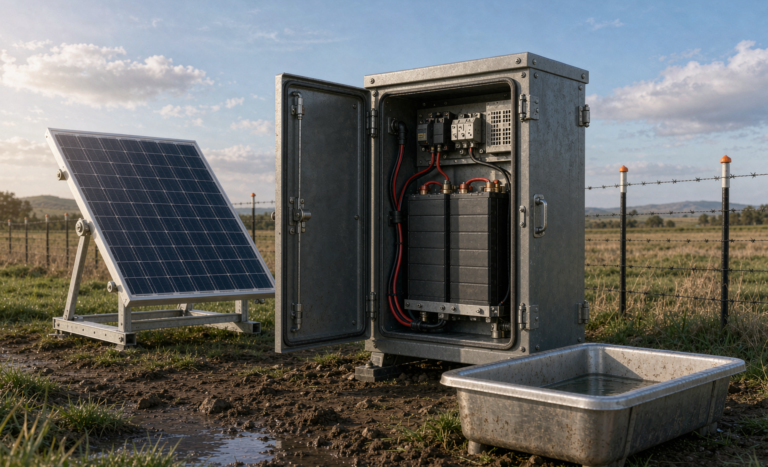
Most remote gates pair the battery with a small solar array. A 600 to 1,200 watt panel set keeps the block topped through long sunny stretches and cuts generator runtime to zero. The charge controller must support lithium charging profiles, not just lead-acid, or the pack will sit undercharged and the gate will fail on the first cloudy week.
Cold is the real test. Below 0 degrees Celsius, LiFePO4 accepts charge poorly and can plate lithium if forced. I specify a self-heating pack or a heated enclosure that warms cells above 5 degrees Celsius before the solar or grid charger engages. For sites down to minus 30 degrees Celsius, I add 20 to 30 percent extra capacity because available energy drops as chemistry slows. Horizon Power ships heated variants for exactly these border climates, and the BMS keeps the heater on the cells, not the whole cabinet, to save energy.
Certifications and Enclosure Rating for Field Use
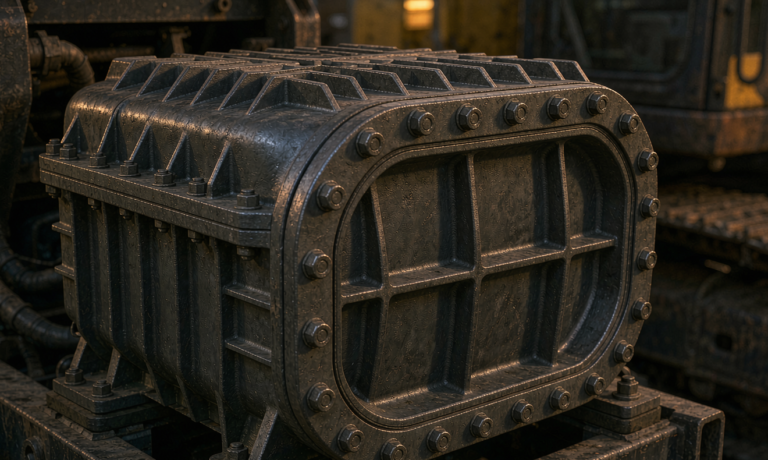
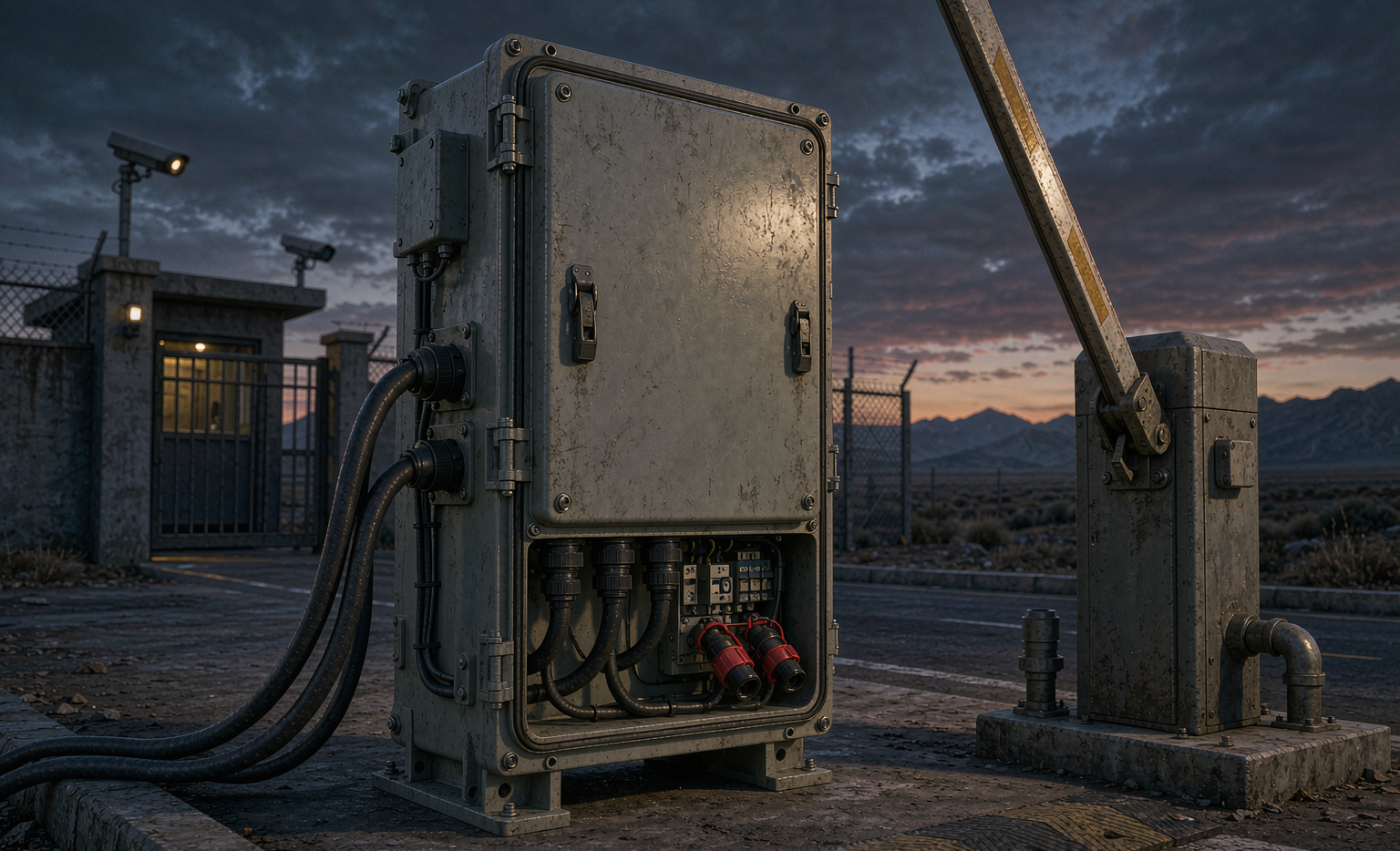
A battery at a checkpoint is a safety-critical asset, so paperwork is not optional. Every pack I ship passes UN38.3 for transport and IEC 62133 for cell and pack safety. The enclosure carries a minimum IP54 rating for dust and splash, and IP65 where the cabinet is exposed to driving rain or snow. For sites near coastlines I step up to anti-corrosion coating on the steel shell.
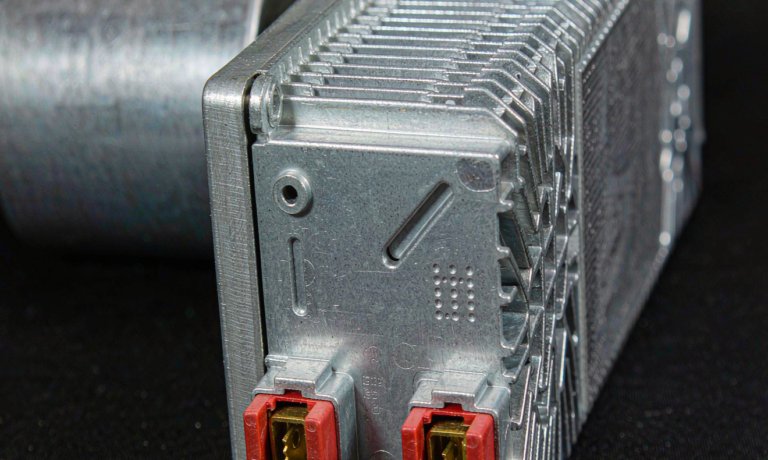
I also match the battery management system to the site. It must report state of charge, cell temperature, and fault codes over RS485 or CAN so the gate operator can see health from a control room. A good BMS disconnects on over-temperature or over-current within milliseconds, which protects both the barrier and the people nearby. I refuse to ship a pack without string-level monitoring because one weak cell is the usual cause of a silent field failure.
Communications, Redundancy, and Remote Health
A remote gate is only as good as the warning before it fails. I add a cellular or satellite link so the BMS pushes state of charge and alarm flags to a dashboard the operator already watches. For checkpoints where a closed gate blocks a national road, I build in a second parallel pack that carries the load if the first one is taken offline for service. The switchover is automatic and the barrier never misses a cycle.
Cybersecurity is part of the brief too. The battery link runs on a separate VLAN from the ANPR network, with a read-only management port, so a camera compromise cannot command the power system. These are small details, but at a border site they are the difference between a clean audit and a flagged one.
Total Cost of Ownership Over Ten Years
Buyers often compare the lithium pack price against a lead-acid bank and flinch at the upfront number. The fair comparison is total cost of ownership. Lead-acid needs replacement every two to three years, drinks water, and loses capacity in cold, so a decade of checkpoints means three or four swaps plus truck rolls to remote sites. A LiFePO4 block runs the full term with one annual visit. When I show clients the per-year cost, the lithium battery solution for border checkpoint remote gate work usually lands at half the lead-acid figure, and that ignores the downtime a dead lead-acid bank causes during a holiday rush.
Installation and Maintenance in Remote Locations
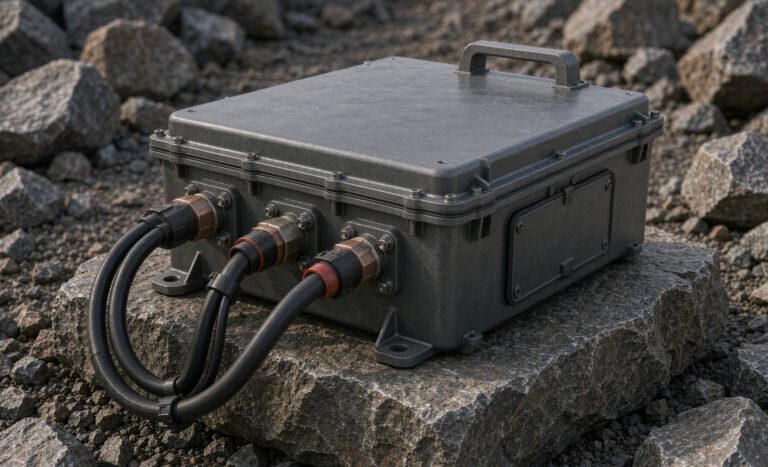
Field installation should be simple because the technician may fly in for one day. I mount the enclosure on a concrete pad or pole bracket, run conduit for the DC feed to the gate motor, and commission the BMS over a laptop. There is no electrolyte to top up and no equalization charge to schedule, which is why clients pick lithium over lead-acid for these sites.
Maintenance is light. I recommend a remote health check every quarter and a physical inspection once a year. The BMS log tells you if a cell is drifting before it fails. That is the difference between a battery that surprises you and one you retire on your own schedule, and it is the reason a lithium battery solution for border checkpoint remote gate deployments keeps total cost of ownership low over a decade.
Frequently Asked Questions
How long does a border checkpoint battery last without grid power?
With a 5 kilowatt-hour LiFePO4 block and a 300-vehicle daily load, the site runs two to three days standalone, and longer with solar support. I size autonomy to the local outage history, usually two to five days, because that covers the typical storm or cable-cut window.
What temperature range can a remote gate battery handle?
Standard LiFePO4 operates from minus 20 to 60 degrees Celsius for discharge. With self-heating, safe charging extends to minus 30 degrees Celsius. I always confirm the site low before shipping so the pack matches the climate rather than the catalog.
Do these batteries meet transport and safety certifications?
Yes. Each pack is built to UN38.3 and IEC 62133, and the enclosure meets IP54 or IP65. I provide the test reports so the operator clears customs and site audit without delay, which matters for cross-border equipment moves.
Can the battery power the ANPR camera and barrier together?
Yes. The pack supplies steady low-wattage electronics and the short motor surge from the same buffer. The BMS caps surge current so the camera never browns out during a lift cycle, and the flat LiFePO4 voltage keeps torque consistent.
How much solar do I need for an off-grid checkpoint?
A 600 to 1,200 watt panel set offsets most daily use at a single gate. I size the array to local insolation and add a generator bypass only for sites with weeks of cloud cover, since the battery already covers the daily gap.
Further Reading
References