Battery Solution for Mining Shaft Sinking Equipment
As a senior lithium battery engineer who has spent the last decade specifying power systems for underground operations, I can tell you that few applications are as unforgiving as shaft sinking. When you are excavating a vertical mine shaft hundreds or even a thousand meters below the surface, there is no quick exit, no easy way to swap a failed pack, and almost no tolerance for a thermal event. A battery solution built for surface material handling will not survive this environment. In this article I walk through how we design custom battery solutions for shaft sinking equipment, from the sinking hoist to the mucker, and why the engineering details matter more than the headline capacity number.
The Equipment That Draws Power During Sinking
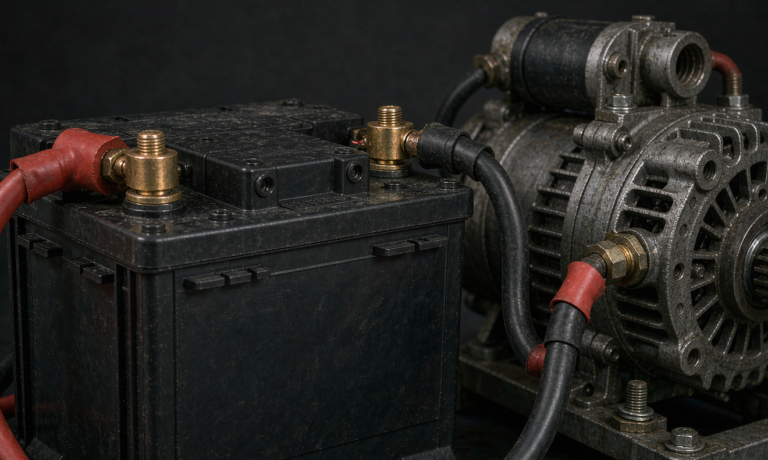
During shaft sinking a battery solution must serve several distinct machines, each with its own load profile. The sinking winder, or hoist, moves men and materials up and down in the kibble and needs high peak current for acceleration. Rock loaders, often called muckers, clear blasted rock from the shaft bottom in hard intermittent bursts. Concrete placers and grouting pumps line the shaft wall with a steady mid power draw.
Dewatering pumps fight continuous inflow and auxiliary ventilation fans keep the air breathable around the clock. Because no single duty cycle fits all of them, we usually deploy a family of lithium battery packs sized to each machine rather than one oversized unit. That approach keeps weight where it belongs and lets the site standardize on a common cell format and charger.
We also power the shaft drilling rigs and the temporary conveyance lighting from the same battery solution, because running separate generators for each consumer multiplies fuel, noise and exhaust risk in a closed shaft. Consolidating the load onto a few well monitored packs is simpler to certify and simpler to keep alive when the crew is a kilometer below the surface.
Why LFP Chemistry Leads Underground
For any underground lithium battery application, chemistry choice is a safety decision first and an energy decision second. We standardize on lithium iron phosphate, or LFP, for shaft sinking equipment. LFP has a thermal runaway onset near 270 degrees Celsius, compared with roughly 150 to 180 degrees for nickel manganese cobalt, or NMC. In a confined shaft where heat has nowhere to go, that margin is the difference between a manageable fault and a catastrophe.
LFP also contains no cobalt, which removes a supply chain and thermal risk at once. The trade off is lower energy density, about 120 to 160 watt hours per kilogram versus 180 to 250 for NMC, but underground equipment has volume to spare and values safety over range. When a single cell failure can threaten an entire crew, the chemistry with the widest safety window is the only responsible choice.
Another practical advantage is the flat discharge curve and stable behavior across a wide temperature band. Sinking shafts pass through wet, cold rock near the collar and warm rock at depth, so the pack may see 5 degrees Celsius on one shift and 35 degrees Celsius on the next. LFP holds capacity and impedance far better across that swing than chemistries that are already stressed near their thermal limits, which keeps the mucker responsive whether the shaft is half sunk or fully deep.
Enclosure, Ingress Protection and Explosion Proof Design
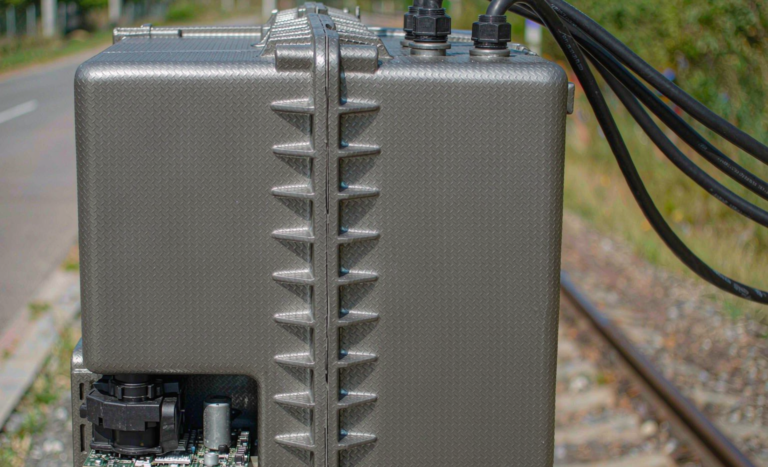
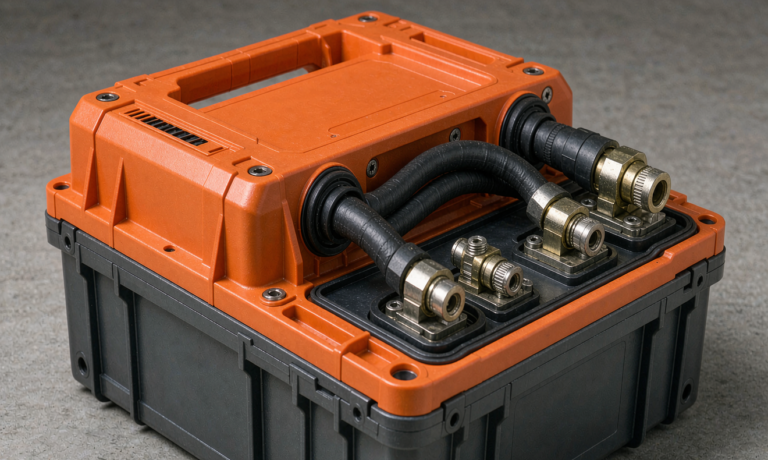
Shaft bottoms are wet, dusty and often rich in methane, and that combination defines the enclosure. We build to IP67 as a floor, meaning the pack survives temporary submersion and total dust exclusion, and we pressure test every enclosure before it ships. Where the atmosphere is classified as hazardous, the battery solution is engineered to intrinsic safety or flameproof standards rather than simply sealed.
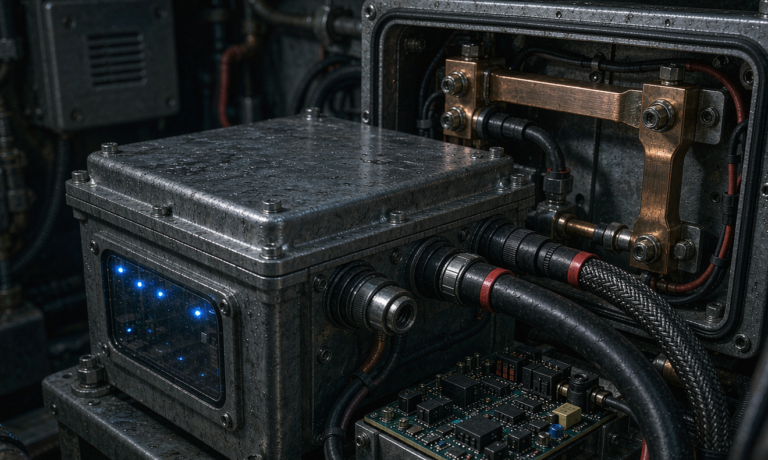
Cable glands are certified, terminals are shrouded, and any relay or contactor sits inside a pressurized or encapsulated compartment. A custom battery solution for this duty is as much a mechanical package as an electrochemical one. We also specify corrosion resistant coatings because the saline and acidic mine water at depth will find any weak point within a season.
Thermal management is part of the enclosure too. Cold inflow water can drop pack temperature fast, so we add controlled pad heating fed from the pack itself and switched by the BMS only when cells fall below their healthy window. The goal is never to overheat but to keep the lithium battery in the band where it can both deliver peak current and accept charge during the short opportunity windows underground.
BMS, Thermal Runaway Containment and Remote Monitoring
Underground you cannot watch the pack directly, so the battery management system, or BMS, carries the load. We spec a redundant architecture in which cell voltage and temperature are sampled at every cell and a second independent watchdog monitors the first. Cell level fusing limits fault current before it can propagate to neighboring cells.
For thermal runaway containment we use ceramic separators, dedicated vent channels and a steel enclosure that directs any off gas away from the shaft rather than into it. Remote monitoring reports state of charge, cell imbalance and internal resistance to the surface control room over a hardened link, so a drifting cell is flagged and isolated long before it becomes a trip. That telemetry is what turns a black box into a managed asset.
On top of protection we run active cell balancing so that after months of unequal loads the pack does not develop a weak string that quietly loses capacity. For shaft sinking the balancing current is modest but continuous, which is exactly what a slow, deep campaign needs, and it keeps the lithium battery honest across the thousands of shallow cycles a sinking project actually accumulates.
Sizing, Charging and Cycle Life in Continuous Operations
Sizing a battery solution for sinking starts with the duty cycle, not the catalog. We log the actual current profile for at least a week, then size to the 95th percentile peak with headroom for cold starts and blast related surges. Depth of discharge is held near 80 percent to protect cycle life, and a well engineered LFP pack delivers 3,000 to 6,000 cycles at that depth.
In a 24 hour sinking campaign that translates to several years of service before capacity falls below the useful threshold. Charging happens during blast and walkout windows using explosion proof chargers, so the pack is topped while the crew is clear of the shaft. Short opportunity charges in those windows beat one long nightly charge for both pack health and site safety.
We also derate the usable energy by temperature so the pack never pulls more current than its cells can safely give on a cold shift. A custom battery solution that simply quotes nameplate amp hours without a temperature model will let the hoist sag exactly when the crew needs full power, and that is the kind of failure that erodes trust in the whole electrification program.
Compliance and the Certification Path
No mining battery solution ships without a paper trail. Transport to site requires UN38.3, the eight test battery covering altitude simulation, thermal, vibration, shock, external short, impact, overcharge and forced discharge. In service the pack must meet IEC 62133 for portable cells and IEC 62619 for industrial stationary and motive applications, which adds explicit requirements for thermal runaway propagation resistance.
For hazardous locations we pursue ATEX or IECEx certification aligned to the specific mine zone, whether it is a gas zone or a dust zone. We keep every test report in the asset file so the site engineer can demonstrate compliance on demand and so the next audit is a document review rather than a redesign. A custom battery solution is only as good as the evidence that backs it.
Local regulators often layer their own rules on top of the international standards, and we treat that as part of the design rather than a surprise at commissioning. Early alignment with the site safety officer on zone classification, charging location and ventilation interlocks prevents the costly late changes that sink a project schedule more surely than the rock itself.
What battery chemistry is safest for underground mining equipment?
LFP is the safest mainstream choice because its thermal runaway threshold sits near 270 degrees Celsius, well above the 150 to 180 degrees typical of NMC chemistries. In a confined shaft that margin protects against cascading failure and gives the crew time to respond.
How do you size a battery for a shaft sinking hoist?
We record the real current profile for at least a week, size to the 95th percentile peak current with cold start headroom, and limit depth of discharge to about 80 percent to preserve cycle life and avoid unexpected shutdown.
Are lithium batteries allowed in explosive mine atmospheres?
Yes, but only as a certified battery solution. The pack must meet ATEX or IECEx requirements for the specific mine zone, with flameproof or intrinsically safe enclosures and certified cable glands verified by a notified body.
How long does a mining battery pack last underground?
A properly sized LFP pack runs 3,000 to 6,000 cycles at 80 percent depth of discharge, which usually means several years in a continuous sinking campaign before capacity drops below the useful working threshold.
What certifications does a mining battery solution require?
At minimum UN38.3 for transport, IEC 62133 for cells, IEC 62619 for the industrial pack, and ATEX or IECEx for hazardous locations, all backed by full third party test reports kept in the asset file.
Can shaft sinking batteries be fast charged between shifts?
Yes. We use explosion proof chargers during blast and walkout windows for short opportunity charges, which is healthier for the cells than one long daily charge and keeps the pack ready when the crew returns.
Shaft sinking is a marathon run in the worst conditions a lithium battery will ever face, and the right battery solution is the one engineered for those conditions rather than adapted from a warehouse forklift. If you are planning a sinking campaign and want a custom battery solution matched to your hoist, mucker and dewatering duty, the details above are where the conversation should start.
Further Reading
References
Request a Quote for Your Battery Solution for Mining Shaft Sinking Equipment Project
Tell us your target voltage, capacity, continuous and peak current, size limits, certification requirement and annual volume. Our engineering team will return a buildable pack design with a quotation within 24 hours.