Battery Solution for Road Marking and Line Painting Equipment
Why Line Painting Crews Are Leaving Diesel Behind
For two decades the road marking truck was a rolling diesel generator. The compressor that feeds the glass bead gun, the pump that meters the paint, and the hydraulic lift that raises the operator platform all drew from one noisy, idling engine. As a lithium battery engineer at Horizon Power I have spent the last several years helping municipal fleets and line painting contractors replace that engine with a purpose-built battery solution. The drivers are practical rather than ideological. Night closures in dense cities no longer tolerate diesel exhaust drifting into residential streets, an electric line painting rig is measurably quieter at the curb, and the energy cost per kilometer of stripe is a fraction of what a diesel compressor burns. Maintenance also drops sharply when you remove the engine, the fuel tank, and the hydraulic circuit from the equation.
The contractors who switch first are the ones working airport aprons, parking structures, and city centers where idling bans are enforced after dark. A lithium battery pack that silently runs the compressor and bead system lets a two-person crew lay clean, uninterrupted lines without waking the block. That operational quiet is the single feature that sells the conversion more often than any spec sheet.
The economics close the deal. A diesel compressor burns fuel every minute it spins, even when the gun is paused between passes, whereas an electric pack only draws when the tool actually runs. Over a striping season of hundreds of shift hours, the energy and service savings typically pay back the battery conversion inside eighteen months, after which the rig is simply cheaper to operate than the diesel unit it replaced. For a public works department justifying a capital request, that payback window is what gets the line item approved.
The Operating Environments a Marking Battery Must Survive
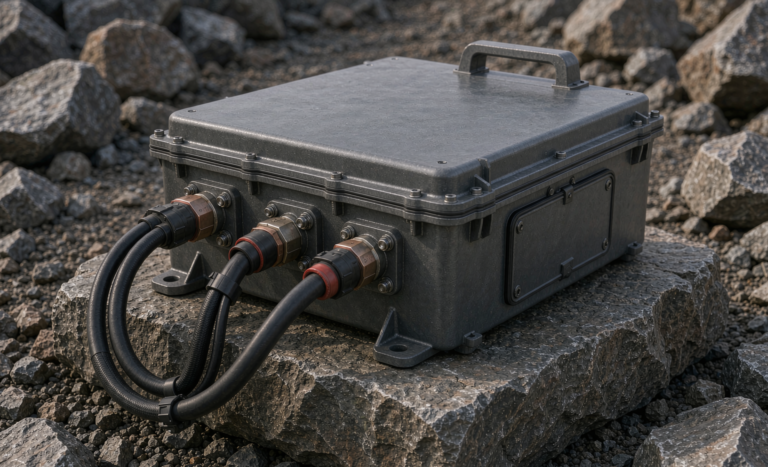
Road marking is a harsh duty cycle even though the vehicle itself moves slowly. The bead gun and the spray pump generate constant vibration, and the rig spends its life on uneven shoulders, expansion joints, and freshly graded shoulders that send shock loads into the pack. I spec enclosures to at least IP65 so that the fine glass bead dust, road grit, and the inevitable water rinse after a paint change cannot reach the cells. In the summer striping season the pack can sit in ambient temperatures above 40 degrees Celsius next to a hot compressor, while in winter night work the same pack launches at minus 10 degrees Celsius.
Thermal swing is the real enemy. A cell that is happy at 25 degrees Celsius degrades twice as fast if it is held at 45 degrees Celsius for an entire shift, and a pack that cannot warm its electrolyte in winter will deliver only a fraction of its rated capacity. The enclosure design has to manage both directions without active air conditioning, which is why passive conduction cooling plus a modest self-heating film is the layout I recommend for marking equipment.
Sizing a Battery Pack for a Full Night of Striping
Sizing starts with the load profile, not with a catalog number. A typical electric line painter draws from five subsystems. The compressor that supplies bead gun and spray air is the largest, often 1.2 to 1.8 kW while running but cyclical rather than continuous. The bead dispenser motor adds roughly 0.3 to 0.5 kW. The paint pump is around 0.2 to 0.4 kW. LED work lights and the arrow board draw 0.15 to 0.3 kW, and the controller, sensors, and inverter losses take another 0.1 kW. Across an eight hour shift with the compressor cycling at about 40 percent duty, the delivered energy lands in the 8 to 12 kWh range.
On a 48V architecture that means a pack of roughly 200 to 250 Ah nominal. I reserve 20 percent as a buffer so the usable window is about 7.7 to 9.6 kWh, which covers a full shift with margin for an extended job. A 48V 230Ah LFP module is the sweet spot I ship most often: it keeps cable cross-section manageable, stays under the low-voltage directive threshold, and still delivers the peak current the compressor needs on startup.
Peak current is the part newcomers underestimate. A reciprocating compressor can draw three to four times its running current for a second or two on each start, and if the pack and inverter cannot supply that surge the compressor trips and the line quality suffers. I size the battery management system and the busbars for at least 150A continuous and 400A for short pulses, and I pair the pack with a pure sine inverter sized to the compressor locked rotor current rather than its running rating. Getting this right is the difference between a rig that lays a clean bead every pass and one that stalls on a humid night.
Cell Chemistry: Why LFP Leads in Municipal Fleets
For road marking and line painting equipment the chemistry debate ends quickly in favor of lithium iron phosphate, or LFP. A municipal striping rig cycles every working night, so cycle life dominates the total cost of ownership. LFP routinely delivers 3000 to 6000 full cycles before it reaches 80 percent capacity, while nickel manganese cobalt chemistries fade faster under the same daily deep cycling and carry a meaningfully higher thermal runaway risk in a dust and vibration environment.
The weight penalty of LFP is real but irrelevant here. A line painting truck is already heavy with paint and bead payload, and the battery sits low in the chassis where mass helps stability. What matters is that the pack survives five to eight years of nightly abuse, passes the safety case without exotic thermal barriers, and keeps its voltage flat through the discharge so the compressor never sees a sag. For a custom battery solution in this application, LFP is the default I will not apologize for.
Charging, Swapping, and Cold Weather Reality
Most fleets charge at the depot between shifts, and a 48V pack of this size accepts a 0.3C charge in roughly three hours on a basic industrial charger. I prefer opportunity charging at 0.5C during the day if the crew has a break, because it lets a smaller pack cover the route and shrinks the capital cost. For airports and 24 hour operations, a swap pack design is cleaner: two standardized modules, one on the rig and one on the charger, so downtime becomes a two minute mechanical exchange instead of a charging wait.
Cold weather needs respect. Below zero degrees Celsius a lithium cell loses usable capacity and charges reluctantly, and forcing current into a frozen cell damages it. The pragmatic fix is a low power self heating film that brings the pack to a safe window before the main charge begins, and a derating curve that tells the inverter to cap compressor current when the electrolyte is cold. I have measured 25 to 35 percent capacity recovery simply by warming the pack to 10 degrees Celsius before the shift starts.
Certifications and Build Quality That Matter
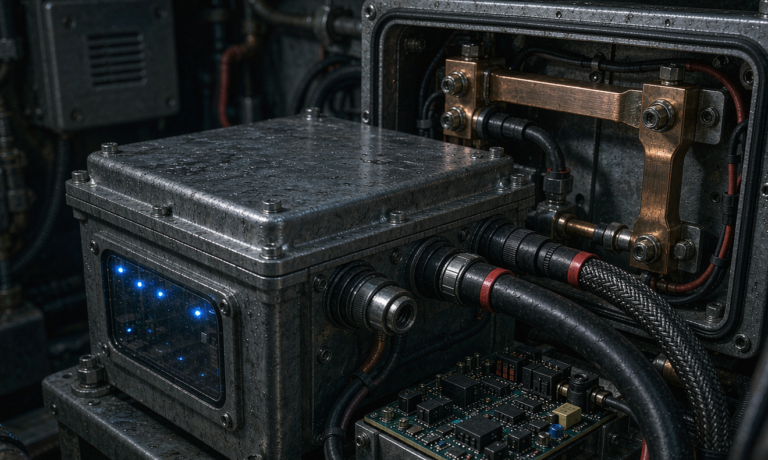
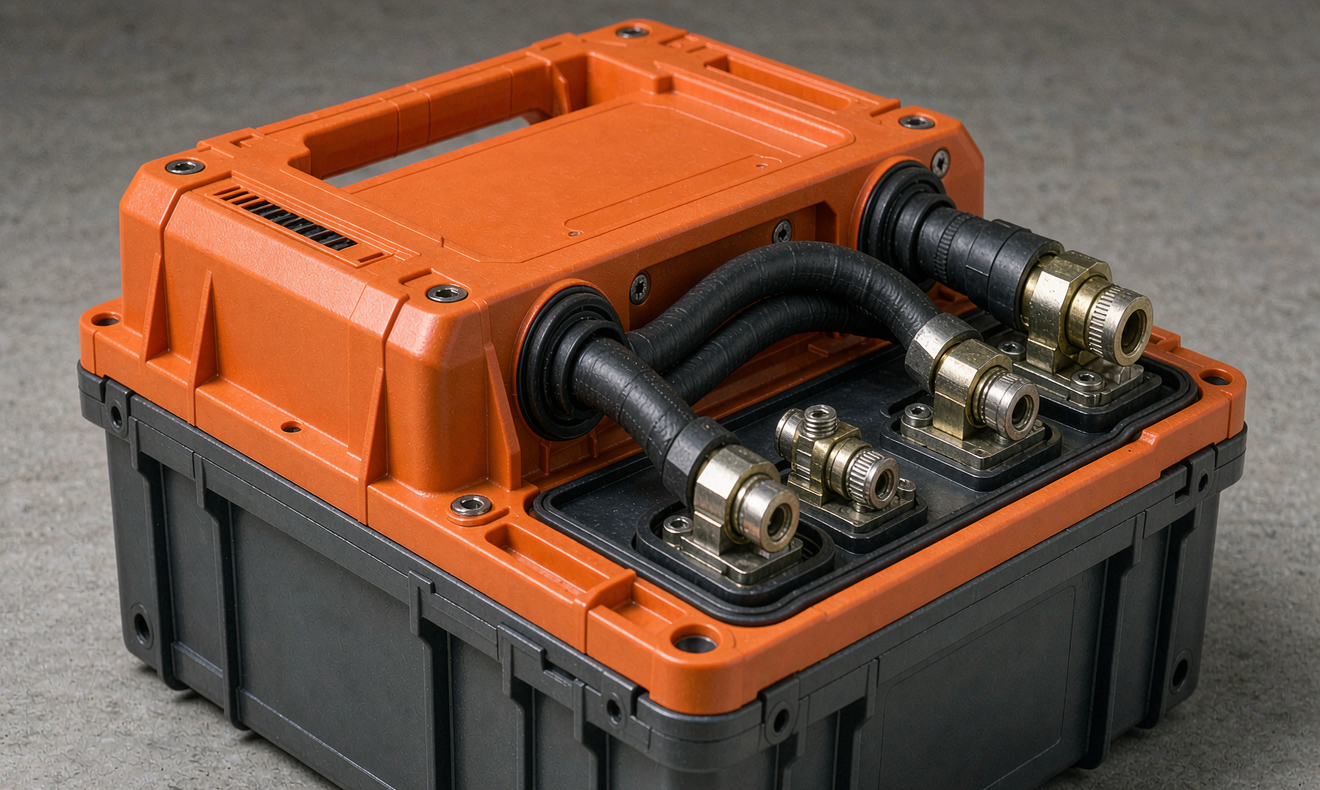
A battery solution for public works equipment is not a consumer product, and the paperwork matters as much as the cells. Every pack I release for road marking use carries UN38.3 transport certification and is built to IEC 62133-2 for the cell and pack safety requirements. The enclosure is validated to IP65 ingress and the module is vibration tested to IEC 60068-2-64 random profile so that bead gun chatter and shoulder impacts do not loosen terminations over time.
Build quality shows up in the details: tin plated busbars torque checked to spec, a battery management system that logs cycle history for the maintenance shop, and clearly labeled service disconnects so a technician can isolate the pack in seconds. When a contractor asks for a custom battery solution, these are the items I refuse to compromise, because a failure on a live roadway is not a warranty event, it is a safety event.
Frequently Asked Questions
Can a battery powered line painter run a full shift without recharge?
Yes for the large majority of municipal routes. A 48V 200 to 250 Ah LFP pack delivers 8 to 12 kWh of usable energy, which covers an eight hour night of cyclical compressor, bead, and pump operation with margin. Crews that run longer simply carry a swap module or use opportunity charging during breaks.
What voltage system is standard for road marking equipment?
48V has become the de facto standard. It keeps peak currents reasonable so cable sizes stay practical, remains below the low voltage directive threshold that triggers heavier compliance burdens, and matches the inverter and compressor ecosystem already used in electric work trucks.
How does cold weather affect a line painting battery pack?
Below zero degrees Celsius the cells lose usable capacity and resist charging, which can cut range by 25 to 35 percent if ignored. A self heating film that warms the pack to around 10 degrees Celsius before use recovers most of that loss and protects the cells during the charge cycle.
Is LFP safer than other lithium chemistries for municipal use?
For this duty cycle, yes. LFP has a higher thermal runaway threshold, contains no cobalt, and withstands the daily deep cycling of nightly striping far longer than nickel based chemistries. The lower fire risk is especially valuable when the pack lives in a dusty, vibrating, public works environment.
What certifications should a road marking battery solution carry?
At minimum UN38.3 for transport and IEC 62133-2 for cell and pack safety, with an IP65 enclosure and vibration validation to IEC 60068-2-64. Depot and municipal buyers also expect a documented battery management system with cycle logging and clearly marked service disconnects.
Further Reading
References