Sodium-Ion Battery for Campgrounds and RV Parks
Campground operators ask me a version of the same question every season: how do I stop the evening power rush from maxing out the transformer without spending a fortune on another service upgrade? A sodium-ion battery for campgrounds and RV parks has become my usual answer, because the load shape here is unusual. Sites draw hard for a few evening hours, then sit nearly idle all night, and the whole park sees a summer peak that winter never touches. That pattern rewards a battery with strong partial-state efficiency and good cold-weather behavior, which is exactly where sodium chemistry is strongest. In this guide I walk through sizing, pedestal design, and the code questions that come up on real projects.
I am Karl Huang, a senior lithium battery engineer. For the past decade I have specified and commissioned stationary packs for commercial sites, including marina and RV park shore power. The figures below come from site surveys and commissioning reports I have worked on, and the standards are the ones inspectors actually ask for. Treat this as a working design note rather than a catalog, because utility rules and local codes change by region.
Why Sodium-Ion Fits This Duty Profile
Campground duty is a poor match for the way most people think about batteries. The bank sits at high state of charge through the day, takes a sharp two-to-five-hour discharge as air conditioners and microwaves come on, then recovers slowly overnight. It rarely sees a full deep cycle, and it spends more of its life cold than a indoor system does. Sodium-ion cells handle this well. Layered-oxide cells nominally sit near 3.0 volts and polyanionic cells near 3.2 volts, and both tolerate a wide operating window better than many lithium formulations.
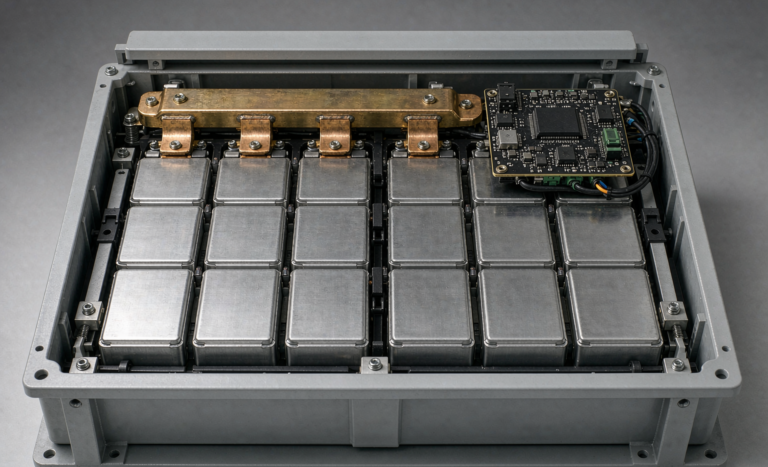
The low-temperature advantage is the practical reason I reach for this chemistry. Sodium-ion cells commonly retain roughly 85 to 90 percent of room-temperature capacity at minus 20 degrees Celsius, and they accept charge at temperatures where a lithium iron phosphate pack would need derating or a heating pad first. For an outdoor cabinet on a concrete pad with no conditioned space, that difference removes a whole layer of thermal hardware. The tradeoff is energy density: at roughly 100 to 160 watt-hours per kilogram, sodium packs are larger for the same kilowatt-hours, so plan the footprint accordingly.
Mapping the Real Electrical Loads
You cannot size a park battery from a nameplate count of sites. I start with a load survey over at least one busy weekend, logging current at the service and at a sample of pedestals. A single RV hookup is typically a 50 amp, 240 volt feed (a 14-50R receptacle) or a 30 amp, 120 volt feed (TT-30R). One roof air conditioner draws about 1.3 to 1.5 kilowatts, and on a hot evening a site with two units plus a fridge and water heater can touch 6 to 8 kilowatts for short periods.
Diversity is what makes storage viable. Not every site peaks at once, so a 40-site park might have 240 kilowatts of connected capacity but only 60 to 90 kilowatts of measured evening demand. The battery targets that measured peak, not the connected sum. I record current at fifteen-minute intervals because a one-hour average hides the short compressor surges that trip breakers. Those intervals also reveal the shoulder hours when the park can recharge from solar or off-peak grid power without touching the transformer. Two weekends of data are usually enough to build a reliable daily profile; guessing from site counts has burned more than one budget I have seen.
- Evening energy. Multiply the measured average evening load by the number of peak hours. A park drawing 70 kilowatts for five hours needs roughly 350 kilowatt-hours before efficiency and reserve.
- Peak shaving target. Decide how many kilowatts you want to clip. A 100 kilowatt inverter can flatten a transformer spike that would otherwise trigger a demand charge.
- Reserve margin. Hold back 15 to 20 percent of capacity for a second hot night or a temporary outage, rather than designing to empty the bank every evening.
- Charging window. Confirm there are enough overnight and midday hours to refill at the planned charge rate, especially on short winter days.
Designing the Pedestal and Distribution Side
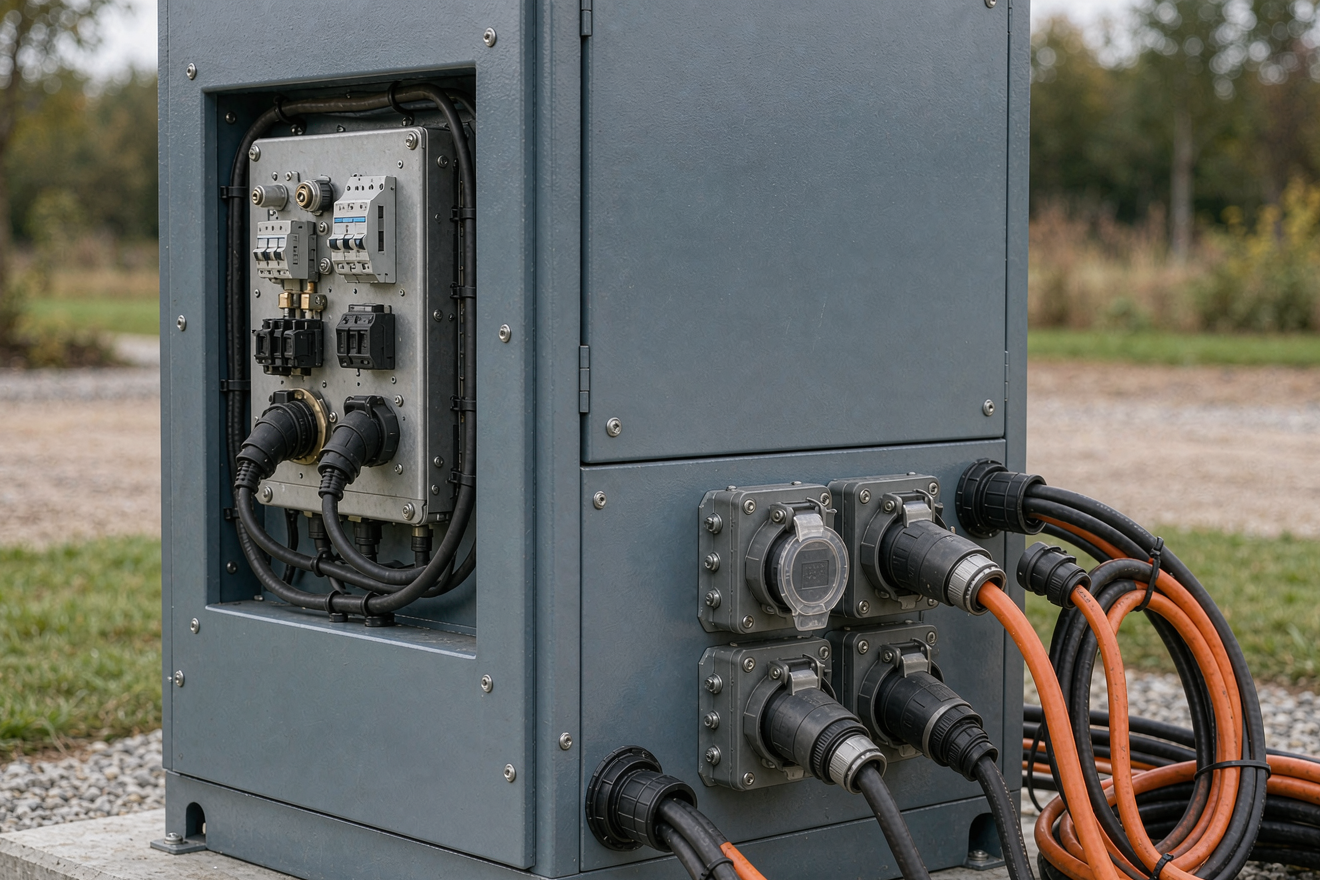
A campground bank is only as good as the distribution feeding the pedestals. I keep the battery and inverter feeding a dedicated subpanel that ties into the park distribution ahead of the individual site breaks, so the system can shave the aggregate without rewiring every hookup. Each pedestal keeps its own breaker and ground-fault protection; the battery does not replace those devices. Where sites are spread out, voltage drop becomes the limiting factor, and I have seen perfectly sized banks disappoint because the far loops sagged more than three percent at peak.
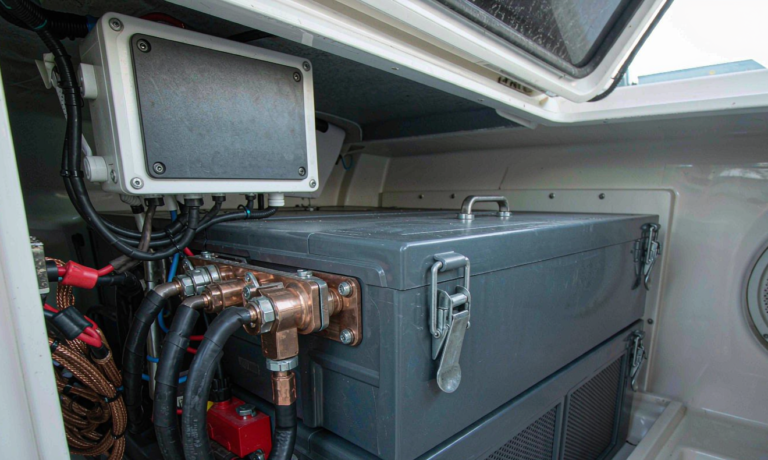
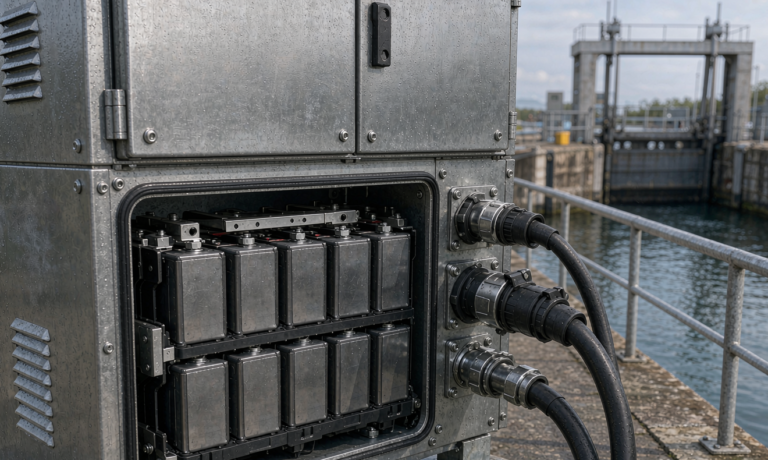
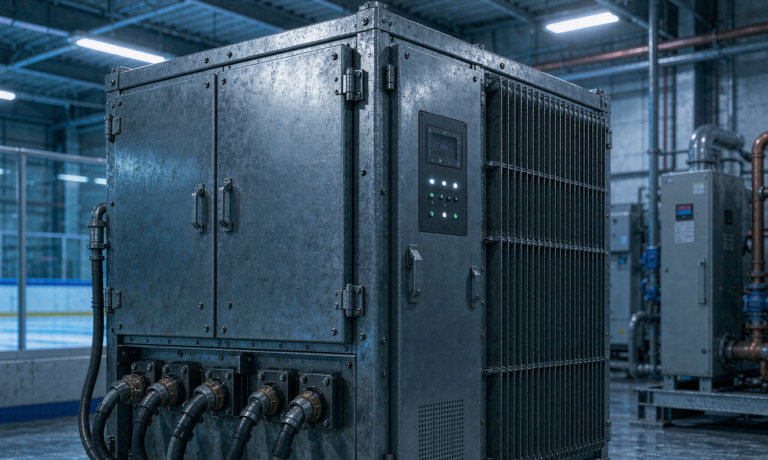
Enclosure choice matters outdoors. Specify a weatherproof cabinet rated NEMA 3R or better, with a sealed battery compartment, drainage, and corrosion-resistant fasteners near salt or fertilizer exposure. Keep the inverter and DC disconnect accessible to responders, and label the isolation points clearly without cluttering the faces with branding. On the documentation side, the cells should carry UN 38.3 transport summaries and IEC 62619 stationary safety certification; the complete assembly should be evaluated to UL 9540 with a UL 9540A thermal runaway report on file, which is what authorities having jurisdiction typically request.
Cold Weather and Seasonal Operation
Seasonal parks create a maintenance problem that year-round sites do not: months of idle time. If the park closes for winter, do not simply leave the bank discharged in an unheated cabinet. Store it near 40 to 60 percent state of charge, disconnect the float chargers where appropriate, and inspect terminals before the spring return. Sodium-ion tolerates cold storage better than lithium, but a pack that sits for six months still needs a documented check.
For parks that operate through winter, plan a low-temperature charge strategy. Even though sodium cells accept charge cold better than lithium cells, sustained charging below 0 degrees Celsius should still be limited to a reduced rate, and the cabinet needs a small internal heater for deep freezes. I also set the battery management system to widen the state-of-charge window in freezing weather, typically holding 10 to 90 percent, because the top and bottom of the range are where cold cells age fastest.
Safety, Codes, and Commissioning
Inspectors will focus on system-level safety, not cell chemistry claims. Install the bank to NFPA 855 for stationary storage spacing and separation, and follow the local electrical code Article 706 for the connection. Maintain the manufacturer clearances around the cabinet, keep combustible storage away, and provide a clear working aisle. A listed smoke or heat detector in the equipment area and a documented emergency response plan go a long way in the review.
Commissioning is where I catch most problems. Before handover I verify firmware versions, record cell and module voltages, confirm the ground-fault and overcurrent devices trip at their setpoints, and run a controlled discharge to prove the inverter holds the target output. I also simulate a utility outage to confirm the transfer device actually isolates the park from the grid, since a fault here can back-feed a line worker. The as-built folder should include the single-line diagram, serial numbers, the UL 9540A report, the permit approval, and dated photos of the installation. A park with that folder resolves insurance and inspection questions in days instead of weeks.
One last item I insist on is operator training. The park manager does not need to be an engineer, but they should know where the emergency disconnect is, what a BMS alarm looks like, and who to call when the cabinet reports a fault. I leave a single laminated sheet at the panel with those three things and nothing else. In two different parks I have seen a minor alarm turn into a multi-day outage simply because nobody on site recognized the signal or had the service number handy. A ten minute walkthrough at handover prevents that, and it costs nothing.
Frequently Asked Questions
How much battery capacity does a typical RV park need?
It depends on measured evening demand, not site count. Multiply the average peak load by the peak hours, then add 15 to 20 percent reserve. A 40-site park drawing 70 kilowatts for five hours needs roughly 400 kilowatt-hours installed.
Can sodium-ion batteries replace a service upgrade?
Sometimes. They shave peaks and defer an upgrade when the constraint is short-duration demand. If the park needs more total energy across a full day, a utility upgrade is still required.
Do these batteries work in freezing campgrounds?
Yes, with planning. Sodium-ion holds capacity well in cold, but sustained charging below 0 degrees Celsius should be rate-limited and the cabinet needs a small heater for deep freezes.
What certifications should I ask a supplier for?
Ask for UN 38.3 transport summaries, IEC 62619 cell safety, a UL 9540 system listing, and a UL 9540A thermal runaway report. These are what inspectors and insurers recognize.
How long does the installation usually take?
A single cabinet on a prepared pad can be commissioned in a few days. Most schedules slip on permits, interconnection approval, and trenching, not on the battery itself.
What maintenance does a park bank need?
Quarterly visual checks, terminal torque verification, filter cleaning, and an annual capacity test. Keep a log of alarms and firmware updates, and store copies off-site.
The Bottom Line
A sodium-ion battery for campgrounds and RV parks works best when you design around the real evening load, respect the cold, and keep the documentation complete. Size to measured demand with a reserve, protect the pedestals with their own devices, and commission against a written checklist. Do those three things and the bank quietly clips the peak for years while the park stays powered through the busiest weekends.
Further Reading
References