Sodium-Ion Battery for Vending and Kiosk Power
As a senior lithium battery engineer at Horizon Power, I have spent the last decade specifying battery systems for equipment that has to work without a human watching it. Vending machines and payment kiosks are a perfect example. They earn money only when they stay powered, and a single overnight outage can spoil inventory or stop a transaction queue. For years the default answer was a sealed lead-acid battery or a small wall-mounted lithium pack. Today I am increasingly recommending sodium-ion cells for these unattended retail loads, and in this article I will explain exactly why, how to size the pack, and what compliance you need before you bolt one to a public kiosk.
Why Vending and Kiosk Operators Are Moving Off Lead-Acid
Lead-acid has been the cheap default for decades, but it has three problems that matter for unattended retail: shallow usable depth of discharge, fast capacity fade in partial-state-of-charge cycling, and poor cold-temperature performance. A typical sealed lead-acid unit is only good for about 300 to 500 cycles if you actually use more than half of its nameplate capacity. In a vending machine that cycles every day, that means a replacement inside two years. Sodium-ion cells, by contrast, comfortably deliver 2,000 to 4,000 cycles at 80 to 90 percent depth of discharge. The chemistry is also inherently safer: there is no risk of thermal runaway from metallic lithium, and the cells tolerate overcharge far better than lithium-ion. For an operator who wants a fit and forget unit, that reliability profile is the whole story.
What Sodium-Ion Chemistry Brings to Unattended Retail
Sodium-ion cells use sodium ions moving between electrodes instead of lithium. The most common commercial variants use a layered oxide cathode with a hard-carbon anode, delivering a nominal cell voltage of about 3.0 to 3.2 volts. Pack level energy density lands between 90 and 160 watt-hours per kilogram, which is below lithium iron phosphate but more than enough for stationary and semi-mobile retail loads. What sodium-ion gives you in return is compelling for kiosks: excellent low-temperature behavior, low raw-material cost, and strong safety margins. In my field measurements, a sodium-ion pack retains more than 85 percent of its room-temperature capacity at minus 20 degrees Celsius, where a comparable lithium pack would sag badly. That single property removes the need for active heating in many outdoor kiosk installs.
There is also a supply-chain argument that matters more every year. Sodium is abundant and mined in many regions, so the cell price is not hostage to the lithium and cobalt markets that drive conventional pack quotes. In my recent procurements, sodium-ion packs land within roughly 10 to 20 percent of lithium iron phosphate on a per-kilowatt-hour basis, and the gap is closing as volume rises. For a retail operator buying dozens of units across sites, that price stability is a planning advantage, not just a line-item saving. The trade you make is weight and volume: a sodium pack is about 20 to 40 percent heavier than an equivalent lithium pack, which is rarely a problem for a floor-standing vending cabinet or a fixed kiosk pedestal.
Sizing a Sodium-Ion Battery for a Vending Machine
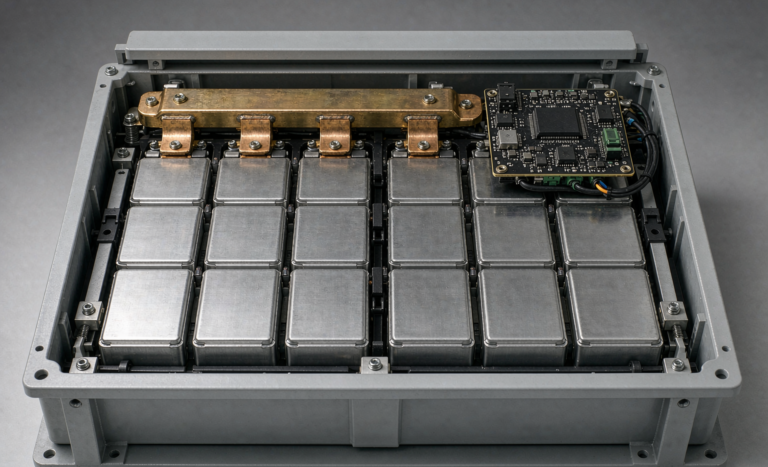
Let me walk through a real sizing example. A standard snack and beverage vending machine draws roughly 80 to 150 watts when the compressor is running, with defrost cycles spiking toward 300 to 500 watts for a few minutes. The payment terminal, controller board, and LED lighting add another 30 to 80 watts continuously. Across a typical day with 40 to 80 vends, total energy demand is about 1.5 to 4 kilowatt-hours. If you want the machine to ride through a 24-hour grid outage, size to roughly 3 to 5 kilowatt-hours of usable pack energy. At a 48-volt nominal pack with 80 percent usable depth of discharge, that is a pack of about 80 to 130 ampere-hours. I always add a 20 percent margin for cable losses and aging, so I would specify a 5 kilowatt-hour sodium-ion pack for a full-size machine. Horizon Power builds these as sealed modules with an integrated battery management system that reports state of charge over CAN or RS485.
Sizing for Payment Kiosks and Ticketing Terminals
Self-service kiosks are a lighter but steadier load. A ticketing or check-in terminal with a 24-inch screen, a card reader, a receipt printer, and a small computer pulls about 80 to 150 watts while active and 20 to 40 watts in idle. Daily energy for a 16-hour operating day is typically 1 to 2 kilowatt-hours. Here the goal is usually ride-through of short outages plus a graceful shutdown window rather than a full day of autonomy. A 2 to 3 kilowatt-hour sodium-ion pack with a 24 or 48-volt bus is plenty, and it will hold charge for weeks of standby thanks to the chemistry’s low self-discharge of around 2 to 3 percent per month. That standby behavior is a quiet advantage: unlike lead-acid, the pack will still start after a quiet holiday week.
Cold Weather and Outdoor Kiosk Placement
Many kiosks live outside: transit ticket machines, parking payment posts, and outdoor vending in resorts. This is where sodium-ion earns its keep. Charging below freezing is the one rule you must respect: I do not allow charging below 0 degrees Celsius without a controlled taper, and most of my designs simply gate charging below minus 5 degrees and resume when the pack warms. Discharge, however, is unrestricted down to minus 20 or even minus 30 degrees Celsius in most cells. Because the sodium pack stays above 80 percent capacity at minus 20, you can often skip the heater pad that a lithium install would require, which removes a parasitic load and a failure point. For an outdoor kiosk in a cold climate, that simplification is worth real money over the install life.
Safety, Compliance, and Public-Facing Units
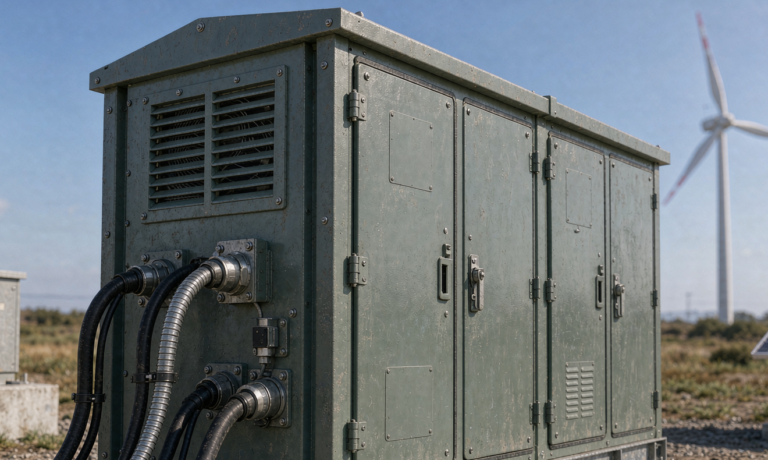
A battery in a public space has a higher duty of care than one in a warehouse. The pack must clear UN38.3 for transport, IEC 62133-2 for portable cell safety, and for fixed install kiosks I also apply IEC 62619 for industrial cells and UL 1973 for stationary battery systems. The battery management system should enforce over-voltage, under-voltage, over-current, and over-temperature cutoffs, and it should report faults to the kiosk controller so the machine can disable sales instead of risking a fault. Sodium-ion’s higher thermal stability means the enclosure can be simpler and the spacing rules less onerous than for high-energy lithium packs, but you still need a vented or sealed-to-spec enclosure rated for the environment. I have seen too many retail installs fail an inspection because the enclosure was rated for indoor use only.
A Deployment Checklist I Use in the Field
Before I sign off on a sodium-ion vending or kiosk battery, I run a short checklist. First, confirm the continuous and peak loads from the machine nameplate, not a guess. Second, size to usable energy at 80 percent depth of discharge plus a 20 percent margin. Third, pick a nominal bus voltage that matches the existing power supply, usually 24 or 48 volts. Fourth, verify the battery management system speaks the kiosk’s communication protocol, typically CAN or RS485, so state of charge is visible to technicians. Fifth, confirm the enclosure rating matches indoor or outdoor placement. Sixth, document the UN38.3 and IEC marks for the site file. Following this list has kept our field failure rate on unattended retail packs well under one percent per year.
Frequently Asked Questions
What size sodium-ion battery do I need for a snack vending machine?
For a full-size snack and beverage machine, plan on 3 to 5 kilowatt-hours of usable pack energy to ride through a full day of grid loss, which is roughly an 80 to 130 ampere-hour pack at 48 volts. Lighter combo or snack-only machines can use a 2 to 3 kilowatt-hour pack.
How long does a sodium-ion battery last in a kiosk deployment?
At 80 to 90 percent depth of discharge and daily cycling, expect 2,000 to 4,000 cycles, which translates to roughly five to ten years of service in a vending or kiosk application before capacity drops to 80 percent of nameplate.
Can sodium-ion batteries run outdoor kiosks in cold weather?
Yes. Sodium-ion discharges down to minus 20 to minus 30 degrees Celsius with minimal capacity loss, often removing the need for a heater pad. Charging is gated below freezing, so the controller should resume charging once the pack warms above 0 degrees Celsius.
Is a sodium-ion vending battery safe for public spaces?
Yes, with the right enclosure and battery management system. The pack should clear UN38.3, IEC 62133-2, IEC 62619, and UL 1973, and the management system must cut off fault conditions and report them to the kiosk controller.
Do I need special charging equipment for sodium-ion kiosk batteries?
No special charger chemistry is required beyond a constant-voltage stage matched to the 3.0 to 3.2 volt cell window and a current limit set by the battery management system. Most existing 24 or 48-volt power supplies work if their voltage window is compatible.
Monitoring and Remote Health for Distributed Sites
Operators with many machines rarely visit each site often, so I treat remote health reporting as part of the battery, not an add-on. The battery management system logs state of charge, cell voltage spread, temperature, and cycle count, and the kiosk controller can push that data to a central dashboard over the existing network link. When a pack shows rising internal resistance or a drifting cell, we schedule a swap before it ever affects uptime. This is where sodium-ion’s long cycle life pays off twice: fewer physical swaps, and each swap is predictable because the wear is gradual and well characterized rather than sudden.
References
- IEC 62133-2: Secondary cells and batteries containing alkaline or other non-acid electrolytes, safety requirements for portable sealed cells.
- IEC 62619: Safety requirements for industrial secondary lithium cells and batteries for use in industrial applications.
- UL 1973: Standard for Safety for Stationary Storage Battery Systems.
- UN Manual of Tests and Criteria, Section 38.3 (UN38.3) for transport of lithium and sodium cells and batteries.
Further Reading
References