Battery Solution Cost Optimization for Sensors
Why the Cell Is Rarely the Real Cost in a Sensor Deployment
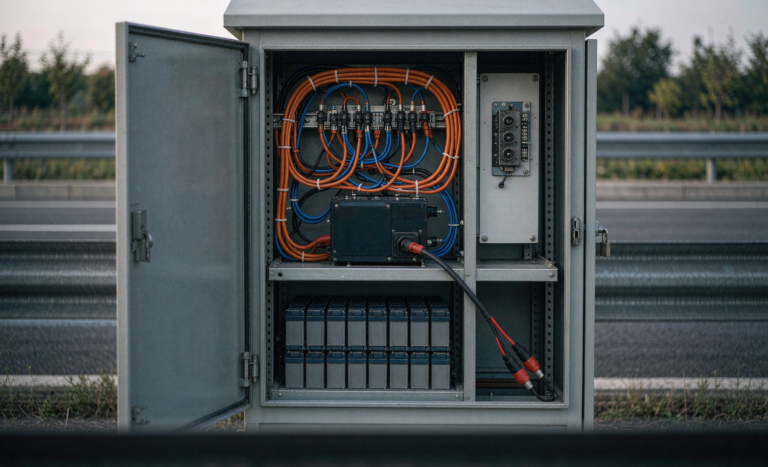
When a procurement team asks me to “cost-optimize a battery solution for sensors,” the first thing I do is reframe the question. For most wireless sensor nodes — environmental monitors, smart-agriculture soil probes, pipeline pressure taps, perimeter security beacons — the lithium cell inside the pack is a small fraction of the money you will actually spend. In the field deployments my team at Horizon Power has supported, the raw cell is typically 5–15% of lifetime cost. The other 60–80% is the labor to physically reach the device, open the enclosure, swap the pack, and re-seal it against ingress.
That changes everything about how you should optimize. Shaving 30 cents off a cell that gets serviced once every eight years is false economy if it pushes one more truck-roll into a remote substation. True battery solution cost optimization for sensors means engineering the pack so the dominant cost — field service — collapses, even if the pack itself costs a little more up front. I treat the sensor battery as a flight-critical, hard-to-reach asset, and I budget its lifetime cost the way I would budget a drone battery that has to come back from 120 meters.
Energy Budgeting Before You Spec a Cell
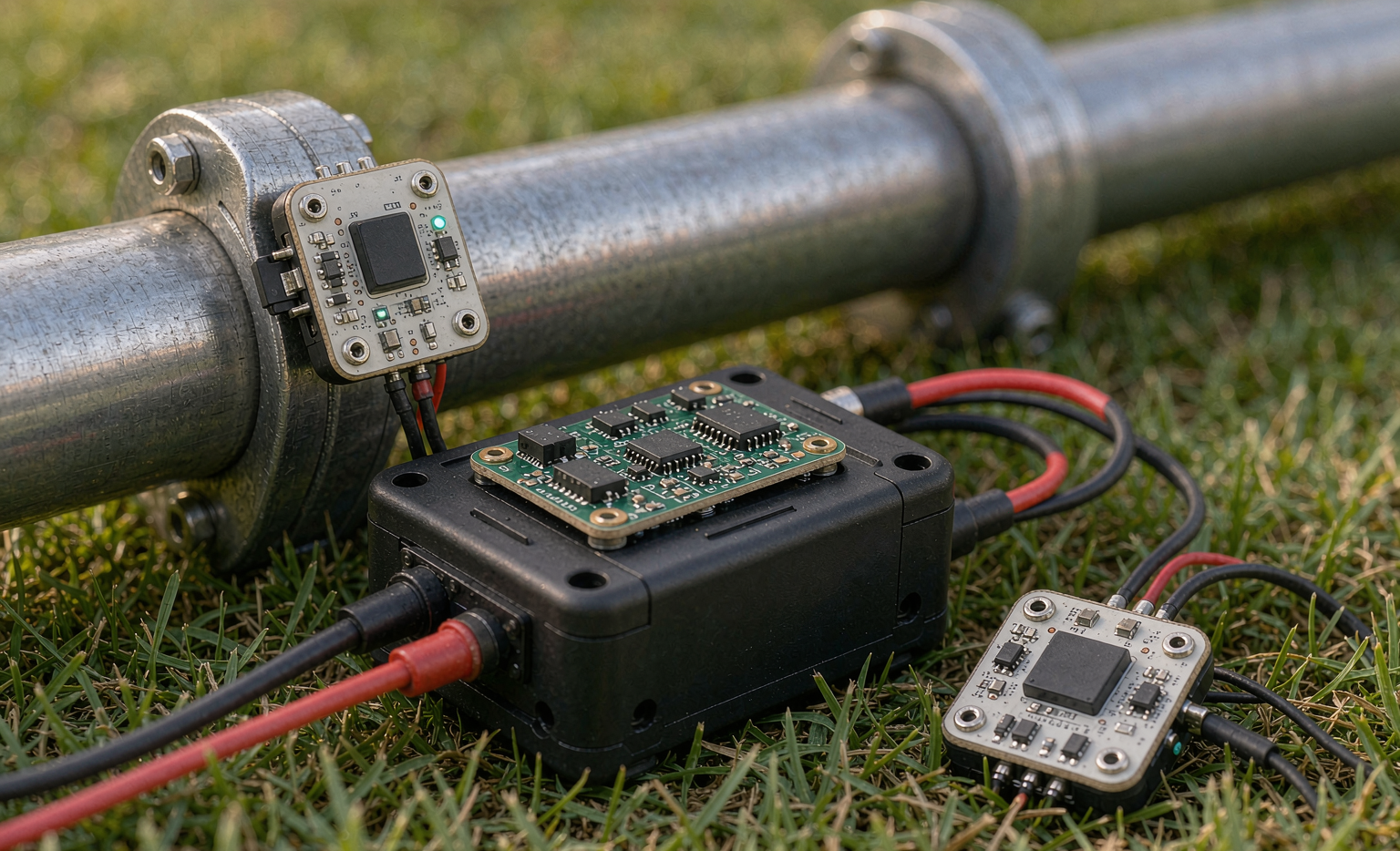
Before any chemistry conversation, I build an energy budget from the sensor’s actual duty cycle. A typical remote sensor sits in deep sleep at 2–15 µA, wakes every few minutes to sample a 1–3 mA ADC front end, and transmits a LoRa or NB-IoT burst at 80–180 mA for 100–400 ms. Spread across an hour, the average draw is often under 0.05 mA. A 19,000 mAh Li-SOCl2 D-cell at that rate lasts the better part of a decade — on paper.
The trap is the tail current. A BMS, a stray pull-up resistor, or a poorly chosen regulator can add a constant 5–20 µA that quietly eats 40–60% of usable life. So my first optimization lever is the quiescent budget, not the cell. I spec regulators with sub-1 µA shutdown, I gate the radio with a p-FET the MCU fully cuts, and I measure the sealed assembly’s real parasitic draw on a 6.5-digit meter before it ever ships. A custom battery solution that wins on cell price but leaks 15 µA in standby is a guaranteed premature replacement.
Chemistry Selection — Matching Chemistry to the Duty Cycle
Sensor packs are where I am most willing to diverge from the lithium-ion default that dominates our drone battery work. Three chemistries cover almost everything:
- Li-SOCl2 (lithium thionyl chloride) primary — 3.6 V nominal, 10–20 year shelf/calendar life, self-discharge under 1% per year. This is the set-and-forget king for inaccessible nodes. Its drawback is low pulse capability and a voltage delay on cold wake, so I pair it with a thin supercapacitor or a small Li-MnO2 buffer for the transmit burst.
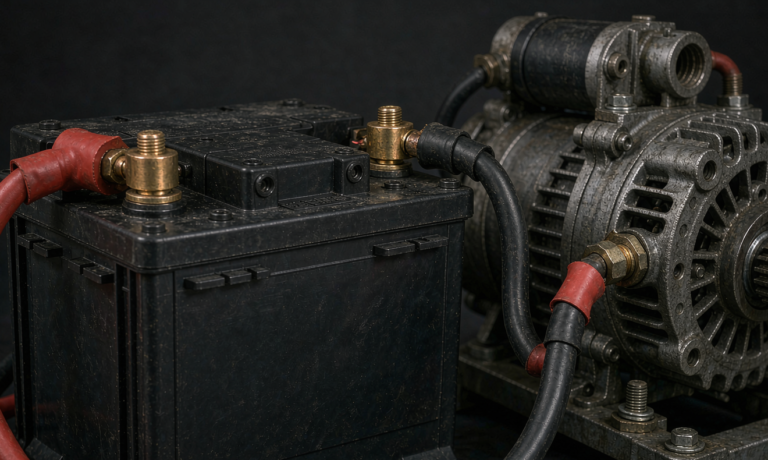
- LFP (LiFePO4) rechargeable — 3.2 V, 2,000–4,000 cycles, 270 °C thermal-runaway onset. I pick this only where a solar or energy-harvesting source can trickle-charge it. The cycle life amortizes the higher BOM over many seasons.
- Li-MnO2 (CR-type) primary — 3.0 V, cheap, good pulse, but 3–5 year life and higher self-discharge than Li-SOCl2. Fine for short-mission or easily reachable sensors.
I avoid NMC in hot enclosures for sensors: the calendar fade and the thermal envelope simply do not justify the energy density when you are not weight-constrained the way a drone lithium battery is. Choosing the right chemistry against the duty cycle — not the headline Wh/kg — is the second big lever in battery solution cost optimization for sensors.
Right-Sizing: Stop Over-Provisioning Sensor Packs
The most common waste I see is over-provisioning. A designer sizes the pack to the label capacity, then doubles it “for safety margin,” then the BMS end-of-discharge cutoff eats another 15%. Result: half the paid energy is still in the cell when the scheduled truck-roll swaps it anyway because nobody modeled the real curve.
My rule is to size to a target end-of-life capacity, not beginning-of-life. If the node needs 11,000 mAh over its service interval and the chemistry fades to 80% by year 8, I size the starting pack to about 13,800 mAh and set the retirement gate at 80% SoH. That single discipline often removes one cell from a 2S or 3S stack, cutting BOM and mass with zero field-risk increase. Right-sizing is pure margin because the cell is the one component you are not over-paying to replace later.
Self-Discharge and Cell Matching Control Field Life
For primary cells that sit for years, the killer is self-discharge spread, not capacity spread. I grade incoming cells on the K-factor — the open-circuit voltage settle rate — and require K < 1.0 mV/day across a pack. Mismatched self-discharge means one cell collapses while its siblings are still fat, and in a series string that one weak cell defines the whole pack’s end of life. The cost of a 4-wire Kelvin grading step on incoming cells is pennies; the cost of a premature swap across a 5,000-node network is five figures. This is the same discipline we apply to high-rate lithium battery grading, just tuned to the decade timescale sensors live on.
The Ultra-Low-Power BMS That Doesn’t Drain the Pack
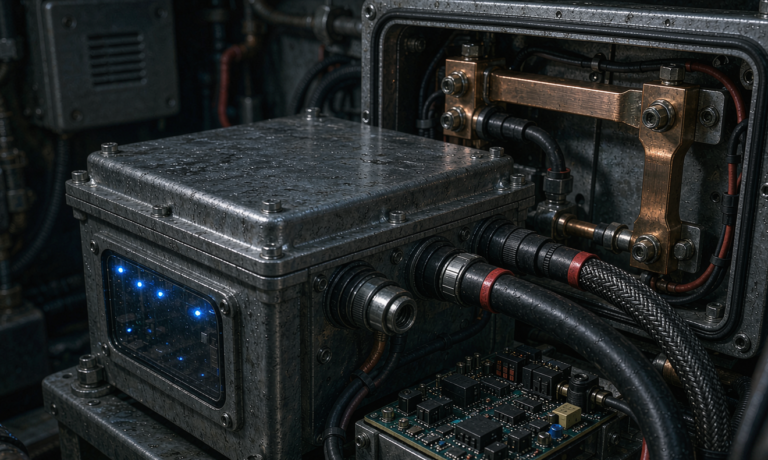
A sensor BMS should be nearly invisible. I commission it with a quiescent draw under 5 µA, a fuel gauge that the MCU polls on wake only, and protection that is normally open until a fault. Features I do not pay for on a primary sensor pack: active balancing (irrelevant for primaries), a constant-on Bluetooth beacon (a silent 200 µA tax), a fancy SOC display. What I do pay for is a contactor-style disconnect that trips on over-temperature or external short and a one-wire genealogy tag so the service tech knows exactly which pack revision they are holding.
The BMS is also where I embed remote health. A LoRa uplink of once-per-day voltage and temperature is enough to predict the knee. That converts blind scheduled swaps into condition-based swaps — and condition-based is where the service-labor line item finally shrinks.
Predictive Replacement and Second-Life Rotation
Once a node reports SoH, I stop swapping on a calendar. I build a retirement gate at 80% capacity, DCIR growth over 30%, or cell-to-cell spread over 40 mV, whichever comes first, and I rotate the pulled packs into a second-life pool for bench or training use. For networks where regulations forbid second-life of primaries, I at least use the data to tighten the next procurement’s right-size factor. Either way, predictive replacement turns a fixed annual truck-roll into an event-driven one, and on a 2,000-node deployment that is often three to four fewer service visits per year per technician — the single largest dollar saving in the whole battery solution program.
A Procurement Scorecard That Protects Margin
Cost optimization dies in procurement if you only read the unit price. My scorecard weights five things: (1) verified calendar-life data, not just cycle life; (2) incoming grading CoV on capacity and self-discharge; (3) certification completeness; (4) traceability and DataMatrix genealogy; (5) second-source availability. A cell that is 12% cheaper but fails item 2 on the line will cost you ten times the saving in field returns. We hold our custom battery solution partners to the same incoming-QA bar we hold ourselves, because a sensor network’s reputation is only as good as its worst-hidden weak cell.
Standards and Transport Floor for Field Sensor Packs
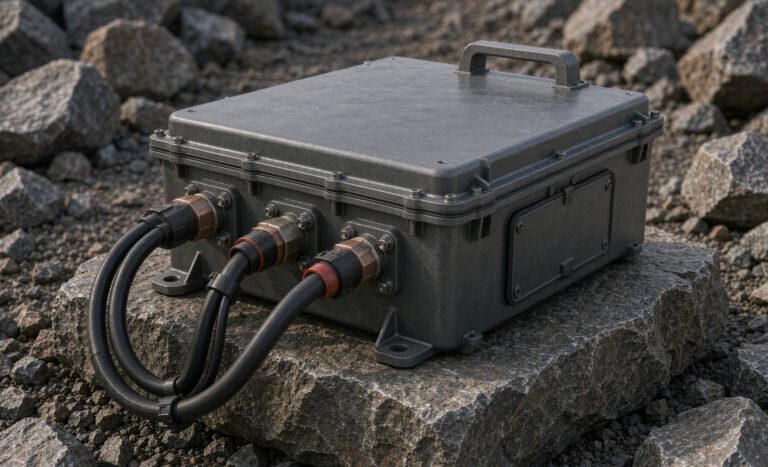
Even a tiny sensor pack ships under the same transport and safety floor as our larger systems. Every pack I release clears UN38.3 (T.1–T.8 altitude, thermal, vibration, shock, external short, impact, overcharge, forced discharge), IEC 62133-2 for portable cells, and IEC 62619 where the design edges toward industrial stationary use. Primary Li cells additionally carry the IEC 60086 and UN Manual of Tests Section 38.3 primary-cell dossier, and for air freight we stay inside IATA Section II with the 30% SoC rule applied to any rechargeable variant. FCC/CE marking closes the radio-adjacent compliance loop. None of this is optional margin — it is the floor that keeps a low-cost sensor pack from becoming a recalled one.
Frequently Asked Questions
Is Li-SOCl2 really cheaper than rechargeable LFP for sensors?
On cell price alone, no — a primary Li-SOCl2 D-cell costs more up front than a small LFP pouch. But once you add the truck-roll to recharge or replace, the primary almost always wins for inaccessible nodes because you do one service event in ten years instead of several. The crossover point is reachability: if a technician walks past the sensor weekly anyway, LFP with harvesting is cheaper.
How much can over-provisioning actually waste?
On a 2S Li-SOCl2 node I commonly see designs carrying 40–60% unused capacity at scheduled swap time. Removing one cell from the stack and tightening the sizing rule typically saves 18–25% of pack BOM across a fleet, with no change to field reliability because the retirement gate still lands at 80% SoH.
Why grade sensors on self-discharge instead of capacity?
Primary cells in storage fade by self-discharge, not by capacity mismatch. A pack of perfectly matched-capacity cells with different K-factors will still be defined by its fastest-leaking cell after five years. Grading on K < 1.0 mV/day keeps the whole string alive to the same end-of-life.
Can a drone battery BMS design be reused for sensors?
Only the architecture, not the values. The protection philosophy and genealogy tagging carry over, but a drone battery BMS draws milliamps continuously and would drain a sensor pack in months. Sensor BMS quiescent must stay under 5 µA, so we strip the always-on telemetry and gate everything behind the MCU wake line.
Do I still need UN38.3 for a tiny coin-cell sensor pack?
Yes. Transport and safety certification is per-cell-and-pack, not per-size. A CR2032 sensor node and a 100 Wh pack both clear UN38.3 T.1–T.8 before they ship. Skipping it to save a few dollars is the fastest way to a customs hold or a recall.