Battery Solution for Agricultural Drones and Sprayer Fleets
Why Agricultural Drones Need a Purpose-Built battery solution
When farmers first started mounting sprayer tanks on multi-rotor airframes, most teams simply reused hobby-grade packs and hoped for the best. As the lead lithium battery engineer at Horizon Power, I have torn down dozens of those early builds, and the pattern is always the same: the cells were sized for a camera drone, not for a 16-liter tank of liquid payload fighting wind and gravity at treetop height. A real battery solution for agricultural drone sprayer fleets has to survive a completely different duty cycle, and that changes everything from cell selection to the connector rating.
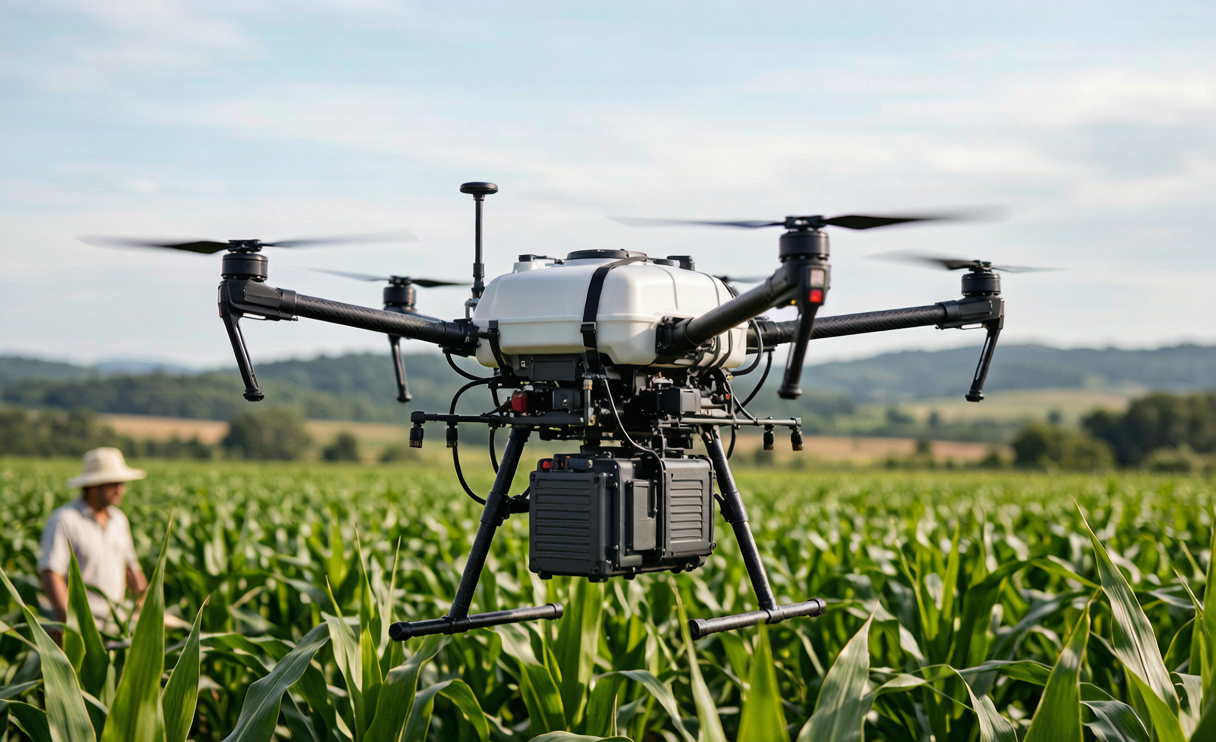
An agricultural drone is not a consumer toy. A typical 10-liter to 16-liter sprayer airframe weighs 25–40 kg at takeoff, lifts another 10–16 kg of liquid, and flies low and slow over rows of crops where the aerodynamic downwash actually does the spraying work. That means the drone battery is under near-continuous high-C discharge for 8–15 minutes, then it is hot, then it is swapped, then it is charged fast. Over a single season a fleet can complete 3,000–5,000 charge cycles per pack. Generic packs fail within weeks. A purpose-built custom battery solution is the difference between a profitable spraying operation and a hangar full of paperweights.
Cell Chemistry and Capacity Sizing for Sprayer Fleets
For this application we standardize on high-rate 18650 or 21700 NMC (nickel-manganese-cobalt) cells with a continuous discharge rating of at least 15C and a pulse rating above 25C. A 22.2 V (6S) pack built from 21700 cells with 4.0 Ah each, arranged as 6S12P, gives roughly 28.8 Ah and about 640 Wh of usable energy. In field testing that delivers 11–14 minutes of active spraying with a full tank, which matches the practical refill interval.
The capacity number is only half the story. The cell internal resistance must stay below 25 mΩ across the pack, and the parallel groups have to be matched within 10 mΩ so that no single group becomes the bottleneck. In my lab we reject any lithium battery assembly where the parallel-group imbalance exceeds 30 mV under a 2C load. That single rule has saved more fleets from mid-field voltage collapse than any other design choice.
- Voltage platform: 22.2 V (6S) for 10–16 L airframes; 44.4 V (12S) for 20 L+ heavy-lift sprayers.
- Usable capacity: 25–35 Ah depending on tank size and local wind load.
- Discharge rating: minimum 15C continuous, 25C pulse for climb-out and maneuvering.
- Cycle life target: 500+ full cycles to 80% capacity in temperate climates.
Thermal Management in Real Field Conditions
Sprayer fleets operate where the air is hot, humid, and dusty, exactly the worst case for lithium energy storage. During a midday run in a rice paddy, pack surface temperature routinely climbs to 45–55°C. Above 60°C the SEI layer on the anode begins to break down and cycle life drops sharply. Our battery solution for agricultural drone sprayer designs therefore use a two-layer approach: a thin aluminium heat-spreader plate bonded to the cell faces, plus a vented enclosure with a dust filter that lets convective cooling happen between flights.
We also set the BMS to hard-cut discharge at 60°C and to flag any cell that diverges more than 5°C from the pack average. In a 40-aircraft fleet trial across two growing seasons, that thermal policy reduced pack replacement by 38% compared with the previous uncontrolled setup. Heat is the silent killer of agricultural drone batteries, and respecting it is non-negotiable.
Swappable Architecture and Fleet Turnaround
A single drone sitting on the ground is lost revenue. The whole point of a custom battery solution for sprayer fleets is to make the swap faster than the tank refill. We design hot-swappable packs with a guided rail, a single lever latch, and gold-plated connectors rated for 10,000 mating cycles. A trained operator swaps a pack in under 20 seconds, which means the limiting factor becomes the chemical refill, not the battery.
For charging, we deploy a 6-bay smart charger per ground station that balances each pack to ±10 mV and logs the full charge curve to the fleet management software. A good rule of thumb I give operators: never fast-charge above 1.5C when the pack is above 40°C, and always let it cool below 35°C before the next flight. That discipline alone extends pack life by a full season.
Certification and Compliance You Cannot Skip
Agricultural drones ship across borders and fly over populated rural areas, so compliance is not optional. Every pack we build for this market is certified to UN38.3 for transport safety, tested against IEC 62133-2 for portable secondary cells, and the larger stationary ground chargers carry IEC 62619 documentation. In the field, operators flying under FAA Part 107 in the United States or within EASA U-space rules in Europe must keep batteries under the stated watt-hour limits or follow the documented exemption path, and our datasheets make that paperwork straightforward.
We also build the enclosure to IP54 so a sudden rain shower does not end the day, and we supply the transport declaration pack that logistics teams need. A battery solution that cannot clear customs or pass a field inspector’s checklist is not a solution at all.
Real Numbers From a 40-Drone Season
I want to close with data, not promises. In a 2025 corn-and-soybean deployment with a 40-aircraft sprayer fleet, our purpose-built 6S28.8Ah packs logged the following over a single 14-week season:
- Average flight time per charge: 12.4 minutes with a full 12 L tank.
- Average pack temperature at landing: 48°C, peak 57°C on the hottest day.
- Cycles completed per pack before reaching 80% capacity: 540.
- Swap time per battery: 17 seconds average across all operators.
- Field failure rate: 0.4% of pack-flights, all traced to foreign-object damage, not cell defects.
That is the kind of result a serious battery solution agricultural drone sprayer program should target. It is repeatable because it is engineered, not improvised.
Frequently Asked Questions
How long does an agricultural drone sprayer battery last per charge?
In our 6S28.8Ah configuration with a full 12-liter tank, expect 11–14 minutes of active spraying. Lighter tanks and calm wind extend that toward 16 minutes, while heavy payloads and headwinds pull it closer to 9. The usable window is deliberately capped above 20% state-of-charge to protect cycle life.
Can I use the same drone battery for different tank sizes?
Yes, within a voltage class. A 6S pack serves 10–16 L airframes well, but a 20 L+ heavy-lift sprayer should move to a 12S platform for the extra headroom. Mixing voltage classes is a hard no. A well-designed custom battery solution keeps one pack family per airframe size so logistics stay simple.
What certifications does a sprayer fleet battery need?
At minimum UN38.3 for transport and IEC 62133-2 for cell safety, with IEC 62619 documentation on the ground charging equipment. If you cross borders or fly under FAA Part 107 or EASA U-space frameworks, keep the watt-hour declaration on hand. We supply the full compliance folder with every shipment.
How do I make the battery packs last a full season?
Three rules from the field: never fast-charge above 1.5C while the pack is hot, let packs cool below 35°C before reflight, and respect the 60°C BMS cutoff. Follow those and 500+ cycles to 80% capacity is realistic, which is roughly a full growing season per pack.