Battery Solution for Data Center Edge Nodes
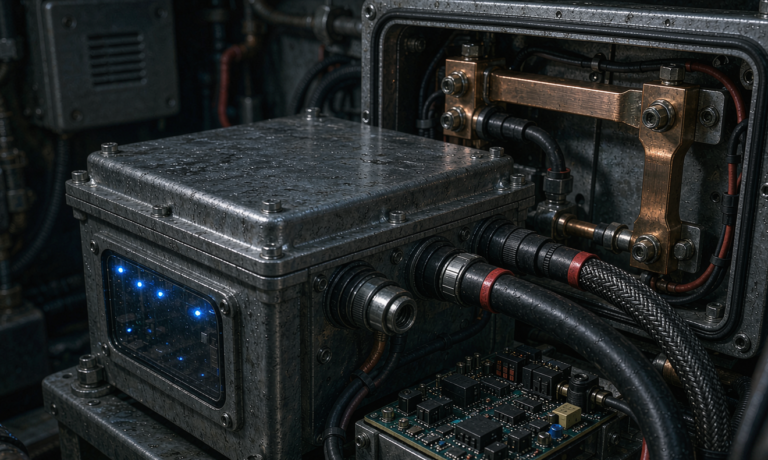
When teams talk about edge computing, they usually describe latency, 5G, and workloads moving out of the central cloud. What gets discussed far less is the thing that keeps those workloads alive when the grid blinks: a dependable battery solution for data center edge nodes. Over the past decade I have engineered lithium packs for telecom shelters, micro data centers, and industrial edge cabinets, and the pattern is always the same. The compute is designed to five-nines availability, but the power buffer is treated as an afterthought until the first outage costs a shift of production data.
In this field guide I will walk through how I specify, size, and certify battery systems for edge nodes, from chemistry selection to BMS architecture to the certifications that actually matter for global shipping and installation. The goal is a pack that disappears into the cabinet and only reminds you it exists when the mains fail.
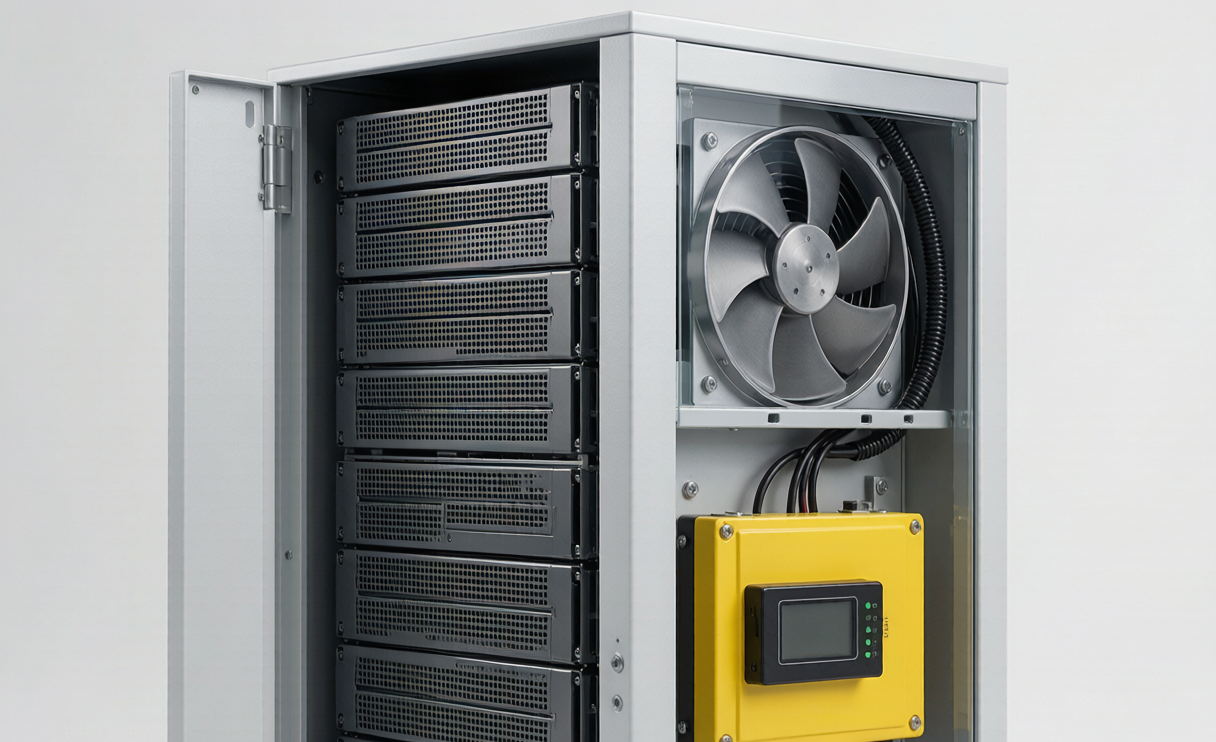
Why Edge Nodes Need a Dedicated Battery Solution
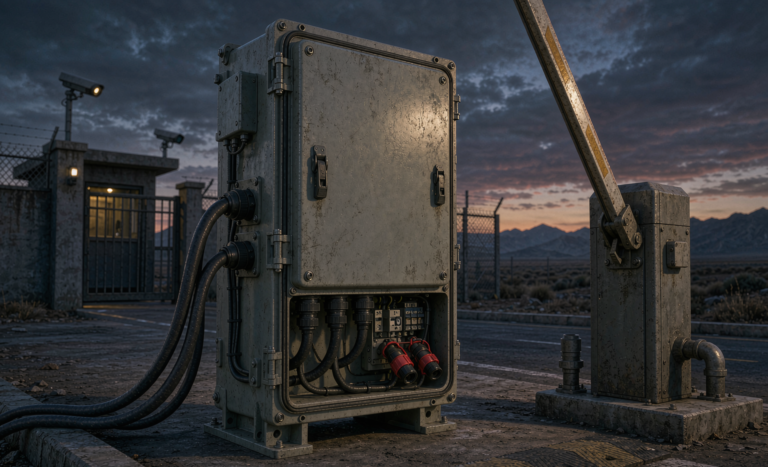
Edge nodes are not mini versions of a hyperscale facility. They sit in unsealed cabinets, roadside enclosures, factory floors, and retail back rooms where temperature, vibration, and maintenance intervals are completely different from a climate-controlled data hall. A generic off-the-shelf UPS battery rarely matches the duty cycle. An edge node may see hundreds of shallow micro-cycles per year rather than the rare deep discharge a data center string is built for.
This is why we treat the edge as its own battery application solution problem. The pack has to tolerate partial-state-of-charge (PSOC) operation, survive wide ambient ranges, and still deliver full cranking current on demand. I typically design for a nominal 48 V or 51.2 V platform, which lines up with telecom-grade rectifiers and most edge server PSU inputs, so the battery slots straight into the existing power architecture without a second conversion stage.
Core Chemistry Choices: LiFePO4 vs NMC for Edge
For edge nodes, lithium iron phosphate (LiFePO4, LFP) is my default chemistry in roughly 80% of deployments. Its thermal-runaway threshold sits near 270 °C versus roughly 150–180 °C for nickel manganese cobalt (NMC), which materially simplifies the safety case and the enclosure ventilation budget. LFP also delivers 3,000–6,000 full-equivalent cycles at 80% depth of discharge, versus 1,000–2,000 for NMC. That cycle life directly lowers total cost of ownership across a five- to ten-year edge deployment.
NMC still earns its place when energy density is the binding constraint, for example wall-mounted edge cabinets where every liter of volume matters. But the trade is a more aggressive BMS solution and stricter enclosure limits. I only specify NMC when the cabinet volume budget forces it, and even then I keep each module below 1 kWh so a single fault stays contained and the thermal event cannot cascade into neighboring cells.
Sizing the Pack: Runtime, Cycling, and Downtime Budgets
Sizing starts with the downtime budget, not the battery. Most edge nodes I work on have a generator or grid transfer within 30 seconds to 2 minutes, so the battery’s real job is ride-through: bridge the gap until the alternate source engages, or until a graceful shutdown completes. A 5-minute bridge at 2 kW load is only about 0.17 kWh of usable energy, but I never size to that textbook number.
I apply three margins. First, a 20% capacity-fade allowance so the pack still meets runtime at end of life. Second, a C-rate derate: edge packs often discharge at 1C or higher, and usable capacity drops 8–12% at 1C versus the 0.2C lab rating. Third, a temperature derate of roughly 1% per °C below 25 °C. After all three, a “5-minute” pack usually lands at 0.3–0.4 kWh of nameplate. A custom battery solution lets me tune cell count and bus voltage to exactly this envelope instead of over-buying a standard block that wastes cabinet space and capital.
The BMS Solution: Monitoring, Balancing, and Fail-Safe
The battery management system is where edge reliability is won or lost. At minimum I specify a 15S or 16S topology for LFP with coulomb-counting fuel gauging, passive balancing above a 30 mV cell imbalance, and a hard contactor that opens on any fault. For edge nodes, remote visibility matters far more than in a staffed data hall. I push state-of-health (SOH), state-of-charge (SOC), cell temperatures, and fault codes over MODBUS/RTU or CAN bus up to the node’s management layer.
A good BMS solution also handles the awkward edge cases: it must survive a full discharge without bricking, must re-enable automatically after a grid restore, and must log the last fault so a remote technician can diagnose without a site visit. I have lost count of the truck rolls we avoided because the BMS flagged a single weak cell weeks before it would have caused an unplanned outage.
Thermal, Safety, and Certification
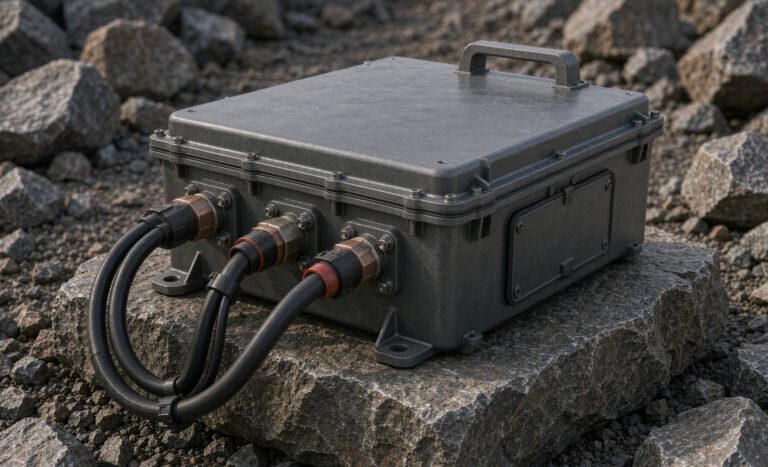
Edge enclosures live outdoors, so thermal design is not optional. I target a pack operating window of −20 °C to 55 °C with self-regulation, and I spec intake heaters for cold-climate sites so the electrolyte stays above the lithium-plating threshold during charge. Mechanically, the pack needs at least IP54 to resist dust and splash in roadside or factory installs, and I seal the enclosure seams with closed-cell gaskets rated for the local humidity swing.
On the compliance side, three standards dominate my edge work. UN38.3 is mandatory for air and multimodal shipping of lithium cells and packs: without that test report you cannot move the product across borders. IEC 62133 covers the safety requirements for portable cells and batteries, and most enterprise buyers now require it. In North America, UL 1973 applies to stationary storage batteries while NFPA 855 sets the installation fire-code envelope. I bake these into the design review from day one rather than bolting them on for shipment, because a late certification gap is the fastest way to miss a deployment window.
Custom Battery Solution: Integrating With Existing Infrastructure
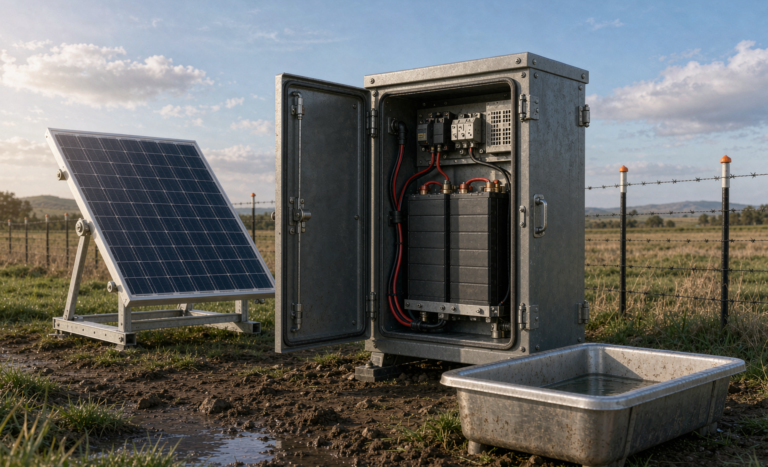
Edge rollouts rarely start from a blank slate. You inherit a rectifier, a UPS, a cabinet, and a cable run that someone else sized. A custom battery solution means matching form factor, communication, and protection to that reality. I have mounted LFP packs directly onto DIN rails inside existing telecom frames, swapped lead-acid strings for drop-in lithium with identical footprint and terminal layout, and added CAN gateways so legacy SCADA could finally read the new BMS.
The integration work is where a battery application solution partner earns the fee. It is not the cells, those are commodities. It is the mechanical adapters, the firmware that speaks the site’s protocol, and the field validation that proves the bridge time under real load. I budget at least one on-site pilot before a fleet rollout for exactly this reason, because a 2% voltage-sense error in the cabinet always shows up only at 3 a.m. on a storm night.
Field Deployment and Maintenance
Once deployed, edge batteries should be close to fit-and-forget, but “close” is not “never.” I set a remote SOH alert threshold at 80% and schedule a physical inspection only when it trips. For fleets of dozens or hundreds of nodes, this telemetry-first model cuts maintenance cost by an order of magnitude versus calendar-based truck rolls. I also record every pack’s serial, firmware version, and first-charge date in an asset database so a future recall or firmware fix is a single query, not a scavenger hunt across regional depots.
What battery chemistry is best for edge data center nodes?
For most edge nodes, LiFePO4 (LFP) is the best balance of safety, cycle life, and cost. It tolerates partial-state-of-charge cycling and has a high thermal-runaway threshold, which simplifies enclosure design. Choose NMC only when cabinet volume is the hard limit and every liter of space is accounted for in the mechanical layout.
How long should an edge node battery backup last?
Usually 5 to 15 minutes. The battery’s job is ride-through until a generator or grid transfer engages, not multi-hour backup. Size to the downtime budget plus capacity-fade, C-rate, and temperature derates, never to the bare load number, or you will under-build the pack and discover it during the first real outage.
Do edge battery systems need UN38.3 or IEC 62133 certification?
Yes. UN38.3 is required for shipping lithium cells and packs by air or multimodal freight. IEC 62133 is the de-facto safety baseline most enterprise and telecom buyers demand. In North America add UL 1973 and design around NFPA 855 so the installation passes local fire code without rework.
Can I integrate a custom battery solution with my existing UPS?
In most cases yes. Drop-in LFP replacements keep the same footprint and terminal layout as lead-acid strings, and a CAN or MODBUS gateway lets your existing management layer read SOC and faults. Pilot one node first to validate bridge time under real load, because the wrapper is easy and the integration quirks are what bite.
How do I monitor battery health at remote edge sites?
Push SOC, SOH, cell temperature, and fault codes over CAN or MODBUS to your node management layer, and set a remote SOH alert at 80%. This telemetry-first approach lets you dispatch a technician only when a pack actually degrades, instead of on a fixed calendar that wastes field hours on healthy batteries.