Battery Solution for Emergency and Disaster Response
When a flood, earthquake, or wildfire takes down the grid, the first 72 hours decide outcomes. In my fifteen years designing packs at Horizon Power, I have shipped battery solution programs for utility crews, ambulance fleets, and UN-style relief deployments. The difference between a pack that saves lives and one that fails on day two is rarely the cells themselves — it is the system engineering around them. This guide walks through how we specify a reliable emergency battery solution, from duty-cycle math to the certifications that let it legally cross borders and reach the people who need it.
Why a Generic Power Bank Won’t Survive the Field
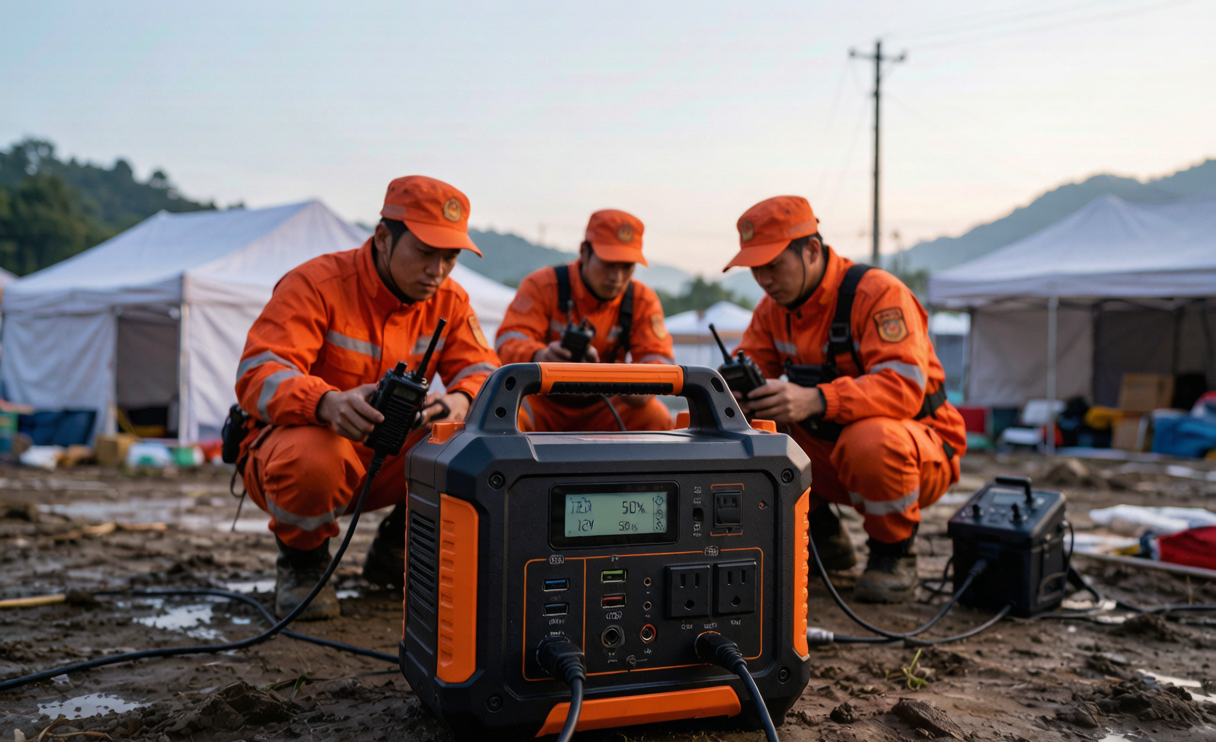
I learned this the hard way on a typhoon-relief deployment in 2019. A well-meaning donor sent consumer power banks rated for “camping.” Within 36 hours, half had shut down — not from low charge, but from condensation inside the case and a BMS that tripped on a single cell imbalance. Emergency response is not camping. It is wet, dusty, dropped, frozen, and overheated, often in the same day. A mission-grade battery solution is built for that abuse envelope, not a lab at 25°C and 50% relative humidity.
The functional requirements are also different. Relief teams need to run radios, LED floodlights, water purifiers, medical refrigerators, and drone controllers simultaneously, with brutal surge currents when a transmitter keys up or a compressor starts. Consumer gear is optimized for a phone and a laptop. Field gear is optimized for everything at once.
Sizing the Pack: Runtime, Surge, and Duty Cycle
Sizing starts with the load profile, not a marketing number. Consider a mobile command post: 400 W continuous draw (radios, lights, routers) with a 1.2 kW surge every few minutes when the long-range radio transmits. A 5 kWh pack at 80% usable depth of discharge gives 4 kWh of real energy. At 400 W that is 10 hours of runtime; the 1.2 kW surge is absorbed by the inverter’s capacitor bank and the pack’s pulse rating.
I always spec the pack to the worst 24-hour duty cycle, then add a 30% margin. Field conditions — cold, aged cells, partial shading on solar input — eat margins faster than people expect. For a true battery application solution in disaster response, we model the load minute-by-minute rather than averaging it. Averaging hides the surge that actually kills inverters. Cell-level safety margins follow IEC 62133, which sets the testing envelope for portable secondary cells and batteries, and we derate the pack’s continuous current to stay comfortably inside those limits.
Chemistry Choice: Why LFP Leads Emergency Battery Solution Design
For almost every ground-based response scenario, lithium iron phosphate (LFP, LiFePO4) is the right answer. Its thermal-runaway onset sits around 270°C, versus roughly 150°C for nickel-cobalt-manganese (NCM). That gap is the difference between a pack that vents safely and one that contributes to the fire you are trying to contain. LFP also tolerates deeper cycling and a wider state-of-charge window, which matters when charging opportunities are scarce.
There is one exception I design around deliberately: extreme cold. Below -10°C, LFP capacity drops sharply. For arctic or high-altitude disaster response, I have specified sodium-ion cells that retain about 90% of capacity at -20°C. A custom battery solution lets us mix chemistries across a fleet — LFP for the bulk cache, sodium-ion for the cold-climate forward units — instead of forcing one chemistry to do everything badly.
Ruggedization: IP Rating, Shock, and Temperature
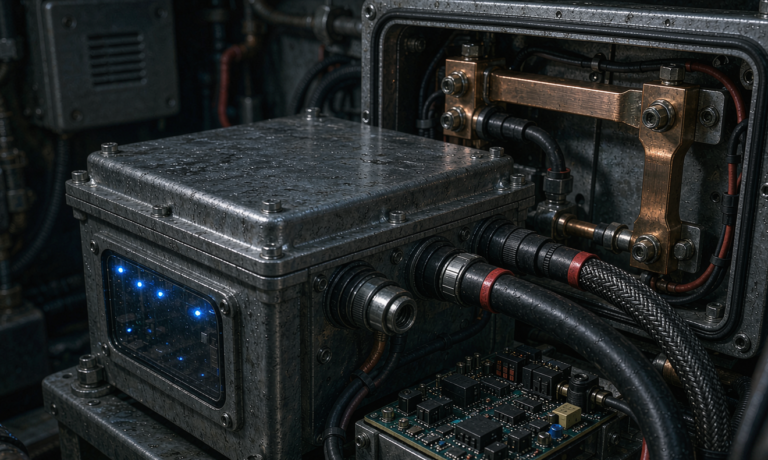
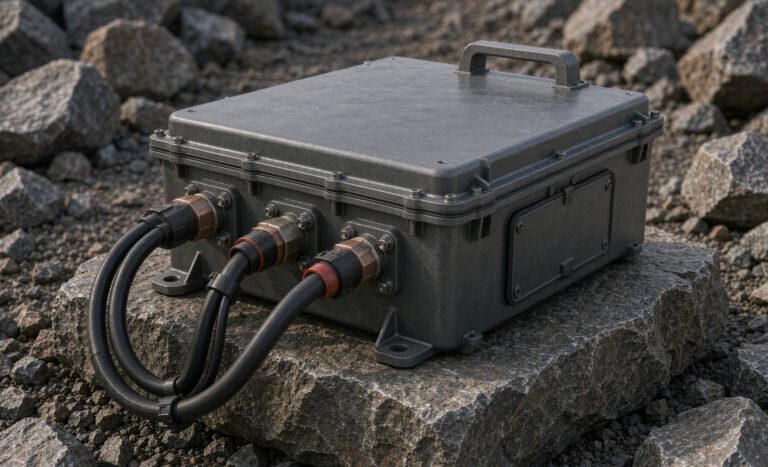
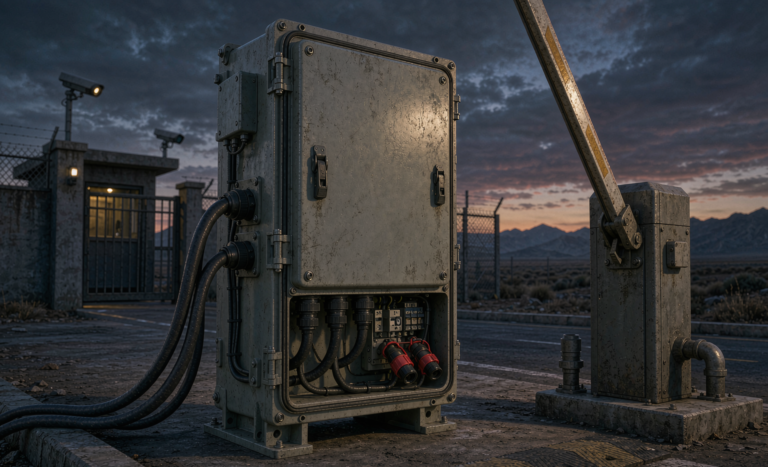
Enclosure rating is where most failures begin. For flood and storm response I specify a minimum of IP65 — dust-tight and protected against low-pressure water jets — and IP67 for units that may be partially submerged during a river rescue. Seals are only as good as the cable glands and connector choice, so we use molded, locking waterproof connectors rather than exposed terminal blocks.
Mechanical shock matters too. Packs get dropped from trucks and stacked under tarps. We validate to MIL-STD-810H vibration and drop profiles, and we pot the cell module in a flame-retardant epoxy so a single impact cannot short adjacent cells. Operating envelope is typically -20°C to +60°C ambient, with the BMS throttling charge below 0°C to prevent lithium plating. A purpose-built battery solution bakes these constraints into the mechanical design from the first sketch, not as a retrofit.
The BMS Solution: The Brain That Keeps Responders Safe
The single most important component in any emergency pack is the battery management system. A proper BMS solution monitors every cell’s voltage, every parallel group’s temperature, and the total pack current, then balances cells and cuts off fault conditions before they escalate. In the field, that means no over-discharge that permanently damages cells, no thermal runaway from a single bad cell, and an accurate state-of-charge readout a tired volunteer can trust at 3 a.m.
For aviation-deployed packs — supply drops or drone-delivered caches — I design to FAA and EASA guidance on lithium battery transport and carriage, which means the BMS must report cell-level telemetry and support a hard disconnect that meets air-safety isolation requirements. Communication is over CAN bus or SMBus so the command-post software can see pack health in real time. Redundancy is not optional: a primary protection IC plus a secondary hardware fuse path ensures the pack fails safe even if firmware locks up.
Field Charging and Swappable Architecture
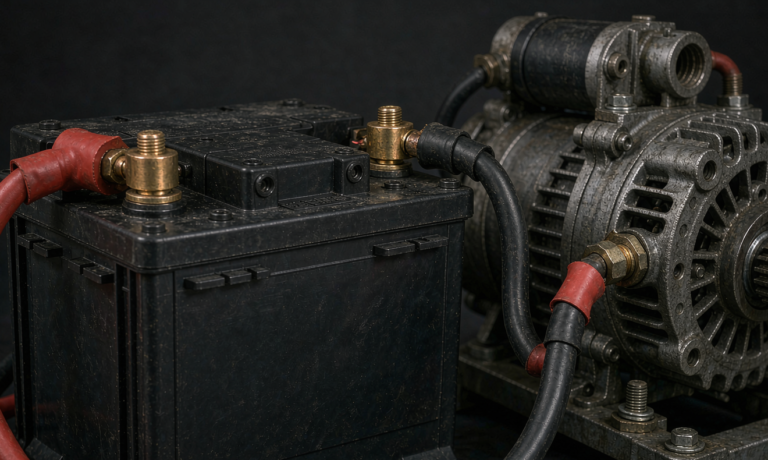
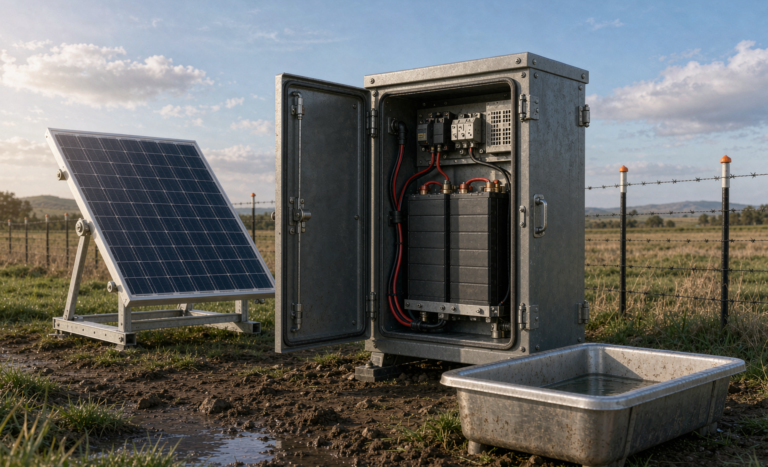
An emergency battery solution is only as good as its recharge plan. I design for three independent input paths: grid (when it returns), vehicle alternator through a DC-DC converter, and solar via an MPPT controller. Having all three means the pack can sip from a truck battery or a folded panel when nothing else is available.
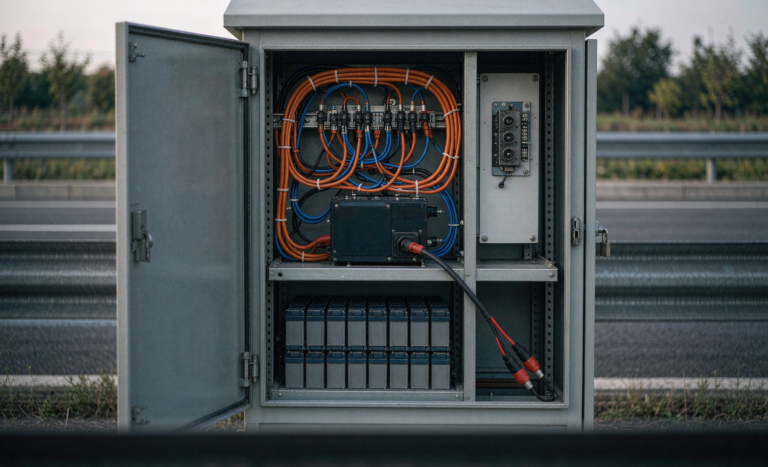
Hot-swappable modules are the force-multiplier. Instead of one 10 kWh brick that goes dead and stops everything, I prefer four 2.5 kWh modules that a team can rotate through a charger while the others run the load. This battery application solution keeps the command post alive continuously and lets a small logistics tail support a large operation. We standardize the module footprint so any unit in the fleet can borrow any module.
Certifications and Transport: Getting Power Across Borders
A pack is useless if customs or the airline refuses it. UN38.3 is mandatory for air and sea transport of lithium batteries — it is the test suite covering altitude simulation, thermal, vibration, shock, external short, impact, overcharge, and forced discharge. Every Horizon Power emergency pack ships with a valid UN38.3 test summary. I also build to IEC 62133 for cell safety and carry CE, FCC, and UL marks where the deployment region requires them.
For relief logistics this is where a real battery solution provider earns its fee. We generate the hazmat documentation, the SDS, and the transport labeling so the shipment clears without a three-day stall at a port. I have watched perfectly good batteries sit in a warehouse because the paperwork referenced the wrong UN number. Engineering the pack is half the job; engineering its passage is the other half.
Cold-Weather Deployment and Thermal Management
Cold is the silent killer of field runtime. Below freezing, both LFP and NCM suffer elevated internal resistance and plating risk during charge. For any deployment where the pack may sit at -10°C or lower, I specify self-heating films or warm-plate layers driven by the BMS solution, which pre-condition cells to a safe charge window before allowing current in. This prevents the catastrophic lithium plating that permanently destroys capacity after a single cold charge.
For forward units in sustained cold, sodium-ion is my preferred chemistry, but even it benefits from insulation. I wrap the module in aerogel or closed-cell foam and place the temperature sensors at the cell coldest point — usually the exterior face — not the geometric center where readings lie to you. A custom battery solution treats thermal management as a first-class design input, not an afterthought bolted on when the prototype underperforms in the snow.
Fleet Logistics, SOH Tracking, and End-of-Mission Handling
A relief operation runs on dozens or hundreds of packs, and the weak one is always the one nobody tracked. I build every emergency battery solution with a unique serial and a state-of-health (SOH) log the BMS writes on each cycle. At the end of a deployment, a quick readout tells logisticians which packs go back into service and which get retired — no guessing, no sending a degraded pack to the next crisis.
End-of-mission handling also has a safety and compliance side. Depleted or damaged lithium packs must be transported as hazardous waste with the proper UN markings, never tossed in a general container. A mature battery application solution includes a take-back plan so the relief effort does not leave a trail of orphaned battery fires behind it. In my experience, the teams that plan recovery up front are the same teams whose packs show up healthy for the next deployment.
FAQ
How long should an emergency battery solution last on a single charge?
For a mobile command post drawing ~400 W continuous, a 5 kWh pack at 80% usable depth delivers roughly 10 hours, but always size to your worst 24-hour duty cycle plus a 30% margin. Cold, cell aging, and unreliable solar input all consume margin in the field.
Which battery chemistry is safest for disaster response?
LFP (LiFePO4) is the default for ground response because its thermal-runaway threshold is around 270°C, far above NCM. For extreme cold below -20°C, sodium-ion retains about 90% capacity and is the better forward-deployment choice.
Can these packs be air-freighted to a disaster zone?
Yes, provided they pass UN38.3 and ship with the correct hazmat documentation, SDS, and UN labeling. Aviation-deployed packs should also meet FAA/EASA isolation and telemetry requirements through a qualified BMS solution.
What IP rating do I need for flood response?
A minimum of IP65 for storm and flood support, and IP67 for units that may be partially submerged during water rescue. Sealing quality depends as much on connectors and cable glands as on the enclosure itself.
How do I size a custom battery solution for a command post?
Build a minute-by-minute load profile including surge currents, sum the energy over 24 hours, apply 80% depth-of-discharge, then add 30% margin. Do not average the load — averaging hides the surge that destroys inverters.
Do I need a BMS solution with redundant protection?
Yes. Use a primary protection IC for balancing and monitoring plus a secondary hardware fuse or disconnect path so the pack fails safe even if firmware hangs. Cell-level telemetry over CAN or SMBus lets the team verify health in real time.