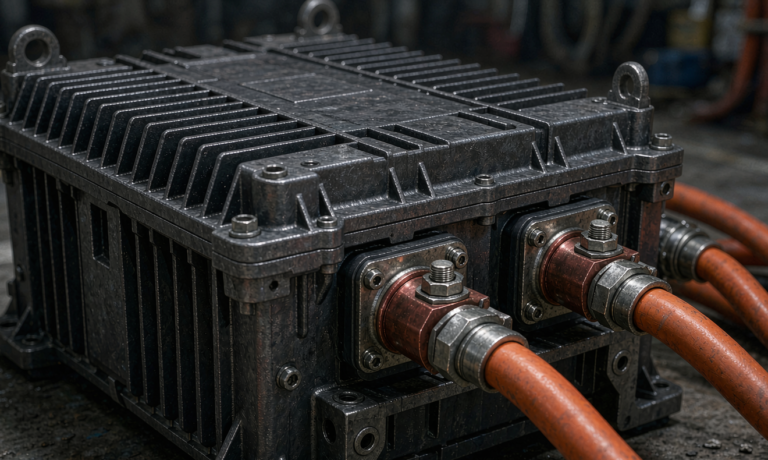
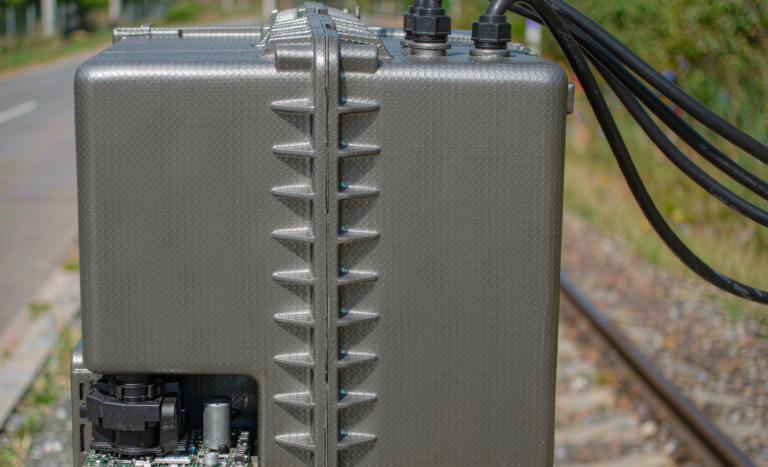
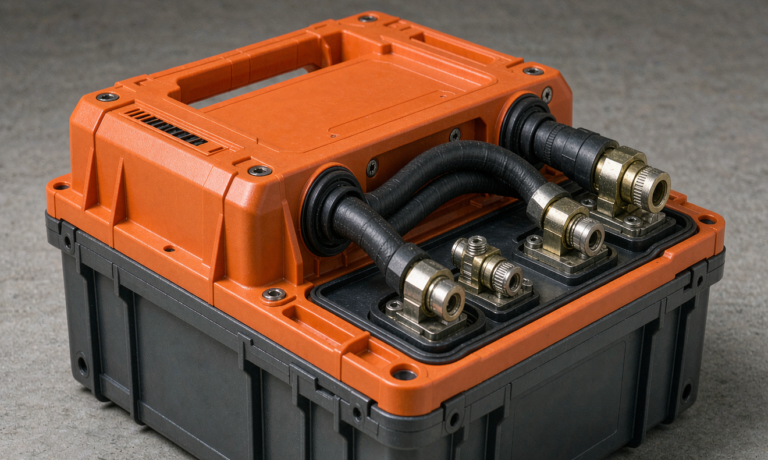
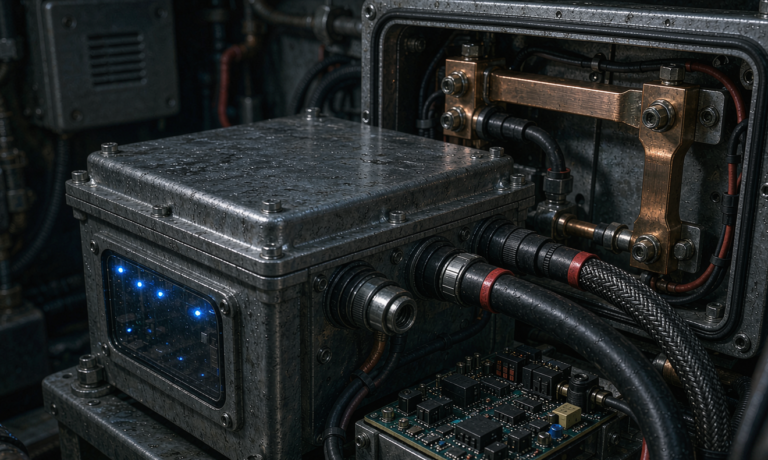
Battery Solution for Exhibition and Trade Show Displays
Every show season I get the same call from exhibit houses: the booth design is signed off, the LED wall is ordered, and then someone reads the venue order form and finds out the floor drop is a single 16 A circuit shared with the stand next door. Two weeks later I am on a show floor at 07:40 with a multimeter, watching a 4 kW display load trip an RCD that nobody can find. This is the sizing, thermal and compliance playbook I use for a battery solution for exhibition and trade show displays — written from the builds that worked and the one that did not.
Booth power is an unusual engineering problem. The loads are small, but the constraints are tighter than almost anywhere else: no combustion engines indoors, limited shared grid capacity, hard acoustic limits next to a client meeting pod, zero tolerance for a mid-demo shutdown, and a pack that must travel by air and truck between venues. That combination is why a generic portable power station rarely survives a full show week, and why we build exhibition packs on the same cell, BMS and enclosure platform used for our industrial battery solutions.

Why Venue Power Fails at Trade Shows
The failure modes are predictable once you have seen a few shows.
First, the drop is shared. Organisers sell a 13 A or 16 A single-phase outlet and describe it as dedicated, but hall distribution boards commonly run at 60–80 % of nominal. Voltage sag at the far end of a hall is real: I have measured 204 V on a nominal 230 V outlet at 13:00 on day two, and switch-mode supplies draw more current to hold their output, pushing the circuit further down.
Second, inrush is brutal on a small circuit. A 16 A C-curve breaker tolerates roughly 80–160 A for 10 ms, yet an espresso machine draws 8–10× its rated current, a dozen LED drivers add NTC-limited surges, and a compressor fridge has a locked-rotor draw of 5–7× running current. That is how a stand ends up with a breaker that trips once an hour, always while a prospect is at the counter.
Third, generators are normally prohibited indoors by fire code (NFPA 1 and local fire marshal amendments). A battery buffer solves all three problems: it isolates the booth from grid sag, absorbs inrush on the DC bus, and keeps the venue connection far below peak demand.
What a Booth Actually Draws
Before specifying anything I insist on a load list with duty cycles, because booths are not constant-load environments and the average-to-peak ratio is typically 2.5:1 to 3.5:1. A representative 3 m × 6 m stand:
- LED video wall, 4 m × 2.25 m: 350–700 W average by content brightness; a bright white demo clip runs 25–40 % above the rated average, peaking near 900 W.
- Truss lighting: 6–10 LED fixtures, 180–500 W average, 600 W peak on a colour wash.
- AV and laptops: 180–350 W, mostly steady, small 2–4× inrush per charger.
- Product demos: 150–2,200 W; anything with a heater, compressor or motor dominates the profile.
- Signage and networking: 40–120 W continuous.
A well-run AV booth with a mid-size LED wall lands at 1.0–1.4 kW average over a 9-hour day with 2.6–3.2 kW peaks. A stand with a live demo machine averages 2.5 kW and peaks near 5 kW. Design to the measured average, never to the nameplate total of everything plugged in at once — that figure is usually 3× reality.
Sizing an Exhibition Battery Solution
The formula is standard off-grid sizing with venue-specific derates:
Nominal energy = (average load × show hours) ÷ (inverter efficiency × usable depth of discharge × temperature derate) + peak reserve
Worked example for the AV booth above — 9-hour day, 48 V-class hybrid inverter at 90 % efficiency, 90 % usable SOC window, 5 % derate for a warm booth case:
- Daily energy: 1.2 kW × 9 h = 10.8 kWh
- Divide: 10.8 ÷ (0.90 × 0.90 × 0.95) = 14.0 kWh
- Configuration: 51.2 V nominal (16S LFP), 3 × 5.12 kWh / 100 Ah modules in parallel = 15.4 kWh nominal, 13.9 kWh usable
Peak capability matters as much as energy. A 3.2 kW peak needs an inverter with 2× surge for 3 s and 3× for 0.5 s, and a DC path sized for the resulting current: 3,200 W ÷ 48 V ÷ 0.90 = 74 A continuous, so 16 mm² cable and a 100 A-rated connector are the minimum. Packs fitted with 6 mm² because the average current looks small are why so many rental units have scorched connectors.
Two derates catch people out. Usable SOC is not 100 % — BMS cut-offs at 3.55–3.60 V per cell and 2.50–2.80 V under load leave about 88–92 % of nameplate. And booths run hot: a pack in an unventilated pedestal under an LED wall sits 15 °C above hall ambient, so design for 35–40 °C internal.
LFP vs NMC vs Sodium-Ion for Booth Power
- LFP — the default, about 90 % of builds: 150–180 Wh/kg, 4,000–6,000 cycles to 80 %, thermal runaway onset above 200 °C and the most benign failure mode available. Rental fleets accumulate 60–120 equivalent cycles a year, so LFP gives 8–12 years of service against 3–5 for NMC.
- NMC: 240–280 Wh/kg, worth it when one person must carry the pack or the pedestal is small. Runaway onset is 110–140 °C, so it needs cell-level fusing and a stricter charging protocol. I use it only when weight or volume is the binding constraint.
- Sodium-ion: genuinely useful for winter outdoor activations — 85–92 % capacity at −20 °C where LFP gives 60–70 % and needs a heater. It costs 25–40 % more volume for the same energy, and its 1.5–4.0 V window complicates 48 V system design.
For a display battery living in a hall at 20–25 °C and charging most nights, LFP is the engineering answer: lowest lifetime cost, widest compliance acceptance and the simplest conversation with a fire marshal.
Inverter Selection: Pure Sine Wave Is Not Optional
A modified sine or square-wave inverter is a false economy at a show. The failure sequence I have debugged twice: LED drivers with capacitive front ends overheat their input stage, wireless microphone receivers lock up when a dimmer fires, and a card reader or touchscreen kiosk reboots at random intervals. Pure sine wave with total harmonic distortion below 3 % is the only specification I will sign off.
- Transfer time under 20 ms in hybrid mode with the venue supply, so switch-mode supplies never drop out.
- Programmable load shedding. Below 30 % SOC the controller should shed tiers in a fixed order — decorative lighting, then non-critical signage, then the demo machine — and never the video wall or the payment terminal.
- Derate for heat. Output typically falls 1 %/°C above 40 °C, so a 3 kW inverter in a closed case at 45 °C is a 2.85 kW inverter.
Thermal and Acoustic Design Inside a Booth Case
The worst place for a pack is where exhibit designers love to put it: a sealed pedestal directly under the video wall, sharing one air volume with the wall’s drivers. Three rules:
- Separate the heat sources. Insulate between the pack bay and the LED driver bay and give each its own air path — typically worth 10–15 °C.
- Move air instead of adding capacity. A 120 mm thermostatically controlled fan on a filtered intake keeps a 15 kWh pack 5–10 °C cooler for about 3 % of daily energy, and it slows calendar ageing (roughly 1.5–2.5 %/year at 25 °C for LFP, doubling per 10 °C).
- Specify fan noise. A show floor sits at 45–55 dB(A), but the stand next door may be running a client meeting; I ask for under 35 dB(A) at 1 m and passive cooling below 1 kW continuous draw.
Sealing matters too: a fully sealed case condenses moisture when it moves from a cold truck into a warm hall, so fit a hydrostatic pressure-relief vent alongside an IP54 or IP65 enclosure.
Transport, Venue Rules and the Certification Stack
- UN38.3 is mandatory for air, road and sea transport, and you should ship at 30 % SOC or below — an air requirement that also limits damage if a crate is dropped. Cells above 100 Wh need carrier approval plus a Class 9 label and dangerous goods declaration on every shipment.
- IEC 62133-2 covers cells and portable packs; IEC 62619 and UL 1973 cover industrial use and are the documents venue insurers ask for. Fixed booth installations increasingly need UL 9540 and UL 9540A large-scale fire testing.
- EMC: EN 61000-6-2 and EN 61000-6-4, or FCC Part 15 Class B in the US — a cheap BMS switching stage can put conducted noise on the DC bus and disturb AV equipment four metres away.
- Venue and fire code: no fuel indoors, documented battery listing, and in some venues a notification above a stored-energy threshold. I carry a one-page certificate pack — UN38.3 summary, IEC 62619 certificate, MSDS and wiring diagram — and have not had a build-up delayed since.
Charging Strategy: Overnight and Opportunity Windows
Most venues allow charging during build-up and overnight, but restrict current because hall distribution is unattended.
- Size the charger to finish inside the window: a 15 kWh pack at 0.3 C needs about 3.3 kW for 5–6 hours. A 0.5 C charger halves that but stresses the pack and needs a 16 A outlet that is often unavailable.
- Use a two-stage profile with no float stage — holding 55 V on a warm LFP pack overnight ages it for no benefit — and prefer morning and lunch-break top-ups, where 2 × 90 minutes at 3.3 kW recovers 8–9 kWh while the hall is attended.
- Store between shows at 30–80 % SOC and charge to 100 % only on the morning of the first show day.
Field Notes from Three Booth Builds
AV stand, 10 kWh per day. A 420 W LED wall, 350 W of truss lighting and 250 W of AV totalled 10.2 kWh over 9.5 hours. Two 5.12 kWh LFP modules in one vented flight case and a 3 kW hybrid inverter carried the full day while the venue circuit never exceeded 8 A.
Live demo with a 2.2 kW appliance. The appliance dominated both energy and inrush: 2,200 W resistive with an 8× inrush for 100 ms, plus a compressor cycling every 12 minutes with a 6× locked-rotor draw. We specified a 5 kW inverter with a 2.5× surge rating for 5 s, a 20 kWh pack, and a 3-minute compressor restart delay after any outage to let refrigerant pressures equalise. No breaker tripped across four show days.
The failure. A rental pack went into a sealed pedestal with a 700 W LED wall above it. Internal temperature hit 46 °C by 15:00 on day one, the inverter thermally derated and the wall dropped to half brightness mid-demo. A 30 W filtered fan and a heat shield cut internal temperature by 11 °C and the pack ran the remaining three days without derating.
Commissioning and Acceptance Checklist
Every pack we ship for exhibition duty leaves with these five tests recorded:
- Insulation resistance above 100 MΩ at 500 V DC between the DC bus and the enclosure.
- Cell balance within 30 mV after a two-hour rest at mid-SOC.
- Capacity at 0.2 C of at least 95 % of rated amp-hours.
- A 2 kW step load drops the bus by less than 10 % and recovers within 50 ms.
- Thermal imaging after a one-hour full-load run, with any junction above 15 K over ambient re-torqued.
Frequently Asked Questions
Can a booth run entirely on battery power for a full show day?
Yes, and it is common practice. A typical 3 m × 6 m stand with LED signage, lighting and AV draws 10–14 kWh over a 9-hour day, which a 15–20 kWh LFP pack covers with margin. Stands with heating, refrigeration or high-power demos reach 25–30 kWh and need a larger pack or an overnight recharge.
How many kWh does a 3 m × 6 m trade show booth actually need?
Measure the average load, not the nameplate total. Most AV-focused stands average 1.0–1.4 kW and need 11–15 kWh usable; stands with live demos average 2.0–2.8 kW and need 22–30 kWh. Multiply average load by show hours, then divide by 0.75–0.80 for efficiency, usable SOC and heat derating.
Is a lithium battery allowed inside an exhibition hall?
In most venues, yes, provided the pack is a listed, certified product. Fire codes generally prohibit fuel-burning engines indoors; they do not prohibit battery packs that carry UN38.3 transport testing plus IEC 62619 or UL 1973 listing. Some venues ask for advance notification above a stored-energy threshold, so bring a certificate pack with your order confirmation.
Will a battery inverter damage my LED video wall or AV equipment?
Not if it is a pure sine wave inverter with total harmonic distortion below 3 %. Modified sine output makes LED drivers run hot, locks up wireless audio receivers and can make dimmers buzz audibly. Insist on a transfer time under 20 ms when running alongside the venue supply.
How do I transport an exhibition battery pack by air?
Every lithium-ion pack needs a UN38.3 test summary, and you should ship at 30 % SOC or lower. Cells above 100 Wh require carrier approval and a Class 9 dangerous goods declaration under the IATA rules, and most exhibition packs fall into that category — so book through a forwarder who handles dangerous goods.
What is the best chemistry for a trade show display battery: LFP or NMC?
LFP for nearly every indoor display application: 4,000–6,000 cycles, runaway onset above 200 °C, and the easiest conversation with a venue fire marshal. Choose NMC only when weight or enclosure volume is the binding constraint, and sodium-ion when the activation happens outdoors below freezing, where LFP loses 30–40 % of its capacity.
How long will an exhibition lithium battery last before replacement?
A well-managed LFP pack reaches 8–12 years in rental service, or 4,000–6,000 full cycles. Two habits shorten that sharply: sustained internal temperatures above 40 °C, which can halve cycle life, and storing the pack at 100 % SOC. Track DC internal resistance every 50 cycles — a 25–30 % rise appears 300–500 cycles before the capacity knee.
Can I recharge the battery overnight at the venue?
Usually yes during build-up and show nights, but organisers often restrict current draw because distribution boards are unattended. Size the charger to complete a full recharge inside the 5–6 hour window you are given, typically 3.3 kW for a 15 kWh pack, and use a two-stage profile with no float stage.
The Commercial Case
A 15 kWh exhibition pack with a 3 kW hybrid inverter costs roughly 6,000–9,000 USD depending on enclosure, redundancy and certification, against 150–400 USD per show day for rental — so two packs pay back within 4–6 show seasons for an exhibitor attending ten shows a year. The harder return to quantify is the demo that never goes dark. If you are designing a stand for next season, send us the equipment schedule and pedestal drawings before fabrication.
Further Reading
References