Drone Battery Transportation Rules for Commercial Fleets
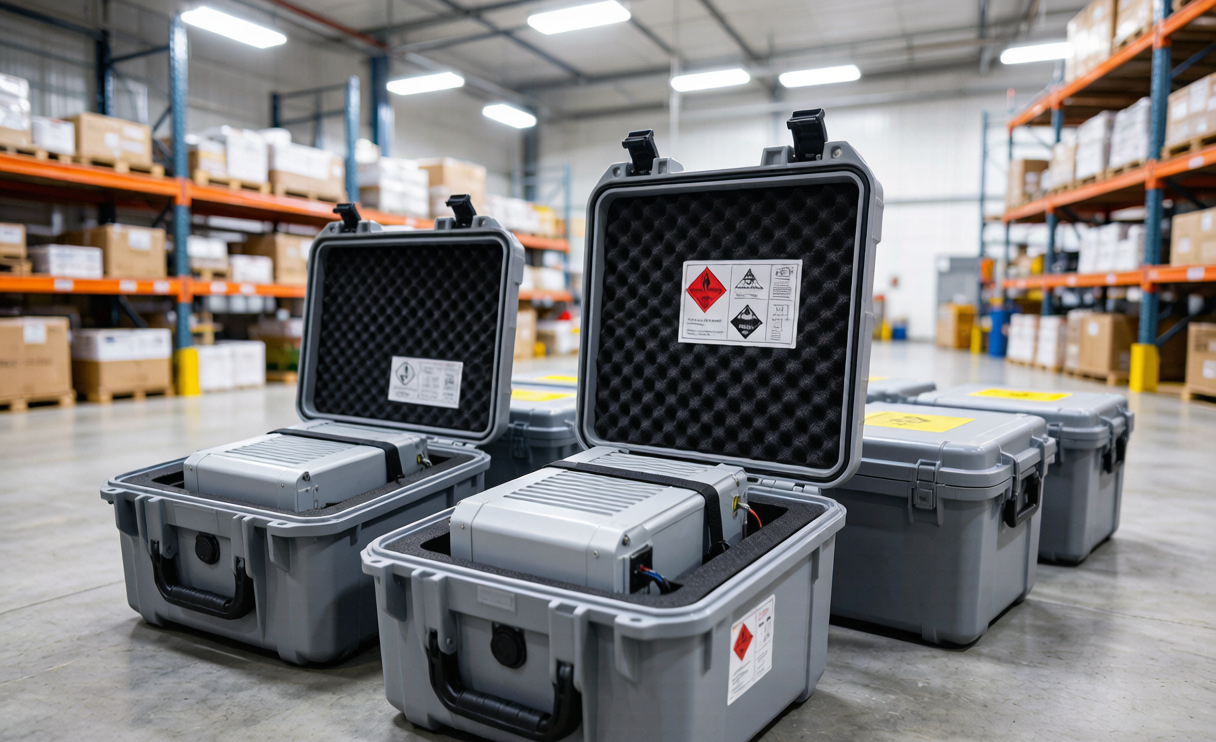
When a commercial drone operation scales from three aircraft to thirty, the weakest link in the operation often is not the airframe or the payload — it is how you move drone battery inventory between sites, warehouses, and countries. After fifteen years on the factory floor building packs for survey, agriculture, and inspection fleets, I have watched more than one promising UAV program get grounded not by a flight failure but by a customs hold or a courier rejection at the depot. The rules that govern lithium-cell transport are unforgiving, and for commercial fleets they are stricter than anything a hobbyist encounters.
This guide walks through the regulatory backbone, the air and ground frameworks that actually matter for a logistics manager, and the practical packaging and state-of-charge discipline that keeps a shipment from being turned away. My goal is to give fleet operators a field-ready mental model — not legal advice, but the engineering reality of moving energy storage that the world has decided is dangerous goods.
Why Commercial Fleets Face Stricter Rules Than Hobbyists
A single consumer quadcopter battery bought online travels inside a product that a manufacturer has already certified and packaged. The end user never touches the dangerous-goods paperwork. A commercial fleet, by contrast, buys cells and packs in volume, swaps them across airframes, carries spares on-site, and frequently ships between regional hubs. Every one of those movements is a separate compliance event.
The threshold that changes everything is quantity. Once you move beyond the small “Section II” allowance, your drone lithium battery shipments fall under full dangerous-goods provisions, which means trained shippers, UN-specification packaging, proper markings, and a declaration document. I have seen operators assume their courier handles it; the courier does not, and the pallet sits for two weeks. Treat transport compliance as part of the battery specification from day one, not as an afterthought at the dock.
The Regulatory Backbone: UN38.3 and the Dangerous Goods Framework
Every lithium battery that crosses a border commercially must pass UN38.3, the United Nations manual of tests and criteria for lithium cells and batteries. This is the non-negotiable baseline. UN38.3 runs eight tests — T.1 altitude simulation, T.2 thermal test, T.3 vibration, T.4 shock, T.5 external short circuit, T.6 impact, T.7 overcharge (for some chemistries), and T.8 forced discharge. A lithium battery that has not cleared these tests should never be in your supply chain.
From UN38.3, the transport world branches into three modal codes: IATA for air (the Dangerous Goods Regulations), IMDG for sea, and ADR for European road. In the United States the Pipeline and Hazardous Materials Safety Administration (PHMSA) adopts these into 49 CFR; in the EU, EASA and member-state agencies enforce them. The watt-hour (Wh) rating of your cell is the master variable: cells at or below 20 Wh and batteries at or below 100 Wh sit in the most permissive band, 100–160 Wh require more documentation, and anything above 160 Wh is treated as a fully regulated dangerous good by air.
One detail buyers miss: UN38.3 is a model test, but airlines and forwarders often demand a current test summary under the 2020 lithium-battery amendment. If your custom battery solution is built from cells that changed formulation last year, the old UN38.3 report may no longer apply. Keep the test summary tied to the exact cell batch.
Air Transport for Drone Batteries — IATA, FAA and EASA
Air is where most commercial fleets get surprised. Spare batteries (not installed in equipment) are generally banned in checked baggage and must travel as cargo under strict conditions. Under IATA DGR, batteries between 100 Wh and 160 Wh shipped as spares fall under Section IB and require UN packaging plus a lithium-battery handling label. Below 100 Wh, Section II allows simpler marking but still forbids passenger-aircraft-only routing nuances that vary by carrier.
In the United States, the FAA aligns with IATA and adds operator-specific restrictions; in Europe, EASA publishes acceptable means of compliance that your freight forwarder will cite. For high-capacity heavy-lift packs above 160 Wh, many passenger airlines will simply refuse the shipment, and you are looking at cargo-only aircraft or a different mode entirely. I advise fleet managers to standardize on a 6S or 12S pack under 160 Wh wherever the mission allows, because that single design choice keeps your spares in the shippable band.
State of charge is the other air rule people ignore. For air transport of spares, keep batteries at or below roughly 30% SOC — this is the threshold that dramatically reduces thermal-event risk and is what trained shippers will verify. A pallet of fully charged packs is a rejected pallet.
Ground and Road Transport: ADR, IMDG and Local Rules
If your fleet moves batteries by truck across Europe, ADR governs. For sea freight, IMDG Code applies, and its amendment cycles have tightened stowage and segregation for lithium classes (UN3480 for batteries alone, UN3481 for batteries packed with or contained in equipment). Road transport is usually the most forgiving for volume, but it still demands correct class labeling and, above a certain threshold, a transport document and trained driver.
Do not assume “domestic” means “unrestricted.” Many countries layer their own rules on top of the international codes. In China, where a large share of commercial drone battery production happens, road transport of lithium goods follows GB standards and requires compliant packaging and hazard markings. The practical move is to brief your forwarder with the exact chemistry, Wh rating, and UN number before you quote a shipment, not after.
Packaging, State of Charge and Labeling That Pass Audit
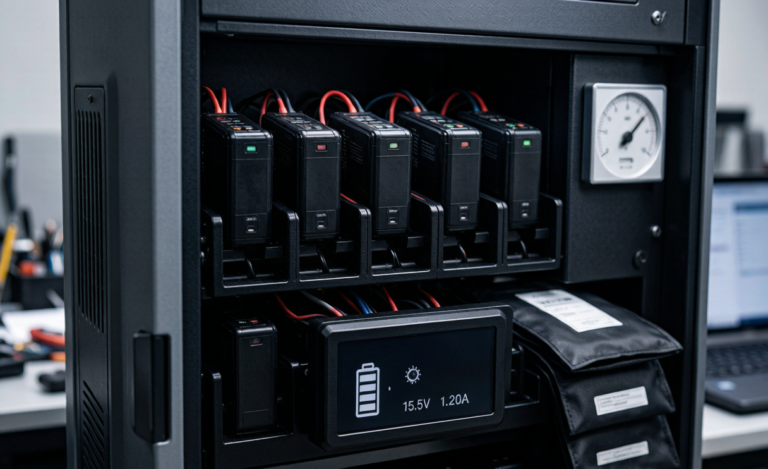
Packaging is where engineering discipline pays off. For regulated shipments you need UN-specification boxes (e.g., 4G fiberboard or 4DV plywood) with the proper gross mass rating, inner cushioning that prevents movement, and terminals protected against short circuit — I use non-conductive caps or individual bagging on every pack. Each package needs the lithium-battery handling label (the square-on-point), and above the Section II threshold, a Class 9 hazard label and a shipping paper with the UN number, proper shipping name, and number of packages.
Three habits I enforce with every fleet client:
- Cap the SOC for transit. Charge packs to 30% or less before they leave the building. Store them that way if they will sit. A battery at storage voltage is both safer to ship and healthier for cycle life.
- Segregate by chemistry. Keep your semi-solid or LFP packs away from damaged or suspect cells. A single unidentified swollen pack can get an entire consolidated shipment destroyed at the screen.
- Keep the paper trail with the product. UN38.3 test summary, SDS, and the dangerous-goods declaration travel in the same file as the packing list. Auditors do not accept “we can send it later.”
For a fleet running a bespoke custom battery solution, I also recommend printing the UN number and Wh rating directly on the pack label. It turns a customs inspection from a half-day argument into a ten-minute scan.
Building a Transport-Safe Battery Program for Your Fleet
The operators who never get stuck are the ones who built transport compliance into procurement. When you issue an RFQ for a new drone lithium battery, require the supplier to deliver UN38.3 test summaries, an SDS, and a recommended transport configuration. Specify the target Wh band so your packs stay in the shippable category. Train at least two people per region as certified dangerous-goods shippers — dependence on a single trained individual is a single point of failure.
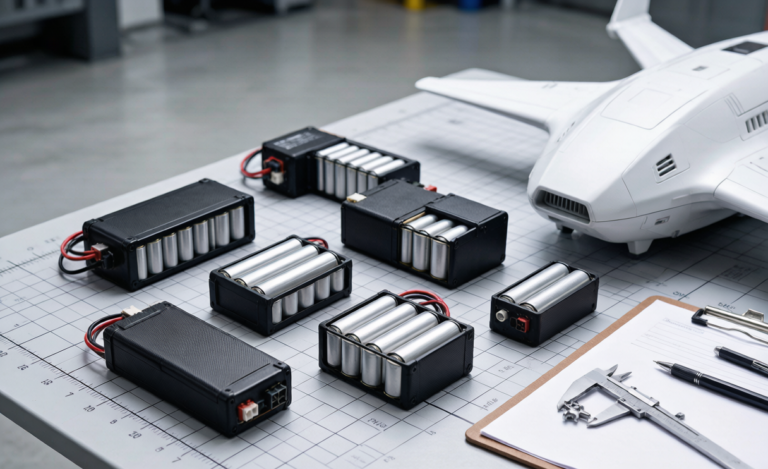
I also encourage a simple internal standard: one pack format, one transport case, one documented procedure. Mixed fleets with a dozen battery shapes generate a dozen chances to mislabel. Consolidation is not just an engineering win; it is a compliance win. If your mission genuinely needs above-160 Wh packs, plan the logistics around cargo aircraft and sea freight from the start, and never assume a passenger flight will take them.
Frequently Asked Questions
What is the maximum drone battery capacity I can ship by air without full dangerous-goods handling?
For spare batteries, the most permissive air band under IATA is below 100 Wh, where Section II provisions can apply with simplified marking. Between 100 Wh and 160 Wh you move into Section IB with UN packaging and a handling label. Above 160 Wh, batteries are fully regulated dangerous goods and most passenger airlines will refuse them. Staying under 160 Wh is the single most useful design constraint for a commercial fleet.
Do I need UN38.3 certification for every battery I transport?
Yes. UN38.3 is the baseline test that proves a lithium cell or battery is safe to offer for transport. You also need a current test summary available to enforcement authorities and your forwarder. If you change cell supplier or chemistry in a custom battery solution, the previous report may no longer be valid, so keep the documentation matched to the exact production batch.
Can I ship fully charged drone batteries?
Technically some modes allow it, but for air transport of spares the accepted practice — and what trained shippers will require — is a state of charge at or below about 30%. Fully charged packs are far more likely to be rejected and are riskier in transit. I standardize every outbound pack at storage voltage.
Who is responsible for the dangerous-goods declaration, the shipper or the courier?
The shipper — that is you or your trained dangerous-goods operator — is responsible for correct classification, packaging, marking, and documentation. Couriers move the freight; they do not classify it for you. Using an untrained person to fill the declaration is a compliance violation, not a convenience.
Are damaged or swollen drone batteries shippable?
No. Damaged, defective, or recalled lithium batteries are prohibited from normal transport and require special provision (often SP188 variations or entirely separate handling) that most commercial fleets should avoid by isolating and disposing of them through a qualified recycler instead of shipping them with live inventory.