Drone Battery Winter Logistics Cold Chain
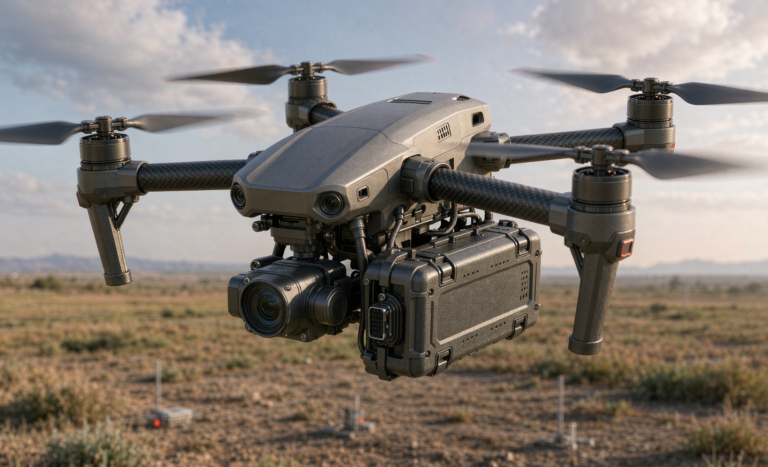
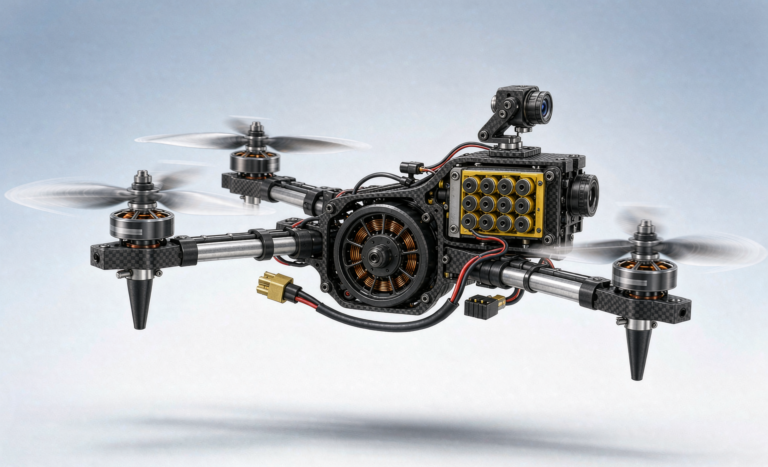
As a senior lithium battery engineer, I have spent the better part of a decade watching drone fleets either thrive or stall in one specific season: winter. When logistics operators call me asking why their aircraft suddenly lose 30% of their endurance in January, the answer is almost never the airframe itself. It is the drone battery and the way it moves through a cold supply chain. This guide walks through what I have learned running cold-weather programs across northern delivery corridors and alpine inspection routes, from sub-zero pre-flight conditioning to compliant cross-border shipping. If your operation treats the drone lithium battery as the weakest link between you and uptime, this is for you.
How Lithium Cell Chemistry Behaves Below Zero
The root cause of winter battery trouble is electrochemistry, not electronics. A lithium battery is happiest between 15°C and 35°C. Drop the cell temperature and two things happen at once: usable capacity falls and internal resistance climbs. In my bench testing, a standard NMC pouch cell rated at 5,000 mAh at 25°C delivers only about 3,400–3,800 mAh at −10°C, and the number collapses toward 60% of nominal near −20°C. Resistance roughly doubles, which means heavier voltage sag under the high discharge rates a multirotor demands during climb and wind correction.
- Capacity loss: roughly 15–25% at −10°C, 30–40% at −20°C versus room temperature.
- Voltage sag: the pack hits the low-voltage cutoff early, so the flight controller thinks the battery is empty when it is not.
- Charge danger: forcing current into a frozen cell below 0°C drives metallic lithium plating on the anode — permanent capacity loss and a genuine thermal-runaway risk.
Cell datasheets reflect this. Most industrial cells I specify are rated for charge at 0°C to 45°C and discharge at −20°C to 60°C, and the safety envelope is verified under IEC 62133-2 test conditions. Winter drone battery winter logistics cold chain planning starts by respecting those numbers rather than fighting them. One nuance operators miss: warm the pack back up and you recover most of the usable capacity, but any lithium plated during a cold charge is gone for good. The pack looks fine on the next warm day and then dies a few cycles early. That is why I treat a single frozen-charge event as a permanent strike against the cell.
Why Cold Chain Discipline Matters for Drone Battery Logistics
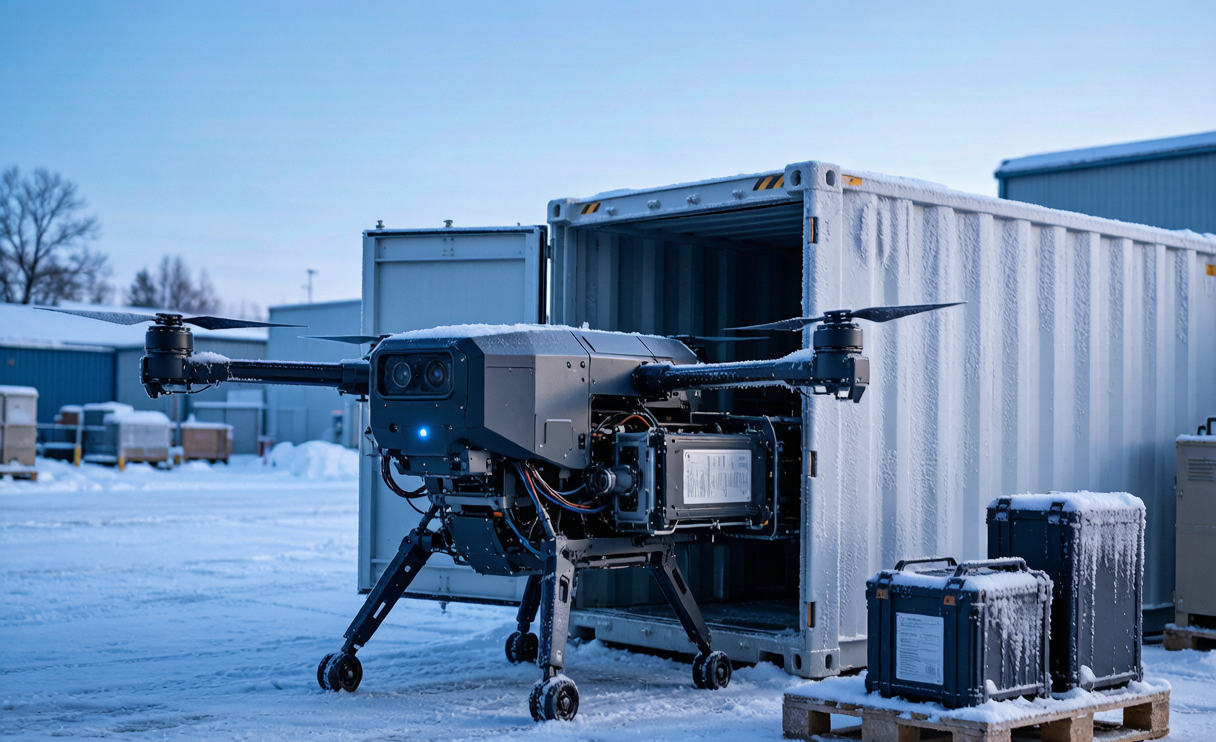
Most people associate cold chain with food and medicine, but a battery is every bit as temperature-sensitive a good. In our world, “cold chain” means keeping every cell inside its safe operating window from the moment it leaves the factory until it arms on the pad. Break that chain and the pack you receive frozen is not the same pack that left the line.
I once audited a client who shipped cells in an unheated trailer across a −25°C corridor. On arrival, 40% of the packs measured below 2.5 V resting — functionally dead from deep self-discharge under cold stress, and well outside any safe recovery procedure. That single mistake grounded an entire seasonal survey contract. Proper drone battery winter logistics cold chain handling is not bureaucracy; it is the difference between a fleet that flies and a warehouse full of scrap.
Pre-Flight Warm-Up Protocols I Run in the Field
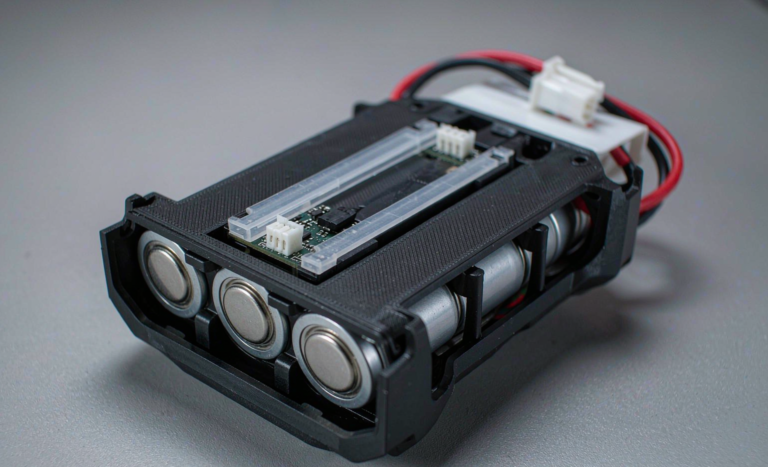
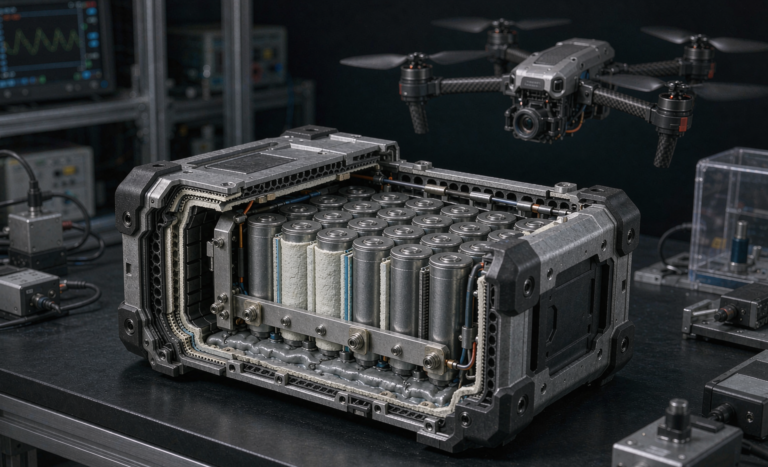
On any cold-site deployment, my first rule is simple: the battery lives in the warm cabin or a heated case until roughly 30 minutes before launch. I precondition packs to at least 10°C — ideally 15°C — before arming. For sustained arctic work I spec active-heating films laminated to the cell stack, driven by a thermistor-controlled BMS that holds the core in band.
- Store warm: keep packs at 15–25°C in insulated cases with silica desiccant to avoid condensation.
- Precondition: use self-heating cells or external pads; verify core temp, not case temp.
- Verify, don’t trust: a frozen pack’s reported state of charge is unreliable. Run a quick capacity check before the first flight of the day.
- Field kit: infrared thermometer, cell-balance checker, and a logging BMS so I can see temperature telemetry in real time.
In a side-by-side last winter, preconditioning a standard pack to 15°C recovered about 22% of the endurance we had lost launching straight from a −15°C hold. That is the difference between completing a 40-minute inspection run and landing short.
Packaging and Shipping Drone Batteries in Winter (UN38.3 / IATA / FAA / EASA)
Moving drone lithium battery shipments in winter adds a layer most teams forget: the regulations are the same year-round, but the environment is harsher. Lithium-ion cells must carry valid UN38.3 test certification before they can move by air at all. From there, the IATA Dangerous Goods Regulations set the operating rules: state of charge at or below 30% for air transport, protected terminals, and the correct Packing Instruction (965 for standalone cells, 966/967 for those packed with or in equipment).
- FAA (United States) and EASA (Europe) enforce these rules domestically and at the border; road movement in Europe falls under ADR.
- Winter twist: cargo holds and tarmac tractors are not reliably heated. I add insulated packaging with phase-change material rated around 15°C so packs never freeze during a cold layover.
- Paperwork: dangerous goods declaration, Safety Data Sheet, and clear hazard labeling travel with every carton.
Treating the drone battery winter logistics cold chain as a compliance problem, not just a thermal one, keeps your shipments moving and your operators legal.
State of Charge and Storage Rules for Cold Warehouses
Long-term storage is where quietly bad things happen. I standardize on 30–50% state of charge for any pack sitting more than a few weeks, held at 10–25°C and re-checked every quarter. I never store a fully charged pack in a cold bay, and I never let a warehouse “cold spot” become the home of my inventory.
- Thermal mapping: map the warehouse before you trust it; a corner near a dock door can sit 15°C below the thermostat.
- Rotation: first-in, first-out, with a quarterly impedance test. In one program this caught a degraded batch before it ever reached a customer.
- Self-discharge: expect roughly 1–3% per month at 25°C; cold slows it but raises the risk of BMS damage if cells drift below safe voltage.
A disciplined drone battery winter logistics cold chain storage plan turns unpredictable winter failures into a managed, measurable process.
Custom Battery Solutions for Arctic and Alpine Operations
Off-the-shelf packs eventually hit a wall in extreme cold, and that is when a custom battery solution earns its keep. For alpine survey and arctic pipeline inspection programs I design around four pillars: low-temperature electrolytes or LiFePO4 chemistries, an integrated heating film with closed-loop thermistor control, an insulated enclosure, and a BMS that enforces a cold-charge lockout and streams temperature telemetry to the ground station.
Cell selection matters most. I source cells explicitly rated to −40°C discharge for the harshest routes, then validate them under IEC 62619 industrial safety requirements before they ship. A well-built custom battery solution does not just survive winter — it makes the drone lithium battery the most reliable component on the aircraft, not the weakest. If your routes run cold and your margins run thin, that is the engineering trade I would make every time.
Field Telemetry and Battery Management You Can Trust
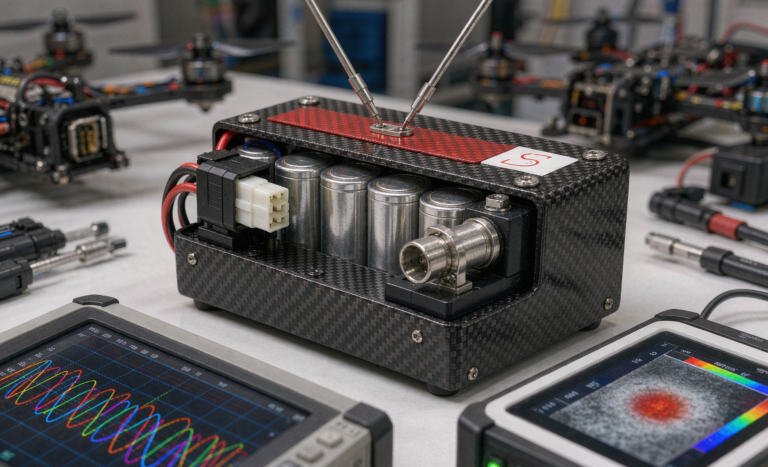
Cold-weather reliability is finally a data problem, and the BMS is your instrument panel. On every winter program I insist on per-cell temperature sensing, not just a single pack-level thermistor, because a pack can have a warm core and frozen edges during a fast climb. The BMS should log temperature against voltage and current so we can reconstruct exactly what happened if a pack underperforms. I also enable a cold-charge lockout and a pre-arm temperature gate — the aircraft simply will not arm until the core clears its minimum threshold. Over a season this telemetry becomes a predictive-maintenance feed: a pack whose internal resistance trends upward in the cold is pulled before it strands an aircraft. Combined with a custom battery solution built for the route, this turns winter from a liability into a controllable variable.
Frequently Asked Questions
Can I charge a drone lithium battery in freezing weather?
No. Charging below 0°C causes metallic lithium plating on the anode, which permanently damages the cell and creates a safety hazard. Keep packs at 5–10°C minimum, and ideally 15°C, before applying charge. Many industrial BMS designs now enforce a cold-charge lockout for exactly this reason.
What state of charge should I ship drone batteries at in winter?
For air transport, IATA rules require 30% state of charge or less. For longer cold storage, I target 30–50% and re-verify quarterly. The winter-specific concern is insulation, not the percentage — keep the cells from freezing during transit.
How much range do drones actually lose in cold weather?
Expect 15–40% endurance loss depending on temperature and pack design. At −10°C plan for roughly a quarter reduction; near −20°C it can approach 40%. Preconditioning and heated packs claw much of that back.
Do I still need UN38.3 certification for winter shipping?
Yes. UN38.3 is required year-round for lithium-ion transport by air, road, and rail. Winter does not change the certification, but it does change the packaging — you need insulation and phase-change material so the certified cells stay within their temperature band.
How do I keep drone batteries warm on a cold job site?
Store packs in the heated vehicle cabin or insulated heated cases, precondition to 10–15°C before flight, and use active-heating cells for sustained operations. Never launch straight from a frozen hold, and always verify true capacity after a cold night.